Concrete Pump Procurement for Workshop Foundations and Heavy Vehicle Service Bays in Christchurch, NZ
Workshop foundations and heavy vehicle service bays in Christchurch require concrete placement that accommodates substantial floor loads, reinforced foundations, inspection pits, and vehicle access areas. Choosing the right concrete pump is therefore not simply a matter of selecting the largest output rating. Contractors must consider concrete volume, placement distance, reinforcement density, site access, and the sequence of construction activities. A pump that suits a broad industrial slab may not be the best fit for narrow foundation trenches or a service bay with restricted overhead clearance. Evaluating these conditions before purchasing helps contractors select equipment that matches the project and remains useful for future work.
For buyers comparing concrete pumps for sale nz, procurement should begin with the intended applications rather than the advertised maximum capacity. Christchurch projects can range from independent vehicle workshops to commercial truck maintenance facilities, where concrete must be delivered consistently across different structural elements. Understanding the distinction between trailer-mounted pumps, mixer pumps, and boom pumps makes it easier to assess equipment suitability, operating requirements, and long-term utilisation.
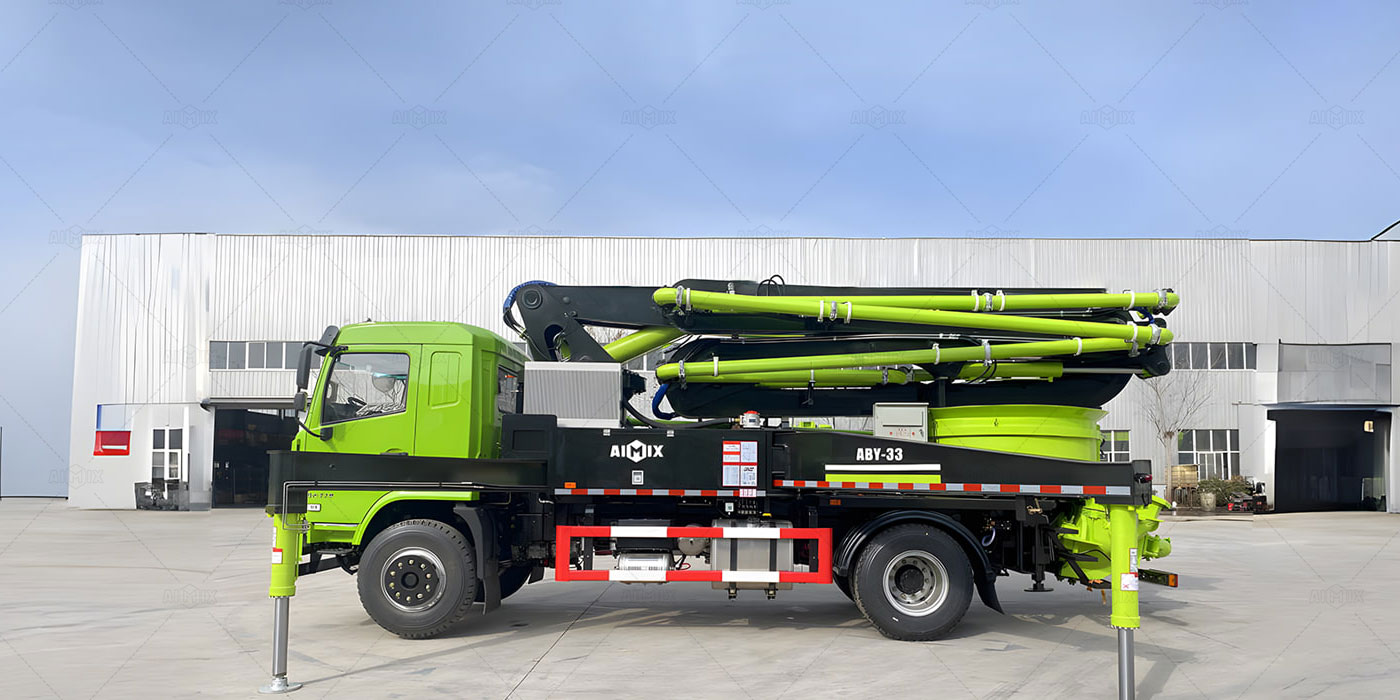
Match Concrete Pump Types to Workshop Foundations and Service Bays
Trailer Concrete Pumps for Reinforced Foundations and Floor Slabs
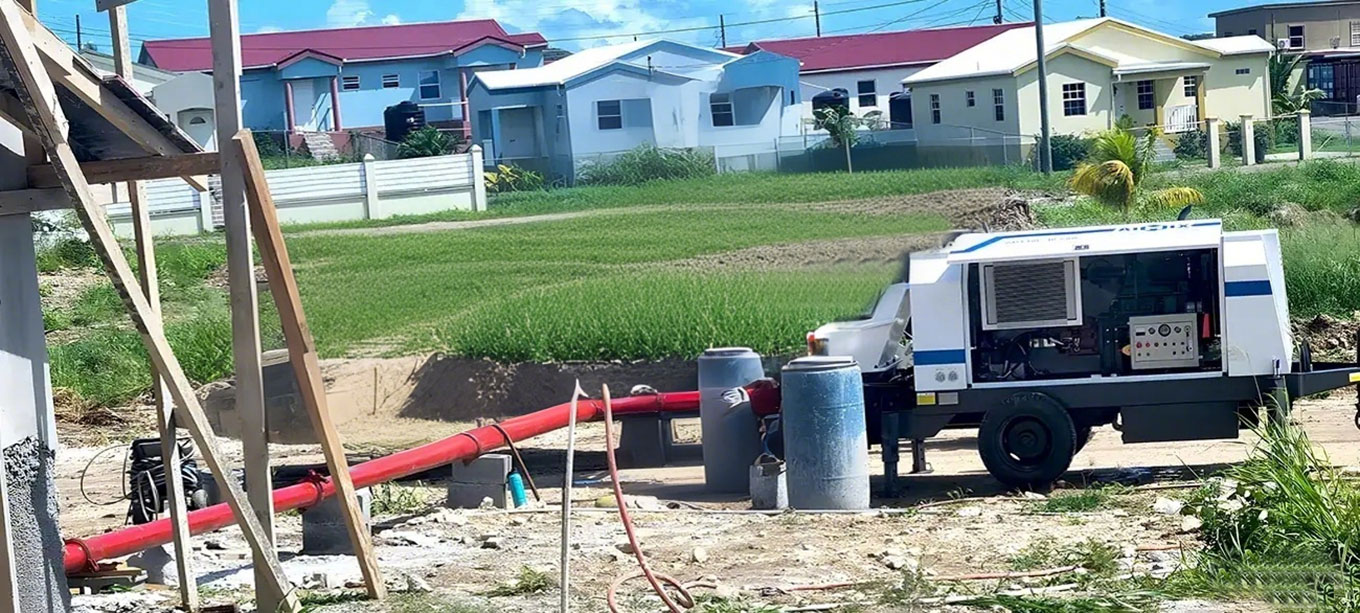
Trailer-mounted concrete pumps are worth considering when a project involves reinforced strip foundations, equipment plinths, ground beams, and workshop floor slabs. They pump concrete through a pipeline, allowing the delivery point to be positioned away from the mixer truck. This arrangement can be advantageous when vehicles cannot drive directly beside the pour or when reinforcement and formwork restrict access.
For Christchurch contractors, the key question is whether the pump can deliver the required concrete at the necessary rate without disrupting placing and finishing operations. A high theoretical output does not automatically translate into faster construction. The concrete supply must remain continuous, the pipeline must be laid out appropriately, and the placing crew must keep pace with delivery.
When comparing concrete trailer pumps nz, examine rated output, pumping pressure, aggregate compatibility, and the manufacturer’s recommended pipeline configuration. Confirm these specifications against the actual concrete mix and required pumping distance. Foundation concrete containing dense reinforcement or passing through narrow sections may require particular attention to aggregate size, workability, and pipe diameter.
Mixer Pumps for Smaller Workshops and Distributed Concrete Work
A concrete mixer pump combines mixing and pumping functions in one machine. It can suit smaller workshop extensions, repair facilities, isolated foundation sections, and projects where ready-mixed concrete deliveries are difficult to coordinate. Rather than arranging separate mixing and pumping equipment, contractors can produce and place concrete within a more integrated workflow.
However, the configuration has limits. Its practical output may be insufficient for a large service bay floor that needs substantial volumes placed within a restricted time window. Buyers should calculate the concrete volume per pour and compare it with realistic production rates, including loading, mixing, repositioning, and cleaning. For larger projects, a dedicated batching arrangement and a separate concrete pump may provide a more suitable production system.
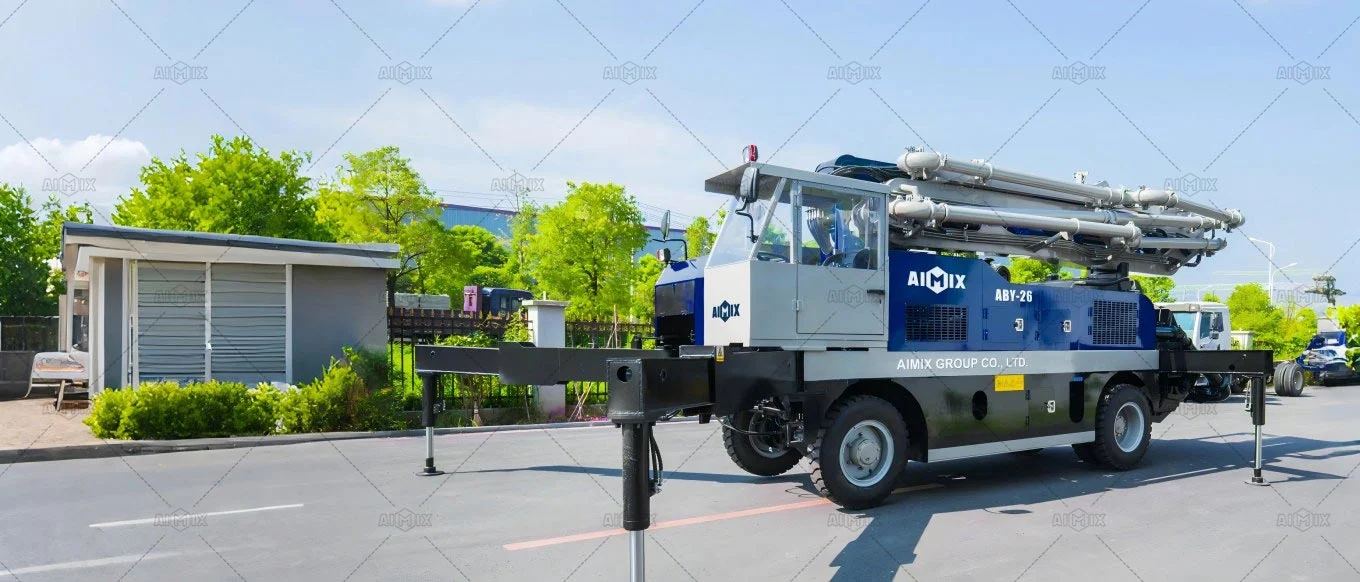
Concrete Boom Pumps for Large Bays and Restricted Ground Access
Boom pumps become relevant when concrete must reach extensive floor areas, elevated sections, or locations that are difficult to access using a ground-level pipeline alone. Their articulated booms can help distribute concrete across a large workshop footprint while reducing the need to reposition delivery hoses manually.
Contractors searching for concrete boom pumps for sale nz should assess the actual reach needed, available setup space, ground-bearing capacity, overhead obstructions, and access for the supporting truck. A boom pump may offer substantial placement advantages, but its mobilisation and setup requirements can be disproportionate for a small foundation pour. Where the site has limited manoeuvring room, a trailer pump with a carefully designed pipeline may be the more practical arrangement.
Assess Christchurch Site Conditions Before Selecting Pump Specifications
Calculate Concrete Volume, Delivery Rate, and Pumping Distance
Procurement should start with the construction drawings. Estimate the concrete volume for each foundation, service pit, equipment base, and floor slab, then identify the largest planned pour. Divide the required volume by the available placing window to establish the minimum average delivery rate. Allow additional time for interruptions, repositioning, testing, and finishing rather than assuming the machine will operate continuously at its maximum rated output.
For example, a workshop slab requiring 60 m³ of concrete within a six-hour placement window needs an average delivery rate of 10 m³ per hour. This is a planning calculation, not a pump recommendation: the actual machine must also accommodate pipeline losses, the concrete mix, and the site workflow. If concrete arrives in batches, delivery coordination may become the limiting factor even when the pump has ample capacity.
Account for Reinforcement, Service Pits, and Concrete Mix Design
Heavy vehicle service bays often include thickened slab sections, reinforced foundations, inspection pits, drainage channels, and anchor points for lifting equipment. These elements can create congested reinforcement zones where concrete must flow around steel and fill confined spaces without leaving voids. Pump selection must therefore be coordinated with the engineer’s concrete specification and the placement method.
Do not assume that a more powerful pump can compensate for an unsuitable mix. Concrete workability, aggregate grading, maximum aggregate size, and the mix’s suitability for pumping all influence delivery performance. Contractors should confirm mix compatibility with the pump supplier and concrete producer before committing to equipment. Any changes to the specified concrete must be approved through the project’s normal engineering and quality-control procedures.
Consider Christchurch Weather, Ground Conditions, and Site Access
Christchurch’s seasonal weather can affect concrete scheduling, ground preparation, and the conditions in which pumping equipment operates. Cold periods may influence concrete temperature and setting behaviour, while rain can complicate access across unsealed or poorly drained areas. These factors do not dictate one universal pump type, but they reinforce the importance of preparing a reliable site plan.
Before delivery, verify the setup area, truck access, ground stability, hose routes, drainage, and safe separation between moving vehicles and workers. For boom pumps, confirm outrigger support requirements and clearance from overhead hazards. For trailer pumps, plan pipeline supports, bends, hose restraints, and the location of the placing crew. A well-prepared site reduces avoidable delays and helps maintain a controlled concrete placement sequence.
Compare Procurement Costs with Long-Term Equipment Utilisation
Evaluate Purchase Price Alongside Operating Requirements
The purchase price is only one component of a concrete pump’s total ownership cost. Contractors should also examine transport, commissioning, operator training, routine servicing, wear parts, cleaning equipment, and the availability of technical support. Pumping concrete subjects delivery components to abrasive wear, so maintenance access and replacement-part availability matter when assessing long-term operating expenditure.
When comparing concrete pumps for sale nz, request a clear specification sheet and clarify which accessories are included. Pipeline sections, delivery hoses, clamps, cleaning equipment, and other necessary items can affect the final investment. Buyers should also establish the warranty conditions, service arrangements, and recommended maintenance intervals before placing an order.
Match Ownership to the Contractor’s Project Pipeline
Purchasing can be justified when a contractor has recurring foundation, industrial flooring, workshop construction, or structural repair projects that keep the machine productively occupied. If pumping demand is occasional or concentrated in a single large pour, hiring may reduce the risk of leaving expensive equipment underutilised. The decision should be based on expected annual operating hours, realistic contract demand, and the cost of outsourcing pumping services.
Contractors should also consider whether future projects will involve similar volumes and access conditions. A compact trailer pump may be suitable for recurring foundation work but less efficient for large commercial slabs that benefit from boom placement. Conversely, buying a boom pump for infrequent work can introduce unnecessary transport, setup, and maintenance commitments. The most suitable investment is the one that aligns with the contractor’s actual workload, not the machine with the most impressive headline specification.
Check Supplier Support and Equipment Documentation
Before finalising an order, confirm that the supplier can provide operating instructions, maintenance schedules, parts information, and practical guidance on commissioning. Check the machine’s compatibility with the intended concrete mix and pipeline arrangement, and clarify who is responsible for training and after-sales assistance. For imported equipment, buyers should also verify transport arrangements, applicable import requirements, and any local compliance obligations relevant to the machine and its operation.
Requesting comparable quotations helps reveal differences in supplied accessories, warranty coverage, service arrangements, and technical specifications. A low initial quotation may not represent the lowest overall ownership cost if essential components or support services are excluded.
Make the Pump Purchase Fit the Project, Not Just the Price
Concrete pump procurement for Christchurch workshop foundations and heavy vehicle service bays should be driven by placement conditions, concrete volume, site access, and repeat demand. Trailer pumps can support foundation and slab work through flexible pipeline layouts; mixer pumps may suit smaller, distributed pours; and boom pumps can improve concrete placement across larger or harder-to-reach areas.
Before choosing among concrete pumps nz, prepare a project-based comparison covering output, pressure, mix compatibility, reach, setup requirements, maintenance, and supplier support. Contractors evaluating concrete boom pumps for sale nz should pay particular attention to reach and setup constraints, while buyers considering trailer or mixer pumps should prioritise realistic delivery rates and the intended range of applications. The right procurement decision is the one that supports consistent concrete placement, predictable scheduling, and useful equipment life across the contractor’s future projects.
Stone Crushing Plant for Sale and Material Flow Design: Why Conveyor Layout Can Influence Total Plant Efficiency
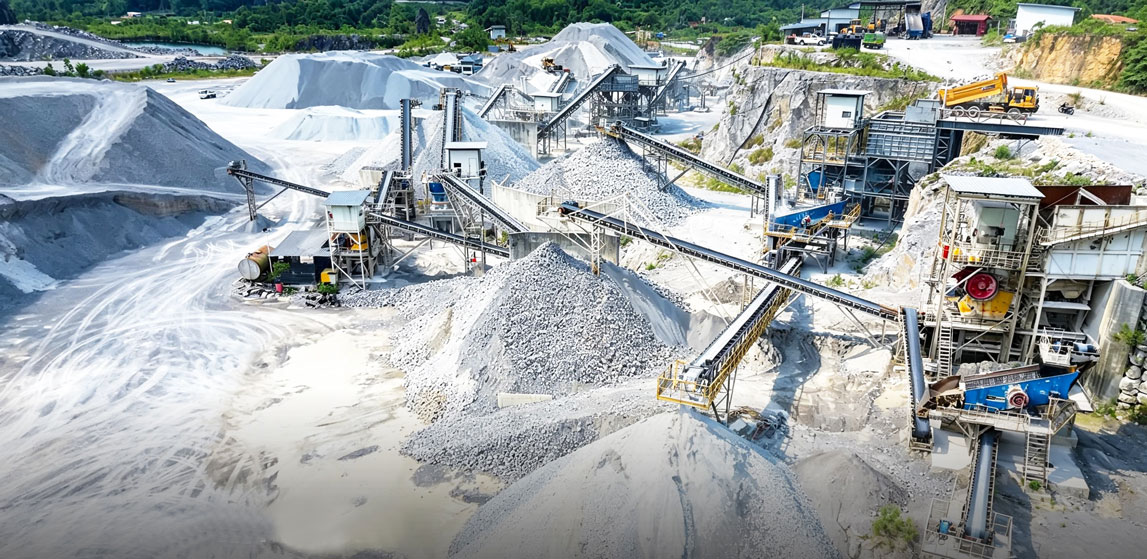
When evaluating a stone crushing plant for sale, buyers often focus on crusher capacity, screening equipment, and the number of crushing stages. However, the conveyor layout can also have a significant effect on overall plant efficiency. Conveyors connect crushers, screens, stockpiles, and other processing stages, so poor material flow can create bottlenecks even when the individual machines have sufficient capacity. A practical plant layout should therefore be designed around continuous material movement, transfer points, stockpile positions, and future operating requirements.
Why Material Flow Matters in a Stone Crushing Plant
A stone crushing plant for sale normally processes material through several stages, such as feeding, primary crushing, secondary or tertiary crushing, screening, and stockpiling. Each stage depends on the previous one delivering material at a suitable rate.
If the conveyor between two stages is undersized, poorly positioned, or frequently blocked, the crusher or screen may have to operate below its intended capacity. Conversely, unnecessarily long conveyor routes can increase equipment investment, power consumption, maintenance requirements, and material transfer points.
A basic material flow may look like:
Raw Stone → Feeder → Primary Crusher → Secondary Crusher → Screen → Finished Aggregate Stockpiles
The conveyor system should support this flow with as few unnecessary transfers and interruptions as practical.
How Conveyor Layout Influences Plant Efficiency
Conveyor layout affects more than material transportation. It influences how smoothly the entire crushing circuit operates.
- Material transfer: Proper conveyor positioning reduces unnecessary material handling between processing stages.
- Crusher utilization: Stable material delivery helps crushers maintain a consistent feed.
- Screen efficiency: Even feed distribution can improve screening performance and reduce overload.
- Stockpile management: Well-positioned discharge conveyors make it easier to separate and store different aggregate sizes.
- Maintenance access: Adequate space around conveyors and transfer points makes inspection and maintenance easier.
For this reason, conveyor design should be considered during the initial plant layout rather than added after the main equipment has already been selected.
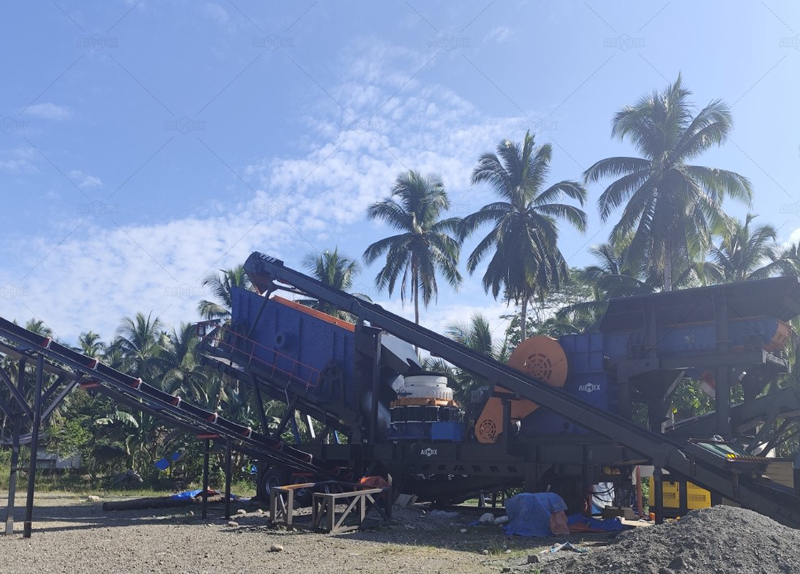
Design the Conveyor Layout Around the Crushing Process
The first step in designing material flow is to establish the required crushing process. A hard-rock project, for example, may use a jaw crusher for primary reduction, followed by a cone crusher and vibrating screen. A softer material may use an impact crusher instead.
Once the crushing stages are established, conveyors can be arranged to connect each stage according to the actual material flow.
For a typical multi-stage plant:
Hopper → Feeder → Jaw Crusher → Transfer Conveyor → Cone Crusher → Screen → Product Conveyors
If the screening stage operates in a closed circuit, an additional conveyor may return oversize material from the screen to the secondary crusher.
Screen Oversize → Return Conveyor → Secondary Crusher
This return route should be considered when determining the required conveyor capacity because recirculated material increases the amount of material moving through part of the circuit.
Minimize Unnecessary Transfer Points
Every transfer point creates another location where material can spill, generate dust, wear components, or require maintenance. Excessive transfers can also increase the vertical and horizontal distance that material must travel.
A more efficient layout generally keeps conveyors as direct as practical while maintaining safe access and suitable discharge positions. Transfer chutes should also be designed to guide material smoothly onto the receiving conveyor instead of allowing excessive impact or material accumulation.
This is particularly important when processing abrasive stone. Repeated impact at poorly designed transfer points can accelerate wear on chutes, conveyor belts, and other components.
Consider Conveyor Capacity and Material Recirculation
Conveyor capacity should be matched to the actual material flow rather than simply the rated capacity of the main crusher. In a closed-circuit plant, some material may pass through the crushing and screening stages multiple times before becoming a finished product.
For example, a plant producing several aggregate sizes may screen the crushed material into 0–5 mm, 5–10 mm, and 10–20 mm products while returning larger particles to the crusher. The conveyor carrying the return material must accommodate this additional load.
When planning a stone crusher plant setup cost, the conveyor system should therefore be included in the calculation along with crushers, screens, feeders, electrical systems, structural supports, installation, and other auxiliary equipment. A low initial equipment price does not necessarily mean a low total project cost if the material handling system is poorly matched to production requirements.
How Conveyor Layout Affects Stone Crusher Plant Setup Cost
Conveyor length, elevation, support structures, transfer towers, drives, belts, and electrical components all contribute to project investment. A complicated layout with long conveyors and multiple transfer points can increase both installation and operating costs.
However, minimizing conveyor length should not be the only objective. A slightly longer conveyor may provide better access, safer maintenance, easier stockpile management, or more flexible future expansion.
The practical goal is to balance:
- Material travel distance
- Conveyor capacity
- Elevation changes
- Number of transfer points
- Maintenance access
- Stockpile locations
- Future production requirements
This approach provides a more realistic basis for estimating the total stone crusher plant setup cost.
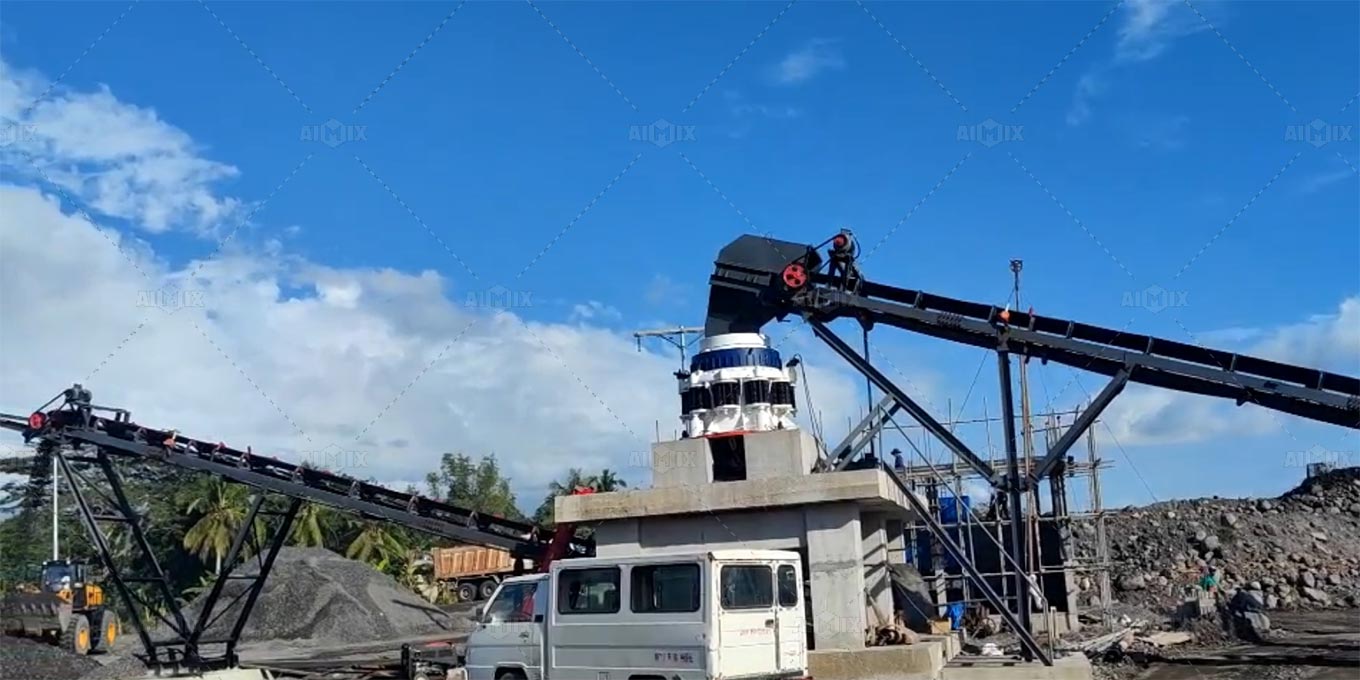
What to Consider When Planning a Stone Crushing Plant Business
A stone crushing plant business plan should consider material flow as part of production planning rather than treating conveyors as secondary equipment. The expected raw material supply, target production, aggregate specifications, stockpile capacity, and truck access all influence the plant layout.
For example, if a project requires several finished aggregate sizes, separate discharge conveyors and stockpile areas may be necessary. If trucks must frequently access the stockpiles, conveyor discharge positions should be arranged to reduce interference with loading and internal traffic.
Future expansion should also be considered. Leaving suitable space for an additional crusher, screen, conveyor, or stockpile can reduce the difficulty of modifying the plant later.
How to Set Up a Stone Crusher Plant With Efficient Material Flow
When determining how to set up a stone crusher plant, start with the material and finished product requirements rather than selecting machines independently.
- Define the feed material: Identify rock type, maximum feed size, hardness, abrasiveness, and expected feed variation.
- Set production targets: Establish required finished aggregate capacity and product sizes.
- Select the crushing process: Determine the appropriate primary, secondary, and tertiary crushing stages.
- Plan screening: Establish the number of finished products and whether oversize material will be recirculated.
- Map material flow: Position crushers, screens, conveyors, and stockpiles to create a practical process route.
- Check conveyor capacity: Include both normal feed and recirculated material when applicable.
- Evaluate access and maintenance: Ensure transfer points, drives, screens, and crushers can be safely inspected and serviced.
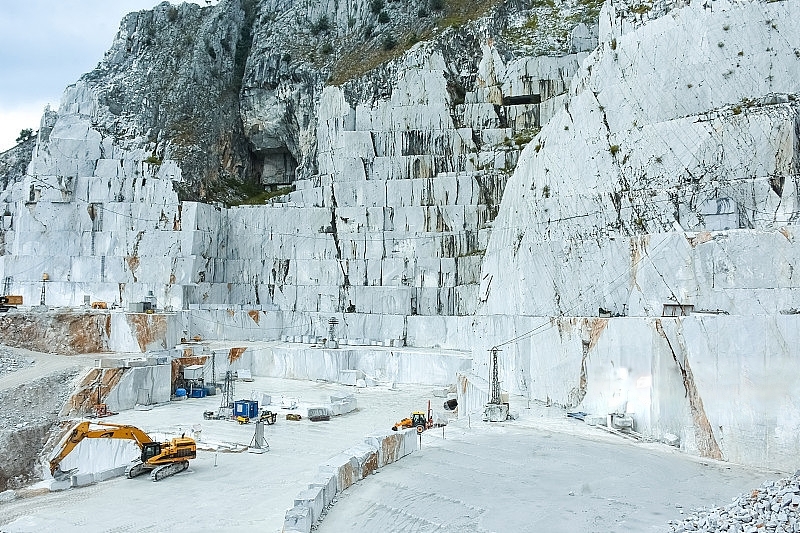
Build the Plant Around the Complete Material Flow
A stone crushing plant should be treated as one interconnected production system rather than a collection of individual machines. Crushers determine how material is reduced, screens determine how it is separated, and conveyors determine how efficiently material moves between these stages.
For anyone comparing a stone crushing plant for sale, conveyor layout should therefore be included in the technical and financial evaluation. A well-planned material flow can reduce unnecessary handling, support stable crusher and screen operation, simplify stockpile management, and provide a more practical foundation for long-term production.
What Is The ROI Of A 100 TPH Asphalt Plant For An Asphalt Paving Company?
For an asphalt paving company, buying a 100 TPH asphalt plant is not simply a decision about equipment. It is a decision about where asphalt supply comes from, how much material the company can control, and how reliably it can support paving projects. A 100 TPH plant can produce up to 100 tons of asphalt mix per hour under suitable operating conditions. However, the real return on investment depends on how often the plant runs, how much the company currently pays for purchased asphalt, transport distance, fuel and energy costs, maintenance, labor, and the volume of paving work available. Therefore, the right ROI question is not “How much does a 100 TPH asphalt plant make?” but rather “How much additional margin and operational value can this plant create for my paving business?”
That distinction matters because two paving companies can buy the same 100 TPH asphalt plant and achieve very different financial results. One company may operate the plant several days a week and supply multiple road projects. Another may only use it for a few short projects each month. As a result, production capacity alone does not determine ROI. Utilization and the local asphalt supply situation matter just as much.
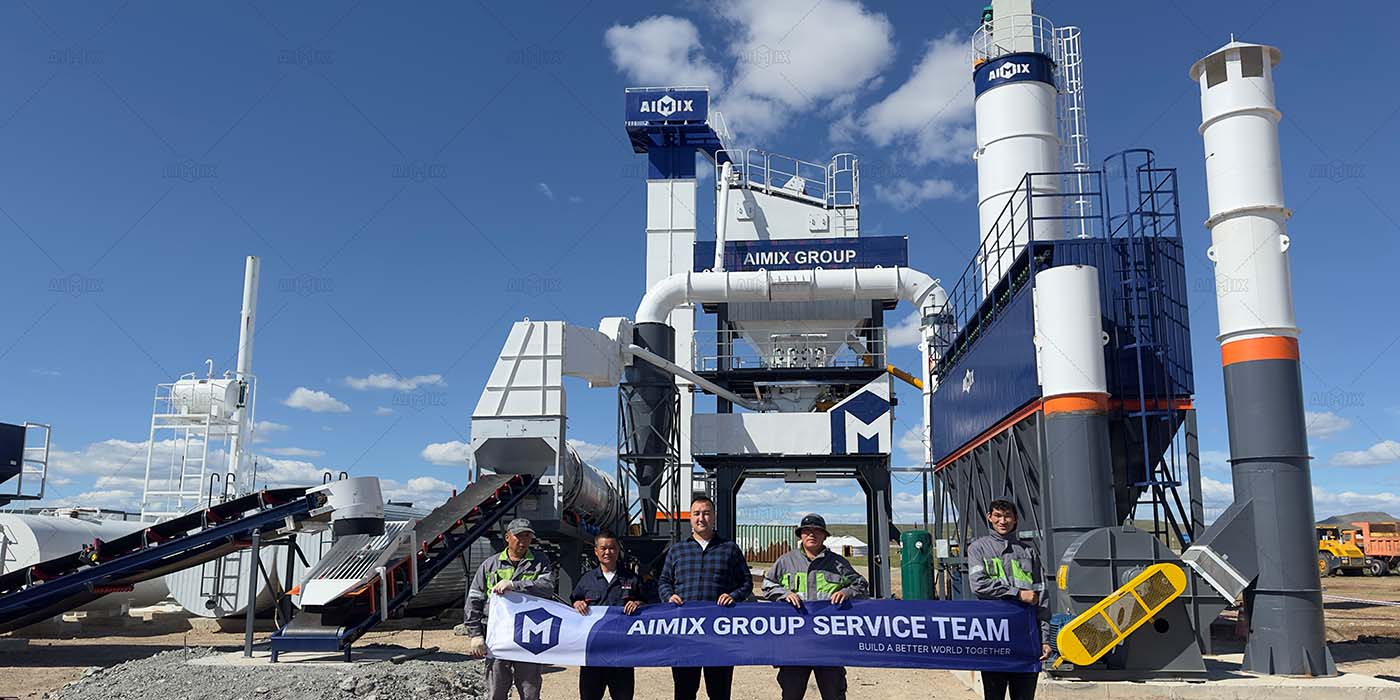
Why A 100 TPH Asphalt Plant Can Change A Paving Company’s Cost Structure
Before calculating ROI, it helps to understand where the financial benefit comes from. A paving contractor normally buys asphalt mix from an external supplier or obtains it from a plant located near the project. The delivered price includes more than aggregate, bitumen, and production. It can also include transportation, supplier margin, loading, waiting time, and other logistics costs.
When a paving company produces its own asphalt mix, some of these costs move inside the company. The business still pays for raw materials, fuel, electricity, labor, maintenance, and plant operation. However, it gains more control over production and scheduling. Therefore, the economic benefit comes from the difference between the cost of producing a ton internally and the total delivered cost of purchasing that ton.
This is the first number an asphalt paving company should calculate. Once the saving per ton is known, the next step is to estimate realistic annual production. For contractors comparing an asphalt plant for sale, this calculation also helps determine whether the proposed capacity matches actual project demand.
Production Capacity Is Not The Same As Annual Production
A 100 TPH asphalt plant has a nominal production capacity of 100 tons per hour. That does not mean it will produce 100 tons every hour of the year. Real projects involve setup time, material loading, maintenance, weather interruptions, job changes, and periods when no paving work requires asphalt.
For example, if a company runs the plant for 6 productive hours per day, the theoretical daily output is:
If the plant operates for 120 productive days in a year, the theoretical annual production would be about 72,000 tons. The actual figure can be lower because the plant may not operate at full rated capacity throughout every production period.
Therefore, it is better to build an ROI model around actual project demand rather than the maximum nameplate capacity.
How Much Asphalt Can A 100 TPH Plant Produce?
The answer depends on operating hours and utilization. This is important for paving companies because project schedules rarely remain constant throughout the year. A contractor may have several months with heavy roadwork and other periods with much lower demand.
| Operating Scenario | Operating Hours | Nominal Daily Output | Annual Production At 120 Days |
|---|---|---|---|
| Short production shift | 4 hours/day | 400 tons/day | 48,000 tons/year |
| Moderate production shift | 6 hours/day | 600 tons/day | 72,000 tons/year |
| Long production shift | 8 hours/day | 800 tons/day | 96,000 tons/year |
These figures are simple capacity calculations, not guaranteed production. Actual output depends on aggregate moisture, mix design, plant configuration, loading efficiency, fuel, maintenance, site conditions, and operating practice.
More importantly, the paving company should compare these numbers with its own asphalt consumption. If the company only needs 20,000 tons per year, a 100 TPH plant may have significant unused capacity. If it regularly consumes 50,000 to 80,000 tons per year, the plant has more opportunity to spread its fixed investment across a larger production volume.
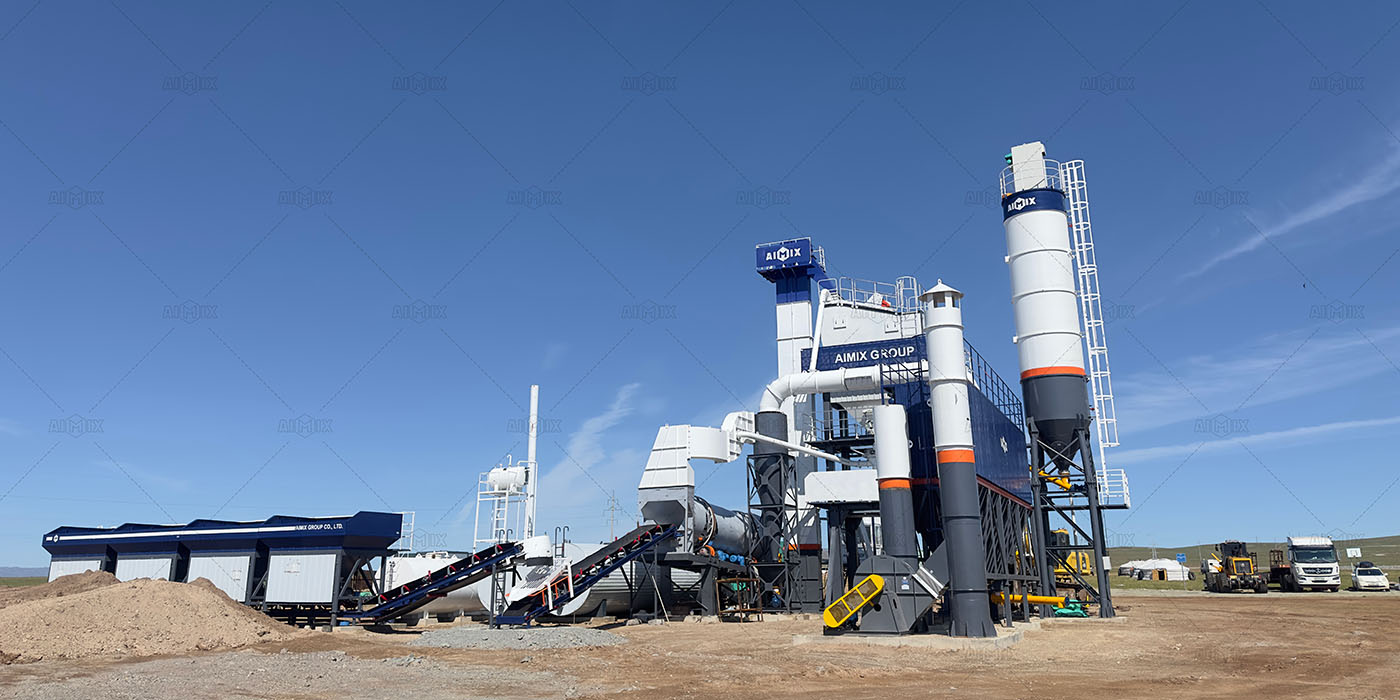
What Determines The ROI Of A 100 TPH Asphalt Plant?
Once production demand is established, the ROI calculation becomes much clearer. Several variables directly affect the result. Because these variables differ from one market to another, an asphalt plant should not be evaluated using a single universal payback number.
1. Annual Asphalt Demand
Annual demand is usually the starting point. A paving contractor should review its recent project records and estimate how many tons of asphalt it buys or consumes each year.
- Total asphalt purchased during the last 12 to 24 months.
- Expected asphalt volume from current contracts.
- Potential production volume from future projects.
- Seasonal changes in paving activity.
- Potential third-party asphalt sales when internal demand is low.
If the company can consistently consume a large share of its own production capacity, the fixed cost of the plant can be distributed across more tons. In contrast, low utilization increases the investment cost per ton.
2. Purchased Asphalt Price
The local delivered asphalt price has a major effect on ROI. A company should not compare its plant production cost with the supplier’s factory price alone. The relevant comparison is the price the paving company actually pays to receive asphalt at the job site or its required delivery point.
For example, a supplier may offer asphalt at a competitive plant-gate price. However, a long haul can add a significant transport component. Waiting time can also affect truck utilization and project productivity. Therefore, transportation can become an important part of the business case for an in-house plant.
3. In-House Production Cost
Producing asphalt internally does not mean producing it for free. The company must calculate all major operating expenses.
- Aggregate and mineral filler.
- Bitumen or asphalt binder.
- Fuel or energy for heating and drying.
- Electricity.
- Plant operators and supporting labor.
- Routine maintenance.
- Wear parts and replacement components.
- Loader operation and aggregate handling.
- Quality control and testing.
- Site costs and other operating expenses.
The calculation becomes more reliable when these costs are converted into a cost per ton. That figure can then be compared directly with the delivered purchase price. For paving companies that need consistent hot asphalt production, a properly selected hot mix asphalt plant should therefore be evaluated together with its expected fuel, material, labor, and maintenance costs.
How To Calculate The Potential Annual Savings
After calculating the production cost, the next step is straightforward. Multiply the potential saving per ton by the number of tons produced for the company’s own paving projects.
Consider an illustrative example. Suppose a paving company currently pays an average delivered cost of $70 per ton for asphalt. After accounting for aggregate, bitumen, fuel, electricity, labor, maintenance, and other operating costs, its estimated in-house production cost is $58 per ton.
The potential difference would be:
If the company produces 50,000 tons for its own projects during a year, the theoretical annual operating saving would be:
This is not the same as net profit. The company still needs to account for financing, depreciation, taxes, insurance, site preparation, plant installation, and other ownership costs. However, it gives the management team a useful starting point for investment analysis.
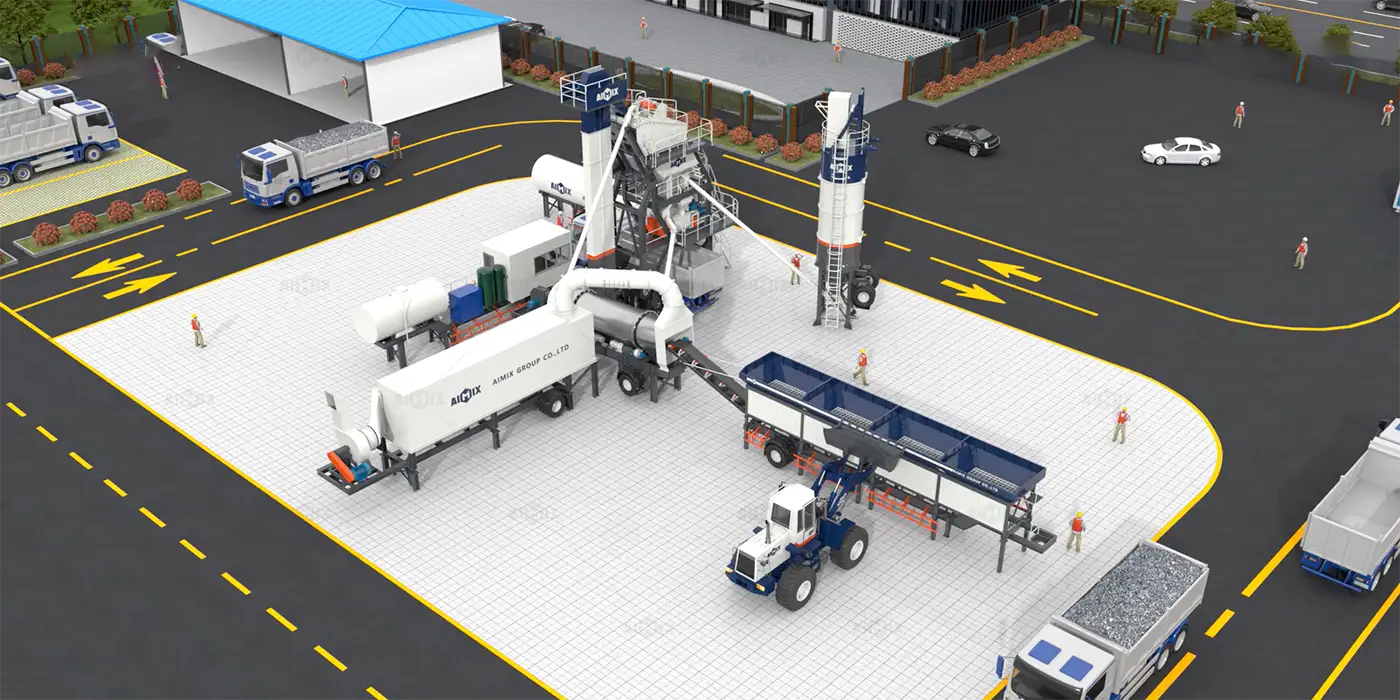
Why Transportation Can Have A Major Effect On ROI
For many paving companies, asphalt logistics are as important as asphalt production. A plant located far from the project can increase truck requirements and create delivery risks. The problem becomes more noticeable when paving crews must maintain a continuous paving operation.
If asphalt trucks arrive too slowly, the paver may need to reduce its speed or stop. That can affect crew productivity and project scheduling. On the other hand, producing asphalt closer to the paving operation can reduce haul distance when the plant location is properly selected.
However, a local plant is not automatically cheaper. The company should compare the complete logistics chain, including aggregate transport, bitumen delivery, finished mix haulage, loader movement, and site access.
Shorter Haul Distance Can Improve Operational Control
The financial benefit may therefore extend beyond the direct price difference per ton. A paving contractor can potentially gain more control over delivery timing and production scheduling. This can be especially useful for large road projects where asphalt demand changes throughout the day.
In other words, ROI can include both measurable cost savings and operational improvements. The second category should be quantified where possible instead of being treated as a vague benefit.
What Does The Payback Period Look Like?
The payback period shows how long it may take for cumulative operating benefits to recover the initial investment. It is one of the simplest metrics for management teams to understand.
For example, assume a company invests $500,000 in an asphalt plant project. This figure is only an illustration and may include the plant and selected project costs. Suppose the calculated annual net operating benefit reaches $250,000 after operating expenses and other relevant annual costs.
Under these assumptions, the simple payback period would be approximately two years. However, management should not treat this as a guaranteed two-year return. If asphalt demand falls, production utilization drops, fuel costs rise, or maintenance expenses increase, the actual payback period will change.
What Investment Costs Should A Paving Company Include?
A common mistake is to calculate ROI from the equipment purchase price alone. A realistic investment model should include the complete project cost.
- Asphalt plant purchase price.
- Shipping and import costs where applicable.
- Foundation or site preparation.
- Electrical installation.
- Fuel storage and supply systems.
- Aggregate storage and handling equipment.
- Environmental and dust-control systems.
- Installation and commissioning.
- Initial spare parts and maintenance items.
- Operator training.
- Testing and quality-control equipment.
- Permits and local compliance costs.
The exact list depends on the country, plant configuration, site conditions, and local regulations. Therefore, a supplier quotation should be reviewed as a complete project proposal rather than as a single equipment price.
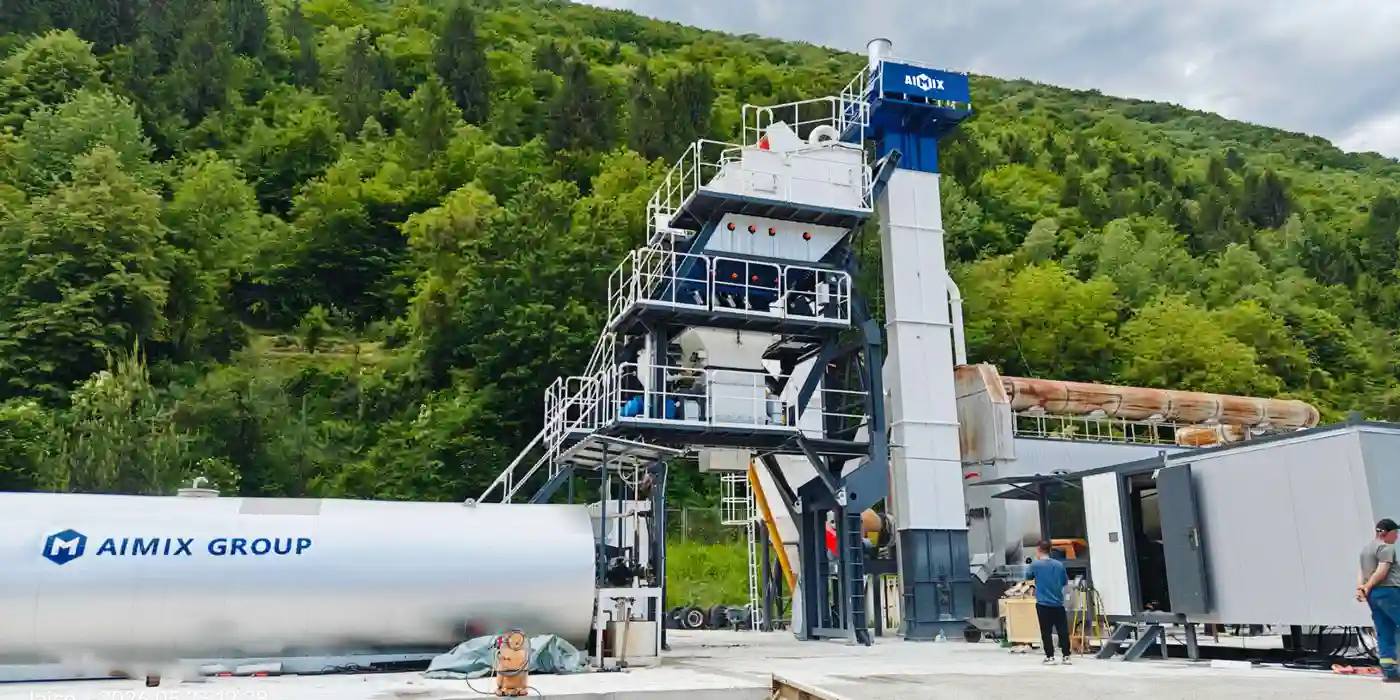
When Does A 100 TPH Asphalt Plant Make More Financial Sense?
The strongest business case usually appears when a paving company has a relatively stable flow of asphalt-intensive projects. This does not necessarily mean the plant must operate every day. Instead, the company needs enough annual production to make good use of the equipment.
Several situations deserve closer analysis.
Multiple Road Projects In The Same Region
A contractor working on several road, highway, municipal, or industrial paving projects can potentially use the same plant across multiple contracts. This improves annual utilization and reduces dependence on one project.
High Delivered Asphalt Costs
If purchased asphalt carries a high transportation component, an in-house plant may create a larger cost difference. The contractor should calculate the actual delivered cost rather than relying on a supplier’s advertised plant-gate price.
Frequent Asphalt Supply Constraints
Supply availability can also influence the investment case. If external suppliers have limited production windows, long delivery distances, or tight schedules during peak construction periods, owning production capacity can provide greater control over project planning.
Opportunity To Sell Surplus Asphalt
A paving company does not necessarily need to consume every ton of its production. Where regulations, market demand, and business strategy allow, surplus production can potentially serve other contractors or projects. This can increase plant utilization.
However, third-party sales require their own analysis. The company needs to consider credit risk, logistics, quality requirements, customer management, and additional sales costs.
When Should A Company Be Careful About The Investment?
Owning an asphalt plant also introduces new responsibilities. Therefore, a paving contractor should test the downside scenario before making the investment.
For example, if annual asphalt demand is highly uncertain, the plant may operate below its practical utilization level. Fixed ownership costs then become a larger cost per ton. The company also takes responsibility for maintenance, raw material procurement, quality control, environmental compliance, and plant operation.
A useful sensitivity analysis can test at least three production scenarios.
| Scenario | Annual Production | Illustrative Saving/Ton | Illustrative Annual Gross Saving |
|---|---|---|---|
| Lower Utilization | 30,000 tons | $10/ton | $300,000 |
| Moderate Utilization | 50,000 tons | $12/ton | $600,000 |
| Higher Utilization | 70,000 tons | $12/ton | $840,000 |
The values above are illustrative only. Actual savings depend on local aggregate and bitumen prices, energy consumption, plant utilization, transport costs, labor, maintenance, financing, and other project-specific factors.
This scenario approach is more useful than relying on one optimistic ROI calculation. If the investment remains workable under a lower-production scenario, the company has a clearer understanding of its financial exposure.
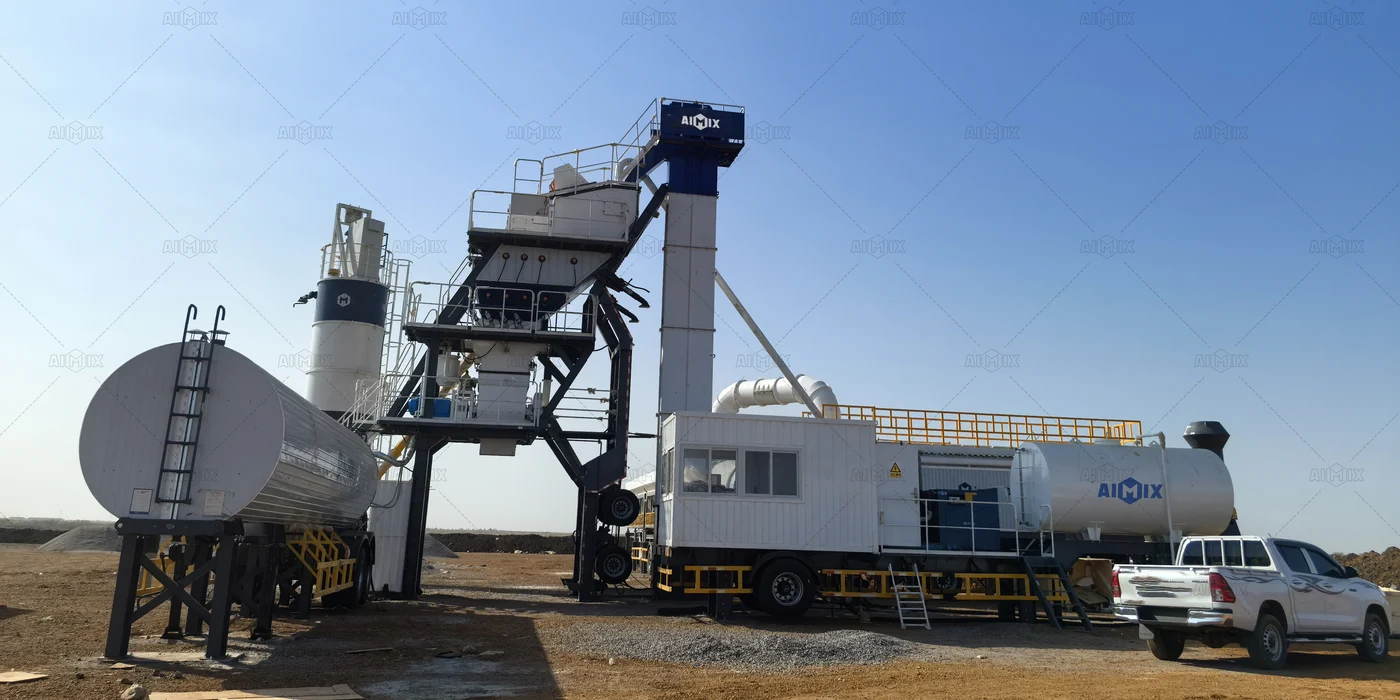
How Plant Type And Configuration Affect The Business Case
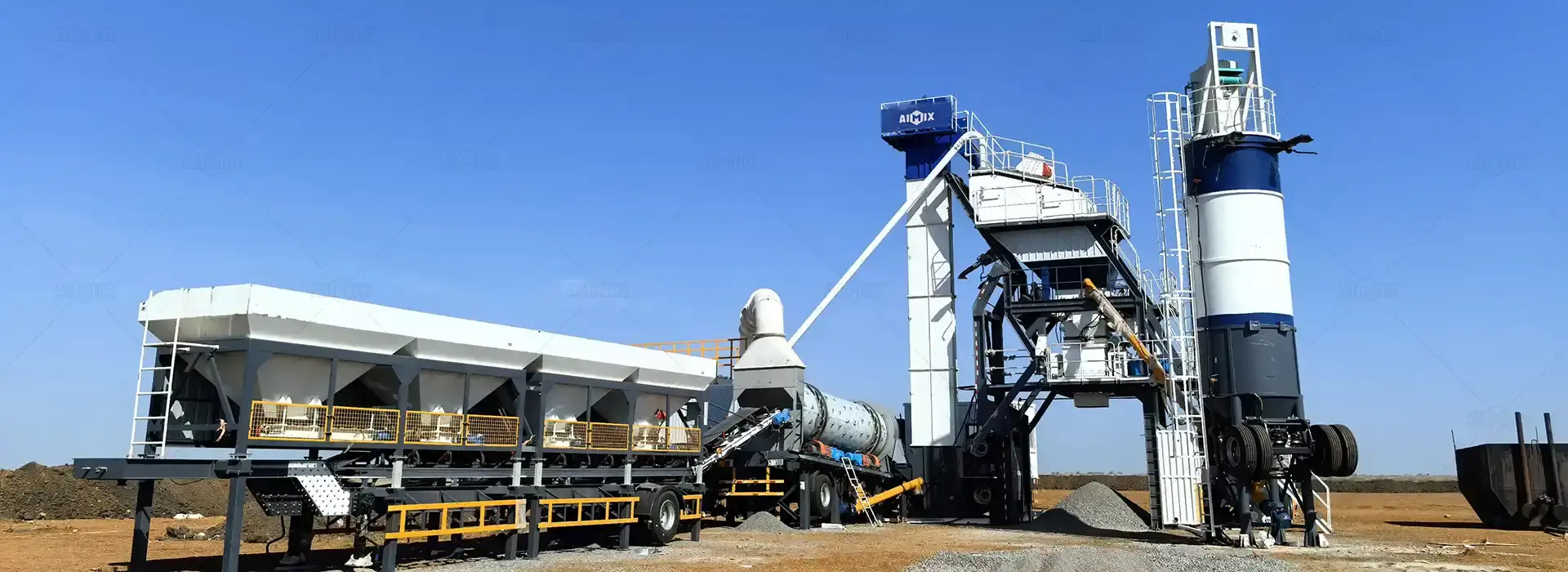
A 100 TPH asphalt plant can use different configurations depending on the contractor’s project requirements. A stationary batch plant may suit a company with a long-term production site and relatively stable demand. A mobile asphalt batch plant can offer greater flexibility when the contractor moves between projects or needs to establish production closer to different work areas.
For companies that expect to move production between road projects, a mobile asphalt batch mix plant can be evaluated as part of the ROI calculation. The key question is not simply whether the plant can move. Instead, the contractor should calculate whether relocation, setup time, transport, and reduced permanent site requirements create enough value for its actual project pattern.
The decision should therefore connect plant configuration with project duration and location. A contractor should not choose mobility simply because it sounds more flexible. The company should calculate whether relocation, setup time, transport, and reduced site infrastructure provide enough value for its actual project pattern.
Batch Production Can Also Support Mix Flexibility
For paving companies working with different asphalt specifications, batch production can provide a practical advantage. The plant can produce controlled batches according to the required mix design. This can be useful when projects require different aggregate gradations or binder specifications.
Nevertheless, the plant should be selected according to the company’s actual mix requirements. More features do not automatically create a higher ROI. The right configuration is the one that supports the company’s production and project requirements without unnecessary capital expenditure.
ROI Should Include More Than Direct Cost Savings
Direct production savings are usually the easiest part of the calculation. Yet a paving company’s investment decision can also involve several operational factors.
- Scheduling: Production can be coordinated more closely with paving operations.
- Supply control: The company has greater control over when asphalt production starts and stops.
- Project flexibility: Production can be planned around different project requirements.
- Transport planning: Plant location can be selected with project logistics in mind.
- Business expansion: Additional production capacity may support new contracts where legally and commercially practical.
- Quality management: The contractor can directly manage key parts of the asphalt production process.
These factors should not be assigned an arbitrary dollar value. Instead, the company should identify which ones can be measured. For example, reduced truck waiting time can be converted into equipment-hour savings. Reduced haul distance can be calculated from fuel and truck operating costs. Better scheduling can be evaluated through actual project productivity.
What Questions Should A Paving Company Ask Before Buying?
A good ROI calculation starts with good project data. Before requesting a quotation, the contractor should prepare several figures from its existing business. Working with an experienced asphalt plant supplier can also help the contractor identify the equipment configuration and supporting systems that match these project conditions.
- How many tons of asphalt does the company purchase each year?
- What is the average delivered asphalt cost per ton?
- How far does asphalt normally travel from the supplier to the paving site?
- How many paving days does the company expect each year?
- How many tons does each major project require?
- How many hours per day can the plant realistically operate?
- What are the local aggregate, bitumen, fuel, and electricity costs?
- Will the plant serve one long-term site or multiple projects?
- Is a stationary or mobile asphalt batch plant better suited to the project pattern?
- What permits and environmental requirements apply to the selected site?
- Who will operate and maintain the plant?
- What technical support and spare parts will be available?
With these answers, the ROI calculation becomes much more specific. Instead of asking whether a 100 TPH asphalt plant is “profitable,” the company can calculate its own production cost, expected utilization, annual benefit, and potential payback period.
Build The ROI Around Your Actual Asphalt Demand
For an asphalt paving company, a 100 TPH asphalt plant can become a major production asset. But its financial value depends on utilization rather than capacity alone. A plant that produces 100 tons per hour for a few hours on selected project days has a very different economic profile from a plant that supports tens of thousands of tons of annual paving work.
The most practical approach is to work backward from your projects. Start with annual asphalt demand. Then calculate your current delivered asphalt cost. Next, estimate the complete in-house production cost. After that, account for plant investment, installation, financing, maintenance, and site costs. Finally, test the result under lower, expected, and higher utilization scenarios.
This process gives the management team a much clearer picture of whether the equipment can support its long-term paving strategy.
Need To Estimate The ROI For Your 100 TPH Asphalt Plant Project?
Every paving company has a different asphalt demand, project distance, material cost, and operating schedule. Therefore, a useful ROI estimate should use your actual project conditions rather than a generic payback promise.
If you are considering a 100 TPH asphalt plant, prepare your expected annual asphalt volume, project locations, operating days, required mix type, and current purchased asphalt cost. These figures can be used to evaluate the suitable asphalt plant configuration, production capacity, operating requirements, and potential investment return.
Does Buying a Concrete Batching Plant Make Sense for a Project Requiring 8,000 m³ of Concrete?
For contractors and developers, 8,000 m³ is a meaningful volume. Yet the right decision still depends on the project duration, daily demand, site location, concrete delivery distance, labor, and whether the equipment can serve future projects. Therefore, this decision should start with the project’s actual concrete demand rather than the concrete plant price alone.
What Does 8,000 m³ of Concrete Mean in Daily Production?
First, divide the total concrete requirement by the planned concrete placement period. This gives a more practical view of the required production capacity.
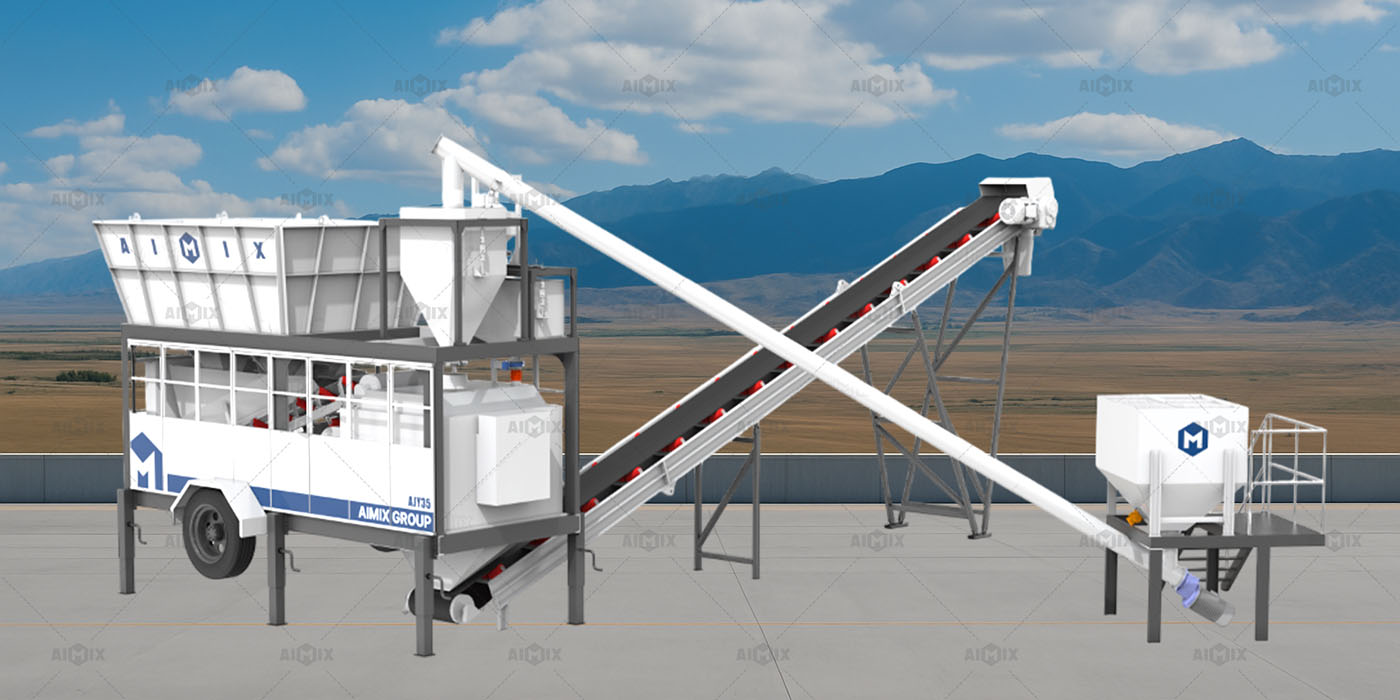
For example, contractors can consider a concrete mixing plant when they need more control over production and want to coordinate concrete output with their own construction schedule.
| Concrete Period | Average Daily Requirement | Possible Plant Capacity |
|---|---|---|
| 60 days | About 133 m³/day | 30–60 m³/h |
| 90 days | About 89 m³/day | 30–60 m³/h |
| 120 days | About 67 m³/day | 30–60 m³/h |
| 180 days | About 44 m³/day | 25–40 m³/h |
These figures are planning references rather than exact production requirements. Construction rarely uses concrete at a perfectly constant rate. A project may need only 30 m³ on one day but 150 m³ during a major slab or foundation pour.
Therefore, contractors should consider both average demand and peak demand. A plant should have enough practical capacity for intensive pouring periods without being unnecessarily oversized for the rest of the project.
When Does Buying a Batching Plant Make More Sense?
The answer becomes clearer when you look at the operational problems behind concrete procurement. An 8,000 m³ project may benefit from an in-house plant when several of these conditions exist.
1. The Project Has a Short Construction Schedule
If the project needs 8,000 m³ within two or three months, concrete demand can become highly concentrated. Major foundations, columns, beams, slabs, and other structures may require large volumes within short time windows.
In this situation, depending entirely on an external ready-mix supplier can create scheduling pressure. The supplier may have other projects. Truck availability can also change. Traffic can further increase delivery time.
With an on-site batching plant, the contractor has more control over production timing. Concrete can be produced according to the actual pouring schedule. Consequently, the plant becomes part of the project’s production system rather than simply another machine on site.
2. The Construction Site Is Far From Commercial Batching Plants
Distance is another major factor. If a commercial supplier is far from the project, transportation can add both cost and uncertainty to every cubic meter. This becomes more important when the project requires frequent concrete deliveries.
For projects that need consistent ready-mix production, a ready mixed concrete plant can provide an integrated production point closer to the construction site.
If the nearest commercial concrete supplier is far away, every cubic meter may involve significant transportation time and cost. Long delivery routes also make traffic, road conditions, and truck availability more important.
For remote projects, an on-site batching plant can shorten the concrete supply chain. Aggregates, cement, water, and admixtures come to the project site, while finished concrete travels only a short distance to the pouring location.
This can be particularly useful for projects in remote areas, industrial zones, islands, mining areas, resorts, and infrastructure projects where commercial ready-mix coverage is limited.
3. The Contractor Needs Better Control Over Concrete Supply
Concrete quality depends on more than the concrete mix design. Production timing, material storage, batching accuracy, mixing, transportation, and placement all matter.
Owning a batching plant gives the contractor greater control over these steps. The team can coordinate production with concrete pumps, mixer trucks, workers, and the construction schedule.
For example, if a large foundation requires 120 m³ of concrete in one day, the contractor can organize aggregate, cement, water, admixture, mixer trucks, and pumping capacity around that specific operation.
How Much Concrete Can a 30–60 m³/h Plant Produce?
Plant capacity is often misunderstood. A 60 m³/h rating does not mean the plant will produce 60 m³ every hour for the entire working day.
Actual output depends on loading, material availability, mixing cycle, truck changes, site conditions, operator efficiency, and other factors.
Example: 8,000 m³ Over 90 Days
Suppose the project needs 8,000 m³ over 90 days.
The average requirement is about:
8,000 ÷ 90 = 88.9 m³/day
If the plant operates for four effective production hours per day, a 30 m³/h plant has a nominal production capacity of about 120 m³/day. A 50 m³/h plant would have a nominal capacity of about 200 m³/day.
This does not mean the contractor must buy a 50 m³/h plant. Instead, it shows why production capacity should be matched with the construction schedule and peak pouring requirements.
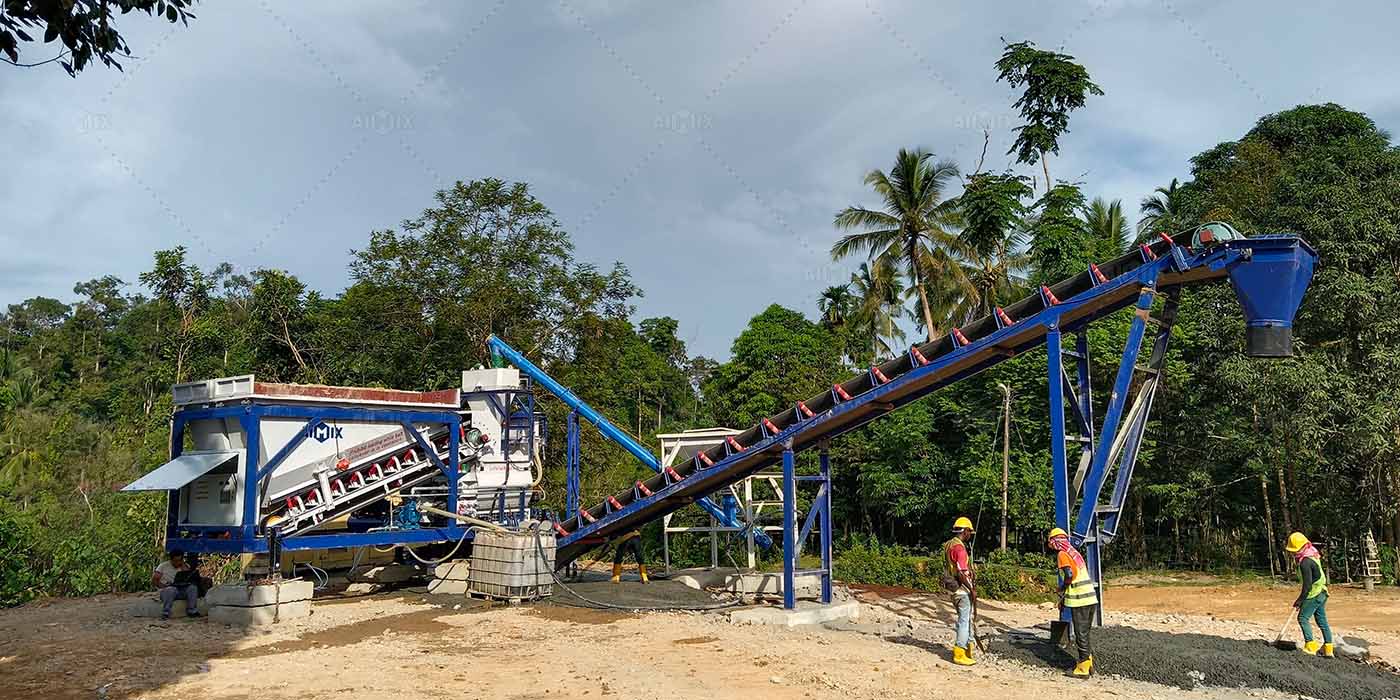
Buying vs. Purchasing Ready-Mix Concrete
The comparison should not focus only on the equipment purchase price. Contractors should compare the complete cost and operational risks of both options.
| Factor | Own Batching Plant | Buy Ready-Mix Concrete |
|---|---|---|
| Initial investment | Higher | Lower |
| Concrete supply control | Higher | Depends on supplier |
| Transportation distance | Can be reduced | Depends on supplier location |
| Production flexibility | High | Depends on supplier capacity |
| Future project use | Possible | No equipment asset |
| Operation responsibility | Contractor manages production | Supplier manages production |
Therefore, the cheaper option on day one is not always the lower-cost option across the entire project. Contractors should calculate the total cost per cubic meter under both scenarios.
What Costs Should Be Included in the Calculation?
A realistic calculation should include more than the batching plant purchase price.
Equipment Cost
Start with the batching plant itself. Then include the required configuration, such as cement silos, screw conveyors, aggregate bins, control systems, and other supporting equipment.
At this stage, it is also useful to contact a concrete batching plant supplier for a project-specific quotation rather than relying only on a general online price range.
Site Preparation and Installation
The site may require foundations, electrical connections, water supply, access roads, drainage, and installation work. These costs vary according to local site conditions.
Material and Production Costs
Cement, aggregates, water, admixtures, electricity, fuel, labor, and maintenance all contribute to the actual production cost.
Concrete Transportation
Even with an on-site batching plant, concrete still needs to reach the pouring point. Mixer trucks or other concrete transport equipment may therefore remain necessary.
Plant Utilization After the Project
This is an important part of the calculation.
If the contractor can move the plant to another project after completing the 8,000 m³ job, the equipment has value beyond the current contract. A mobile or compact batching plant can be especially useful for contractors who frequently move between projects.
What If the Project Needs Concrete in Different Construction Areas?
Project layout also affects the decision.
For a large construction site, a batching plant located close to the main work area can reduce internal transportation time. For projects with several separated work zones, however, a mobile or compact solution may provide greater flexibility.
For example, road construction, bridges, housing developments, industrial projects, and remote infrastructure projects may not have the same concrete logistics. Therefore, the best plant configuration should follow the site rather than forcing the site to follow the equipment.
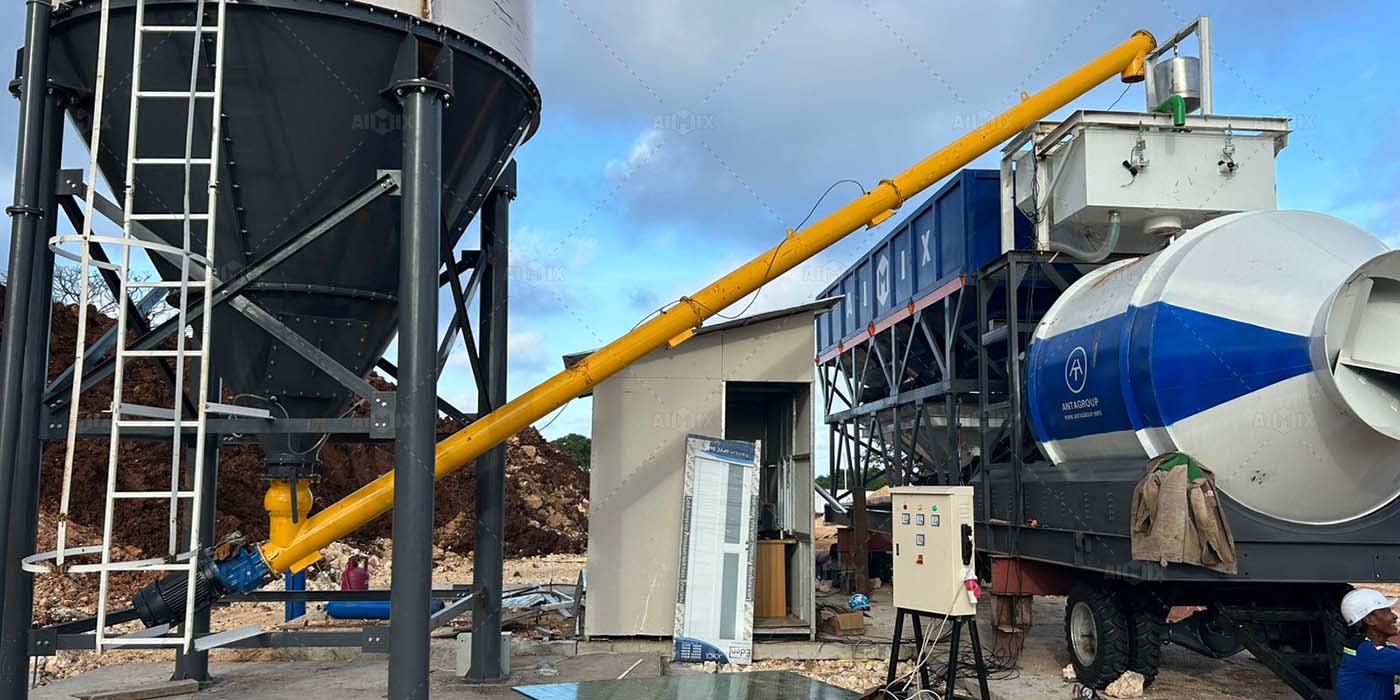
Could a Fast-Installation Plant Be Useful for an 8,000 m³ Project?
When time is limited, installation speed becomes part of the project economics.
A fast installation mobile batching plant can reduce the time between equipment arrival and concrete production. This can matter when the construction schedule is already tight.
For example, AIMIX AJQ fast-installation batching plants are available in capacities such as 50, 70, 100, and 150 m³/h. The suitable capacity depends on the project’s actual peak demand rather than the total 8,000 m³ volume alone.
For projects that may relocate after completion, a mobile or compact configuration can also be considered. This allows contractors to think beyond one construction contract.
When Might Buying a Plant Not Make Sense?
Buying equipment is not automatically the right solution for every 8,000 m³ project.
If the project lasts a long time and requires only a small amount of concrete each day, a large plant may remain underutilized. Similarly, if a reliable ready-mix supplier operates close to the site and can guarantee the required delivery schedule, external supply may reduce the contractor’s equipment management responsibilities.
Furthermore, contractors should consider whether they have trained operators, material storage space, maintenance resources, and suitable access for the equipment.
In short, the total concrete volume is only one part of the decision.
A Practical Break-Even Check for 8,000 m³
Contractors can start with a simple calculation.
Potential saving per m³ = Ready-mix delivered cost − In-house production cost
Then estimate:
Total potential operating saving = Potential saving per m³ × 8,000 m³
Next, compare this amount with the total cost of owning and operating the plant. Include depreciation or resale value, installation, labor, electricity, maintenance, transport, and other project-specific expenses.
The calculation becomes even more useful when the plant can serve additional projects. In that case, the 8,000 m³ project does not need to recover the entire equipment investment by itself.
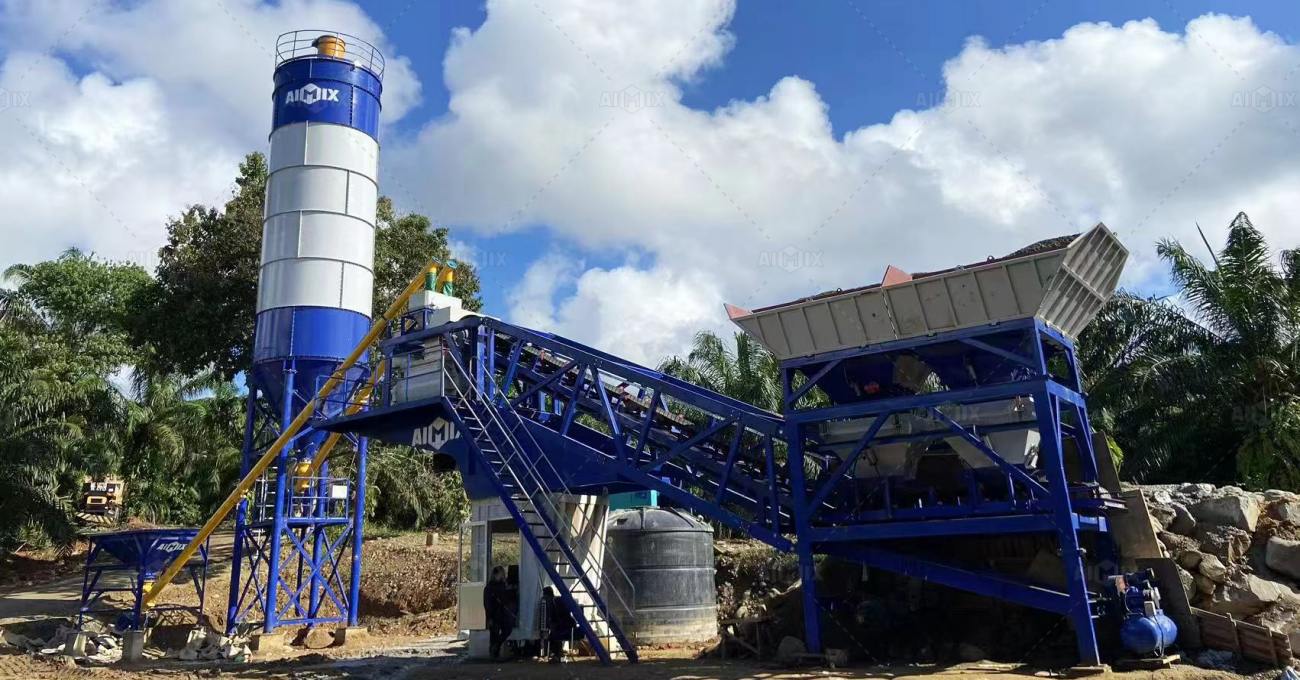
What Plant Capacity Is Reasonable for 8,000 m³?
There is no single capacity that fits every 8,000 m³ project.
However, many projects in this range can start their evaluation with compact capacities such as 30, 40, 50, or 60 m³/h. The final choice should depend on the maximum concrete volume required during the busiest pouring periods.
For example, a project with moderate daily demand may not need a high-capacity plant. In contrast, a project with several large concrete pours may need more capacity to shorten the production window.
Therefore, do not select a plant simply because its hourly capacity looks impressive. Select it because the capacity fits the project’s actual production rhythm.
Key Questions to Ask Before Buying
Before placing an order, contractors should answer several practical questions:
- How many cubic meters of concrete are needed each day?
- What is the maximum concrete volume required in one day?
- How many cubic meters may be required during the largest single pour?
- How far is the nearest reliable ready-mix supplier?
- How much does delivered ready-mix concrete currently cost?
- What is the expected in-house production cost per cubic meter?
- How long will the batching plant operate on this project?
- Can the plant be moved to another project afterward?
- Is there enough space for aggregate and cement storage?
- Who will operate and maintain the plant?
Once these questions are answered, the buying decision becomes much more concrete. Instead of asking whether an 8,000 m³ project is “big enough,” the contractor can evaluate the actual economics and logistics.
So, Does Buying a Batching Plant Make Sense?
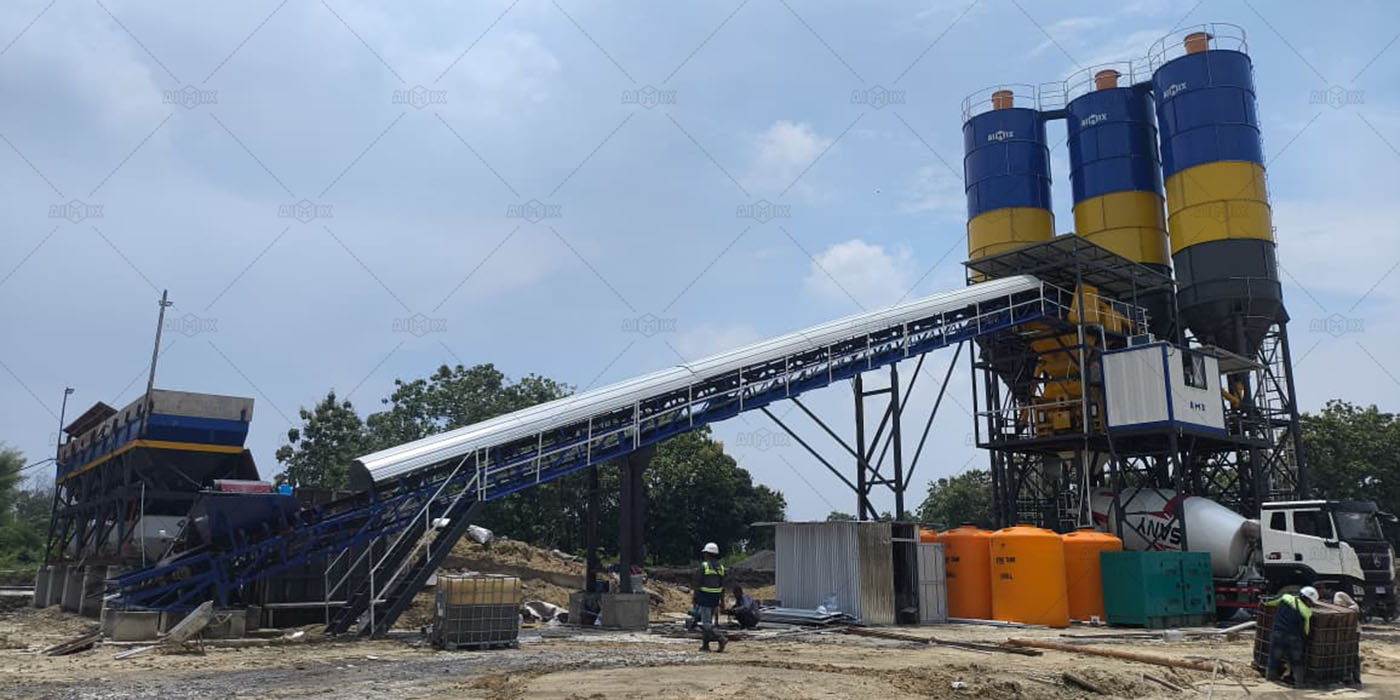
An 8,000 m³ concrete requirement can support the case for an on-site batching plant when the project needs strong supply control, has intensive concrete demand, faces long ready-mix transportation distances, or can reuse the plant on future projects.
On the other hand, the total volume alone does not determine whether buying is economical. Project duration, peak demand, local ready-mix prices, transportation, utilization, installation, and future equipment use all affect the result.
The most practical approach is therefore to calculate the total cost per cubic meter under both options. Then compare that result with the project’s schedule and operational requirements.
Plan Your 8,000 m³ Concrete Supply Around the Project
If you are planning an 8,000 m³ concrete project, AIMIX can help you evaluate the required batching capacity based on your project duration, daily concrete demand, site conditions, and concrete transportation distance.
Instead of selecting a plant only by its rated capacity, you can compare different configurations and determine whether a compact, fast-installation, stationary, or mobile batching plant fits your construction plan.
Share your project location, total concrete volume, construction period, peak daily demand, and expected start date with the AIMIX team. With these details, you can make a more practical equipment and concrete-supply decision before investing in the plant.
Stone Crusher Plant Price: How Different Aggregate Products Influence Crushing Stages, Screening, and Investment
Stone crusher plant price is closely related to the aggregate products a project needs to produce. A plant making simple road base material may require a different configuration from one producing several precisely sized aggregates for concrete or asphalt. The required product sizes determine the number of crushing stages, screening equipment, conveyors, and auxiliary systems, which ultimately influence both initial investment and operating cost.
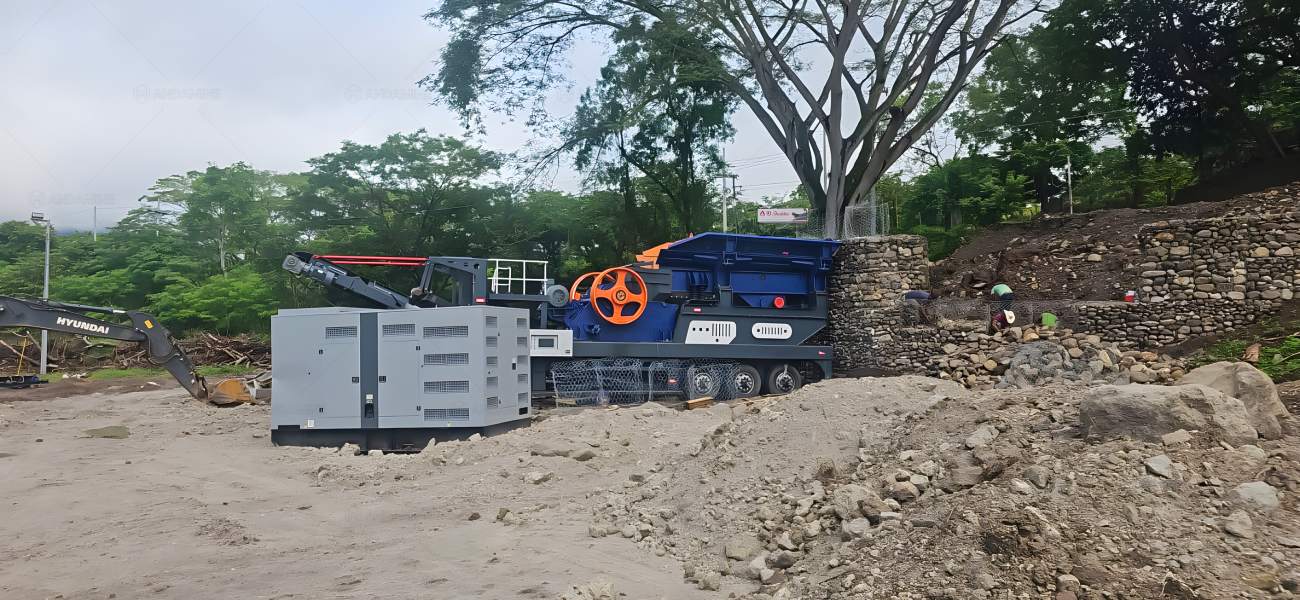
Product Requirements Should Come Before Equipment Selection
A crushing plant should be designed around the final products rather than starting with a specific crusher model. Before estimating the stone crusher plant price, operators need to define the required sizes, production volume, material characteristics, and quality standards.
For example, a project producing only one relatively coarse aggregate may be able to use a simple primary and secondary crushing process. If the market requires 0–5 mm, 5–10 mm, 10–20 mm, and 20–30 mm products simultaneously, additional screening and more precise crushing control may be necessary.
Coarse Aggregate Usually Requires Less Processing
Coarse aggregate applications such as road base and general construction fill may not require extensive size reduction. If the feed material is already suitable for the selected primary crusher and the final product has a relatively broad size range, a simpler crushing circuit can sometimes meet the specification.
This can reduce the initial investment because fewer crushers, screens, conveyors, and transfer points are required. However, the configuration still needs to control oversize material and maintain sufficient production capacity. Reducing equipment simply to lower the purchase price can create bottlenecks if the final product requirements are not properly considered.
Multiple Aggregate Sizes Increase Screening Requirements
Producing several commercial aggregate sizes generally increases the importance of screening. The screen must separate crushed material into the required fractions while maintaining stable production throughout the circuit.
A multi-deck vibrating screen can divide material into several products in one stage. The number and size of screen decks, screening area, and recirculation arrangement all influence the final configuration. As screening requirements become more complex, the stone crusher plant price may increase even when the crusher capacity remains unchanged.
Screening efficiency also affects operating economics. Poor separation can send correctly sized material back into the crusher, increasing circulating load and energy consumption. Therefore, investing appropriately in screening can sometimes reduce the cost per ton even if it raises the initial equipment investment.
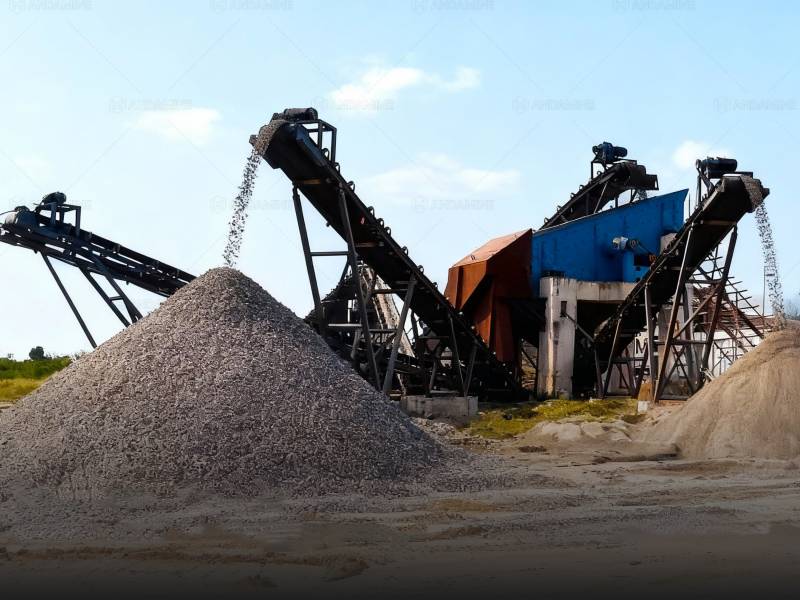
Fine Aggregate Can Require Additional Crushing
Producing fine aggregate or manufactured sand usually requires greater size reduction than producing coarse stone. Depending on the feed material and required particle shape, a plant may need additional secondary or tertiary crushing.
For hard and abrasive rock, cone crushing can provide efficient reduction in secondary and tertiary stages. Impact crushing may be preferred where particle shape and cubical products are especially important. The appropriate configuration depends on the material and specification rather than simply choosing the crusher with the highest rated capacity.
Aggregate Shape Can Change the Plant Configuration
Size is not the only factor affecting plant design. Aggregate shape can also influence equipment selection. Some concrete and asphalt applications require more cubical particles and controlled flakiness, which may require additional crushing or a different crushing technology.
This is why two plants with identical feed capacity can have very different equipment configurations. One may be designed primarily for high-volume coarse aggregate, while another uses additional stages to achieve tighter gradation and better particle shape. Their stone crusher plant price can therefore differ significantly even when their nominal capacity is similar.
Closed-Circuit Crushing Can Improve Product Control
When the required aggregate specification is tight, closed-circuit crushing can provide better control. Material from the crusher passes through a screen, while oversize particles are returned for further crushing.
This approach allows the plant to continuously separate finished products from material that still requires size reduction. However, a closed circuit also introduces additional conveyors, screening capacity, and circulating material. The investment should therefore be evaluated against the value of better product control and reduced oversize.
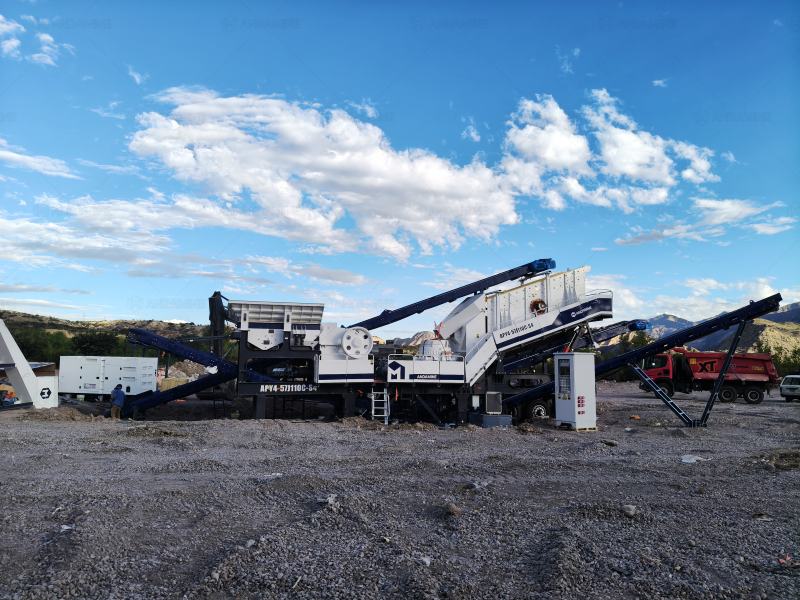
Why Prices Differ Between Countries
Searches for terms such as stone crusher machine price in Nigeria illustrate why equipment prices should not be compared solely by the machine itself. Shipping distance, import costs, local transportation, installation requirements, electrical infrastructure, and site conditions can all affect the final project investment.
The same principle applies to searches for crusher plant price in Peru. A crushing plant operating in a remote quarry or mountainous area may require different transportation arrangements, installation methods, and supporting equipment from a plant located close to a major industrial center. Consequently, the final project cost can be substantially different from the basic equipment quotation.
Capacity and Product Mix Must Be Balanced
Another important factor is the relationship between production capacity and product demand. A plant may technically produce 200 tons per hour, but if the market mainly requires one product and has limited demand for the others, the additional capacity may not generate sufficient returns.
A better approach is to estimate the expected demand for each aggregate size and then design the crushing and screening circuit around the actual product mix. This can prevent over-investment in equipment that remains underutilized while ensuring that the most valuable products receive adequate processing capacity.
How to Start a Stone Crusher Business With the Right Configuration
Anyone researching how to start stone crusher business should begin with the market and raw material rather than immediately purchasing equipment. The first step is to determine what types of aggregates local customers need and at what volumes.
- Study the raw material: Determine hardness, abrasiveness, moisture, feed size, and geological consistency.
- Identify product demand: Define the required aggregate sizes and expected sales volume.
- Develop the process: Select crushing stages and screening arrangements according to the target products.
- Estimate total investment: Include crushers, screens, conveyors, foundations, electrical systems, transportation, and installation.
- Calculate operating cost: Consider electricity, fuel, wear parts, labor, maintenance, and material handling.
- Check future expansion: Leave practical options for increasing capacity or adding products if market demand grows.
This approach produces a more realistic investment estimate than comparing equipment prices alone.
Conclusion
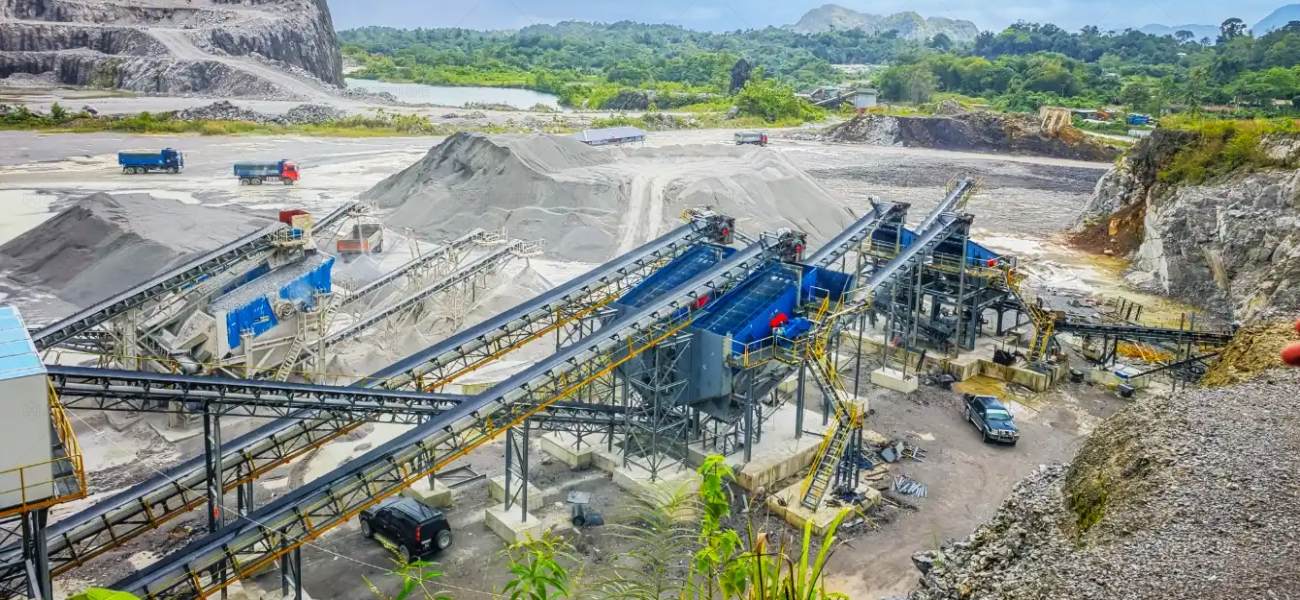
Stone crusher plant price is ultimately shaped by what the plant needs to produce. Coarse road aggregates may require a relatively simple circuit, while multiple finished sizes, fine aggregates, strict gradation, or controlled particle shape can require additional crushing and screening stages. The most economical plant is therefore not necessarily the one with the lowest purchase price, but the one that matches processing requirements with market demand and long-term operating costs.
When is On-Site Concrete Production More Cost-Effective Than Purchasing Ready-Mixed Concrete?
In modern construction projects, controlling material costs and logistics efficiency is critical to maintaining healthy profit margins. One of the most significant decisions project managers face is whether to purchase ready-mixed concrete from commercial batching plants or produce concrete directly on-site. While ready-mixed concrete offers convenience for urban infrastructure with easy access, it often introduces high transit costs, supply delays, and material waste for remote or medium-sized projects. Understanding the tipping point where on-site batching becomes the superior financial choice can save contractors thousands of dollars in operational expenses.
The introduction of modern equipment like the self-loading concrete mixer(hormigonera autocargable) has revolutionized on-site production. By combining aggregation, weighing, mixing, and transportation into a single mobile machine, contractors can drastically reduce labor overhead while maintaining strict concrete quality standards. In this article, we evaluate the precise scenarios where producing concrete on-site delivers a higher return on investment than relying on commercial suppliers.
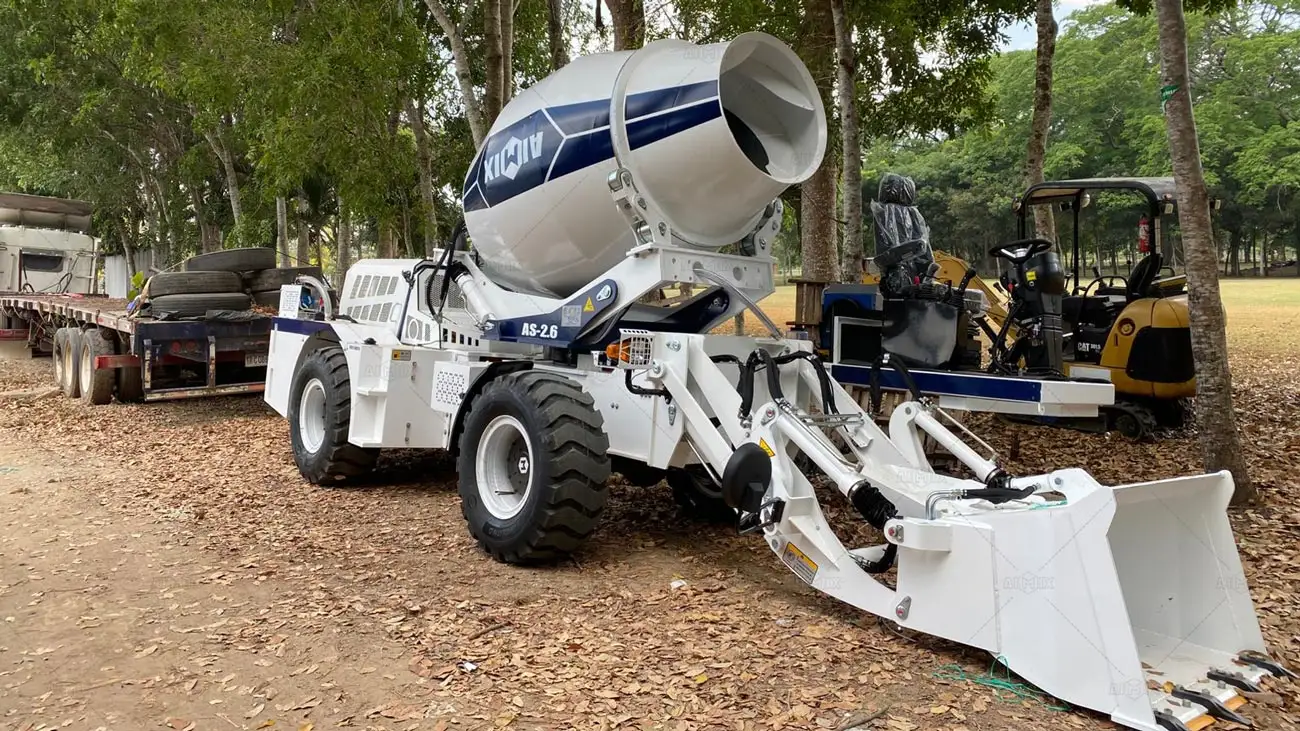
Key Cost Factors: On-Site Production vs. Ready-Mixed Concrete
To determine which method is more economical, contractors must evaluate several key cost drivers that influence overall expenditure:
- Transportation and Delivery Surcharges: Commercial ready-mix suppliers charge premium rates for long-distance deliveries, small loads (under-load fees), and extended waiting times at job sites.
- Material Cost Markup: Pre-mixed concrete includes supplier profit margins and overhead costs, whereas purchasing raw materials (cement, aggregates, sand, and water) in bulk allows contractors to produce concrete at base material cost.
- Labor Efficiency: Manual batching on-site requires a dedicated crew. However, using an automated self-loading concrete mixer allows a single operator to complete the entire loading, batching, and discharge cycle.
- Equipment Capital Expenditure: Purchasing or leasing machinery requires initial capital, but these costs are amortized over multiple projects, eventually reducing per-cubic-meter production costs significantly below ready-mix prices.
Scenarios Where On-Site Production Wins
1. Remote Infrastructure and Rural Construction
When job sites are located far from commercial batching plants, ready-mix trucks face long travel times. This increases transit fees and risks premature setting of the concrete during transport. On-site production eliminates distance-related delays and ensures fresh concrete is poured exactly when needed.
For instance, contractors operating a self-loading concrete mixer in Chile frequently work across mountainous terrain and isolated mining or agricultural zones where commercial ready-mix plants simply do not exist or charge prohibitive delivery rates. In these rugged environments, mobile on-site production becomes the only viable and cost-effective choice.
2. Medium-Volume, Intermittent Concrete Pouring
Projects that require steady, medium-volume pours throughout the workday—such as canal linings, foundations, retaining walls, and utility trenches—often suffer from ready-mix scheduling delays. Late deliveries cause costly crew downtime. Mobile mixing machinery allows teams to produce exact batches on demand, preventing material waste and schedule overruns.
3. High-Frequency, Multi-Site Projects
If your construction operations involve moving between several smaller job sites within a region, buying ready-mixed concrete for every location results in repeated delivery premiums. Equipment like the AS-MK24 self-loading concrete mixer(AS-MK24 autohormigonera) provides full mobility, driving from site to site independently to handle multiple jobs per day without relying on external suppliers.
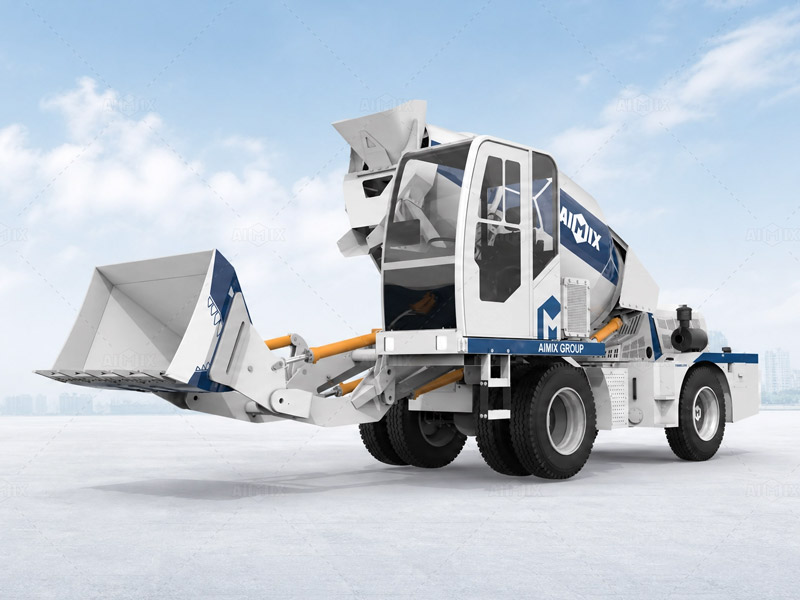
Cost Breakdown: Evaluating ROI and Self-Loading Concrete Mixer Price
When assessing equipment investments, contractors must balance initial acquisition costs against long-term operational savings. Calculating the overall ROI involves analyzing raw material prices, labor reduction, and machine utilization rates.
| Cost Vector | Ready-Mixed Concrete | On-Site Production (Mobile Mixer) |
|---|---|---|
| Raw Material Cost | High (Includes supplier markup) | Low (Bulk purchasing of aggregates & cement) |
| Transportation Fees | High (Distance & waiting surcharges) | Minimal (Fuel and machine movement) |
| Labor Requirements | Minimal on-site, high coordination | 1–2 operators with self-loading capability |
| Supply Flexibility | Fixed delivery windows | Instant on-demand batching |
While looking into machinery options, researching competitive self-loading concrete mixer price(autohormigonera precio) points reveals that most contractors recover their initial capital investment within 3 to 6 months of continuous operation. The savings generated by eliminating commercial delivery surcharges and reducing total workforce headcount directly contribute to payback velocity.
Specific models, such as the high-efficiency AS-MK24 self-loading concrete mixer, feature 270-degree drum rotation, four-wheel drive, and precise electronic weighing systems. These features ensure batch accuracy comparable to commercial plants while maintaining low fuel consumption and minimal maintenance expenditure.
Maximizing Savings with Mobile Mixing Technology
Adopting on-site production is not merely about buying raw ingredients; it is about choosing machinery that optimizes job site workflow. Modern self-loading technology automates shovel loading, water metering, and mixing within a compact footprint. For regional contractors—such as companies deploying a self-loading concrete mixer in Chile(autohormigonera en Chile) or similar expanding markets—this mobility translates into a distinct competitive advantage when bidding on rural public works, road repairs, and private residential developments.
Before committing to commercial ready-mix contracts, calculate your project’s total volume, distance from batching plants, and expected delivery schedule. If transit fees and downtime threaten your margins, investing in versatile mobile mixing equipment like the AS-MK24 self-loading concrete mixer offers a reliable, highly profitable path forward for current and future construction projects.
How to Choose a Straddle Carrier for Heavy Precast Concrete Handling
Choosing a straddle carrier for heavy precast concrete handling starts with the load, not the machine. The most important factors are the maximum load weight, load dimensions, lifting height, required travel distance, yard surface, handling frequency, and available power supply. A carrier designed for 40-ton precast elements, for example, may be unsuitable for a 70-ton bridge beam even if the beam can physically fit inside its frame.
For precast concrete plants and infrastructure projects, the right straddle carrier should match the complete handling cycle: lifting the precast element, transporting it through the yard, positioning it in storage, and retrieving it for dispatch or installation. Capacity, frame dimensions, steering configuration, lifting system, ground clearance, and control method all affect whether the equipment can perform this cycle safely and repeatedly.
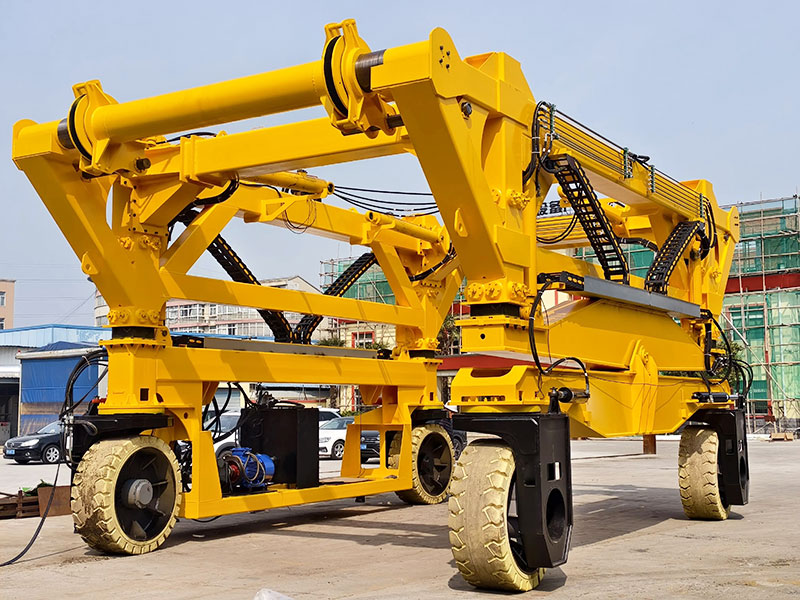
1. Start With the Actual Weight of the Precast Concrete
The first specification to establish is the heaviest load that the straddle carrier for sale will handle, rather than the average load.
Precast products can vary significantly in weight. A yard may handle relatively small concrete panels during normal production but occasionally move bridge girders, large columns, tunnel segments, or other structural components that weigh several times more.
When determining required capacity, consider:
- Maximum individual precast component weight
- Lifting accessories and spreader beams
- Weight variations caused by different concrete designs
- Future products planned for the same yard
- Whether the carrier will lift from production lines, molds, storage areas, or transport trailers
For example, if the heaviest precast element weighs 45 tons and the lifting accessories add another 3 tons, selecting a carrier with a nominal capacity of exactly 48 tons leaves little practical margin.
A more useful approach is to define the maximum operational load, including the lifting attachment, and then discuss the appropriate safety and engineering margin with the equipment manufacturer.
For projects involving bridge girders or large structural components, the load chart should also be checked against the required lifting height and load position. Rated capacity should not be treated as a single number independent of operating conditions.
2. Check the Dimensions of the Precast Component
Weight alone does not determine whether a straddle carrier is suitable.
Large precast concrete products can be long, wide, or tall while remaining within the carrier’s rated weight capacity. The equipment therefore needs enough clearance between its legs and sufficient lifting geometry for the actual component.
Important dimensions include:
- Overall length
- Overall width
- Overall height
- Lifting points
- Center of gravity
- Required clearance from the carrier frame
- Required clearance between the load and the ground
- Required storage height
Consider a precast beam that weighs 50 tons but is 20 meters long. The carrier must accommodate the beam’s length and lifting configuration, not simply its 50-ton weight.
The center of gravity is particularly important for irregular precast components. If the lifting points are not positioned symmetrically, the load may not remain level during lifting. The carrier, spreader beam, and lifting accessories therefore need to be considered as one handling system.
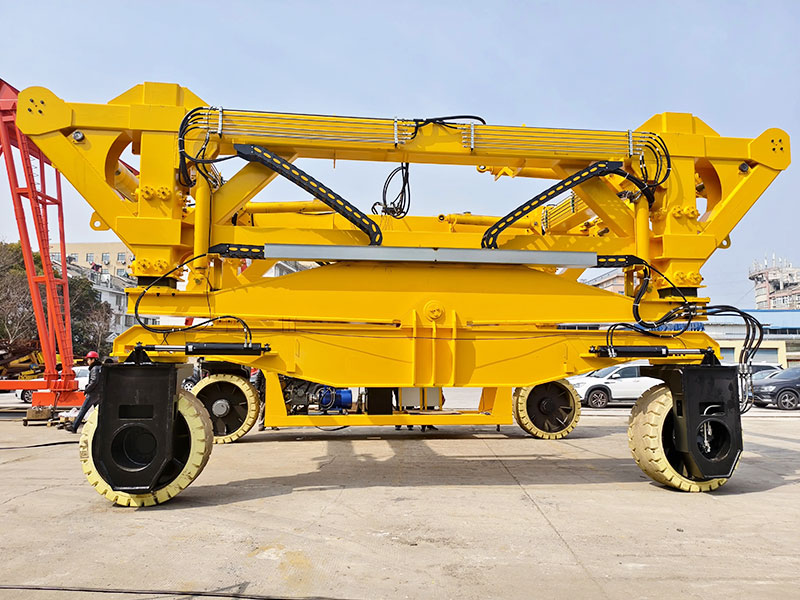
3. Determine the Required Lifting Height
The required lifting height should be based on the highest point the load must clear, not simply the height of the storage stack.
For example, a mobile gantry crane may need to:
- Pick a precast element from a production mold.
- Lift it above nearby equipment.
- Travel through a designated lane.
- Place it on supports in the storage yard.
- Later retrieve it for loading onto a trailer.
Each operation may require a different clearance height.
A project that only requires low-level horizontal transportation may need much less lifting height than a precast yard that stacks components vertically.
When calculating lifting height, include the height of:
- The precast component
- Lifting hooks or chains
- Spreader beams
- Storage supports
- Trailer decks
- Other obstacles along the travel route
The practical requirement is not simply “lift 8 meters.” It may be “raise a 5-meter-high precast structure high enough to clear a 1-meter support system and surrounding obstacles.”
That distinction can significantly affect the required equipment configuration.
4. Match the Straddle Carrier to the Yard Layout
A straddle carrier works inside a defined operating area, so the yard layout directly affects equipment selection.
Before choosing the machine, map the typical route from production → temporary storage → final storage → dispatch.
Measure:
- Lane width
- Turning areas
- Distance between storage rows
- Entry and exit points
- Fixed structures
- Drainage channels
- Utility lines
- Building columns
- Loading areas
- Trailer access routes
A carrier may have sufficient lifting capacity but still be impractical if it cannot maneuver between storage rows.
For example, a precast yard with narrow storage lanes may require a different steering arrangement from a large open yard where the carrier can travel long distances in straight lines.
The turning radius and steering modes should therefore be evaluated together with the site’s actual traffic pattern.
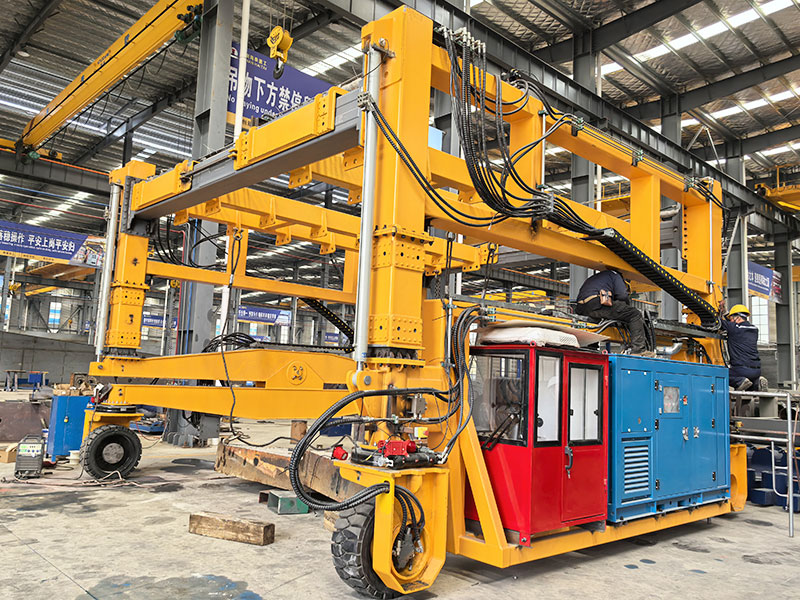
5. Evaluate Steering Requirements
Steering becomes particularly important when handling large precast concrete components.
A rubber tire crane may need to travel straight, change direction at intersections, or position a long beam precisely between storage supports.
Common steering requirements can include:
- Straight travel
- Crab steering
- Pivot turning
- Diagonal movement
- Multi-mode steering for confined areas
For a long precast beam, lateral positioning can sometimes be more important than maximum travel speed. The carrier needs to align the load with storage supports or a trailer without repeatedly repositioning the entire machine.
If the yard includes narrow passages or multiple storage blocks, steering flexibility should be evaluated during the equipment-selection stage rather than after installation.
6. Consider the Ground Conditions
Heavy precast handling places substantial loads on the yard surface.
Before selecting a straddle carrier, assess:
- Concrete strength
- Asphalt condition
- Ground flatness
- Maximum allowable surface pressure
- Drainage
- Expansion joints
- Uneven sections
- Slopes
- Temporary construction areas
For heavy loads, the combined weight of the carrier and precast component can be much greater than the rated payload alone.
For example, a 60-ton precast element does not create a 60-ton operating load on the yard. The total system includes the carrier’s own weight and the dynamic effects associated with starting, stopping, steering, and uneven ground.
The wheel configuration and tire dimensions should therefore be evaluated against the site’s allowable ground pressure.
For newly planned precast yards, it is useful to coordinate the carrier specification and civil engineering design early. This allows the travel lanes, turning areas, and pavement structure to be considered together.
7. Compare Power Options With the Actual Yard Environment
Power configuration affects where and how the straddle carrier can operate.
Depending on the project, possible power arrangements include:
- Diesel generator power
- Cable reel power
- Battery-electric power
- Other site-specific electric configurations
A fixed production yard with an established electrical infrastructure may have different requirements from a construction project where the carrier needs to move between several work areas.
Battery-powered equipment can be useful where local operating requirements prioritize reduced onsite emissions and lower noise. Diesel-powered configurations can provide greater independence from fixed electrical infrastructure.
The key question is not simply which power source is better. It is:
What power source can reliably support the required lifting, travel, duty cycle, and operating environment?
The daily operating hours, charging or refueling arrangements, travel distance, and availability of electrical infrastructure should all be included in the calculation.
8. Match Travel Speed to the Handling Cycle
Maximum travel speed is only one part of productivity.
For a precast yard, the complete handling cycle includes:
pickup → lifting → acceleration → loaded travel → positioning → lowering → unloading → return travel
If a carrier travels quickly but requires significant time for positioning, the theoretical maximum speed will not determine actual throughput.
Suppose a carrier moves a precast component 150 meters from the production area to storage. Increasing travel speed may reduce transport time, but the total cycle can still be dominated by lifting, alignment, and positioning.
For this reason, evaluate:
- Loaded travel speed
- Unloaded travel speed
- Acceleration
- Braking
- Steering response
- Positioning accuracy
- Lifting and lowering speed
A balanced handling cycle is generally more useful than selecting equipment based only on the highest advertised travel speed.
9. Check the Required Duty Cycle
Precast plants can operate on very different production schedules.
A small facility may move several heavy components per day, while a high-volume precast operation may require continuous internal transportation.
The carrier’s duty cycle should therefore reflect:
- Lifts per hour
- Operating hours per shift
- Number of shifts per day
- Average travel distance
- Percentage of loaded versus unloaded travel
- Average load weight
- Peak load frequency
For example, a machine handling 20 heavy components per day has a different duty requirement from one handling 100 components per day.
The selection should be based on the actual operating cycle, not just maximum rated capacity.
10. Consider the Lifting and Load-Control System
Heavy precast components require controlled lifting and positioning.
The lifting system should be compatible with the project’s lifting points and accessories. Depending on the component, this can involve hooks, slings, spreader beams, or other engineered lifting arrangements.
Important considerations include:
- Number and position of lifting points
- Load leveling
- Vertical lifting accuracy
- Hoisting speed
- Lowering control
- Emergency stopping
- Load monitoring
- Operator visibility
For large concrete components, smooth acceleration and controlled stopping can be especially important because sudden movements can create unwanted load swing or impose additional forces on lifting accessories.
11. Consider Operator Visibility and Control
The operator needs to see both the carrier and the load path.
This becomes difficult when a large precast component blocks the forward field of view.
Possible solutions may include:
- Elevated operator cabins
- Remote controls
- Cameras
- Load-position monitoring
- Warning systems
- Defined travel zones
The choice depends on the Aicrane carrier design and site layout.
A remote-control configuration, for example, may be useful when the operator needs a better view of the load and surrounding clearance rather than remaining inside a fixed cabin.
12. Use a Selection Example Instead of Choosing by Capacity Alone
Consider a precast yard with the following requirements:
- Maximum precast component: 60 tons
- Typical component weight: 35–50 tons
- Maximum component length: 18 meters
- Required lifting height: 8 meters
- Travel distance: 100–250 meters per handling cycle
- Concrete yard surface
- Multiple storage rows
- Eight operating hours per day
A reasonable equipment-selection process would be:
Step 1: Establish the required rated capacity from the 60-ton maximum load and lifting accessories.
Step 2: Verify that the carrier frame and lifting system accommodate the 18-meter component.
Step 3: Confirm that the lifting height provides sufficient clearance for the component, rigging, and storage supports.
Step 4: Measure the storage lanes and turning areas to determine the required steering configuration.
Step 5: Check wheel loads and ground pressure against the concrete pavement design.
Step 6: Calculate the expected handling cycle using loaded and unloaded travel speeds.
Step 7: Select the power system according to operating hours and site infrastructure.
Step 8: Verify the control, visibility, and safety systems for the actual load-handling process.
This approach produces a much more defensible equipment specification than simply searching for a “60-ton straddle carrier.”
13. A Practical Straddle Carrier Selection Checklist
Before requesting a quotation, prepare the following information:
| Selection Factor | Information to Prepare |
|---|---|
| Maximum load | Heaviest precast component |
| Average load | Typical operating weight |
| Load dimensions | Length × width × height |
| Lifting height | Maximum required hook/load elevation |
| Lifting points | Number, spacing, and configuration |
| Travel distance | Typical loaded and unloaded routes |
| Yard surface | Concrete, asphalt, compacted ground, etc. |
| Lane width | Narrowest operating section |
| Turning area | Available maneuvering space |
| Storage height | Maximum stacking/support height |
| Operating cycle | Lifts per hour or day |
| Working hours | Hours per shift and shifts per day |
| Power | Diesel, cable, battery, or other requirement |
| Control | Cabin, pendant, remote, or combination |
| Environment | Indoor/outdoor, temperature, dust, rain |
| Future loads | Planned increase in component size or weight |
The more complete this information is, the easier it is to determine whether a proposed straddle carrier is actually suitable for the project.
Conclusion
Choosing a straddle carrier for heavy precast concrete handling requires more than matching the machine’s rated tonnage to the weight of a concrete component. The equipment must fit the load dimensions, lifting height, yard layout, ground conditions, steering requirements, handling cycle, duty cycle, power supply, and control system.
For bridge beams, tunnel segments, precast panels, columns, girders, and other large concrete components, the most important selection process is to analyze the complete movement from pickup to storage and from storage to dispatch.
A well-defined specification should therefore answer seven basic questions:
- How heavy is the heaviest load?
- What are the maximum load dimensions?
- How high must the load be lifted?
- How far and through what route must it travel?
- What are the site’s ground and maneuvering conditions?
- How frequently will the carrier operate?
- What power and control configuration matches the site?
Once these requirements are established, the straddle carrier can be selected around the actual precast handling process rather than around a single capacity number. This results in a specification that is easier to evaluate, quote, and integrate into a precast concrete or infrastructure construction workflow.
Can A Portable Asphalt Plant Support Road Construction After Natural Disasters?
After a flood, earthquake, landslide, hurricane, or other natural disaster, road construction has a different priority. Contractors do not simply need a new road. They need to restore access as quickly as possible. Emergency routes may connect hospitals, damaged bridges, evacuation areas, ports, villages, and construction sites. At the same time, existing asphalt suppliers may be too far away, damaged, or unable to meet the sudden increase in demand.
This is where an asphalt mixing plant portable can become a practical solution. It allows contractors to produce hot mix asphalt closer to the damaged road instead of depending entirely on a distant commercial asphalt plant. However, portability alone does not guarantee a successful disaster-recovery project. The contractor still needs to consider production capacity, aggregate supply, fuel, power, transport access, site conditions, asphalt quality, relocation time, and project duration.
So, can a portable asphalt plant support road construction after natural disasters? Yes, in many situations, especially when the project needs rapid asphalt production in a location where conventional supply is unreliable or too far away. The key is to match the plant configuration with the actual recovery project rather than choosing capacity based only on the largest possible output.
Why Natural Disasters Create Special Asphalt Supply Problems
Before choosing equipment, it is important to understand why conventional asphalt supply can become difficult after a disaster. The problem often starts with logistics rather than paving technology.
A damaged road network can interrupt truck routes between an asphalt plant and the construction site. Floodwater can close bridges. Landslides can block mountain roads. Earthquakes can damage industrial facilities and utilities. Storms can also create fuel shortages and traffic restrictions.
Therefore, a contractor may face several problems at the same time:
- The nearest commercial asphalt plant may be too far from the damaged road.
- Asphalt delivery trucks may spend too much time traveling.
- Existing asphalt suppliers may prioritize their regular customers.
- Road access may change from day to day.
- Temporary repair projects may require asphalt at short notice.
- Power and water infrastructure may not operate normally.
- Several damaged road sections may require work at different locations.
Consequently, disaster recovery often requires a more flexible asphalt production strategy. Instead of asking only, “How much asphalt do we need?”, contractors should also ask, “Where can we produce it reliably?”
How A Portable Asphalt Plant Helps During Road Recovery
A portable asphalt plant changes the relationship between asphalt production and the construction site. Instead of moving large quantities of finished asphalt over long distances, the contractor can move the production equipment closer to the aggregate supply and paving area.
This approach can reduce dependence on a fixed asphalt supplier. It can also make production easier to adjust when the project moves from one damaged road section to another. Contractors should still evaluate the supplier’s manufacturing capability, technical support, spare parts, installation service, and experience with similar projects when selecting an asphalt plant supplier.
Moreover, mobility does not mean every plant can move immediately. The actual relocation process depends on plant design, transport regulations, lifting requirements, site preparation, utility connections, and commissioning. Therefore, mobility should be evaluated as a complete process rather than as a marketing label.
1. Shorter Asphalt Hauling Distances
Distance matters because hot mix asphalt must reach the paving site within a suitable temperature range and time window. Long transportation distances increase exposure to traffic delays, weather conditions, and heat loss.
For example, a contractor repairing a remote mountain road may find that a commercial asphalt plant is located many hours away. Even if the supplier has enough production capacity, the delivery cycle can become inefficient.
A portable plant can be positioned closer to the project when site access, aggregate supply, and environmental requirements allow it. This does not eliminate transportation, but it can shift the main transport task from finished asphalt to raw materials.
As a result, the contractor can build a more controllable supply chain around the damaged road.
2. Faster Response To Changing Work Areas
Disaster recovery rarely follows a perfectly predictable construction schedule. One road may become the priority today, while another route becomes more important tomorrow.
A mobile asphalt plant is useful in this environment because mobility can support phased construction. Contractors can select a temporary production location for one work zone and later relocate the plant when the recovery program changes.
However, contractors should not assume that every mobile plant can move immediately from one location to another. The actual relocation process depends on transport regulations, site conditions, equipment configuration, and the level of disassembly required.
Therefore, the contractor should compare the expected number of relocations with the time and cost of each move before making a purchase decision.
What Type Of Disaster Recovery Project Fits A Portable Asphalt Plant?
Not every emergency road project needs its own asphalt plant. The strongest business case usually appears when the project has enough asphalt demand and enough logistical difficulty to justify local production.
Several project scenarios are particularly suitable.
| Disaster Recovery Situation | Main Challenge | Why A Portable Plant May Help |
|---|---|---|
| Flood-damaged rural roads | Long transport routes and damaged bridges | Local asphalt production can reduce dependence on distant suppliers |
| Earthquake road reconstruction | Unstable logistics and multiple damaged sections | Flexible production can support phased repair work |
| Landslide-affected mountain roads | Difficult access and long hauling distances | A plant can be positioned closer to suitable aggregate sources |
| Storm or hurricane recovery | Large quantities of emergency repair work | Continuous local production can support intensive paving schedules |
| Remote infrastructure recovery | No nearby commercial asphalt supplier | On-site or near-site production can improve supply independence |
In contrast, a small repair project requiring only a limited amount of asphalt may not justify mobilizing a complete plant. In that case, buying asphalt from an existing supplier may remain simpler.
Therefore, project scale and logistics should always be considered together.
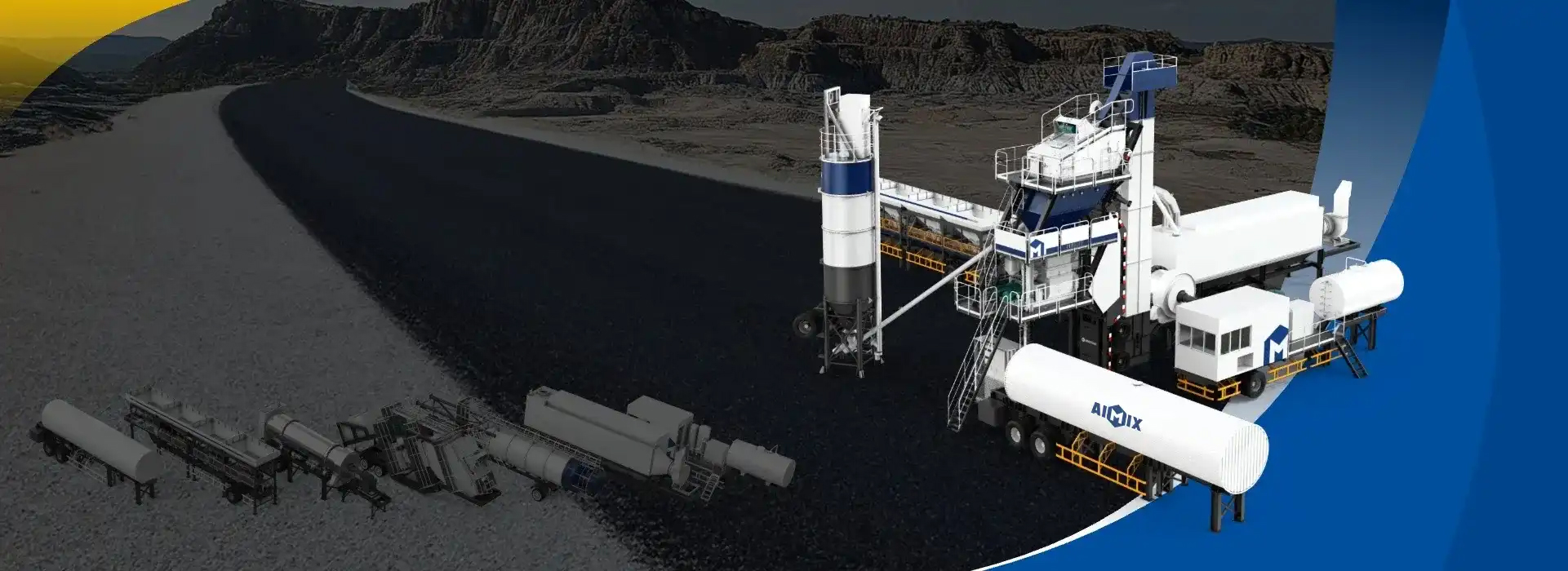
How Much Asphalt Production Capacity Is Needed?
Production capacity is one of the most important decisions. A plant that is too small may create a bottleneck for the paving team. A plant that is much larger than the actual demand may increase capital, fuel, staffing, and logistics requirements without providing enough additional value.
For disaster recovery, contractors can start with the expected daily asphalt requirement and then work backward to the required hourly capacity.
For example, suppose a project needs approximately 600 tonnes of asphalt per day. If the plant operates effectively for 10 production hours per day, the theoretical average requirement is about 60 tonnes per hour.
However, the contractor should not select a 60 TPH plant automatically. Production interruptions, material loading, maintenance, truck changes, weather, and paving coordination can reduce actual output.
A practical selection process is:
- Estimate the total asphalt quantity.
- Determine the required completion period.
- Calculate the target daily production.
- Estimate realistic operating hours per day.
- Allow reasonable operating margin.
- Check whether trucks and paving equipment can consume the output.
The final point is often overlooked. A 120 TPH asphalt plant does not automatically make a project faster if the site only has enough trucks and paving capacity to consume 60 TPH.
Match Plant Output With The Paving Team
Disaster recovery works as a chain. The aggregate supply, asphalt plant, storage, trucks, paver, rollers, and road crew must work together.
If the asphalt plant produces faster than trucks can transport the mix, the plant may need to stop or hold material. If trucks arrive faster than the paver can place asphalt, the trucks may queue. If the plant produces too slowly, the paving operation may lose continuity.
Therefore, the best portable asphalt plant is not necessarily the plant with the highest rated capacity. It is the plant that creates a balanced production and paving system.
What Site Conditions Should Contractors Check?
After a disaster, choosing a plant location requires more attention than normal. A site that looked suitable before the disaster may no longer be safe or accessible.
Contractors should check the following factors before mobilization.
Road Access
Heavy equipment, aggregate trucks, fuel vehicles, and asphalt trucks must reach the plant. A narrow temporary road may limit equipment transport even if the plant itself is portable.
Ground Conditions
Flooding, soft soil, landslides, and erosion can create serious foundation and stability problems. The plant area needs suitable ground conditions and adequate drainage.
Aggregate Availability
Local aggregate availability can strongly influence plant location. If quality aggregate is available close to the damaged road, positioning the asphalt plant nearby may improve overall logistics.
Fuel And Power
Portable does not mean independent of utilities. Drying and heating aggregates require significant thermal energy. The control system and auxiliary equipment also require electrical power.
Contractors should confirm fuel availability and generator requirements before equipment arrives.
Water And Environmental Conditions
Water management, dust control, emissions, drainage, and local environmental requirements still matter during emergency construction. Disaster status may change project priorities, but it does not automatically remove environmental or safety responsibilities.
Can A Portable Asphalt Plant Produce Consistent Asphalt Quality?
Yes. A properly configured portable asphalt plant can produce consistent hot mix asphalt, provided the contractor controls the mix design, aggregate gradation, moisture, temperature, bitumen dosage, and operating parameters.
This is especially important during emergency road repair. A fast paving schedule is not useful if the asphalt quality causes early pavement failure.
Contractors should pay close attention to aggregate moisture because wet aggregate increases the energy required for drying and heating. After floods or heavy rainfall, moisture can become a major operational issue.
The asphalt mix also needs to follow the project specification. The plant should therefore provide accurate aggregate feeding, controlled bitumen dosing, effective mixing, and suitable temperature monitoring.
In other words, speed should support quality rather than replace it.
How Does A Portable Asphalt Plant Affect Disaster Recovery Costs?
The economic benefit depends on the project conditions. A portable asphalt plant involves equipment investment, transport, installation, fuel, labor, maintenance, and site preparation. Therefore, comparing the purchase price with the price of commercial asphalt alone does not provide a complete answer.
Instead, contractors should compare the total delivered asphalt cost.
Consider The Full Logistics Chain
A useful calculation includes:
- Cost of purchased asphalt or asphalt production.
- Aggregate transportation distance.
- Finished asphalt hauling distance.
- Truck waiting time.
- Fuel consumption.
- Plant operation and maintenance.
- Labor requirements.
- Mobilization and relocation costs.
- Expected utilization period.
For a short emergency project close to a reliable commercial asphalt plant, buying asphalt may still be the better choice.
On the other hand, a large recovery program in a remote region can produce a different result. If hundreds or thousands of tonnes of asphalt must travel a long distance every day, local production may provide a stronger economic case.
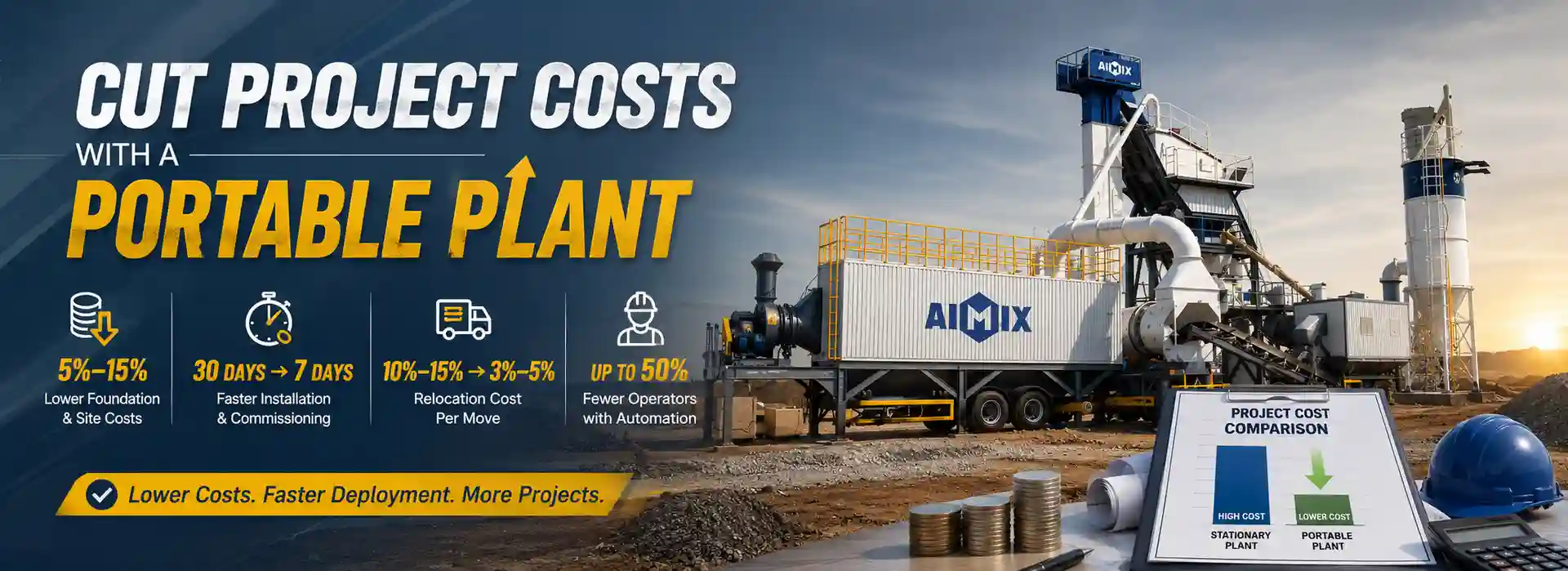
Portable Asphalt Plant Vs. Buying Asphalt From A Local Supplier
The decision becomes clearer when contractors compare the two supply strategies directly. The broader asphalt plant selection should be based on production needs, site conditions, mobility requirements, and the expected operating period.
| Factor | Portable Asphalt Plant | Commercial Asphalt Supplier |
|---|---|---|
| Supply control | Higher control over production scheduling | Depends on supplier availability |
| Remote projects | Potentially strong option | May face long hauling distances |
| Initial investment | Higher | Lower |
| Large recovery programs | Can become attractive | Depends on supplier capacity |
| Short small repairs | May not be economical | Often simpler |
| Multi-location projects | Mobility can provide flexibility | Supply routes may need to change |
Therefore, contractors should treat a portable asphalt plant as a project logistics solution, not simply as another piece of construction equipment.
What Should Be Included In A Disaster-Ready Asphalt Plant Setup?
A reliable emergency asphalt production system needs more than the main mixing unit. The supporting equipment determines how smoothly the entire operation works.
Aggregate Feeding And Storage
The plant needs a reliable system for receiving and feeding different aggregate sizes. Stockpile organization also matters because poor aggregate management can interrupt production.
Drying And Heating
The drying system must handle the expected aggregate moisture and production rate. This becomes particularly important after flooding or heavy rainfall.
Bitumen Storage And Dosing
Bitumen supply must match production demand. Accurate dosing helps maintain the required mix proportions.
Dust Collection
Dust control remains important even during emergency work. The plant should include a suitable dust collection system and operate according to local requirements.
Control System
Simple and reliable controls can help operators manage production during demanding recovery schedules. Clear monitoring of aggregate feeding, temperature, bitumen dosage, and production status can reduce operating errors.
What About Relocation After The First Road Is Repaired?
This is one of the strongest reasons to consider a portable plant for a disaster recovery program rather than a single isolated repair.
Emergency road programs often contain several work packages. A contractor may first repair an access road, then move to a bridge approach, and later reconstruct another damaged highway section.
If the plant can be relocated efficiently, the same production system may support several stages of the recovery program.
However, contractors should calculate relocation costs before making the decision. Transport permits, disassembly, loading, site preparation, reconnection, testing, and commissioning all require time.
Thus, mobility creates value when the plant will actually move between meaningful project locations. If the plant will remain in one location for many years, a stationary solution may deserve consideration instead.
When Is A Portable Asphalt Plant Not The Best Choice?
A portable asphalt plant is not a universal answer. There are situations where another supply method makes more sense.
For example, a contractor may not need a portable plant when:
- The project requires only a small quantity of asphalt.
- A reliable commercial plant is located close to the jobsite.
- The project duration is very short.
- The site cannot safely accommodate asphalt production equipment.
- Aggregate and fuel supply are difficult to secure.
- Local regulations make temporary plant operation impractical.
In these situations, purchasing asphalt from an existing producer may reduce project complexity.
The goal is not to own more equipment. The goal is to restore the road efficiently while maintaining quality, safety, and cost control.
A Practical Decision Checklist For Disaster Recovery Contractors
Before ordering a portable asphalt plant, contractors can use the following questions to test whether the solution fits the project.
- How many tonnes of asphalt will the project require?
- How much asphalt must be produced each day?
- How far is the nearest reliable asphalt supplier?
- Can asphalt trucks reach the damaged road consistently?
- Where can suitable aggregates be sourced?
- What is the aggregate moisture condition?
- What fuel is available near the project?
- Can the site support the plant and stockpiles?
- How many trucks and paving machines are available?
- Will the plant serve more than one recovery project?
- How long will the plant operate at the selected location?
- What local environmental and safety requirements apply?
If the answers show high asphalt demand, long hauling distances, uncertain commercial supply, and a need for flexible production, a portable plant becomes much more compelling.
Why Portable Asphalt Production Matters In Remote Recovery Projects
Natural disasters often expose weaknesses in conventional construction logistics. A road may be urgently needed in a location where normal supply chains no longer work.
Portable asphalt production can provide another option. It brings production closer to the work area, supports flexible scheduling, and can reduce dependence on a single distant supplier.
More importantly, it gives contractors greater control over one of the most critical inputs in road reconstruction: asphalt mix supply.
That control can become particularly valuable when several agencies, contractors, and infrastructure projects compete for limited asphalt production capacity after a major disaster.
How To Choose The Right Portable Asphalt Plant
The right selection starts with the project, not the equipment catalog. Contractors should provide the supplier with the expected asphalt quantity, target production rate, aggregate conditions, fuel availability, site location, road access, project duration, and expected relocation requirements.
For example, a contractor repairing several remote roads may prioritize mobility and quick deployment. A contractor rebuilding a major highway may place greater emphasis on continuous production capacity, automation, fuel efficiency, and long-term operating stability.
In both cases, the equipment supplier should evaluate the complete production system. The plant capacity, aggregate system, heating system, bitumen system, dust collector, control system, storage, transport arrangement, installation, commissioning, and after-sales support should work together.
This project-based approach helps prevent a common mistake: choosing a plant based only on its advertised TPH number.
Final Answer: Can A Portable Asphalt Plant Support Post-Disaster Road Construction?
Yes, a portable asphalt plant can be an effective solution for post-disaster road construction when the project requires significant asphalt production, rapid deployment, flexible logistics, or reliable supply in remote areas.
Its main value comes from bringing asphalt production closer to the construction area. This can help contractors manage long hauling distances, unstable supply chains, changing work locations, and intensive repair schedules.
However, the decision should always consider the full project economics. Production capacity, aggregate availability, fuel, transport, site conditions, paving capacity, relocation costs, asphalt quality, and local requirements all matter.
For a small repair next to an operating commercial asphalt plant, buying asphalt may be simpler. For a large or remote recovery program where asphalt must travel long distances, a portable plant can offer much greater operational flexibility.
Plan Your Disaster Recovery Asphalt Solution
When roads are damaged, every unnecessary delay can affect transportation, emergency access, construction schedules, and local economic recovery. A suitable asphalt production strategy can therefore become part of the recovery plan itself.
If you are evaluating a portable asphalt plant for flood recovery, earthquake reconstruction, landslide-damaged roads, storm recovery, remote highway projects, or other emergency infrastructure work, start with your actual project data. Share the required asphalt volume, target TPH, project location, aggregate source, fuel conditions, working period, and expected hauling distance.
With these details, an asphalt plant supplier can help compare plant capacity, configuration, mobility, installation requirements, and operating considerations for the specific recovery project. The result should not simply be a plant that produces asphalt. It should be a production solution that keeps the road reconstruction process moving when normal supply chains are under pressure.
Crusher Machine Types: Understanding the Strengths and Limitations of Each Crushing Technology
Selecting the right crushing equipment is one of the most important decisions in quarrying, mining, and aggregate production. Different crusher machine types are designed for specific applications, material characteristics, and production requirements. While some crushers focus on handling large rocks during primary crushing, others are designed to improve particle shape or produce fine materials. Understanding the advantages and limitations of each crushing technology helps businesses create more efficient production systems and achieve better long-term results.
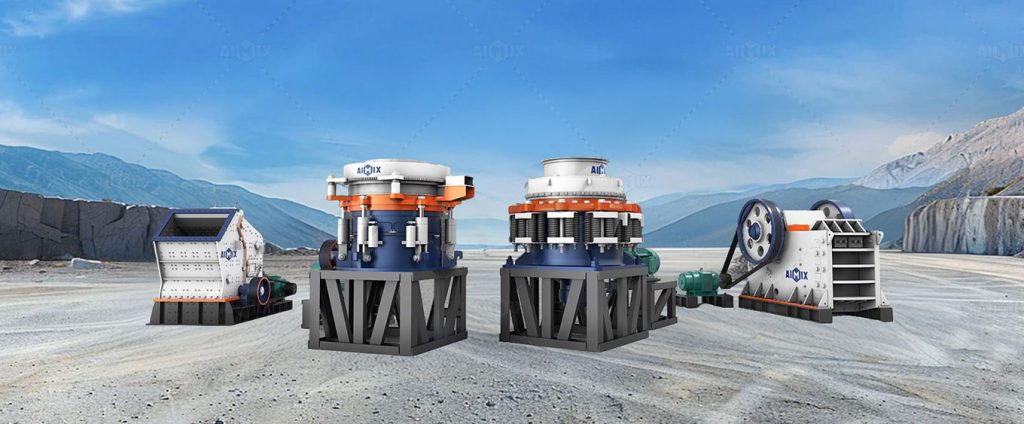
The Importance of Choosing the Right Crusher Machine Types
A crushing operation usually involves multiple stages, including primary crushing, secondary crushing, and sometimes tertiary crushing. Each stage requires equipment with different capabilities. Choosing unsuitable equipment can lead to higher operating costs, excessive wear, unstable production, and poor final product quality.
Factors such as material hardness, feed size, required output size, production capacity, and final application all influence crusher selection. For example, hard rocks such as granite and basalt require powerful crushing forces, while softer materials may be processed with equipment designed for higher reduction ratios and shaping performance.
Modern crushing plants often combine several crusher machine types to create a complete production system. By understanding the strengths and limitations of each technology, operators can select a more balanced solution for their specific needs.
Jaw Crusher Machine: Reliable Primary Crushing Technology
The jaw crusher machine is one of the most widely used crushing technologies for primary crushing applications. It operates through a compression process, where materials are crushed between a fixed jaw plate and a moving jaw plate. This simple but effective design allows jaw crushers to process large feed materials efficiently.
One of the biggest advantages of a jaw crusher machine is its strong crushing capability. It is suitable for handling hard and abrasive materials, making it commonly used in quarries, mining operations, and large aggregate production projects. Jaw crushers are also known for their simple structure, easy maintenance, and reliable operation.
However, jaw crushers also have certain limitations. They are mainly designed for primary crushing and may not produce ideal particle shapes when used alone. The output usually requires further processing through secondary crushing equipment to achieve specific aggregate sizes and better cubicity.
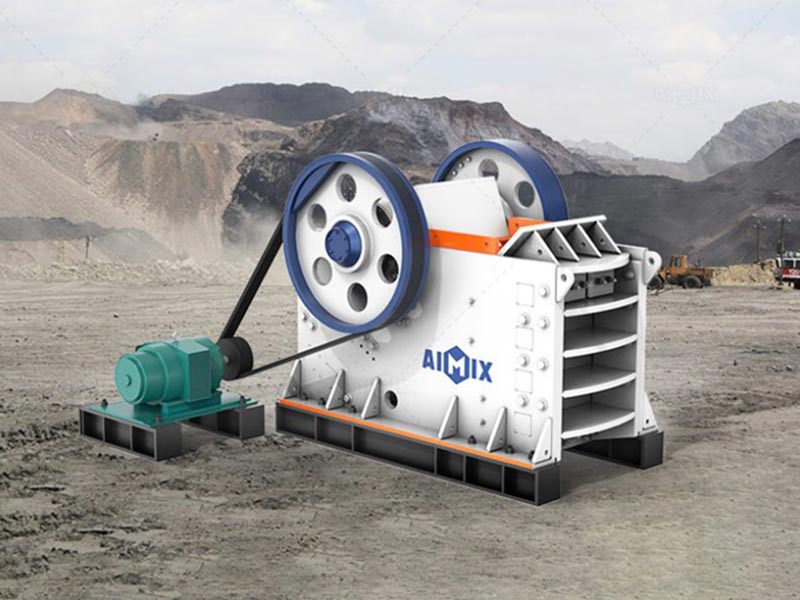
Cone Crusher Machine: Efficient Secondary and Fine Crushing
A cone crusher machine is commonly used for secondary and tertiary crushing stages. Unlike jaw crushers that use compression between two plates, cone crushers crush materials through the interaction between a rotating mantle and a fixed concave surface.
The main advantage of a cone crusher machine is its ability to produce high-quality aggregates with consistent particle sizes. It is especially suitable for processing hard and abrasive materials where excellent crushing efficiency and product shape are required.
Cone crushers are often used after jaw crushers in complete crushing plants. The combination allows the jaw crusher to handle large raw materials while the cone crusher further reduces the size and improves the quality of the final product.
Despite their advantages, cone crusher machines require more careful operation and maintenance compared with simpler crushing equipment. Factors such as proper feeding, lubrication, and wear part management have a significant impact on performance. In addition, cone crushers may have higher initial investment costs, making them more suitable for medium and large-scale production operations.
Impact Crusher Machine: Producing Better Particle Shape
The impact crusher machine uses impact force rather than compression to reduce material size. The material is accelerated by a high-speed rotor and broken when it strikes impact plates inside the crushing chamber.
One of the key strengths of an impact crusher machine is its ability to produce excellent particle shape. The crushing process creates more cubic-shaped aggregates, which are highly valued in concrete and asphalt production. This makes impact crushers popular in applications where final product quality is a priority.
Impact crushers also offer a high reduction ratio and can efficiently process medium-hard materials such as limestone and recycled construction materials. They are commonly used in aggregate production, recycling projects, and manufactured sand applications.
However, impact crushers have limitations when processing extremely hard and highly abrasive materials. The impact force can increase wear on internal components, resulting in higher maintenance requirements. Therefore, material characteristics should always be considered before selecting this type of crusher.
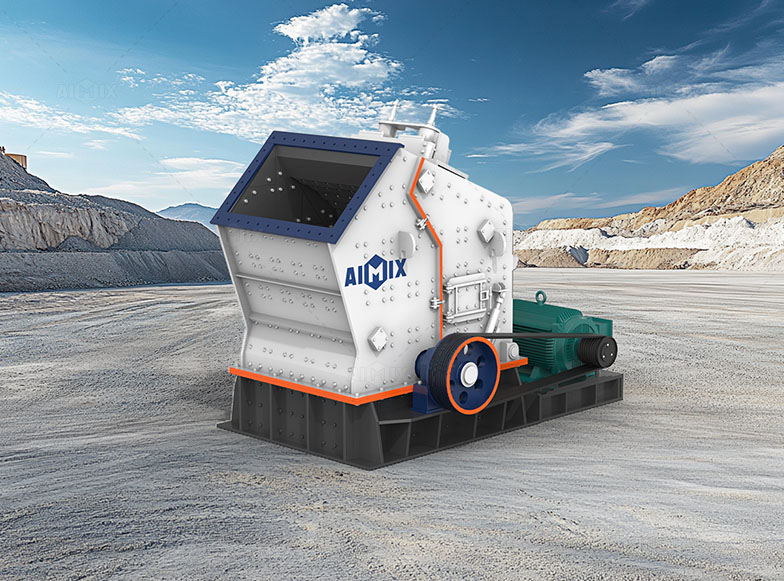
Comparing Different Crusher Machine Types for Different Applications
Each crusher technology has its own role within a crushing system. A jaw crusher machine is usually selected when strong primary crushing capability is needed. A cone crusher machine is preferred when operators require efficient secondary crushing and high-quality aggregates. An impact crusher machine is ideal when excellent particle shape and high reduction ratios are important.
Rather than choosing a crusher based only on capacity, businesses should evaluate the complete production process. The best crushing solution often combines different crusher machine types to achieve a balance between productivity, product quality, and operating costs.
| Crusher Type | Main Strength | Main Limitation |
|---|---|---|
| Jaw Crusher Machine | Strong primary crushing ability and reliable performance | Limited ability to produce final-shaped aggregates |
| Cone Crusher Machine | Efficient secondary crushing with consistent output | Higher investment and maintenance requirements |
| Impact Crusher Machine | Excellent particle shape and high reduction ratio | Higher wear when processing very hard materials |
Building an Efficient Crushing System Through Proper Equipment Selection
Successful crushing operations depend on matching equipment capabilities with production goals. A well-designed plant considers not only individual crusher performance but also how different machines work together.
For example, a quarry producing high-quality aggregates may combine a jaw crusher machine for primary reduction, a cone crusher machine for secondary processing, and an impact crusher machine for final shaping. This multi-stage approach improves efficiency and allows producers to meet different market requirements.
As construction and mining industries continue to demand higher-quality materials, selecting the right crusher machine types has become increasingly important. Proper equipment selection can reduce downtime, improve productivity, and increase the overall profitability of crushing operations.
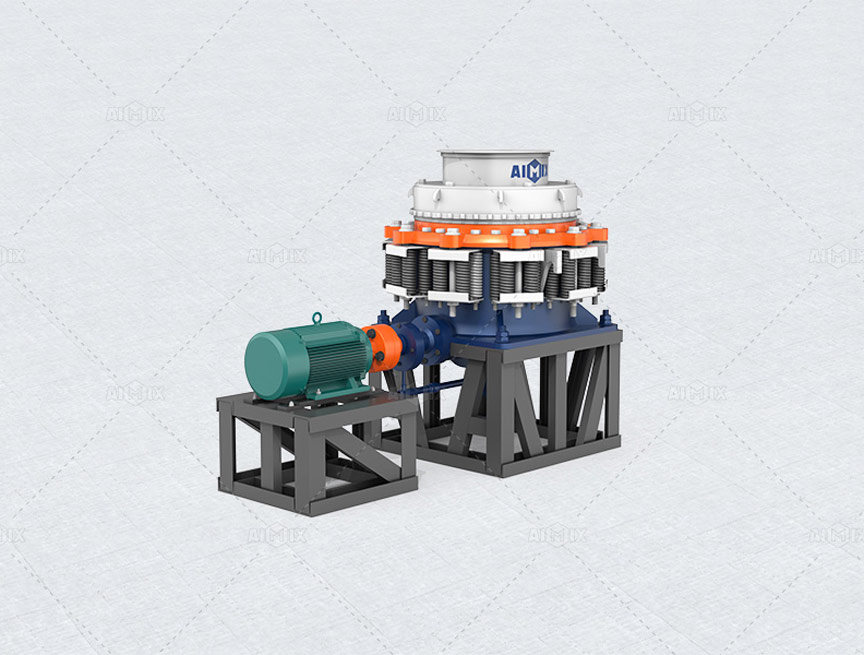
Conclusion
Understanding the strengths and limitations of different crusher machine types helps businesses make smarter decisions when designing crushing solutions. The jaw crusher machine, cone crusher machine, and impact crusher machine each provide unique advantages for different stages of material processing. By selecting the right combination of crushing technologies based on material properties, production goals, and product requirements, operators can build more efficient, reliable, and profitable crushing systems.
Why Concrete Supply Continuity Matters in Large Concrete Road Pavement Construction
Large concrete road pavement projects depend on a carefully synchronized sequence: aggregates and cement must be batched, concrete must be mixed and transported, and the fresh material must reach the paving front before its workable period is compromised. The process resembles a moving production line. If one stage slows, the disturbance can propagate through the entire operation. A batching plant may have sufficient theoretical output, yet an inadequate transport fleet can starve the paving operation. Likewise, a high-performance concrete road paving machine cannot maintain its designed paving rhythm when concrete deliveries arrive sporadically.
For this reason, concrete supply continuity is not simply a matter of production capacity. It concerns the coordination of the batching plant, transit mixer, paving equipment, and curing operations as one interconnected system. On extensive highways, airport pavements, industrial roads, and other concrete pavement projects, a mobile batching plant can also provide production closer to the active work front. The objective is to sustain a predictable flow of concrete from material dosing to final curing, while minimizing interruptions that could affect pavement uniformity.
Why Continuous Concrete Supply Matters in Road Pavement Construction
Large-Scale Paving Requires an Uninterrupted Workflow
Concrete pavement construction differs from many conventional concrete applications because the paving front progresses continuously along a defined alignment. Once the concrete paver machine begins placing material, the operation is expected to advance at a controlled speed. Concrete must therefore arrive at approximately the same rhythm as the paving process.
This creates a production equation rather than a simple equipment requirement. The effective paving rate depends not only on the paver itself but also on mixing capacity, transportation cycles, discharge efficiency, and site traffic. If concrete reaches the paver too slowly, the machine may need to reduce speed or stop. Neither condition is desirable on a large pavement project.
Irregular Supply Can Affect Pavement Continuity
Concrete pavement benefits from consistent placement conditions. Extended interruptions can create interfaces between successive placements, while inconsistent delivery may cause variations in workability and finishing conditions.
A cold joint or poorly integrated construction joint is not merely a visual imperfection. It can become a discontinuity within the pavement structure and may require additional treatment or corrective work. Maintaining concrete supply continuity therefore helps the paving crew preserve a more uniform placement sequence and reduces unnecessary interruptions.
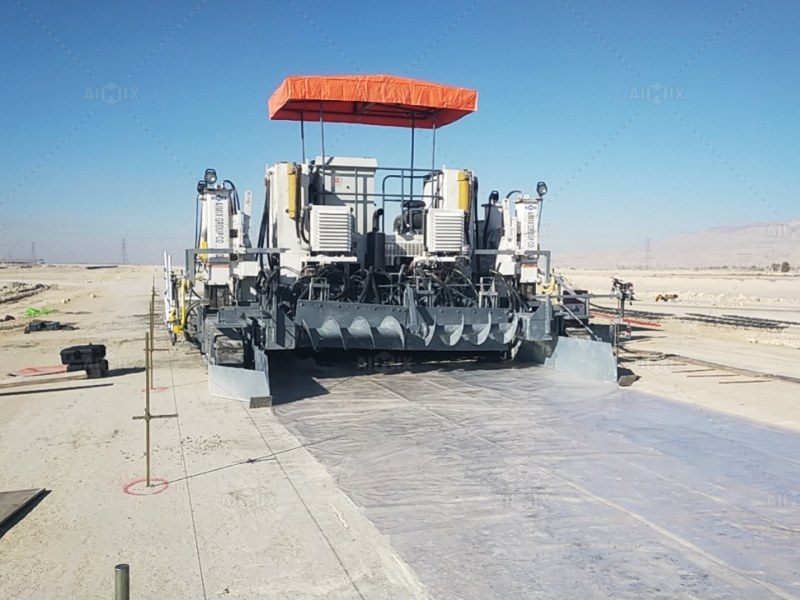
Building a Continuous Concrete Supply Chain
Batching Plant for Centralized Concrete Production
A batching plant forms the production nucleus of a large concrete pavement operation. It receives and proportionally doses aggregates, cement, water, and other materials before mixing them into concrete with the required properties.
For major road projects, production planning should begin with the required paving rate rather than simply selecting a plant based on its maximum advertised output. The plant must produce enough concrete to support the paver while also accommodating practical factors such as loading intervals, maintenance, material replenishment, and variations in site conditions.
Centralized production also provides greater control over mix consistency. Stable aggregate proportions and repeatable batching cycles help maintain similar concrete characteristics throughout an extended paving shift.
Mobile Batching Plant for Changing Construction Fronts
A mobile batching plant becomes particularly useful when road construction extends over a considerable distance or when the active paving front gradually shifts. Instead of keeping concrete production permanently tied to one location, the plant can be deployed closer to the construction zone.
This arrangement can reduce transportation distances and help shorten the interval between mixing and placement. The benefit becomes more pronounced on projects where road conditions, traffic restrictions, or long haul distances could otherwise introduce uncertainty into concrete delivery.
Mobility also provides a degree of logistical resilience. As the paving front advances, the production point can be repositioned according to the project’s evolving geometry, provided the relocation plan is incorporated into the overall construction schedule.
Transit Mixers Connect Production With the Paving Front
The transit mixer is the link between concrete production and pavement placement. Its role is more consequential than simply transporting material. The vehicle must complete loading, travel, discharge, and return cycles quickly enough to prevent gaps in the supply chain.
For a continuous paving operation, fleet sizing should consider the complete transportation cycle. A mixer that spends substantial time waiting at the plant or traveling along a congested access route contributes less effective supply than its nominal carrying capacity might suggest.
Consequently, several transit mixers may be required to create a buffer between the batching plant and paver. The objective is to prevent a single delayed vehicle from interrupting the paving rhythm.
Coordinating Concrete Production With Pavement Operations
Match Batching Capacity With Paving Speed
The production rate of the batching plant should be aligned with the concrete consumption rate of the paver. If the plant consistently produces less concrete than the paving operation consumes, the paver will eventually exhaust the available material. Conversely, excessive production without adequate transportation can result in unnecessary waiting and inefficient material handling.
A more useful approach is to establish the expected paving rate first and then calculate the required concrete volume per unit of pavement length. Pavement width, thickness, paving speed, and concrete density can then be used to estimate the approximate hourly demand. Allowances for operational interruptions and delivery variability should also be incorporated.
Integrate the Concrete Paver Machine With Upstream Equipment
The concrete paver machine represents the downstream point of the concrete production chain. Its productivity depends on receiving material at the correct frequency and in sufficient quantity.
Before paving begins, the batching plant for sale, transit mixers, paver, and supporting crews should therefore be treated as one operational system. Delivery routes should be defined, discharge points should be coordinated, and communication between the production and paving teams should remain continuous.
This synchronization creates a more stable paving rhythm. Instead of reacting to shortages as they occur, the operation is organized around anticipated concrete consumption.
Control Concrete Quality From Mixing to Placement
Continuity does not mean sacrificing quality for speed. Concrete must retain the required workability and uniformity throughout transportation and placement. Excessive delays, prolonged agitation, or poorly managed delivery sequences can affect the material before it reaches the paver.
Quality control should therefore extend beyond the batching plant. Fresh concrete testing, visual inspection, delivery-time records, and monitoring of placement conditions can help identify deviations before they become embedded across a large pavement section.
Maintaining Pavement Quality During Long Concrete Pours
Reduce Cold Joints and Unplanned Stoppages
One of the clearest reasons to maintain supply continuity is to reduce avoidable stoppages. A paving operation interrupted by insufficient concrete may have to manage an unintended termination point, reorganize the work area, or create a construction joint at a location that was not included in the original paving sequence.
A properly planned supply chain reduces this possibility. Production capacity, mixer availability, travel distance, and reserve arrangements should all be evaluated before a major pavement pour begins.
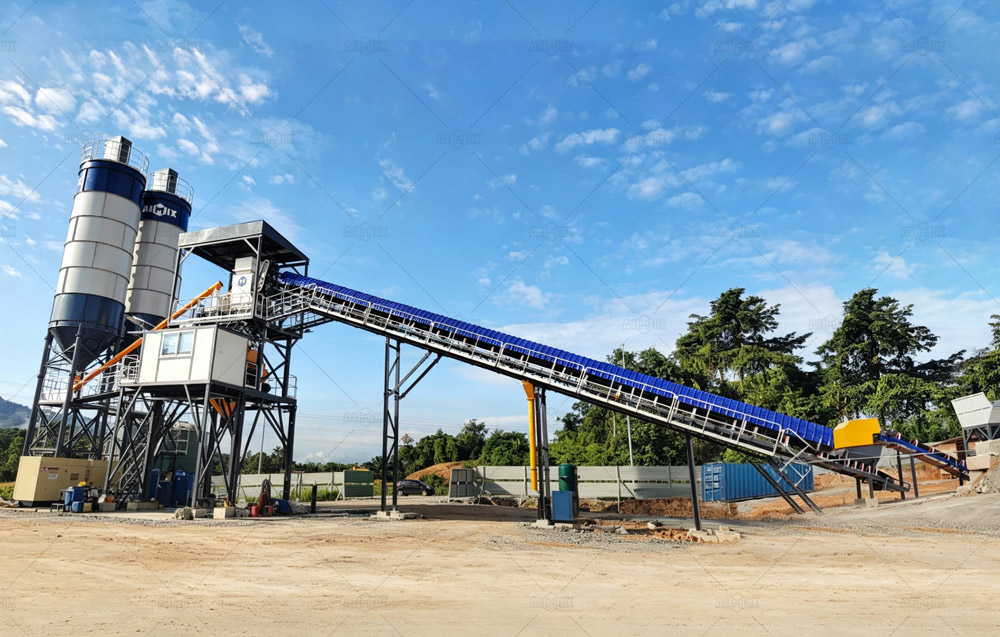
Coordinate Paving, Vibration, and Finishing
Concrete placement is followed by consolidation, shaping, surface treatment, and other finishing operations. These activities are closely coupled with the movement of the paver.
If the concrete supply becomes erratic, the downstream crews may experience alternating periods of excessive workload and inactivity. Continuous supply creates a steadier operating rhythm, allowing finishing personnel to work behind the paver without repeatedly adapting to sudden changes in material availability.
Plan Curing as Part of the Same Production Sequence
Curing should not be treated as an isolated activity after paving is complete. It is the final link in the concrete pavement workflow. Once the surface has been finished, appropriate curing measures should follow within the planned sequence to limit premature moisture loss and support concrete strength development.
On large projects, the paving train can therefore be viewed as a continuous chain: the batching plant produces concrete, transit mixers transport it, the concrete paver machine places and shapes it, and curing operations protect the newly finished pavement. Weakness at any link can affect the performance of the entire system.
Concrete supply continuity ultimately determines how effectively large pavement projects can convert production capacity into finished roadway. A batching plant provides the production foundation, a portable concrete batch plant for sale can bring that production closer to changing work fronts, and transit mixers maintain the connection between the plant and the paving operation. At the downstream end, the concrete paver machine depends on this coordinated supply to maintain a stable paving rhythm. When production, transportation, paving, finishing, and curing are planned as one integrated sequence, large concrete road projects can reduce interruptions, improve placement consistency, and create a more predictable construction process.
