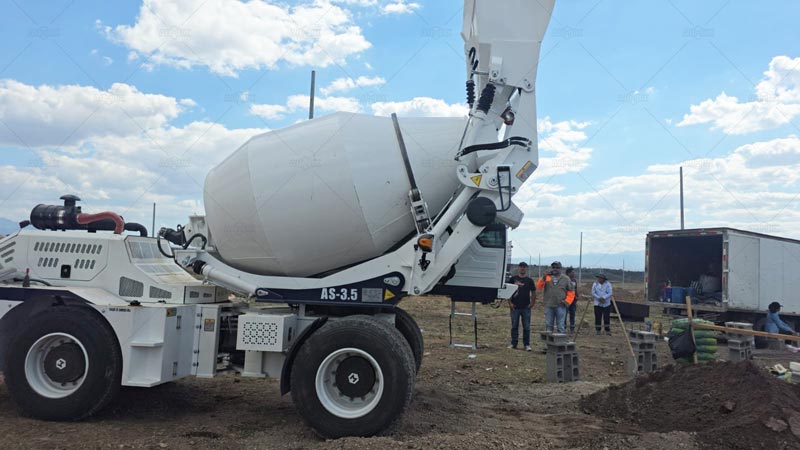
In modern infrastructure projects, concrete batching accuracy directly determines structural integrity, material cost management, and compliance with strict engineering standards. Traditionally, achieving high-precision mix ratios required setting up fixed batching plants, transporting raw aggregates over long distances, or relying on manual estimates during site mixing. However, the introduction of integrated automatic weighing systems has fundamentally transformed the modern self-loading concrete mixer from a basic off-road material transshipment machine into a smart, fully automated mobile batching unit. By placing real-time load sensors, intelligent microprocessors, and automated water management directly onto the loader arm and drum frame, a self-loading concrete mixer(autohormigonera) enables contractors to execute precise concrete formulations directly on remote, rough-terrain job sites.
The Mechanics of On-Board Automatic Weighing Systems
Understanding how real-time measurement works inside a mobile unit requires looking at the integration between hydraulic pressure sensors, load cells, and digital control terminals installed inside the driver cab. Equipment such as the AS-MK24 self-loading concrete mixer integrates these components directly into its operational layout to maximize accuracy during heavy-duty site loading.
Pressure Sensors vs. Structural Load Cells
Modern self-loading equipment relies on high-frequency pressure transducers installed within the lift cylinder hydraulics of the loading bucket. As the bucket scoops up aggregates—such as gravel, sand, or crushed stone—the sensor measures the hydraulic oil pressure required to lift the load at a predetermined height. Advanced setups combine hydraulic sensing with strain-gauge load cells mounted beneath the drum frame to ensure dual verification of material mass before mixing begins.
Dynamic Compensation Algorithms
Static weighing is simple, but job sites are rarely flat or perfectly stationary. Automatic weighing terminals utilize dynamic compensation algorithms. These algorithms instantly account for vehicle tilt, boom acceleration, and vibration, ensuring that weight readings on a self-loading concrete mixer remain accurate to within ±1% to ±2% even when operating on uneven ground or steep slopes.
Key Benefits of Integrated Weighing Precision
Automating batch proportions directly at the loading bucket brings distinct advantages that streamline quality control, lower material waste, and increase overall profitability across civil engineering projects. For contractors evaluating equipment investments, comparing the overall self-loading concrete mixer price(autohormigonera precio) against project savings highlights how automated weighing drastically reduces aggregate wastage and labor costs.
| Operational Challenge | Traditional Manual Mixing | Automatic Weighing Self-Loading Mixer |
|---|---|---|
| Aggregate Ratio Accuracy | Estimated by bucket count; high deviation risk | Digitally weighed in real-time; precision within ±1% |
| Water-Cement Ratio | Manual hose estimation; variable slump | Automated volumetric dosing linked to batch weight |
| Material Waste | 10% to 15% aggregate over-scooping common | Exact batch target loading; near-zero waste |
| Quality Records | Paper logs filled out post-pouring | Instant receipt printing and digital USB export |
Elimination of Human Error and Material Waste
When workers rely on manual estimation or bucket counts, raw material ratios fluctuate wildly. Excess gravel weakens concrete compressive strength, while excess cement increases material expenses unnecessarily. By programming recipe targets into the digital interface, the operator can ensure that every batch mixed inside a self-loading concrete mixer meets precise engineering criteria without trial and error.
Consistent Water-to-Cement Ratio Control
The water-to-cement ratio is critical to achieving target slump and compressive strength specifications. Automatic weighing systems measure the exact aggregate dry weight and automatically compute the exact quantity of water required. The integrated water pump then injects the exact gallon or liter volume required into the mixing drum, eliminating human guesswork.
Real-Time Data Logging and Regional Performance
Quality control in modern civil construction requires transparent proof of strength testing and batch composition. On-board automatic weighing systems serve as digital ledger tools that satisfy project engineering audits across demanding international markets.
Cab-Mounted Micro-Printers and USB Data Export
After each batch is loaded and mixed, the system records the exact weight of every component, batch time, operator ID, and water volume. Built-in thermal micro-printers inside the cab produce immediate paper receipts for site managers. Furthermore, operators can export batch logs via USB drives or send real-time data to cloud platforms via cellular telematics modules.
Deploying Automated Technology in South American Infrastructure
Regional terrain challenges make automated mobile batching particularly valuable in mountainous environments. For example, deploying a self-loading concrete mixer Chile project allows crews working on remote Andean roads, tunnel linings, and energy infrastructure to maintain strict concrete quality without relying on distant batching plants. In regions where imported aggregate and cement costs are high, choosing an optimized self-loading concrete mixer Chile(autohormigonera Chile) solution ensures that concrete recipes stay consistent despite changes in ambient humidity and terrain elevation.
Evaluating Capabilities and Cost Efficiency
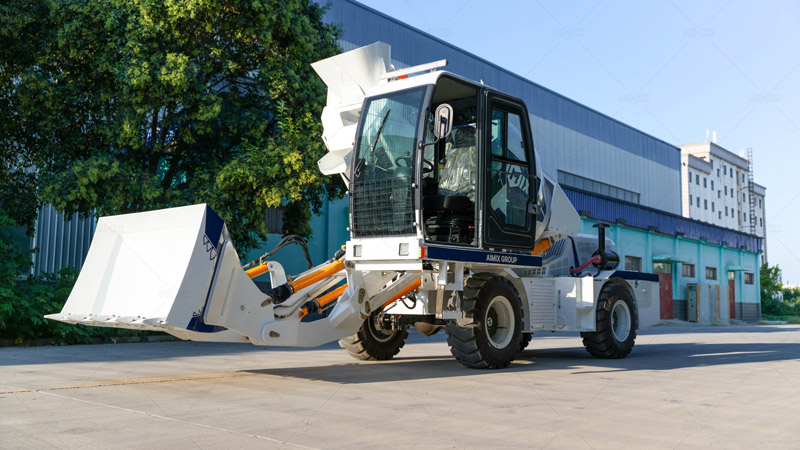
Practical engineering excellence is best observed in real-world deployments where machinery reliability and recipe accuracy are non-negotiable. Specialized equipment, such as the AS-MK24 self-loading concrete mixer, demonstrates how precision hydraulics and digital batching controls simplify site logistics. By allowing operators to batch cement, sand, and stone right on the spot, the AS-MK24 self-loading concrete mixer(AS-MK24 hormigonera autocargable) provides contractors with an all-in-one alternative to bulky stationary plants.
When analyzing equipment procurement options, buyers must balance upfront machinery costs with long-term operational efficiency. Finding a competitive self-loading concrete mixer price involves looking at build durability, weighing sensor precision, and after-sales technical support. Over time, the raw material savings provided by an accurate weighing system ensure that the initial self-loading concrete mixer price is quickly offset by reduced material waste and faster pour rates.
Ultimately, automatic weighing technology transforms the modern self-loading concrete mixer from a standard site transport vehicle into a high-precision, mobile batching plant. By guaranteeing accurate material proportions, automated water dosing, and full digital recordkeeping, these intelligent machines enable contractors to produce certified structural concrete anywhere, anytime.