A six-month road construction schedule may sound straightforward, but asphalt production planning is not simply a matter of dividing the project duration by six. A contractor needs to know how much asphalt mixture the project requires, how many productive paving days are available, how many hours the plant can realistically operate, and how quickly the paving team can place the material.
This is especially important for road projects in Kazakhstan. In 2026, Kazakhstan planned road construction and repair work across approximately 8,900 km of roads, including construction, reconstruction, capital repairs, and medium repairs. The road construction season is therefore supporting a large amount of asphalt demand, while contractors still need to manage regional weather and project schedules. Official Kazakhstan road-sector data provides useful context for contractors planning equipment and production capacity.
So, what asphalt plant capacity matches a six-month road project? The practical answer depends on the project’s total asphalt quantity and its actual productive working window. A 100 TPH asphalt plant may fit one project, while another six-month project may require 120, 160, or even 200 TPH.
Why A Six-Month Schedule Does Not Mean Six Months Of Full Asphalt Production
First, contractors should separate the contract period from the asphalt production period. A road project may last six months, but asphalt production may only occupy part of that time.
Before paving starts, the contractor may need to complete earthwork, drainage, subgrade preparation, aggregate base construction, utilities, testing, and other preparation work. At the end of the project, road marking, final inspection, and finishing work may continue after the main asphalt production phase.
Weather can also reduce the effective production window. Therefore, using six calendar months as the production period can make the required plant capacity look smaller than it actually is.
For example, if a contractor has a six-month contract but only 100 productive asphalt paving days, the plant must produce the required project quantity within those 100 days. That difference can significantly change the required TPH.
Start With The Total Asphalt Requirement
The first calculation should always be the total asphalt mixture required by the project.
Suppose a road project requires 90,000 tons of asphalt mixture.
If the contractor has 100 productive production days, the average daily requirement becomes:
90,000 tons ÷ 100 days = 900 tons/day
If the plant operates for eight effective production hours per day:
900 tons/day ÷ 8 hours = 112.5 TPH
This immediately gives the contractor a useful reference. A 100 TPH plant would have limited room under these assumptions. A 120 TPH plant would provide a closer nominal capacity, while a 160 TPH plant would provide considerably more capacity than the calculated average requirement.
However, the calculation does not end here. The contractor must also consider truck transportation, paving speed, aggregate supply, plant downtime, and the actual construction conditions.
How To Calculate The Required Asphalt Plant Capacity
The basic calculation is simple:
Required Plant Capacity = Daily Asphalt Requirement ÷ Effective Production Hours Per Day
The key word is effective. A plant rated at 100 TPH does not necessarily produce 100 tons every hour throughout an entire working shift.
Startup and shutdown take time. Aggregate moisture can influence drying. Maintenance can interrupt production. Material changes may require adjustments. Trucks may arrive late. The paving crew may also stop temporarily.
Therefore, the nominal TPH rating should be treated as a capacity reference rather than a guaranteed daily production figure.
Example: A 90,000-Ton Road Project
Consider a six-month project with the following planning conditions:
- Total asphalt requirement: 90,000 tons
- Productive asphalt paving days: 100 days
- Effective plant operation: 8 hours per day
- Required average daily production: 900 tons
The calculated hourly requirement is:
900 ÷ 8 = 112.5 TPH
From a planning perspective, the contractor could therefore compare 100 TPH, 120 TPH, and 160 TPH plant configurations.
The important point is that the contractor should not simply select the largest plant. The plant should match the complete production system and the project’s actual daily demand.
What Asphalt Plant Capacity Fits Different Project Volumes?
The following examples show how total asphalt quantity can affect the capacity range that a contractor may evaluate. These figures are planning references rather than guaranteed production outputs.
| Total Asphalt Requirement | Productive Days | Daily Requirement | Average Rate At 8 Hours | Plant Capacity To Evaluate |
|---|---|---|---|---|
| 30,000 tons | 100 days | 300 tons/day | 37.5 TPH | 40–60 TPH |
| 60,000 tons | 100 days | 600 tons/day | 75 TPH | 80–100 TPH |
| 90,000 tons | 100 days | 900 tons/day | 112.5 TPH | 120–160 TPH |
| 120,000 tons | 100 days | 1,200 tons/day | 150 TPH | 160–200 TPH |
The table illustrates an important purchasing principle: project duration alone cannot determine asphalt plant capacity.
Two contractors can both have six-month road contracts but require completely different plants. One project may require only 30,000 tons of asphalt. Another may require 120,000 tons. The production strategy should therefore start with project quantity rather than the contract duration.
When Is A 100 TPH Asphalt Plant Enough?
A 100 TPH asphalt plant can be suitable when the project’s daily asphalt requirement remains within a manageable range and the contractor has enough productive days to complete the work.
At its nominal capacity, a 100 TPH plant could theoretically produce:
100 tons/hour × 8 hours = 800 tons/day
However, contractors should not assume that 800 tons will always be the actual daily output. Real production depends on aggregate moisture, plant configuration, operating efficiency, maintenance, material supply, and transportation.
For a project requiring approximately 500–600 tons per productive day, for example, a 100 TPH class plant may provide a reasonable capacity range to evaluate.
For contractors researching an asphalt batch plant for sale, the first step should therefore be to calculate the project’s actual daily requirement before comparing plant models.
When Should You Consider A 120 TPH Or 160 TPH Plant?
Once the calculated daily requirement approaches the practical limit of a 100 TPH plant, contractors need to consider whether additional production capacity would provide useful schedule flexibility.
120 TPH Asphalt Plant
A 120 TPH plant can be considered when the calculated hourly requirement is slightly above 100 TPH.
For example, if the project requires 900 tons per productive day and the plant operates for eight effective hours:
900 ÷ 8 = 112.5 TPH
A 120 TPH plant therefore provides a closer nominal match than a 100 TPH plant.
This does not mean that 120 TPH will automatically complete the project faster. The contractor still needs enough trucks, a suitable paver, sufficient aggregate supply, and an effective paving crew.
160 TPH Asphalt Plant
A 160 TPH plant becomes more relevant when the project requires a higher daily asphalt output or when the available paving season is shorter than the original schedule suggests.
For example, if the project requires 1,200 tons per productive day and the plant operates for eight effective hours:
1,200 ÷ 8 = 150 TPH
A 160 TPH class plant would provide additional nominal capacity above the calculated average requirement.
This additional margin may help the contractor handle schedule variations. However, the paving system must also be capable of accepting the higher production rate.
200 TPH Asphalt Plant
A 200 TPH plant is more relevant to large road projects with high asphalt quantities or a compressed production schedule.
It can also be considered when a contractor needs to produce large daily quantities during a limited construction season.
However, a larger plant should not be selected simply because its TPH number is higher. If trucks or the paver become the bottleneck, the additional plant capacity may remain unused.
Why Kazakhstan’s Road Construction Season Matters
The six-month schedule should always be compared with the actual construction conditions in the project region.
Kazakhstan has a large geographic area, so weather and construction conditions can vary between regions. The northern, central, western, eastern, and southern areas do not necessarily have identical paving windows.
Current road construction activity also shows the scale of the market. Kazakhstan planned work across approximately 8,900 km of roads in 2026, including 3,400 km of construction and reconstruction projects, 324 km of capital repairs, and 5,200 km of medium repairs. The road construction season is expected to involve around 12,000 specialized machines, more than 25,000 road workers, and 193 asphalt and concrete plants.
Therefore, contractors working on a six-month schedule should consider the actual productive season instead of assuming six uninterrupted months of asphalt production.
Schedule Compression Changes The Capacity Requirement
Consider the same 90,000-ton project.
If 120 productive days are available:
90,000 ÷ 120 = 750 tons/day
At eight effective production hours per day:
750 ÷ 8 = 93.75 TPH
Now assume only 100 productive days remain:
90,000 ÷ 100 = 900 tons/day
The hourly requirement becomes:
900 ÷ 8 = 112.5 TPH
A reduction of only 20 productive days therefore changes the calculated hourly requirement from less than 100 TPH to more than 110 TPH.
This is why schedule planning and plant capacity should be calculated together.
Do Not Match The Asphalt Plant Only To Road Length
Road length alone cannot determine asphalt plant capacity.
Pavement width, layer thickness, number of asphalt layers, material density, and total paved area all influence the final asphalt quantity.
For example, 20 km of a narrow two-lane road can require a very different asphalt volume from 20 km of a wide multilane highway.
A practical project calculation should therefore include:
- Road length
- Pavement width
- Asphalt layer thickness
- Number of asphalt layers
- Asphalt mixture density
- Total paved area
- Estimated material losses
- Total asphalt quantity in tons
Once these values are available, the contractor can calculate the production requirement much more accurately.
Plant Capacity Must Match The Paving Operation
An asphalt plant is only one part of the road construction chain. Its production rate must match the capacity of the trucks, paver, rollers, and site logistics.
For example, a 160 TPH plant may theoretically produce 160 tons per hour, but the project may not be able to place 160 tons every hour.
If the truck fleet is too small, asphalt may accumulate at the plant. If the paving crew works more slowly, plant production may need to decrease. If the roller fleet cannot maintain the required compaction sequence, higher asphalt production will not necessarily increase completed road length.
Therefore, contractors should evaluate the complete system:
- Asphalt plant capacity
- Aggregate storage and feeding
- Bitumen storage and supply
- Hot mix storage
- Truck loading capacity
- Truck fleet size
- Truck cycle time
- Paving speed
- Roller capacity
- Haul distance
- Daily working hours
This approach helps prevent an important purchasing mistake: selecting a large plant while another part of the construction process remains the actual production bottleneck.
How Truck Distance Changes The Required Plant Capacity
Transportation distance can have a major effect on asphalt production efficiency.
Suppose a plant produces 120 tons per hour. If trucks spend a long time traveling between the plant and the paving site, the plant may not receive enough empty trucks to maintain continuous production.
Therefore, contractors should calculate the complete truck cycle:
- Loading time at the asphalt plant
- Travel time to the project
- Waiting time at the paving site
- Unloading time
- Return travel time
- Traffic and road-condition delays
This calculation may change the equipment plan. In some cases, adding trucks can improve material flow more effectively than buying a much larger asphalt plant.
Why Batch-Type Production Can Matter For Road Contractors
For many road projects, contractors need consistent asphalt mixtures for different pavement layers and sections.
Batch-type production allows the contractor to manage production according to defined batches and mixture recipes. This can be useful when different aggregate gradations or asphalt mixture specifications are required for different parts of the project.
For contractors comparing an hmp plant, it is important to evaluate more than the headline TPH figure. The heating system, mixing system, screening arrangement, control system, hot mix storage, and maintenance requirements can all affect actual project performance.
Consequently, the right plant is not necessarily the one with the highest nominal capacity. It is the one that fits the project’s production requirements and complete construction system.
What Should You Check Before Buying An Asphalt Plant In Kazakhstan?
After calculating the required capacity, contractors should evaluate the plant configuration against the actual project conditions.
Aggregate Moisture
Aggregate moisture can affect drying requirements and fuel consumption. Contractors should consider how aggregates will be stored and protected from rain or other moisture sources.
Burner And Heating System
The heating system should match the required production rate and local operating conditions. Stable heating is important because asphalt mixture quality depends on controlled production temperatures.
Control System
A reliable control system helps operators manage aggregate proportions, asphalt dosage, temperatures, and production parameters.
This becomes increasingly important when a project requires large quantities of consistent asphalt mixture across multiple road sections.
Spare Parts And Technical Support
A six-month project leaves limited room for unnecessary downtime.
Before purchasing, contractors should ask about wearing parts, critical spare parts, commissioning support, operator training, troubleshooting, and technical assistance.
Installation And Commissioning
The plant should be ready before the main paving phase begins.
If installation or commissioning takes longer than expected, the contractor may lose productive days and later need a higher daily production rate to recover the schedule.
Consider The Entire Asphalt Production System
The asphalt plant should support the project as part of a complete production chain.
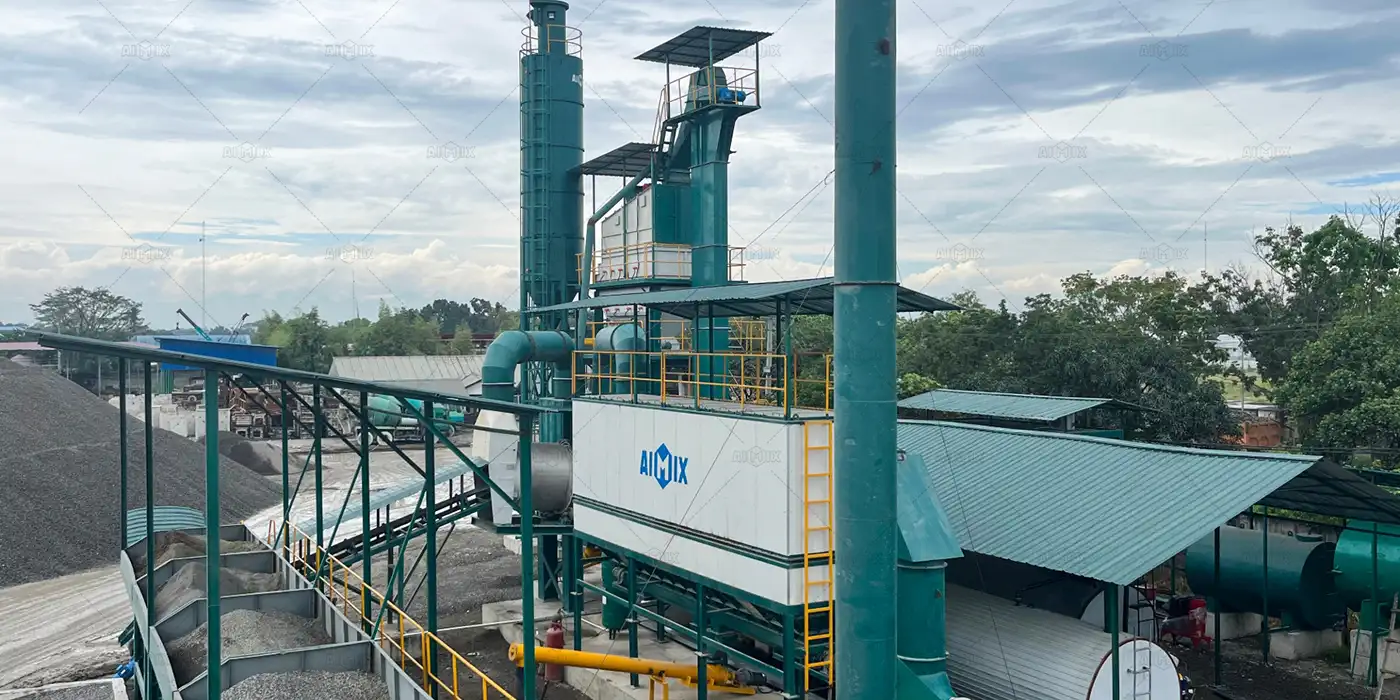
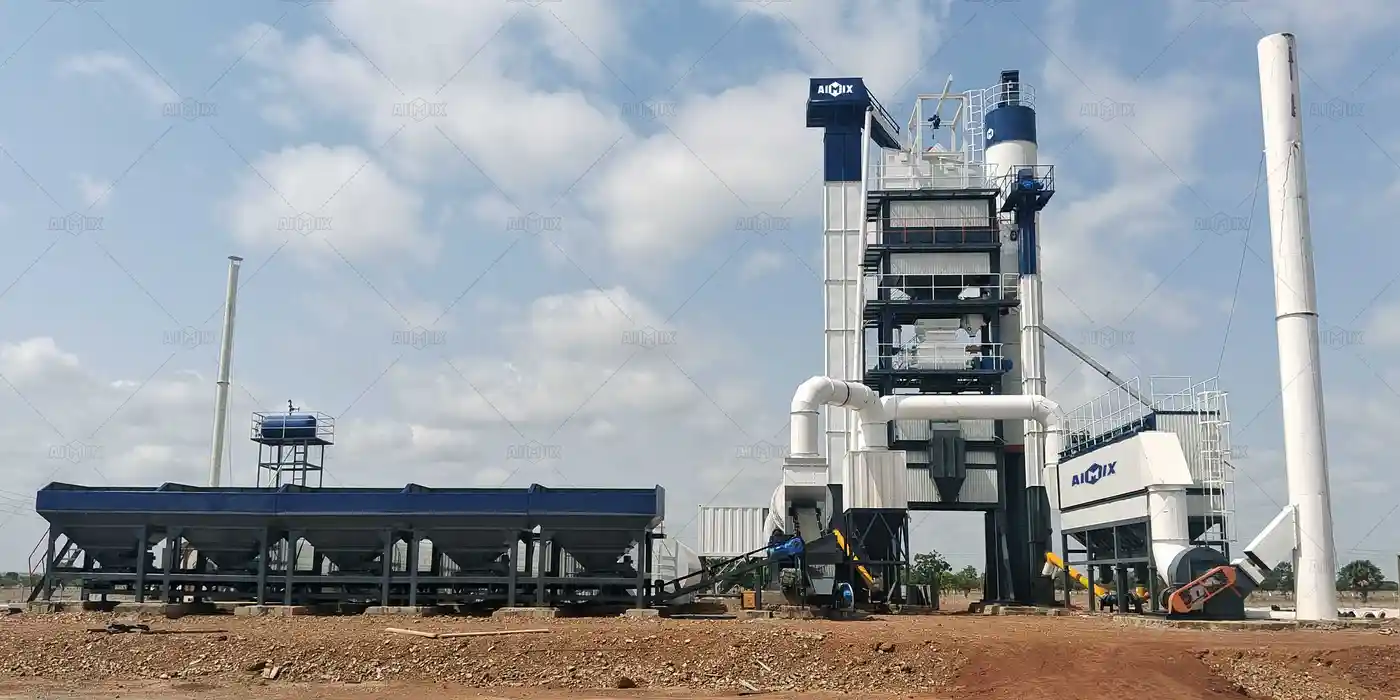
For example, the selected aggregate asphalt plant configuration should match aggregate supply, production capacity, asphalt mixture requirements, storage, and transportation.
Likewise, the paving equipment must accept the asphalt mixture at an appropriate rate. A properly matched asphalt paver machine connects asphalt production with actual pavement placement.
This relationship is critical because the project’s real output is not simply the amount of asphalt the plant can theoretically produce. The real output is the amount that the project can produce, transport, place, and compact within the available working window.
How To Match Plant Capacity With A Six-Month Schedule
A practical equipment selection process can follow seven steps.
- Calculate the total asphalt quantity. Use road dimensions, pavement thickness, density, and project specifications.
- Estimate productive days. Consider the actual construction season and likely weather interruptions.
- Calculate daily asphalt demand. Divide total asphalt tonnage by productive days.
- Calculate hourly demand. Divide daily production by realistic effective operating hours.
- Check transportation capacity. Confirm that the truck fleet can move the planned production continuously.
- Check paving capacity. Make sure the paver and roller fleet can handle the intended material flow.
- Allow practical production margin. Consider maintenance, material supply, weather, and schedule recovery requirements.
This process gives the contractor a much clearer basis for comparing asphalt plant options.
What Is The Practical Capacity For A 6-Month Road Project?
There is no single asphalt plant capacity that matches every six-month road construction project.
A project requiring around 300 tons per productive day may evaluate plants around 40–60 TPH. A project requiring around 600 tons per day may evaluate 80–100 TPH. A project requiring approximately 900 tons per day may need to evaluate the 120–160 TPH range. A project requiring around 1,200 tons per day may need to evaluate 160–200 TPH.
These ranges are planning references. The final selection should come from the actual project quantity, productive days, operating hours, material conditions, transportation distance, and paving capacity.
Plan The Plant Around The Actual Project
A six-month schedule creates pressure to protect every productive paving day. However, simply choosing a larger asphalt plant does not solve every scheduling problem.
The better approach is to calculate the complete production chain. Start with the total asphalt requirement. Then calculate productive days, daily production, hourly demand, truck requirements, and paving capacity.
For Kazakhstan projects, contractors should also consider the regional construction season and material supply. Kazakhstan reported in 2026 that domestic road-bitumen production capacity was sufficient to cover internal demand, which supports a more stable local bitumen supply environment for road construction projects. However, individual project logistics and procurement schedules still need to be planned carefully.
Ultimately, the right asphalt plant capacity is the one that allows the project to maintain a realistic production rhythm without creating a major mismatch between the plant, trucks, paver, and rollers.
If you are planning a six-month road project, prepare your total asphalt quantity, project location, pavement thickness, expected productive days, daily working hours, haul distance, and paving rate before selecting the aggregate asphalt plant. These figures provide a much stronger basis for evaluating whether a 100 TPH, 120 TPH, 160 TPH, or larger asphalt plant is appropriate for the project.