What’s The Best Concrete Batching Plant For Road Projects
Road construction differs greatly from conventional building jobs. Linear layouts, scattered working sections, tight paving schedules and varied concrete mixes from structural curb concrete to roller-compacted base layers make plant selection critical. The right batching setup keeps pouring on schedule, controls slump consistency and cuts unnecessary transport costs. Wet mix, dry mix, dedicated RCC and precast batching plants each carry distinct strengths for different road project profiles.
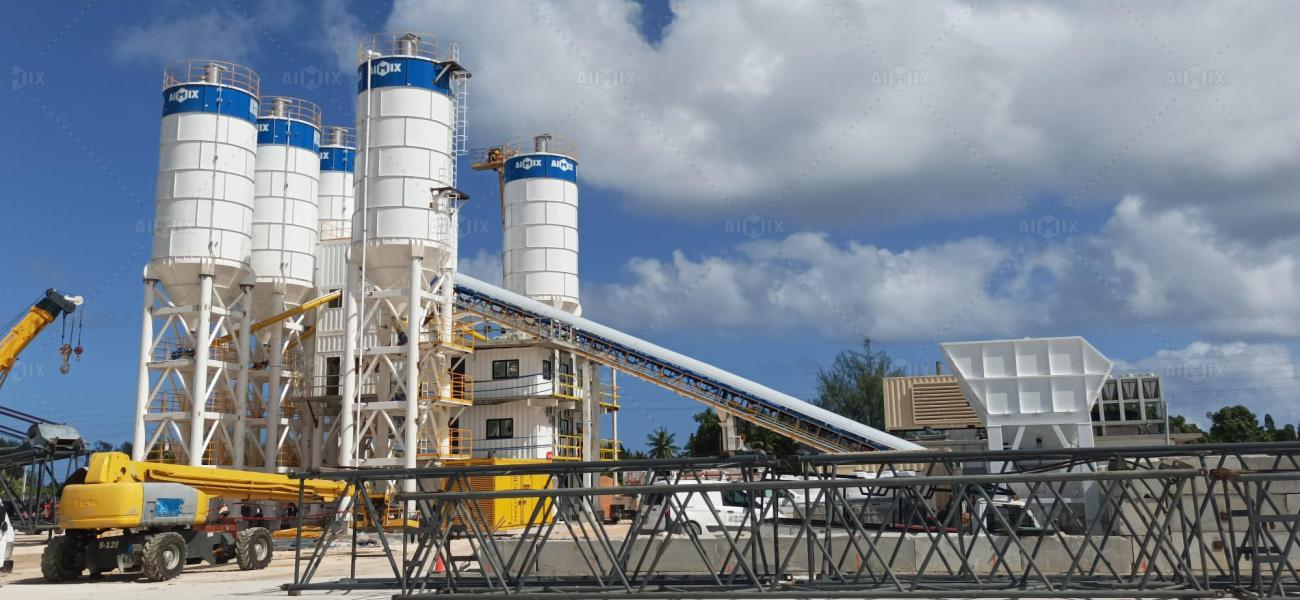
Wet mix concrete batching plant for paved highway surfaces
Wet mix plants complete full homogenised mixing of aggregates, cement, water and admixtures inside the central mixer before discharge. They deliver consistent, ready-to-place concrete with closely controlled slump. This plant type supports continuous paving workflows and precise quality logging required for formal road surface courses. Contractors rely on wet mix units for long highway corridors, urban arterial roads and airport taxiway paving where surface smoothness and uniform strength are mandatory. The main downside is stricter maintenance for mixer liners and water dosing systems under heavy daily production.
Dry mix concrete batching plant for long-distance road base works
Dry mix concrete plants only proportion sand, stone and cement without adding water at the station. Mixing finishes inside transit mixer trucks while travelling to the paving zone. This design shines for projects with long haul distances between the batching site and the paving front. Dry mix cuts the risk of premature setting and slump loss during transport. It is widely used for remote rural road bases, remote haul routes and dispersed small paving zones. Operators must carefully manage water addition on-site, which introduces minor variability if crews lack training.
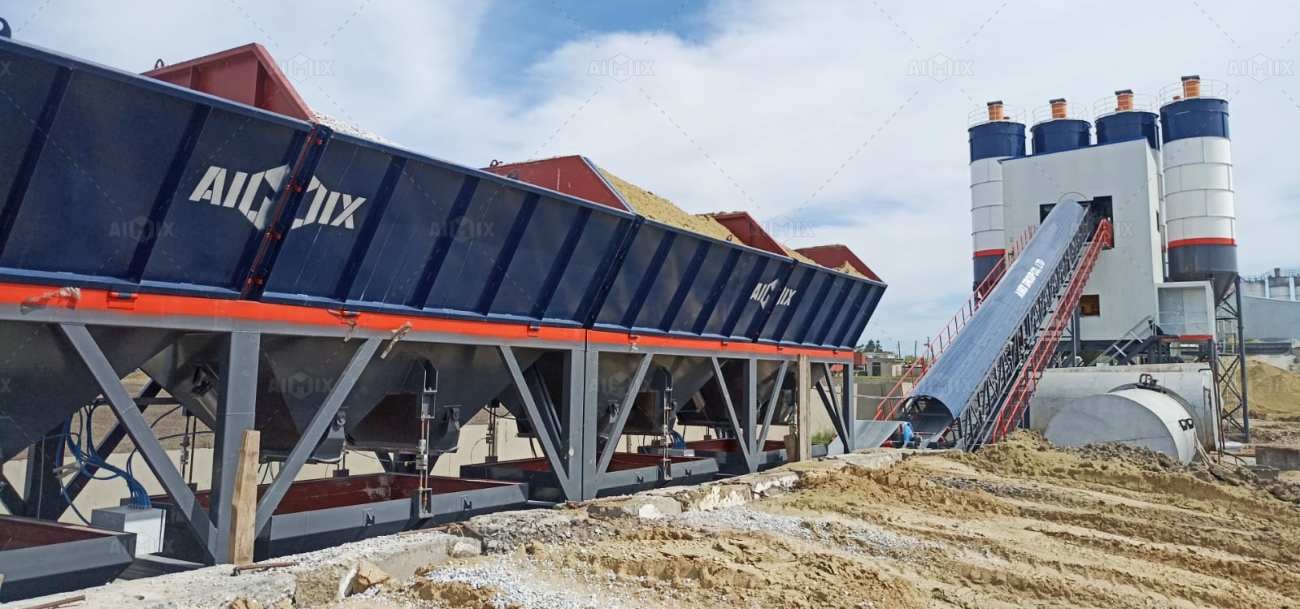
Dedicated RMC concrete batching plant for roller compacted pavement
RMC batching plants are engineered for stiff, zero-slump roller compacted concrete. They feature high-precision aggregate feeding, low water metering and robust discharge gates to deliver stiff, cohesive batches ideal for compaction by road rollers. RMC concrete gains strength quickly and resists heavy axle loads. These plants are popular for heavy-duty industrial haul roads, highway base courses, parking aprons and low-cost rural arterial pavements. They are not suitable for thin curb sections or decorative finished surfaces that demand high workability.
Precast concrete batching plant for road prefabricated components
Precast batching plants are calibrated for low-slump, high-strength concrete used to manufacture off-site road components. Items include culvert segments, barrier beams, gutter slabs, retaining wall panels and bridge girders for highway schemes. Batch tolerances are tighter than general paving plants to minimise deformation during curing. This setup works best when a project uses large volumes of prefabricated road elements, rather than continuous cast-in-place pavement. It cannot efficiently support frequent slump adjustments needed for on-site slipform paving.
Road strength, features and use cases by batching plant type
Pavement performance directly follows the output characteristics of each batching system. Concrete from wet mix plants typically reaches C30–C45 compressive strength, with stable flexural strength critical for surface courses. The finished pavement has uniform texture, fewer cold joints and strong abrasion resistance, built for high-traffic highways, city main roads and toll routes with decades of heavy truck loading.
Dry mix batches commonly achieve C20–C30 strength. The resulting road base is stable and economical, suited for secondary rural roads, temporary construction access roads and remote base-layer works. Surface finish quality is harder to control, so dry mix is rarely used for wearing surface courses.
Concrete from dedicated RCC plants delivers C20–C35 strength with excellent load-spreading capacity. RCC pavements are dense, fast-curing and open to traffic quickly. They are widely adopted for quarry haul roads, logistics yard pavements and highway sub-base layers, though they do not offer a smooth finish without an extra asphalt overlay.
Concrete produced by precast plants is usually C35–C50 grade for road structural parts. Precast elements have predictable dimensional accuracy and high early strength. They speed up road construction by enabling off-site manufacturing, mostly applied for highway culverts, crash barriers and bridge ancillary components instead of cast-in-place road slabs.
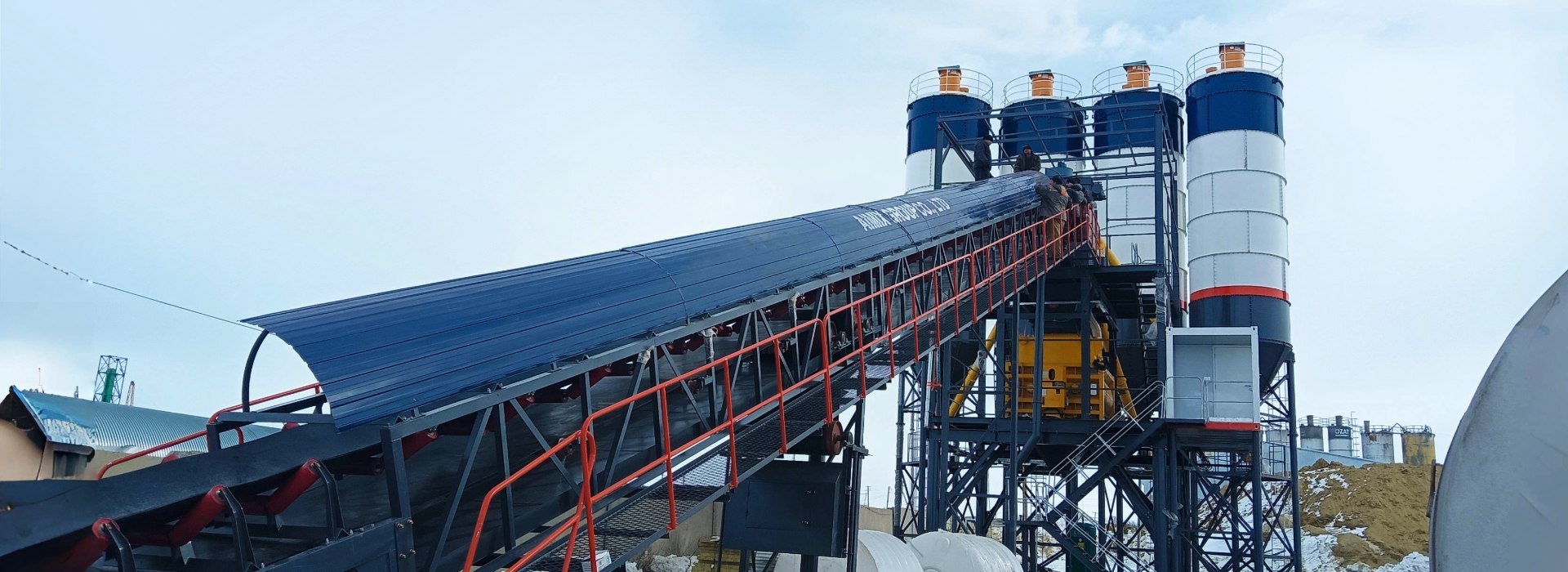
Concrete Batching Plant vs Asphalt Mixing Plant for Road Projects
| Comparison Item | Concrete Batching Plant | Asphalt Mixing Plant |
|---|---|---|
| Binder Material | Cement, mixed with water, aggregates and admixtures | Bitumen (asphalt), heated and blended with hot dried aggregates |
| Pavement Type | Rigid pavement | Flexible pavement |
| Production Requirement | No heating system needed; normal ambient production | Heating & drying system required, high energy consumption |
| Typical Service Life | 25–40 years | 8–15 years, regular resurfacing required |
| Load Resistance | Excellent for heavy axle loads, port & mining haul roads | Suitable for medium traffic; prone to rutting under sustained heavy loads |
| Open to Traffic | Needs curing (days or weeks) | Ready for traffic within hours after cooling |
| Repair & Maintenance | Hard repair; local patching is complicated | Fast, simple local repair and overlay |
| Best Application Scenarios | Highway rigid pavement, RCC base, airport runway, industrial yard, precast road components | Urban roads, residential streets, surface wearing course, road resurfacing & rehabilitation |
| Key Weakness | Long curing time, higher initial cost, noisy rough ride without surface treatment | Higher recurring maintenance cost, softens under high temperature |
No single plant suits every road job. Match plant mixing logic to your pavement layer type, haul distance, required surface finish and traffic loading before finalising investment.
What Asphalt Plant Capacity Matches A 6-Month Road Construction Schedule?
A six-month road construction schedule may sound straightforward, but asphalt production planning is not simply a matter of dividing the project duration by six. A contractor needs to know how much asphalt mixture the project requires, how many productive paving days are available, how many hours the plant can realistically operate, and how quickly the paving team can place the material.
This is especially important for road projects in Kazakhstan. In 2026, Kazakhstan planned road construction and repair work across approximately 8,900 km of roads, including construction, reconstruction, capital repairs, and medium repairs. The road construction season is therefore supporting a large amount of asphalt demand, while contractors still need to manage regional weather and project schedules. Official Kazakhstan road-sector data provides useful context for contractors planning equipment and production capacity.
So, what asphalt plant capacity matches a six-month road project? The practical answer depends on the project’s total asphalt quantity and its actual productive working window. A 100 TPH asphalt plant may fit one project, while another six-month project may require 120, 160, or even 200 TPH.
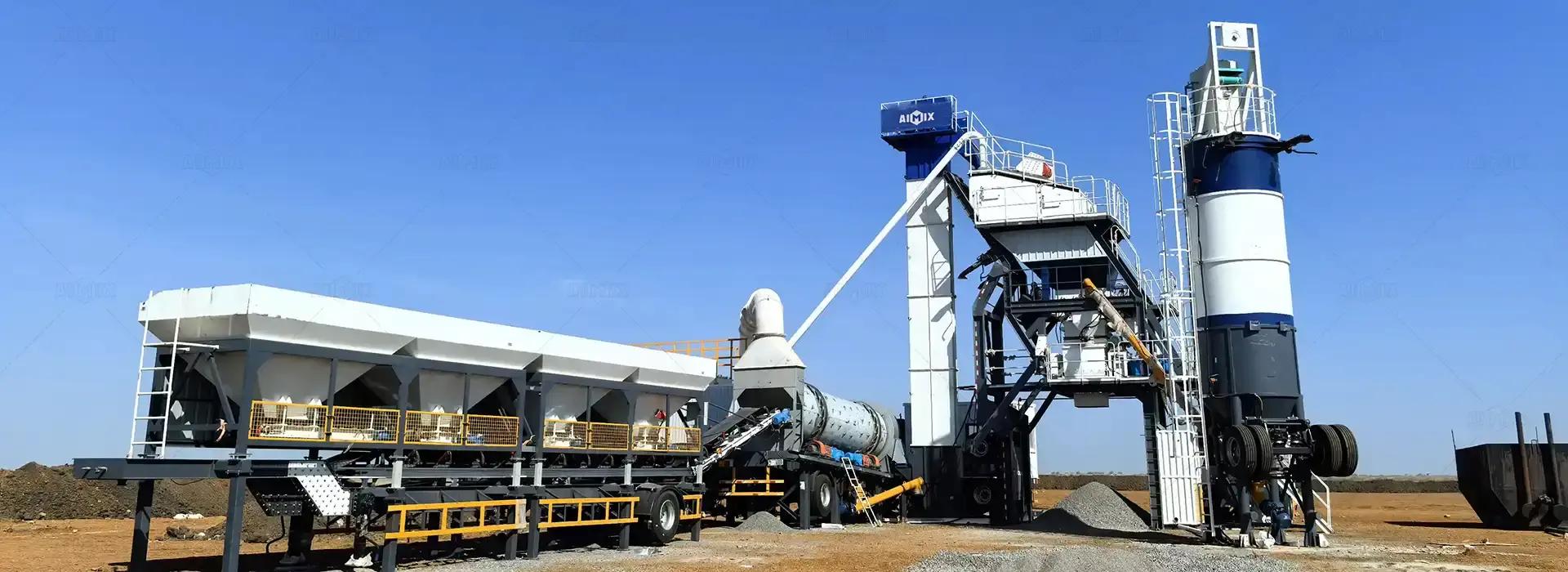
Why A Six-Month Schedule Does Not Mean Six Months Of Full Asphalt Production
First, contractors should separate the contract period from the asphalt production period. A road project may last six months, but asphalt production may only occupy part of that time.
Before paving starts, the contractor may need to complete earthwork, drainage, subgrade preparation, aggregate base construction, utilities, testing, and other preparation work. At the end of the project, road marking, final inspection, and finishing work may continue after the main asphalt production phase.
Weather can also reduce the effective production window. Therefore, using six calendar months as the production period can make the required plant capacity look smaller than it actually is.
For example, if a contractor has a six-month contract but only 100 productive asphalt paving days, the plant must produce the required project quantity within those 100 days. That difference can significantly change the required TPH.
Start With The Total Asphalt Requirement
The first calculation should always be the total asphalt mixture required by the project.
Suppose a road project requires 90,000 tons of asphalt mixture.
If the contractor has 100 productive production days, the average daily requirement becomes:
90,000 tons ÷ 100 days = 900 tons/day
If the plant operates for eight effective production hours per day:
900 tons/day ÷ 8 hours = 112.5 TPH
This immediately gives the contractor a useful reference. A 100 TPH plant would have limited room under these assumptions. A 120 TPH plant would provide a closer nominal capacity, while a 160 TPH plant would provide considerably more capacity than the calculated average requirement.
However, the calculation does not end here. The contractor must also consider truck transportation, paving speed, aggregate supply, plant downtime, and the actual construction conditions.
How To Calculate The Required Asphalt Plant Capacity
The basic calculation is simple:
Required Plant Capacity = Daily Asphalt Requirement ÷ Effective Production Hours Per Day
The key word is effective. A plant rated at 100 TPH does not necessarily produce 100 tons every hour throughout an entire working shift.
Startup and shutdown take time. Aggregate moisture can influence drying. Maintenance can interrupt production. Material changes may require adjustments. Trucks may arrive late. The paving crew may also stop temporarily.
Therefore, the nominal TPH rating should be treated as a capacity reference rather than a guaranteed daily production figure.
Example: A 90,000-Ton Road Project
Consider a six-month project with the following planning conditions:
- Total asphalt requirement: 90,000 tons
- Productive asphalt paving days: 100 days
- Effective plant operation: 8 hours per day
- Required average daily production: 900 tons
The calculated hourly requirement is:
900 ÷ 8 = 112.5 TPH
From a planning perspective, the contractor could therefore compare 100 TPH, 120 TPH, and 160 TPH plant configurations.
The important point is that the contractor should not simply select the largest plant. The plant should match the complete production system and the project’s actual daily demand.
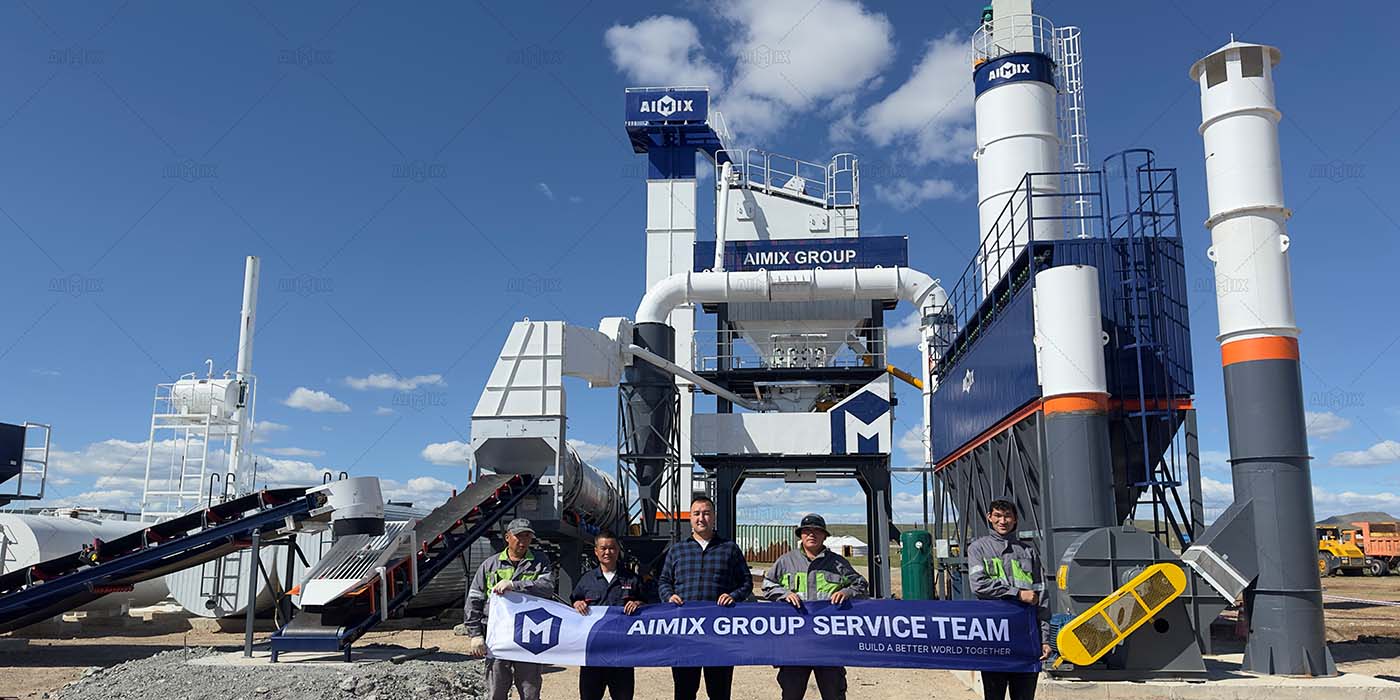
What Asphalt Plant Capacity Fits Different Project Volumes?
The following examples show how total asphalt quantity can affect the capacity range that a contractor may evaluate. These figures are planning references rather than guaranteed production outputs.
| Total Asphalt Requirement | Productive Days | Daily Requirement | Average Rate At 8 Hours | Plant Capacity To Evaluate |
|---|---|---|---|---|
| 30,000 tons | 100 days | 300 tons/day | 37.5 TPH | 40–60 TPH |
| 60,000 tons | 100 days | 600 tons/day | 75 TPH | 80–100 TPH |
| 90,000 tons | 100 days | 900 tons/day | 112.5 TPH | 120–160 TPH |
| 120,000 tons | 100 days | 1,200 tons/day | 150 TPH | 160–200 TPH |
The table illustrates an important purchasing principle: project duration alone cannot determine asphalt plant capacity.
Two contractors can both have six-month road contracts but require completely different plants. One project may require only 30,000 tons of asphalt. Another may require 120,000 tons. The production strategy should therefore start with project quantity rather than the contract duration.
When Is A 100 TPH Asphalt Plant Enough?
A 100 TPH asphalt plant can be suitable when the project’s daily asphalt requirement remains within a manageable range and the contractor has enough productive days to complete the work.
At its nominal capacity, a 100 TPH plant could theoretically produce:
100 tons/hour × 8 hours = 800 tons/day
However, contractors should not assume that 800 tons will always be the actual daily output. Real production depends on aggregate moisture, plant configuration, operating efficiency, maintenance, material supply, and transportation.
For a project requiring approximately 500–600 tons per productive day, for example, a 100 TPH class plant may provide a reasonable capacity range to evaluate.
For contractors researching an asphalt batch plant for sale, the first step should therefore be to calculate the project’s actual daily requirement before comparing plant models.
When Should You Consider A 120 TPH Or 160 TPH Plant?
Once the calculated daily requirement approaches the practical limit of a 100 TPH plant, contractors need to consider whether additional production capacity would provide useful schedule flexibility.
120 TPH Asphalt Plant
A 120 TPH plant can be considered when the calculated hourly requirement is slightly above 100 TPH.
For example, if the project requires 900 tons per productive day and the plant operates for eight effective hours:
900 ÷ 8 = 112.5 TPH
A 120 TPH plant therefore provides a closer nominal match than a 100 TPH plant.
This does not mean that 120 TPH will automatically complete the project faster. The contractor still needs enough trucks, a suitable paver, sufficient aggregate supply, and an effective paving crew.
160 TPH Asphalt Plant
A 160 TPH plant becomes more relevant when the project requires a higher daily asphalt output or when the available paving season is shorter than the original schedule suggests.
For example, if the project requires 1,200 tons per productive day and the plant operates for eight effective hours:
1,200 ÷ 8 = 150 TPH
A 160 TPH class plant would provide additional nominal capacity above the calculated average requirement.
This additional margin may help the contractor handle schedule variations. However, the paving system must also be capable of accepting the higher production rate.
200 TPH Asphalt Plant
A 200 TPH plant is more relevant to large road projects with high asphalt quantities or a compressed production schedule.
It can also be considered when a contractor needs to produce large daily quantities during a limited construction season.
However, a larger plant should not be selected simply because its TPH number is higher. If trucks or the paver become the bottleneck, the additional plant capacity may remain unused.
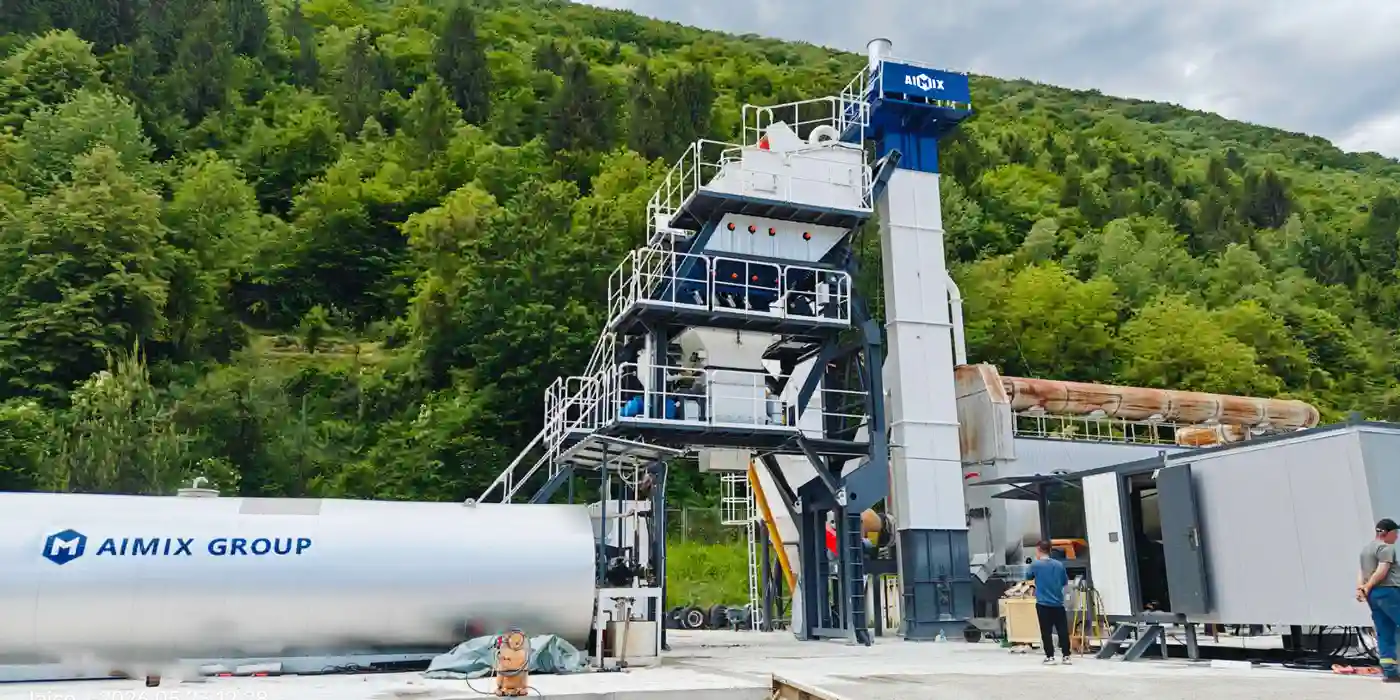
Why Kazakhstan’s Road Construction Season Matters
The six-month schedule should always be compared with the actual construction conditions in the project region.
Kazakhstan has a large geographic area, so weather and construction conditions can vary between regions. The northern, central, western, eastern, and southern areas do not necessarily have identical paving windows.
Current road construction activity also shows the scale of the market. Kazakhstan planned work across approximately 8,900 km of roads in 2026, including 3,400 km of construction and reconstruction projects, 324 km of capital repairs, and 5,200 km of medium repairs. The road construction season is expected to involve around 12,000 specialized machines, more than 25,000 road workers, and 193 asphalt and concrete plants.
Therefore, contractors working on a six-month schedule should consider the actual productive season instead of assuming six uninterrupted months of asphalt production.
Schedule Compression Changes The Capacity Requirement
Consider the same 90,000-ton project.
If 120 productive days are available:
90,000 ÷ 120 = 750 tons/day
At eight effective production hours per day:
750 ÷ 8 = 93.75 TPH
Now assume only 100 productive days remain:
90,000 ÷ 100 = 900 tons/day
The hourly requirement becomes:
900 ÷ 8 = 112.5 TPH
A reduction of only 20 productive days therefore changes the calculated hourly requirement from less than 100 TPH to more than 110 TPH.
This is why schedule planning and plant capacity should be calculated together.
Do Not Match The Asphalt Plant Only To Road Length
Road length alone cannot determine asphalt plant capacity.
Pavement width, layer thickness, number of asphalt layers, material density, and total paved area all influence the final asphalt quantity.
For example, 20 km of a narrow two-lane road can require a very different asphalt volume from 20 km of a wide multilane highway.
A practical project calculation should therefore include:
- Road length
- Pavement width
- Asphalt layer thickness
- Number of asphalt layers
- Asphalt mixture density
- Total paved area
- Estimated material losses
- Total asphalt quantity in tons
Once these values are available, the contractor can calculate the production requirement much more accurately.
Plant Capacity Must Match The Paving Operation
An asphalt plant is only one part of the road construction chain. Its production rate must match the capacity of the trucks, paver, rollers, and site logistics.
For example, a 160 TPH plant may theoretically produce 160 tons per hour, but the project may not be able to place 160 tons every hour.
If the truck fleet is too small, asphalt may accumulate at the plant. If the paving crew works more slowly, plant production may need to decrease. If the roller fleet cannot maintain the required compaction sequence, higher asphalt production will not necessarily increase completed road length.
Therefore, contractors should evaluate the complete system:
- Asphalt plant capacity
- Aggregate storage and feeding
- Bitumen storage and supply
- Hot mix storage
- Truck loading capacity
- Truck fleet size
- Truck cycle time
- Paving speed
- Roller capacity
- Haul distance
- Daily working hours
This approach helps prevent an important purchasing mistake: selecting a large plant while another part of the construction process remains the actual production bottleneck.
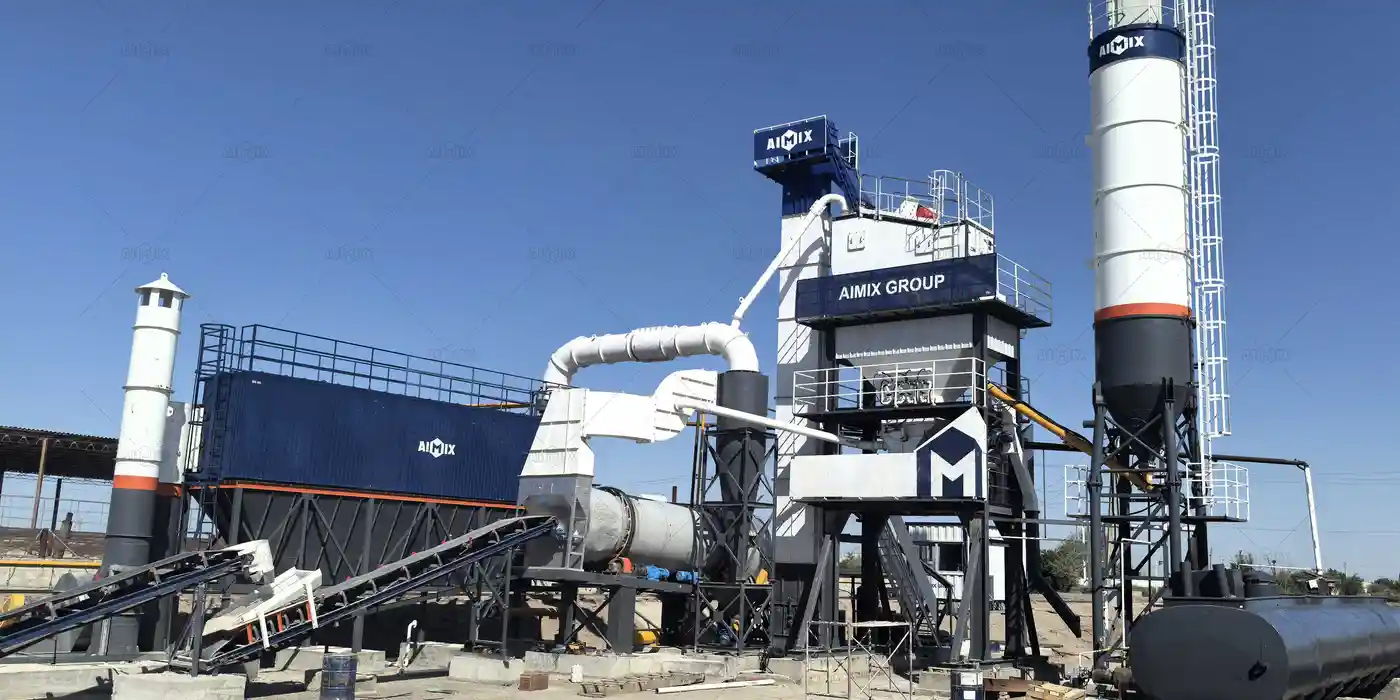
How Truck Distance Changes The Required Plant Capacity
Transportation distance can have a major effect on asphalt production efficiency.
Suppose a plant produces 120 tons per hour. If trucks spend a long time traveling between the plant and the paving site, the plant may not receive enough empty trucks to maintain continuous production.
Therefore, contractors should calculate the complete truck cycle:
- Loading time at the asphalt plant
- Travel time to the project
- Waiting time at the paving site
- Unloading time
- Return travel time
- Traffic and road-condition delays
This calculation may change the equipment plan. In some cases, adding trucks can improve material flow more effectively than buying a much larger asphalt plant.
Why Batch-Type Production Can Matter For Road Contractors
For many road projects, contractors need consistent asphalt mixtures for different pavement layers and sections.
Batch-type production allows the contractor to manage production according to defined batches and mixture recipes. This can be useful when different aggregate gradations or asphalt mixture specifications are required for different parts of the project.
For contractors comparing an hmp plant, it is important to evaluate more than the headline TPH figure. The heating system, mixing system, screening arrangement, control system, hot mix storage, and maintenance requirements can all affect actual project performance.
Consequently, the right plant is not necessarily the one with the highest nominal capacity. It is the one that fits the project’s production requirements and complete construction system.
What Should You Check Before Buying An Asphalt Plant In Kazakhstan?
After calculating the required capacity, contractors should evaluate the plant configuration against the actual project conditions.
Aggregate Moisture
Aggregate moisture can affect drying requirements and fuel consumption. Contractors should consider how aggregates will be stored and protected from rain or other moisture sources.
Burner And Heating System
The heating system should match the required production rate and local operating conditions. Stable heating is important because asphalt mixture quality depends on controlled production temperatures.
Control System
A reliable control system helps operators manage aggregate proportions, asphalt dosage, temperatures, and production parameters.
This becomes increasingly important when a project requires large quantities of consistent asphalt mixture across multiple road sections.
Spare Parts And Technical Support
A six-month project leaves limited room for unnecessary downtime.
Before purchasing, contractors should ask about wearing parts, critical spare parts, commissioning support, operator training, troubleshooting, and technical assistance.
Installation And Commissioning
The plant should be ready before the main paving phase begins.
If installation or commissioning takes longer than expected, the contractor may lose productive days and later need a higher daily production rate to recover the schedule.
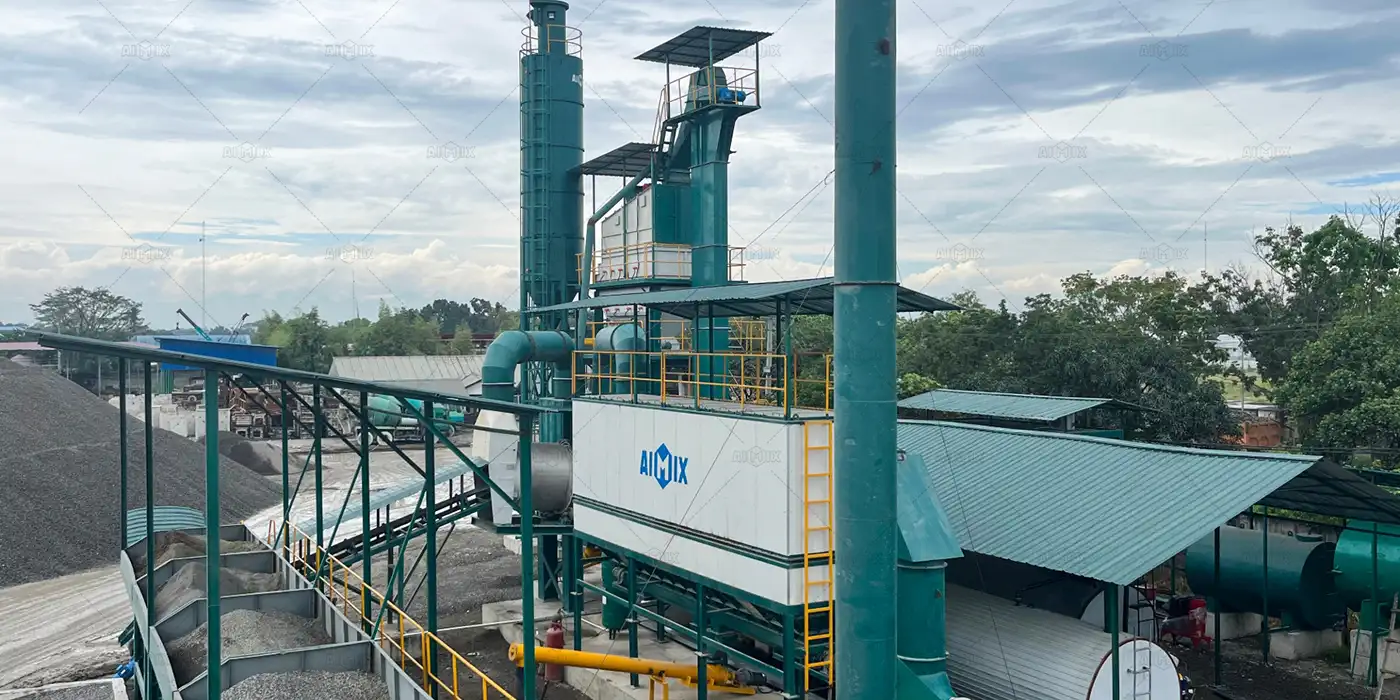
Consider The Entire Asphalt Production System
The asphalt plant should support the project as part of a complete production chain.
For example, the selected aggregate asphalt plant configuration should match aggregate supply, production capacity, asphalt mixture requirements, storage, and transportation.
Likewise, the paving equipment must accept the asphalt mixture at an appropriate rate. A properly matched asphalt paver machine connects asphalt production with actual pavement placement.
This relationship is critical because the project’s real output is not simply the amount of asphalt the plant can theoretically produce. The real output is the amount that the project can produce, transport, place, and compact within the available working window.
How To Match Plant Capacity With A Six-Month Schedule
A practical equipment selection process can follow seven steps.
- Calculate the total asphalt quantity. Use road dimensions, pavement thickness, density, and project specifications.
- Estimate productive days. Consider the actual construction season and likely weather interruptions.
- Calculate daily asphalt demand. Divide total asphalt tonnage by productive days.
- Calculate hourly demand. Divide daily production by realistic effective operating hours.
- Check transportation capacity. Confirm that the truck fleet can move the planned production continuously.
- Check paving capacity. Make sure the paver and roller fleet can handle the intended material flow.
- Allow practical production margin. Consider maintenance, material supply, weather, and schedule recovery requirements.
This process gives the contractor a much clearer basis for comparing asphalt plant options.
What Is The Practical Capacity For A 6-Month Road Project?
There is no single asphalt plant capacity that matches every six-month road construction project.
A project requiring around 300 tons per productive day may evaluate plants around 40–60 TPH. A project requiring around 600 tons per day may evaluate 80–100 TPH. A project requiring approximately 900 tons per day may need to evaluate the 120–160 TPH range. A project requiring around 1,200 tons per day may need to evaluate 160–200 TPH.
These ranges are planning references. The final selection should come from the actual project quantity, productive days, operating hours, material conditions, transportation distance, and paving capacity.
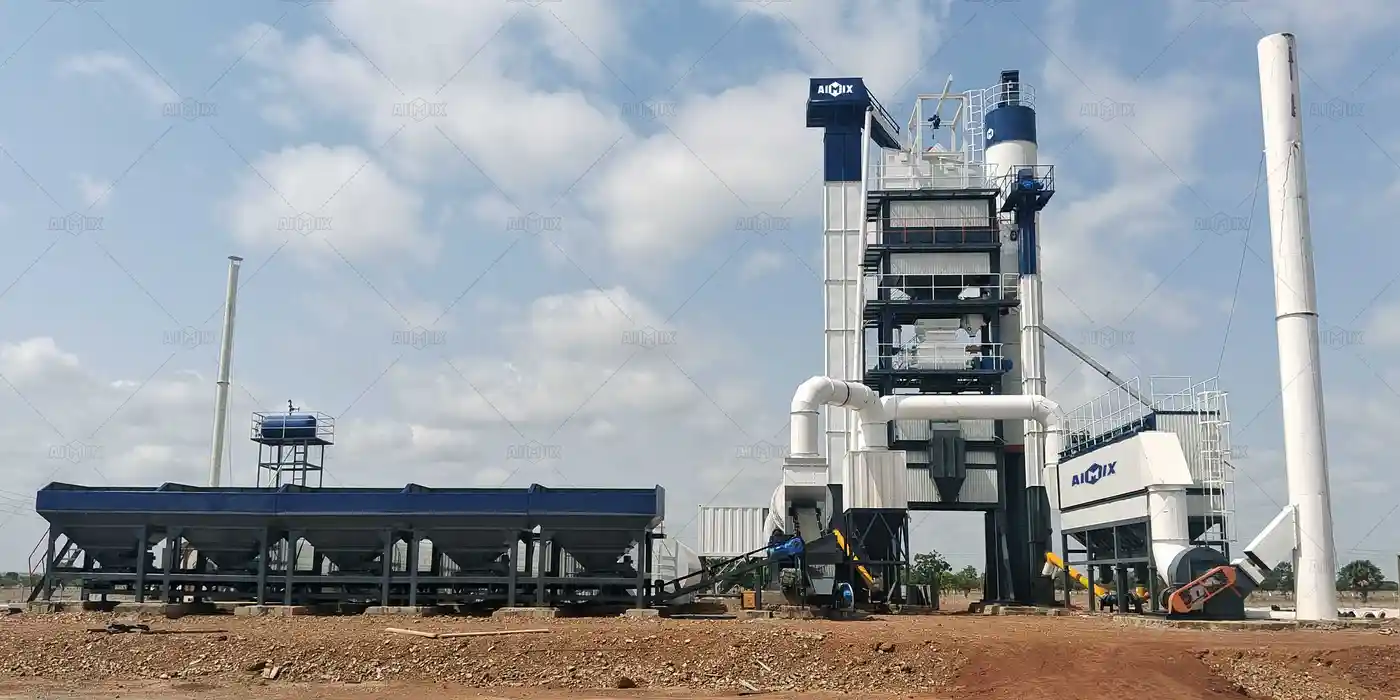
Plan The Plant Around The Actual Project
A six-month schedule creates pressure to protect every productive paving day. However, simply choosing a larger asphalt plant does not solve every scheduling problem.
The better approach is to calculate the complete production chain. Start with the total asphalt requirement. Then calculate productive days, daily production, hourly demand, truck requirements, and paving capacity.
For Kazakhstan projects, contractors should also consider the regional construction season and material supply. Kazakhstan reported in 2026 that domestic road-bitumen production capacity was sufficient to cover internal demand, which supports a more stable local bitumen supply environment for road construction projects. However, individual project logistics and procurement schedules still need to be planned carefully.
Ultimately, the right asphalt plant capacity is the one that allows the project to maintain a realistic production rhythm without creating a major mismatch between the plant, trucks, paver, and rollers.
If you are planning a six-month road project, prepare your total asphalt quantity, project location, pavement thickness, expected productive days, daily working hours, haul distance, and paving rate before selecting the aggregate asphalt plant. These figures provide a much stronger basis for evaluating whether a 100 TPH, 120 TPH, 160 TPH, or larger asphalt plant is appropriate for the project.
Sand Making and Washing Plant Configuration: Matching VSI Crushers, Screens, and Sand Washers to Production Goals
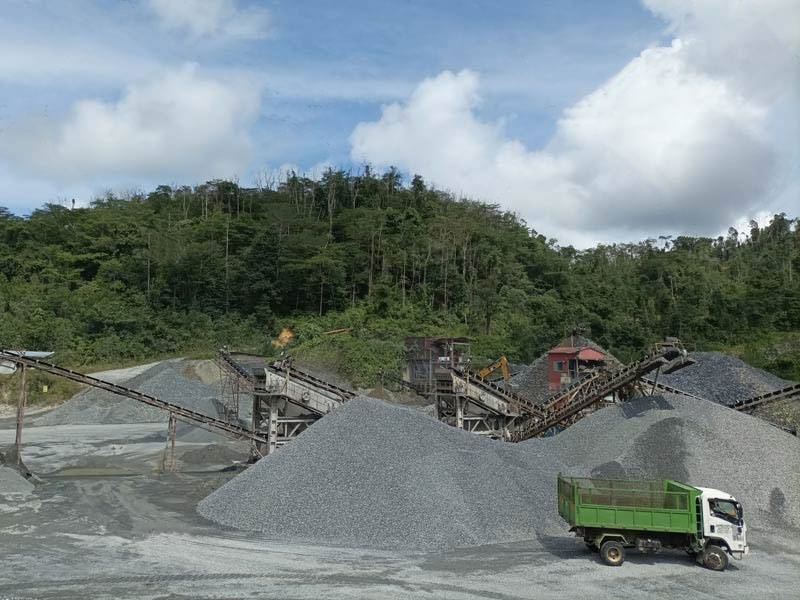
A sand making and washing plant must do more than produce a target volume of manufactured sand. It needs to control particle shape, maintain the required gradation, remove unwanted impurities, and recover usable fine particles without creating bottlenecks. These goals depend on how well the vertical shaft impact crusher, screening system, sand washer, and fine sand recovery equipment work together. For quarry operators and aggregate producers, configuring the complete production line around the raw material and final product specifications is more effective than selecting individual machines based on rated capacity alone.
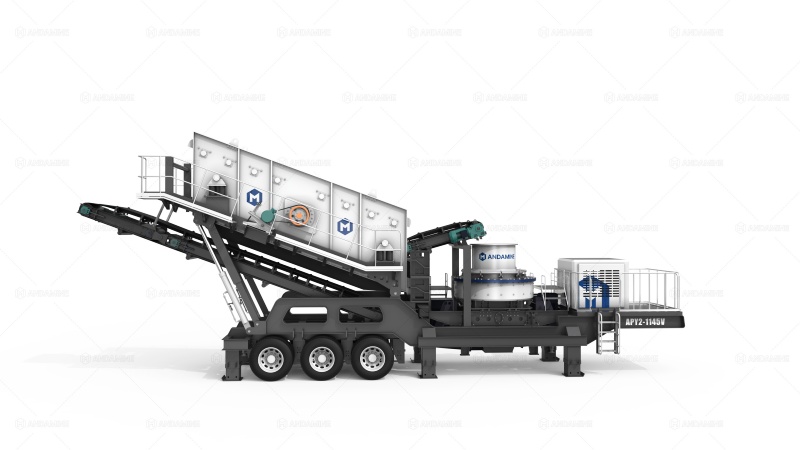
Define Production Goals Before Selecting Equipment
The first step is to establish the plant’s actual production requirements. These include the required hourly output, target sand gradation, allowable fines content, particle shape, and expected operating hours. A plant producing sand for ready-mixed concrete may have different quality requirements from one supplying general construction fill or road base materials. These differences influence the crushing process, screening arrangement, and washing intensity.
Raw material characteristics also determine the configuration. Limestone, granite, basalt, and river pebbles differ in hardness, abrasiveness, moisture content, and particle shape after crushing. Clay contamination and the proportion of naturally occurring fines can further affect washing requirements. A preliminary assessment of feed size distribution and material properties helps determine whether additional screening, pre-washing, or separate fine sand recovery is necessary.
Production targets should be defined for the finished product rather than only for the crusher. If a project requires 80 tons of saleable sand per hour, the complete line must deliver that quantity after accounting for screening rejects, washing losses, moisture, and maintenance downtime. This distinction prevents equipment from being undersized at the final processing stage.
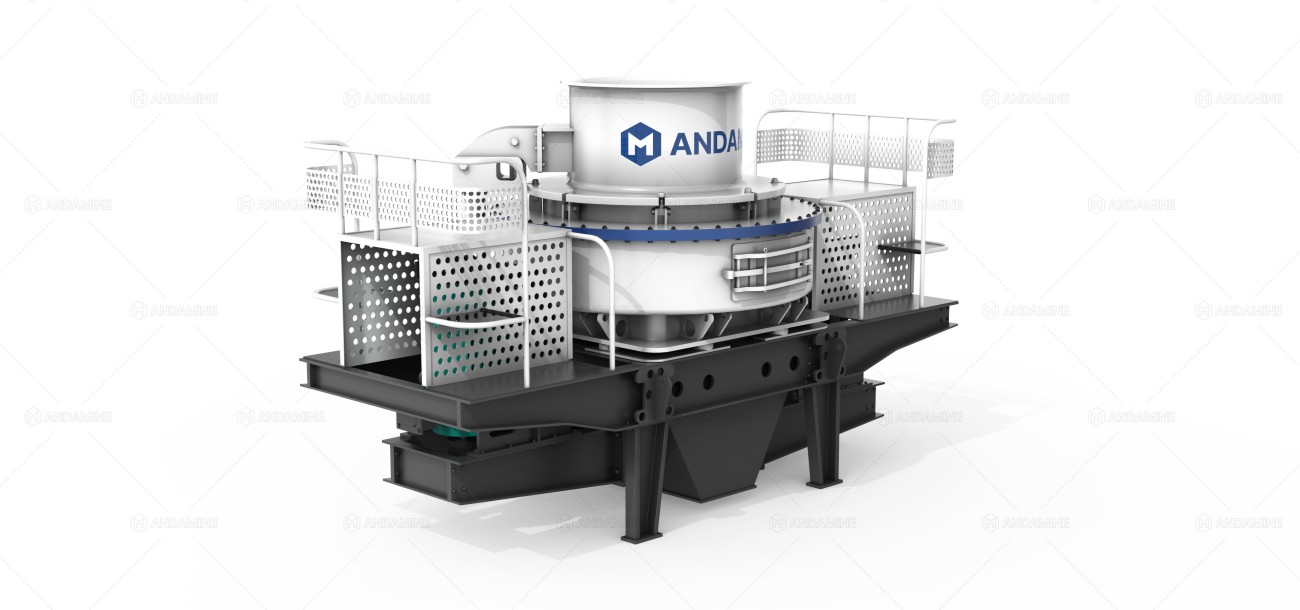
Match VSI Crushers to Sand Shape and Production Capacity
Vertical shaft impact crushers are widely used in manufactured sand production because they can improve particle shape and reduce larger particles into smaller fractions. Depending on the crusher design and operating conditions, rock-on-rock or rock-on-metal crushing can be used to achieve different balances between particle shaping, reduction efficiency, and wear costs.
When choosing a VSI crusher, consider the feed size, material hardness, required sand output, and desired particle-size distribution. The crusher’s rated capacity does not necessarily equal the final sand production rate. Some discharged material may remain oversized and require recirculation, while some fine particles may be removed during washing. The required finished sand output should therefore be used to calculate the capacity of the crushing stage.
Feed consistency is another important factor. Large variations in feed size or an unstable supply of material can cause fluctuations in crusher performance. A properly sized feeder and suitable upstream screening help maintain a steady feed. Operators can then adjust the crusher’s operating parameters according to product gradation and particle shape, while monitoring wear parts and power consumption.
In a sand manufacturing plant, the VSI crusher should be selected as part of a complete process. Installing a high-capacity crusher without sufficient screening and washing capacity may simply transfer the production bottleneck to the next stage.
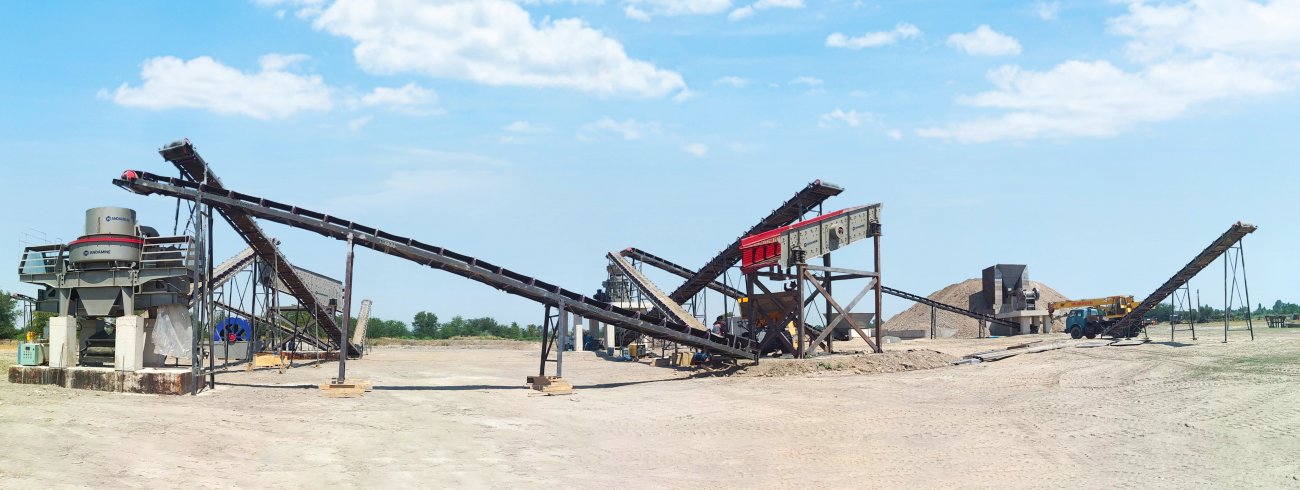
Configure Screens to Control Gradation and Circulating Load
Screening separates material into different size fractions so that each fraction can be directed to the appropriate processing stage. Oversized particles may return to the VSI crusher for further reduction, while material that meets the target size can move toward washing. This closed-circuit arrangement helps control product gradation and prevents finished-size particles from undergoing unnecessary crushing.
Screen selection should account for the required cut sizes, feed volume, material moisture, and the proportion of fine particles. A screen with insufficient effective area may allow too much oversize into the washing stage or cause excessive material to circulate back to the crusher. Either condition can reduce overall plant throughput.
Wet or clay-rich material may also cause screen openings to become blocked. Depending on the feed properties, operators may need to consider suitable screen media, spray bars, or a separate washing step before fine screening. The objective is to maintain reliable separation without adding unnecessary equipment or water consumption.
Screening performance should be evaluated together with crusher performance. If the finished sand contains too much coarse material, the cause may be an unsuitable screen cut size, excessive feed loading, or inconsistent crusher discharge. Adjusting the entire circuit is often more effective than changing the VSI crusher setting alone.
Select Sand Washers According to Contamination Levels
Sand washers remove unwanted materials such as clay, silt, and excess fine particles, depending on the equipment design and process conditions. The appropriate washing system depends on the cleanliness requirements of the final product and the properties of the incoming material. Relatively clean crushed rock may need less intensive washing than feed containing substantial clay or weathered material.
When configuring a sand washer, assess its processing capacity, water demand, feed size distribution, and ability to achieve the required cleanliness. Washing capacity must match the amount of material delivered by the screening system. If the washer is undersized, material may accumulate upstream or pass through too quickly for effective cleaning. If it is oversized relative to the plant’s actual needs, the additional investment and water demand may not provide a meaningful benefit.
Washing intensity also affects sand recovery. Removing excessive amounts of fine material can reduce saleable output, especially when the raw material already contains a useful proportion of fine aggregate. The target should be to remove undesirable contamination while retaining particles that meet the customer’s specifications.
Add Fine Sand Recovery and Water Recycling Where Needed
Fine sand recovery equipment can collect usable particles that would otherwise leave the washing process with wastewater. Hydrocyclones, dewatering screens, and related equipment may be incorporated according to the plant design and the amount of recoverable fines. This stage can improve product yield, reduce material loss, and help stabilize the moisture content of the finished sand.
However, fine sand recovery should be sized using actual process conditions. The quantity and size distribution of particles in the wastewater, slurry concentration, and required final moisture all influence performance. Recovering every fine particle is not necessarily the goal; the recovered material must still satisfy the final product specification.
Water recycling is another important consideration. Settling tanks or ponds and suitable treatment equipment can allow clarified water to return to the washing circuit. A well-planned recycling system reduces freshwater demand and limits wastewater discharge, although make-up water is generally still needed to replace losses in wet products, sludge, and evaporation.
Balance the Complete Plant for Reliable Output
The performance of a sand making and washing plant depends on the interaction between crushing, screening, washing, dewatering, and conveying. Each stage should be sized for the expected operating conditions rather than selected independently. The production line should also provide access for routine inspections, wear-part replacement, cleaning, and maintenance.
Before finalizing the configuration, review the maximum feed size, required finished sand output, product specifications, available water supply, site layout, electrical capacity, and local environmental requirements. Estimate the likely circulating load and material losses, and identify which stage is most likely to limit production. Where several sand grades are required, confirm that the screening and stockpiling arrangements can keep products separated.
During commissioning, operators should measure actual throughput, finished gradation, fine sand recovery, water consumption, and product moisture. These results provide a practical basis for adjusting crusher settings, screen openings, and washing conditions. Regular monitoring also helps identify developing problems before they affect the entire production line.
Conclusion
A productive sand making and washing plant combines suitable crushing technology, efficient screening, controlled washing, and effective fine sand recovery. Vertical shaft impact crushers help shape manufactured sand, screens regulate particle-size distribution, and sand washers remove unwanted contamination. The final configuration should reflect the raw material, required product quality, production target, and operating conditions rather than relying on individual equipment ratings.
Andamine provides crushing and screening equipment solutions for aggregate and manufactured sand production. For projects planning a new sand manufacturing plant or upgrading an existing line, its team can help assess material characteristics, production goals, and equipment compatibility to develop a configuration suited to the project’s requirements.
How Is the Self Loading Mixer Price in Nigeria Shaped by Local Market Conditions?
The price of construction equipment in Nigeria depends on more than its advertised selling figure. Import expenses, exchange-rate movements, regional demand, machine specifications, and after-sales support all influence the final amount a buyer may pay. For contractors working on roads, residential developments, commercial buildings, or remote construction sites, understanding these variables helps establish a realistic purchasing budget.
The Nigerian market also presents different requirements across project locations. A contractor operating in Lagos may prioritize delivery speed and access to technical support, while a company working on a rural infrastructure project may place greater emphasis on mobility and independent concrete production. These distinctions affect equipment selection and ownership costs. Evaluating local market conditions therefore provides a more reliable basis for comparing quotations than relying on a single advertised price of self loading concrete mixer.
Local Construction Demand and Regional Market Conditions
Infrastructure Projects and Private Construction
Nigeria’s construction sector includes road rehabilitation, housing developments, industrial facilities, commercial buildings, and infrastructure projects. Each application creates different requirements for concrete production equipment.
A contractor handling several small building projects may need a compact machine that can move between sites. Larger contractors working on extensive foundations or road construction may prefer higher-capacity equipment to maintain a more consistent concrete supply. When demand for suitable machinery increases, supplier availability, delivery schedules, and promotional terms can also change.
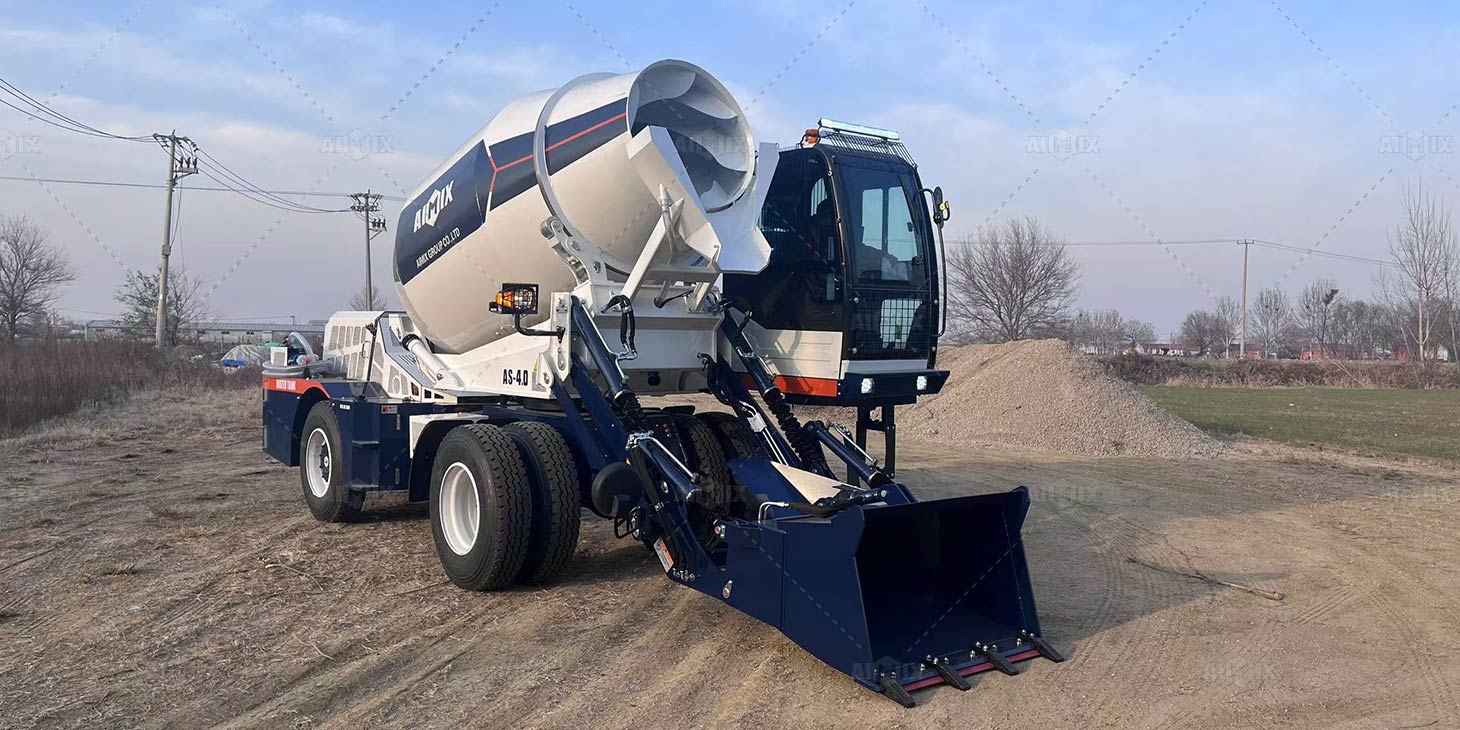
The self loading mixer combines aggregate loading, weighing, mixing, and concrete transportation within one machine. This configuration can reduce dependence on separate loading equipment and improve flexibility on projects where ready-mixed concrete deliveries are inconvenient.
Location and Equipment Availability
Market conditions vary between major commercial centers and remote construction areas. Buyers near established equipment dealers may have more opportunities to inspect machines, obtain replacement parts, and arrange maintenance.
In locations farther from major supply centers, transportation and technician travel can add to ownership expenses. Consequently, two contractors purchasing the same model may face different total costs because their delivery distances, service arrangements, and operating environments differ.
Import Costs, Exchange Rates, and Customs Duties
Currency Fluctuations and International Shipping
Imported machinery is often priced in foreign currency, making exchange rates an important consideration for Nigerian buyers. When the naira weakens against the currency used for the transaction, the local-currency equivalent of the self loading price rises, even if the supplier maintains the same quotation.
International freight, marine insurance, port handling, and inland transportation can further increase the delivered cost. Shipping arrangements also matter. A quotation covering delivery to a Nigerian port may exclude expenses incurred after arrival, whereas a more comprehensive quotation may include additional logistics services.
For this reason, anyone researching the self loading concrete mixer price in Nigeria should establish whether the quoted amount covers the machine only, delivery to the port, or transportation to the final project site.
Customs Clearance and Import Procedures
Customs duties, applicable taxes, inspection charges, and clearance fees depend on the equipment’s classification, declared value, and prevailing Nigerian regulations. These expenses should be confirmed with a qualified customs broker or relevant authority before the purchase is finalized.
Import documentation and clearance arrangements can also affect delivery time. Delays may create additional storage or handling expenses, particularly when documentation is incomplete or shipping schedules change.
A detailed landed-cost calculation is therefore more useful than comparing supplier prices without considering import-related charges.
Equipment Specifications and Configuration
Capacity, Engine Performance, and Hydraulic Systems
Machine specifications are among the most direct influences on purchase price. Smaller models generally require less investment than larger machines with greater mixing capacity, stronger power systems, or more advanced hydraulic configurations.
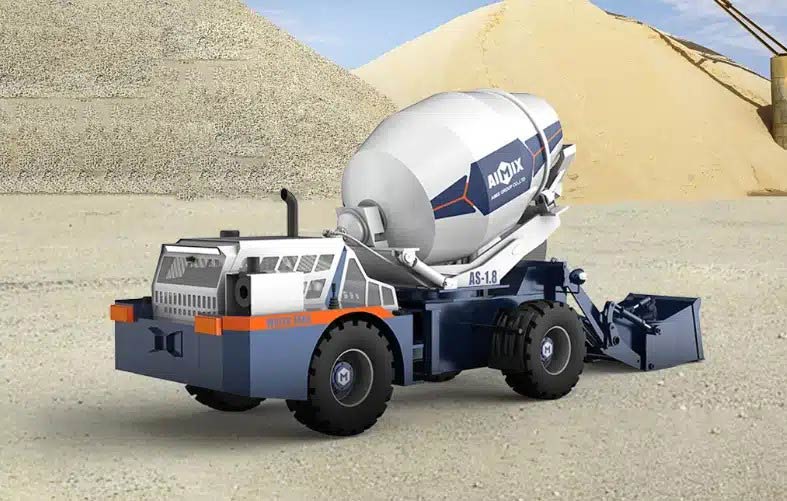
Buyers should examine effective mixing output, bucket capacity, engine power, transmission, four-wheel-drive capability, and drum rotation. These features influence how the machine performs under local working conditions.
For example, a project involving uneven access roads or dispersed construction locations may benefit from four-wheel drive and suitable gradeability. A compact machine may be sufficient for smaller concrete pours, while a higher-output model may better serve contractors with frequent daily production requirements.
The objective is not to purchase the largest available machine. It is to select a configuration that matches the required output, site conditions, and operating schedule.
New Equipment Versus Used Machinery
Used machines may offer a lower initial purchase price, but their condition requires careful assessment. Engine wear, hydraulic leakage, transmission performance, drum condition, and the availability of replacement components can influence future maintenance expenses.
New equipment may provide clearer warranty terms and a more predictable maintenance starting point, depending on the supplier’s policies. Buyers comparing the price of self loading mini concrete mixer options should therefore evaluate the machine’s condition, included accessories, warranty coverage, and expected service requirements alongside the quoted amount.
Dealer Support, Spare Parts, and Operating Costs
After-Sales Service and Parts Availability
Reliable technical support is particularly important when equipment operates far from major service centers. A minor hydraulic fault or unavailable replacement component can interrupt concrete production and affect the wider construction schedule.
Before placing an order, buyers should ask whether the supplier can provide troubleshooting assistance, maintenance guidance, spare-parts delivery, and technician support. They should also clarify warranty exclusions and the availability of commonly replaced components.
A lower quotation may not represent the better purchase if essential parts are difficult to obtain or service arrangements are unclear.
Fuel Consumption and Routine Maintenance
Purchase price represents only one component of ownership cost. Fuel consumption, lubricants, tires, filters, hydraulic maintenance, operator training, and scheduled servicing contribute to expenditure throughout the machine’s working life.
Operating conditions matter. Long working hours, rough terrain, inadequate maintenance, and inconsistent material handling can increase wear and reduce productivity.
Contractors should estimate operating costs using realistic daily working hours and expected concrete demand. This approach makes it easier to determine whether a higher-priced machine offers sufficient practical benefits to justify the additional investment.
How to Evaluate the Price Before Purchasing
Compare Quotations on an Equal Basis
A useful comparison begins with quotations covering equivalent specifications and delivery conditions. Buyers should check the following items:
Machine model, effective mixing capacity, and principal specifications.
Whether the quotation includes freight, insurance, and inland delivery.
Applicable import charges and customs clearance expenses.
Warranty conditions, spare-parts support, and technical assistance.
Payment terms, delivery schedule, and included accessories.
Comparing these details prevents differences in quotation scope from being mistaken for differences in equipment value.
Match Investment to Project Requirements
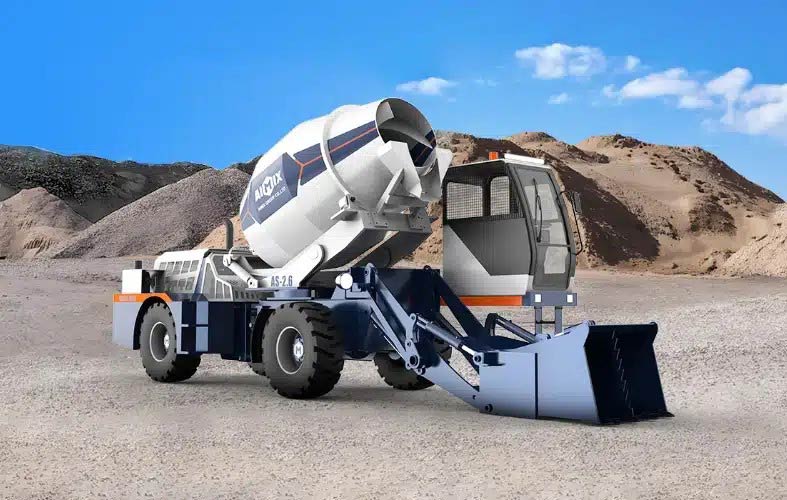
A self loader concrete mixer can be particularly useful when a project needs on-site concrete production, frequent relocation, and reduced dependence on separate loading machinery. However, its suitability depends on the required output, material supply, access conditions, and daily operating schedule.
Contractors should estimate how much concrete they need to produce, how frequently the machine will move, and how long it is expected to remain in service. These factors help determine an appropriate capacity and establish a practical ownership budget.
Conclusion
Local construction demand, exchange rates, import expenses, machine specifications, and after-sales support all shape self-loading mixer purchasing decisions in Nigeria. The final cost also depends on delivery location and the equipment’s operating requirements.
Rather than selecting a machine solely by its advertised price, buyers should compare equivalent specifications, calculate the landed cost, and assess expected operating expenses. A well-matched machine can support dependable concrete production while helping contractors manage investment and project schedules more effectively.
50 Ton vs 60 Ton Gantry Crane: How to Select the Right Capacity
Choosing between a 50 ton gantry crane and a 60 ton gantry crane should not be based only on the heaviest load currently handled. The correct capacity depends on the actual lifted load, lifting accessories, load distribution, duty cycle, lifting height, span, operating conditions, and expected future requirements. A 50 ton crane may be sufficient when the maximum planned lifted load remains comfortably below its rated capacity and operating conditions are well controlled. A 60 ton gantry crane can provide additional working capacity when loads approach 50 tons, lifting accessories add significant weight, or future loads may increase. However, the higher-rated crane also affects structural design, supporting foundations, travel systems, power requirements, and purchase cost. The key is to select the lowest rated capacity that safely covers the required lifting envelope without creating unnecessary equipment and infrastructure costs.
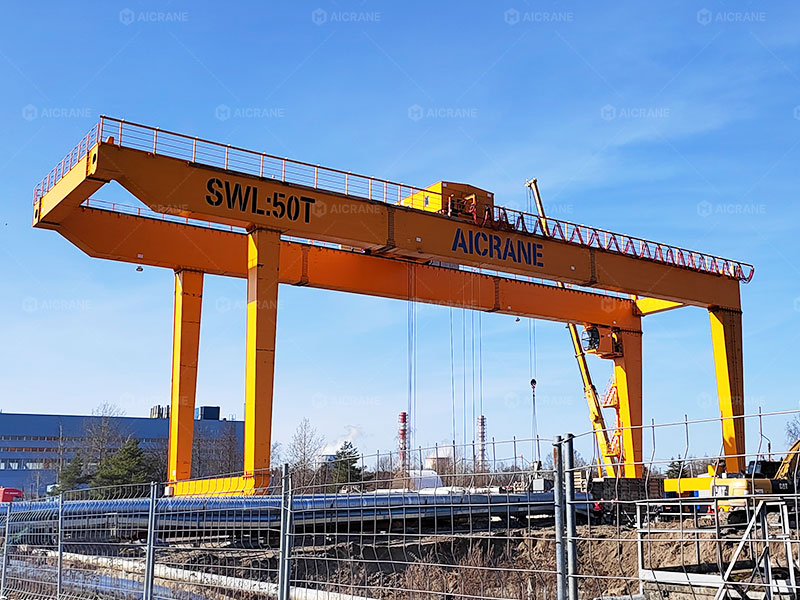
What Is the Difference Between a 50 Ton and 60 Ton Gantry Crane?
The primary difference is the rated lifting capacity.
A 50 ton gantry crane is designed for a maximum rated lifted load of 50 metric tons or another specified capacity basis defined by the manufacturer and applicable design standard. A 60 ton gantry crane is rated for up to 60 tons under its specified operating conditions.
That 10 ton difference represents a 20% increase in rated capacity:
- 50 ton crane: 50 ton rated capacity
- 60 ton crane: 60 ton rated capacity
- Capacity difference: 10 tons
- Relative increase: 20%
However, this does not mean that every component of a 60 ton crane is simply 20% larger. The main girder, legs, trolley, hoist, wheels, brakes, motors, electrical system, and supporting structure must all be engineered as a complete system.
For example, increasing capacity may influence:
- Main girder strength and deflection
- Gantry leg and connection design
- Hoisting mechanism
- Wire rope and drum arrangement
- Wheel loads
- End carriage design
- Crane travel motors
- Runway or ground requirements
- Foundation loads
- Power supply
- Braking and safety systems
Therefore, buyers should compare the complete technical configuration rather than looking only at the rated tonnage.
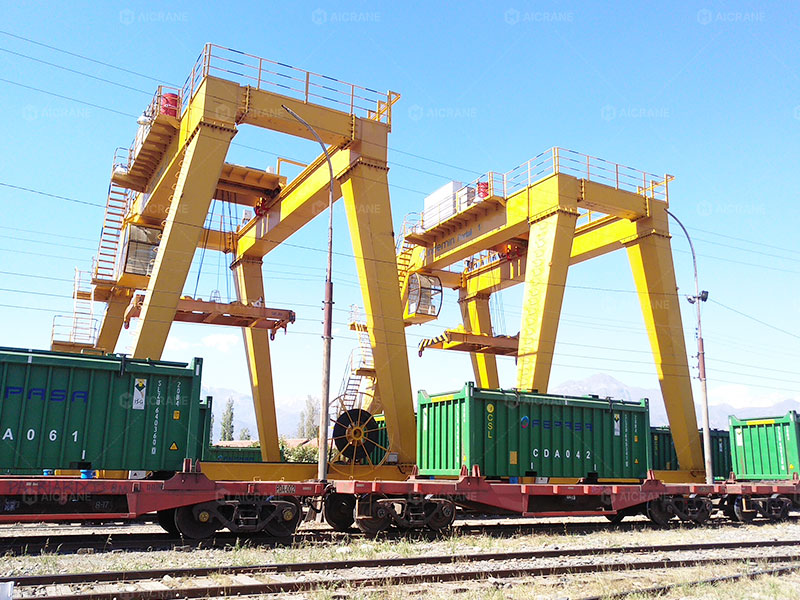
When Is a 50 Ton Gantry Crane Enough?
A 50 ton gantry crane can be appropriate when the maximum required lifted load is within the crane’s rated capacity and the project does not require additional capacity for foreseeable load growth.
For example, consider a precast concrete yard where the heaviest product weighs approximately 42 tons. If the lifting equipment, spreader beam, hooks, slings, or other permanently suspended equipment are accounted for within the crane’s design load and the resulting lifting requirement remains within the specified capacity, a 50 ton crane may be suitable.
A 50 ton configuration may also make sense when:
- Most loads are substantially below 50 tons.
- The heaviest loads are infrequent.
- The load weights are accurately documented.
- The lifting accessories have been included in the engineering calculation.
- There is little expectation of handling heavier products later.
- The available foundation or ground conditions favor a lower equipment load.
- The project is sensitive to equipment and infrastructure costs.
The important point is that a 50 ton crane should not be selected simply because the heaviest object weighs less than 50 tons. The complete lifting arrangement must be evaluated.
When Should You Consider a 60 Ton Gantry Crane?
A 60 ton gantry crane becomes more relevant when the required lifting capacity is close to 50 tons or when future operating requirements are uncertain.
For example, suppose a fabrication facility currently handles components weighing 47–48 tons but expects some future components to approach 55 tons. A 50 ton crane would not provide sufficient rated capacity for those future loads. A 60 ton crane may provide the required capacity, assuming the complete design meets the applicable engineering and operating requirements.
A 60 ton crane may also be considered when:
- Loads frequently approach the 50 ton range.
- Heavy lifting accessories add meaningful weight.
- Future products may be heavier.
- The crane must handle a broader range of large components.
- The buyer wants to avoid replacing the crane when production requirements increase.
- The lifting application requires a greater rated capacity based on the engineered load case.
However, a higher capacity should not be treated as automatically better. The industrial gantry crane still needs to match the actual application.
How Should You Calculate the Required Crane Capacity?
The first step is to establish the maximum gross lifted load, not simply the weight of the main product.
A practical calculation starts with:
Required lifting load = load being lifted + applicable lifting accessories
Depending on the configuration, accessories can include:
- Spreader beams
- Lifting beams
- Slings
- Shackles
- Lifting frames
- Special hooks or grabs
- Other permanently or temporarily suspended equipment
For example, if a component weighs 47 tons and the lifting arrangement adds 2 tons, the crane must be evaluated for a 49 ton lifted load rather than 47 tons.
This does not mean that a 50 ton crane should automatically be selected. Engineers also need to consider how the load is lifted, whether the crane is intended for single-load or tandem operations, the duty classification, environmental conditions, and applicable design requirements.
The capacity calculation should therefore be performed as part of the crane’s engineering design rather than as a simple comparison between product weight and nameplate capacity.
Why Is Operating Margin Important?
A crane should not normally be selected so that every routine lift is effectively at the absolute rated limit.
If a facility routinely handles loads very close to the crane’s rated capacity, operating requirements become less flexible. Load measurement uncertainty, accessory weights, changes in product design, and future production requirements can become important.
Consider two examples:
Application A:
Maximum gross lifted load is approximately 35 tons, with occasional loads around 45 tons.
A 50 ton crane may provide an appropriate capacity range if the complete engineering assessment supports it.
Application B:
Maximum gross lifted load is regularly 48–50 tons, with occasional requirements that could reach 55 tons.
A 60 ton crane may be more appropriate because the required operating envelope extends beyond the practical capability of a 50 ton crane.
The objective is not to maximize the capacity. It is to ensure that the selected crane covers the actual design load envelope.
Does a 60 Ton Crane Require a Heavier Structure?
Potentially, yes.
The difference between 50 and 60 tons can affect the structural and mechanical design of the entire gantry crane. However, the actual difference depends on the crane’s span, lifting height, duty class, wheel arrangement, design standard, and other specifications.
For example, a 60 ton crane with a relatively short span and moderate lifting height may have very different structural requirements from a 60 ton crane with a long span and high lifting height.
Important variables include:
Span
A longer span can increase structural demands on the main girder and supporting structure.
Lifting Height
Greater lifting height can affect the hoist, rope system, drum, trolley arrangement, and overall crane dimensions.
Duty Classification
A crane that performs frequent lifting cycles may require different mechanical and structural design from a crane that performs only occasional heavy lifts.
Travel Conditions
Wheel loads and travel forces depend on the crane configuration, total crane weight, load, wheel arrangement, travel acceleration, and other design parameters.
Therefore, capacity should always be evaluated together with span, lift height, duty, and operating conditions.
How Does Capacity Affect Ground and Foundation Requirements?
For outdoor gantry cranes, the ground and foundation design can be just as important as the crane itself.
A heavier or higher-capacity crane can result in different wheel loads and structural reactions. The supporting system must be designed for the actual crane configuration.
Buyers should provide the gantry crane manufacturer with information such as:
- Ground or foundation type
- Rail arrangement, if applicable
- Rail gauge
- Span
- Crane capacity
- Maximum lifted load
- Operating frequency
- Outdoor or indoor operation
- Wind conditions for outdoor cranes
- Required travel speed
- Site conditions
For rail mounted gantry cranes, foundation and rail design should be coordinated with the crane’s maximum wheel loads and applicable structural requirements.
A 60 ton crane should therefore not be evaluated only by comparing its purchase price with that of a 50 ton crane. Any changes to the supporting infrastructure should also be considered.
What About Hoist and Trolley Selection?
The hoisting system must match the crane’s rated capacity and operating requirements.
For a 50 ton or 60 ton gantry crane, buyers may encounter configurations such as:
- Single hoist
- Main and auxiliary hoist
- Single trolley
- Dual lifting mechanisms
- Special lifting beams
- Synchronized lifting systems
The correct arrangement depends on the loads being handled.
For example, a long steel structure may require a different lifting arrangement from a compact precast concrete component even if both have similar weights.
If the project involves lifting large or flexible loads, the engineer should consider load geometry, lifting points, center of gravity, and load stability rather than selecting the crane based on capacity alone.
50 Ton vs 60 Ton Gantry Crane for Different Applications
The appropriate capacity can vary significantly by industry.
Precast Concrete
Precast plants often handle beams, bridge components, panels, molds, and other large concrete products.
If the heaviest finished product is consistently below 50 tons, a 50 ton crane may be sufficient. If production plans include heavier bridge girders or larger precast elements, a 60 ton configuration may provide the necessary capacity.
Steel Fabrication
Steel fabrication facilities may handle plates, structural assemblies, vessels, modules, and fabricated components.
The key question is not simply the weight of individual steel plates but the weight of the largest assembled component that must be lifted.
Shipbuilding and Marine Projects
Marine fabrication can involve very large assemblies with changing dimensions and centers of gravity. In these applications, capacity should be evaluated together with lifting geometry, working radius or position, load stability, and site layout.
Machinery Manufacturing
Machinery manufacturers may handle heavy equipment frames, industrial machines, engines, or assembled components.
If product weights vary considerably, historical production data can help determine whether 50 tons covers the required range or whether 60 tons is justified.
Should You Choose 60 Tons for Future Expansion?
Future capacity is worth considering, but buyers should avoid paying for capacity that will never be used.
A useful approach is to examine the company’s expected production over the intended crane service period.
Ask:
- What is the heaviest load today?
- What is the heaviest load expected within the next several years?
- Are product sizes increasing?
- Will new manufacturing lines be added?
- Could lifting accessories become heavier?
- Could the crane be moved to another production area later?
- Would replacing the crane be significantly more expensive than selecting a higher capacity initially?
If future requirements could realistically exceed 50 tons, a 60 ton crane may need to be considered during the initial project design.
If future expansion is speculative and the facility has no foreseeable need for loads above 50 tons, selecting a larger crane simply for additional nominal capacity may not be economically justified.
Does a 60 Ton Gantry Crane Cost More?
Generally, a higher-capacity gantry crane can require additional equipment and structural capacity, which can affect the overall project cost. However, capacity alone does not determine the final price.
Other major cost factors include:
- Crane span
- Lifting height
- Duty classification
- Hoisting speed
- Crane travel speed
- Trolley configuration
- Control system
- Power supply
- Outdoor protection requirements
- Wind protection
- Rail and foundation requirements
- Installation conditions
- Testing and commissioning requirements
For this reason, a 50 ton crane with a long span, high lift, and heavy-duty operating cycle could potentially have very different costs from a compact 60 ton crane.
When requesting quotations, buyers should provide a complete technical specification rather than asking only for a “50 ton” or “60 ton” crane price.
A Practical Selection Checklist
Before deciding between a 50 ton and 60 ton gantry crane, collect the following information:
Load Requirements
- Maximum product weight
- Maximum gross lifted weight
- Lifting accessory weight
- Load dimensions
- Center of gravity
- Lifting points
Crane Dimensions
- Required span
- Required lifting height
- Required hook travel
- Crane runway or travel distance
Operating Requirements
- Lifts per hour or shift
- Working hours per day
- Expected annual operating frequency
- Required hoisting and travel speeds
- Indoor or outdoor operation
Site Conditions
- Ground or foundation conditions
- Rail requirements
- Wind exposure
- Temperature range
- Available power supply
Future Requirements
- Expected increase in product weight
- Planned production expansion
- Potential changes in crane location
- Expected service period
This information allows the manufacturer or engineering team to determine whether 50 tons, 60 tons, or another capacity is appropriate.
50 Ton or 60 Ton: Which Should You Select?
The answer depends on the project’s actual load envelope.
A 50 ton gantry crane is generally worth evaluating when the maximum gross lifted load remains within 50 tons, operating requirements are well defined, and future loads are not expected to exceed that range.
A 60 ton gantry crane should be evaluated when the required gross lifted load approaches or exceeds 50 tons, when future loads may reach approximately 60 tons, or when the project requires additional rated capacity based on its engineered lifting requirements.
The decision should be made using the complete gantry crane specification – not capacity alone. Span, lifting height, duty class, lifting configuration, operating environment, wheel loads, foundation requirements, and future production plans can all change the appropriate configuration.
Key Takeaways
- 50 tons vs 60 tons represents a 10 ton, or 20%, difference in rated capacity.
- Select capacity based on the maximum gross lifted load, including applicable lifting accessories.
- A 50 ton crane may be suitable when the required load envelope remains comfortably within its rated capacity.
- A 60 ton crane should be considered when loads approach 50 tons or future requirements may exceed 50 tons.
- Crane capacity also affects structural, mechanical, travel, and supporting-system requirements.
- Span, lifting height, duty classification, operating frequency, and site conditions can be as important as rated capacity.
- Do not select a larger crane solely because it has a higher capacity; evaluate the additional equipment and infrastructure requirements.
- For purchasing decisions, provide the manufacturer with the complete load, dimensional, operating, and site requirements rather than requesting a quotation based only on tonnage.
Concrete Pump Procurement for Workshop Foundations and Heavy Vehicle Service Bays in Christchurch, NZ
Workshop foundations and heavy vehicle service bays in Christchurch require concrete placement that accommodates substantial floor loads, reinforced foundations, inspection pits, and vehicle access areas. Choosing the right concrete pump is therefore not simply a matter of selecting the largest output rating. Contractors must consider concrete volume, placement distance, reinforcement density, site access, and the sequence of construction activities. A pump that suits a broad industrial slab may not be the best fit for narrow foundation trenches or a service bay with restricted overhead clearance. Evaluating these conditions before purchasing helps contractors select equipment that matches the project and remains useful for future work.
For buyers comparing concrete pumps for sale nz, procurement should begin with the intended applications rather than the advertised maximum capacity. Christchurch projects can range from independent vehicle workshops to commercial truck maintenance facilities, where concrete must be delivered consistently across different structural elements. Understanding the distinction between trailer-mounted pumps, mixer pumps, and boom pumps makes it easier to assess equipment suitability, operating requirements, and long-term utilisation.
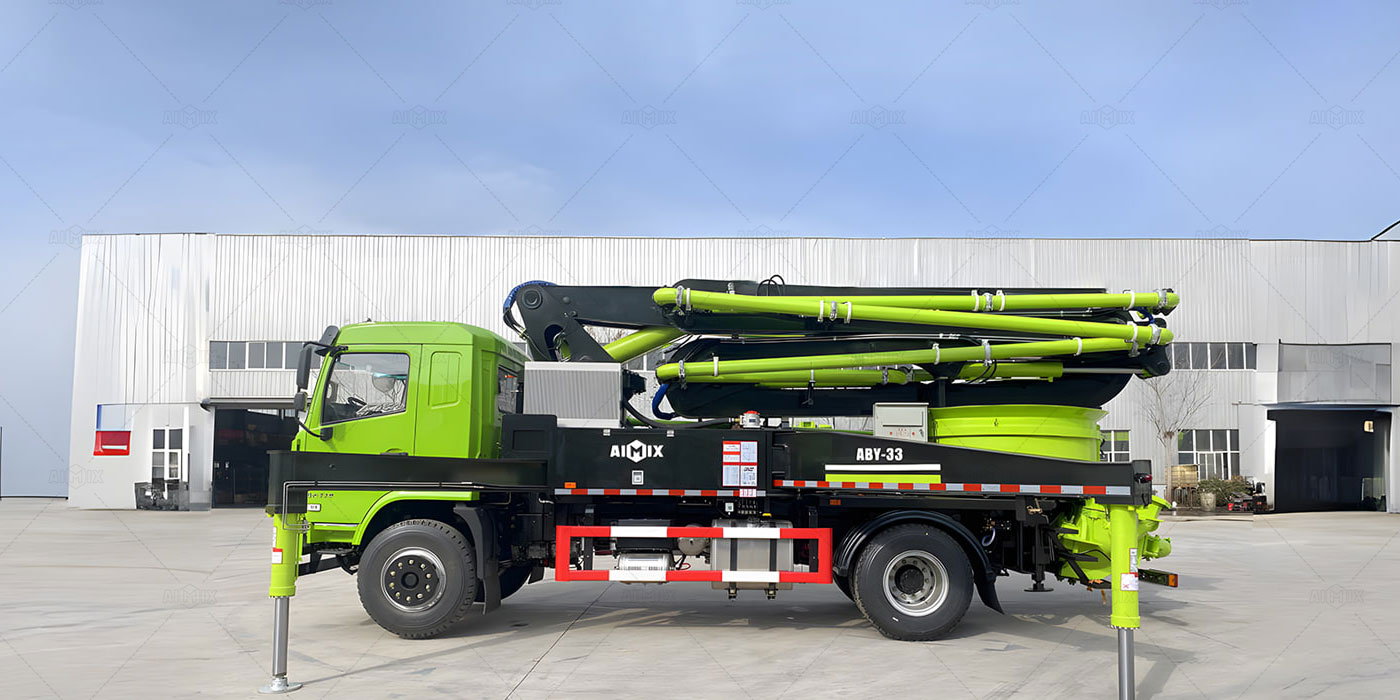
Match Concrete Pump Types to Workshop Foundations and Service Bays
Trailer Concrete Pumps for Reinforced Foundations and Floor Slabs
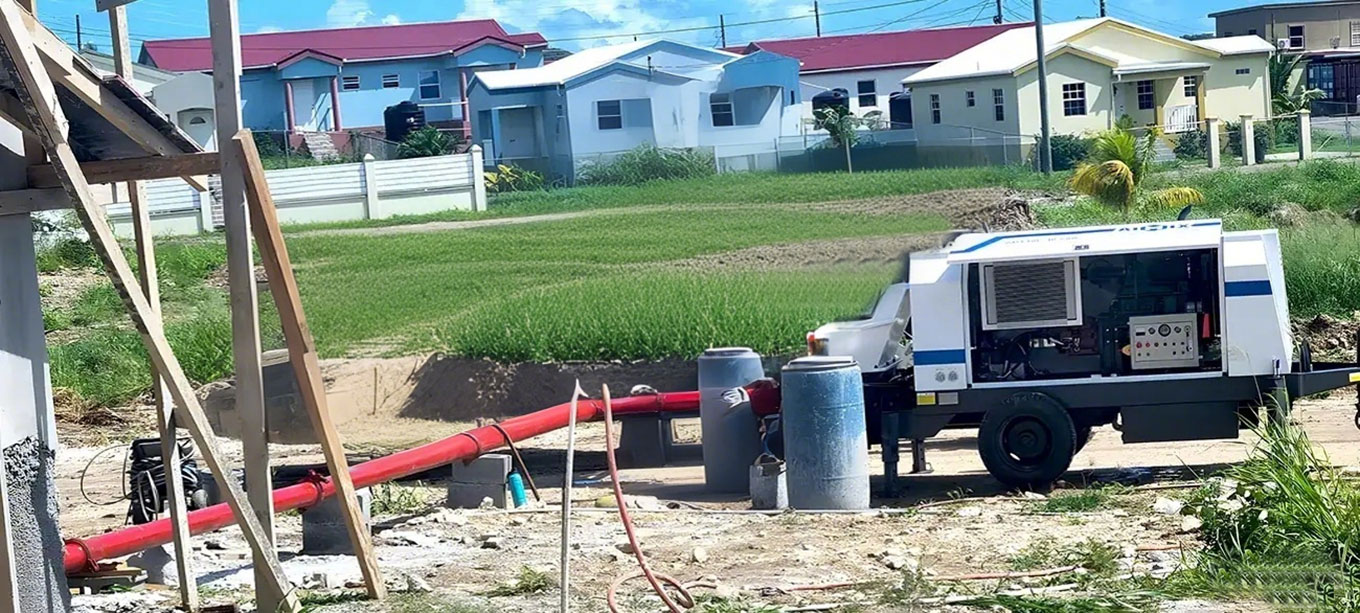
Trailer-mounted concrete pumps are worth considering when a project involves reinforced strip foundations, equipment plinths, ground beams, and workshop floor slabs. They pump concrete through a pipeline, allowing the delivery point to be positioned away from the mixer truck. This arrangement can be advantageous when vehicles cannot drive directly beside the pour or when reinforcement and formwork restrict access.
For Christchurch contractors, the key question is whether the pump can deliver the required concrete at the necessary rate without disrupting placing and finishing operations. A high theoretical output does not automatically translate into faster construction. The concrete supply must remain continuous, the pipeline must be laid out appropriately, and the placing crew must keep pace with delivery.
When comparing concrete trailer pumps nz, examine rated output, pumping pressure, aggregate compatibility, and the manufacturer’s recommended pipeline configuration. Confirm these specifications against the actual concrete mix and required pumping distance. Foundation concrete containing dense reinforcement or passing through narrow sections may require particular attention to aggregate size, workability, and pipe diameter.
Mixer Pumps for Smaller Workshops and Distributed Concrete Work
A concrete mixer pump combines mixing and pumping functions in one machine. It can suit smaller workshop extensions, repair facilities, isolated foundation sections, and projects where ready-mixed concrete deliveries are difficult to coordinate. Rather than arranging separate mixing and pumping equipment, contractors can produce and place concrete within a more integrated workflow.
However, the configuration has limits. Its practical output may be insufficient for a large service bay floor that needs substantial volumes placed within a restricted time window. Buyers should calculate the concrete volume per pour and compare it with realistic production rates, including loading, mixing, repositioning, and cleaning. For larger projects, a dedicated batching arrangement and a separate concrete pump may provide a more suitable production system.
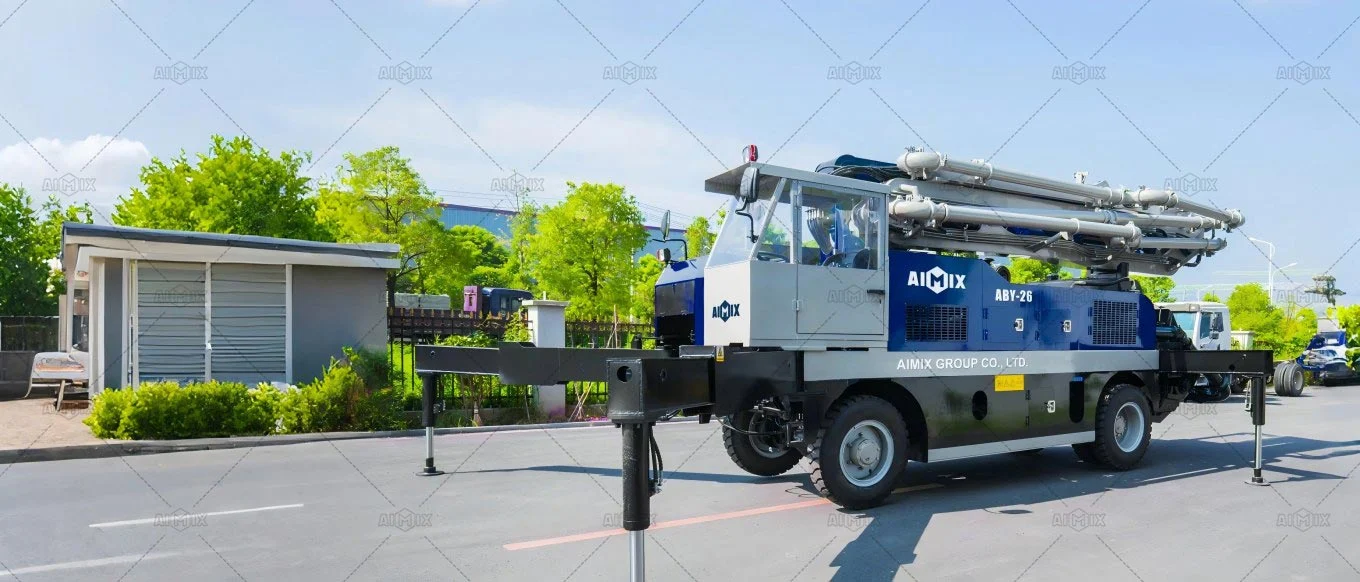
Concrete Boom Pumps for Large Bays and Restricted Ground Access
Boom pumps become relevant when concrete must reach extensive floor areas, elevated sections, or locations that are difficult to access using a ground-level pipeline alone. Their articulated booms can help distribute concrete across a large workshop footprint while reducing the need to reposition delivery hoses manually.
Contractors searching for concrete boom pumps for sale nz should assess the actual reach needed, available setup space, ground-bearing capacity, overhead obstructions, and access for the supporting truck. A boom pump may offer substantial placement advantages, but its mobilisation and setup requirements can be disproportionate for a small foundation pour. Where the site has limited manoeuvring room, a trailer pump with a carefully designed pipeline may be the more practical arrangement.
Assess Christchurch Site Conditions Before Selecting Pump Specifications
Calculate Concrete Volume, Delivery Rate, and Pumping Distance
Procurement should start with the construction drawings. Estimate the concrete volume for each foundation, service pit, equipment base, and floor slab, then identify the largest planned pour. Divide the required volume by the available placing window to establish the minimum average delivery rate. Allow additional time for interruptions, repositioning, testing, and finishing rather than assuming the machine will operate continuously at its maximum rated output.
For example, a workshop slab requiring 60 m³ of concrete within a six-hour placement window needs an average delivery rate of 10 m³ per hour. This is a planning calculation, not a pump recommendation: the actual machine must also accommodate pipeline losses, the concrete mix, and the site workflow. If concrete arrives in batches, delivery coordination may become the limiting factor even when the pump has ample capacity.
Account for Reinforcement, Service Pits, and Concrete Mix Design
Heavy vehicle service bays often include thickened slab sections, reinforced foundations, inspection pits, drainage channels, and anchor points for lifting equipment. These elements can create congested reinforcement zones where concrete must flow around steel and fill confined spaces without leaving voids. Pump selection must therefore be coordinated with the engineer’s concrete specification and the placement method.
Do not assume that a more powerful pump can compensate for an unsuitable mix. Concrete workability, aggregate grading, maximum aggregate size, and the mix’s suitability for pumping all influence delivery performance. Contractors should confirm mix compatibility with the pump supplier and concrete producer before committing to equipment. Any changes to the specified concrete must be approved through the project’s normal engineering and quality-control procedures.
Consider Christchurch Weather, Ground Conditions, and Site Access
Christchurch’s seasonal weather can affect concrete scheduling, ground preparation, and the conditions in which pumping equipment operates. Cold periods may influence concrete temperature and setting behaviour, while rain can complicate access across unsealed or poorly drained areas. These factors do not dictate one universal pump type, but they reinforce the importance of preparing a reliable site plan.
Before delivery, verify the setup area, truck access, ground stability, hose routes, drainage, and safe separation between moving vehicles and workers. For boom pumps, confirm outrigger support requirements and clearance from overhead hazards. For trailer pumps, plan pipeline supports, bends, hose restraints, and the location of the placing crew. A well-prepared site reduces avoidable delays and helps maintain a controlled concrete placement sequence.
Compare Procurement Costs with Long-Term Equipment Utilisation
Evaluate Purchase Price Alongside Operating Requirements
The purchase price is only one component of a concrete pump’s total ownership cost. Contractors should also examine transport, commissioning, operator training, routine servicing, wear parts, cleaning equipment, and the availability of technical support. Pumping concrete subjects delivery components to abrasive wear, so maintenance access and replacement-part availability matter when assessing long-term operating expenditure.
Whe