Road construction differs greatly from conventional building jobs. Linear layouts, scattered working sections, tight paving schedules and varied concrete mixes from structural curb concrete to roller-compacted base layers make plant selection critical. The right batching setup keeps pouring on schedule, controls slump consistency and cuts unnecessary transport costs. Wet mix, dry mix, dedicated RCC and precast batching plants each carry distinct strengths for different road project profiles.
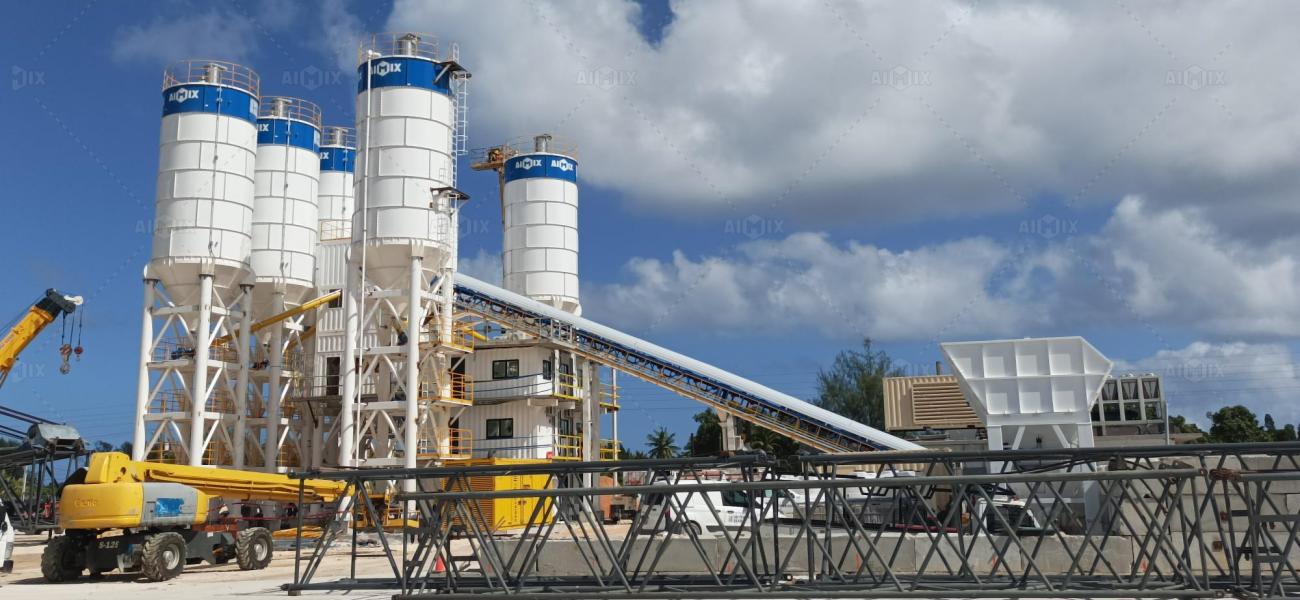
Wet mix concrete batching plant for paved highway surfaces
Wet mix plants complete full homogenised mixing of aggregates, cement, water and admixtures inside the central mixer before discharge. They deliver consistent, ready-to-place concrete with closely controlled slump. This plant type supports continuous paving workflows and precise quality logging required for formal road surface courses. Contractors rely on wet mix units for long highway corridors, urban arterial roads and airport taxiway paving where surface smoothness and uniform strength are mandatory. The main downside is stricter maintenance for mixer liners and water dosing systems under heavy daily production.
Dry mix concrete batching plant for long-distance road base works
Dry mix concrete plants only proportion sand, stone and cement without adding water at the station. Mixing finishes inside transit mixer trucks while travelling to the paving zone. This design shines for projects with long haul distances between the batching site and the paving front. Dry mix cuts the risk of premature setting and slump loss during transport. It is widely used for remote rural road bases, remote haul routes and dispersed small paving zones. Operators must carefully manage water addition on-site, which introduces minor variability if crews lack training.
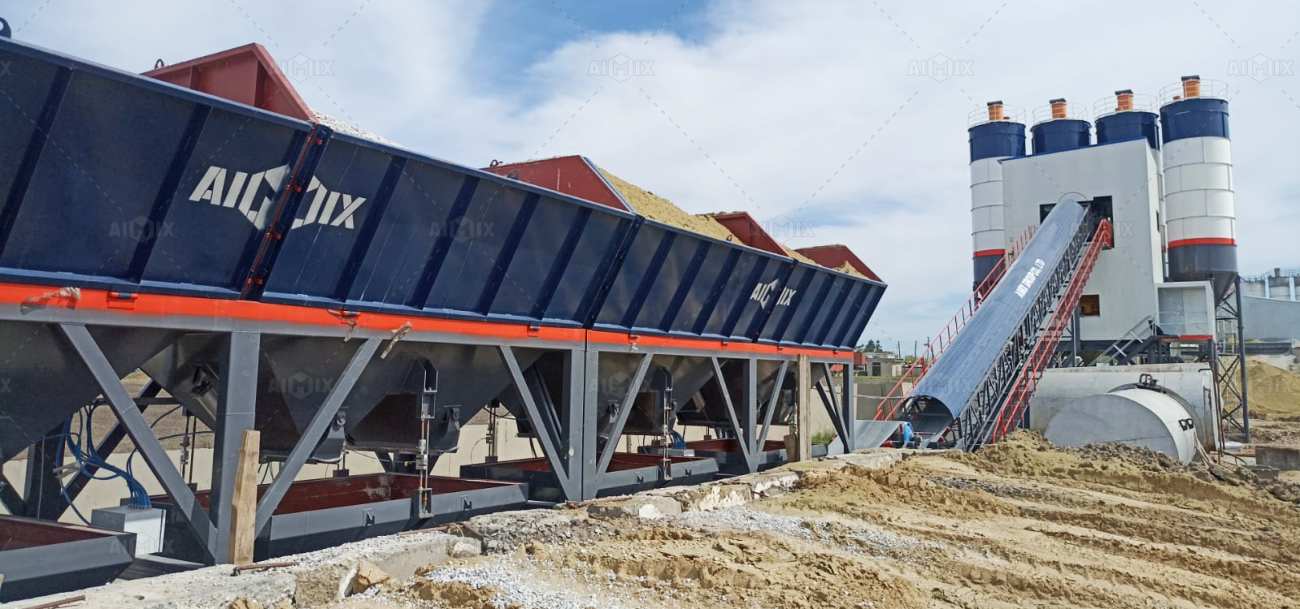
Dedicated RMC concrete batching plant for roller compacted pavement
RMC batching plants are engineered for stiff, zero-slump roller compacted concrete. They feature high-precision aggregate feeding, low water metering and robust discharge gates to deliver stiff, cohesive batches ideal for compaction by road rollers. RMC concrete gains strength quickly and resists heavy axle loads. These plants are popular for heavy-duty industrial haul roads, highway base courses, parking aprons and low-cost rural arterial pavements. They are not suitable for thin curb sections or decorative finished surfaces that demand high workability.
Precast concrete batching plant for road prefabricated components
Precast batching plants are calibrated for low-slump, high-strength concrete used to manufacture off-site road components. Items include culvert segments, barrier beams, gutter slabs, retaining wall panels and bridge girders for highway schemes. Batch tolerances are tighter than general paving plants to minimise deformation during curing. This setup works best when a project uses large volumes of prefabricated road elements, rather than continuous cast-in-place pavement. It cannot efficiently support frequent slump adjustments needed for on-site slipform paving.
Road strength, features and use cases by batching plant type
Pavement performance directly follows the output characteristics of each batching system. Concrete from wet mix plants typically reaches C30–C45 compressive strength, with stable flexural strength critical for surface courses. The finished pavement has uniform texture, fewer cold joints and strong abrasion resistance, built for high-traffic highways, city main roads and toll routes with decades of heavy truck loading.
Dry mix batches commonly achieve C20–C30 strength. The resulting road base is stable and economical, suited for secondary rural roads, temporary construction access roads and remote base-layer works. Surface finish quality is harder to control, so dry mix is rarely used for wearing surface courses.
Concrete from dedicated RCC plants delivers C20–C35 strength with excellent load-spreading capacity. RCC pavements are dense, fast-curing and open to traffic quickly. They are widely adopted for quarry haul roads, logistics yard pavements and highway sub-base layers, though they do not offer a smooth finish without an extra asphalt overlay.
Concrete produced by precast plants is usually C35–C50 grade for road structural parts. Precast elements have predictable dimensional accuracy and high early strength. They speed up road construction by enabling off-site manufacturing, mostly applied for highway culverts, crash barriers and bridge ancillary components instead of cast-in-place road slabs.
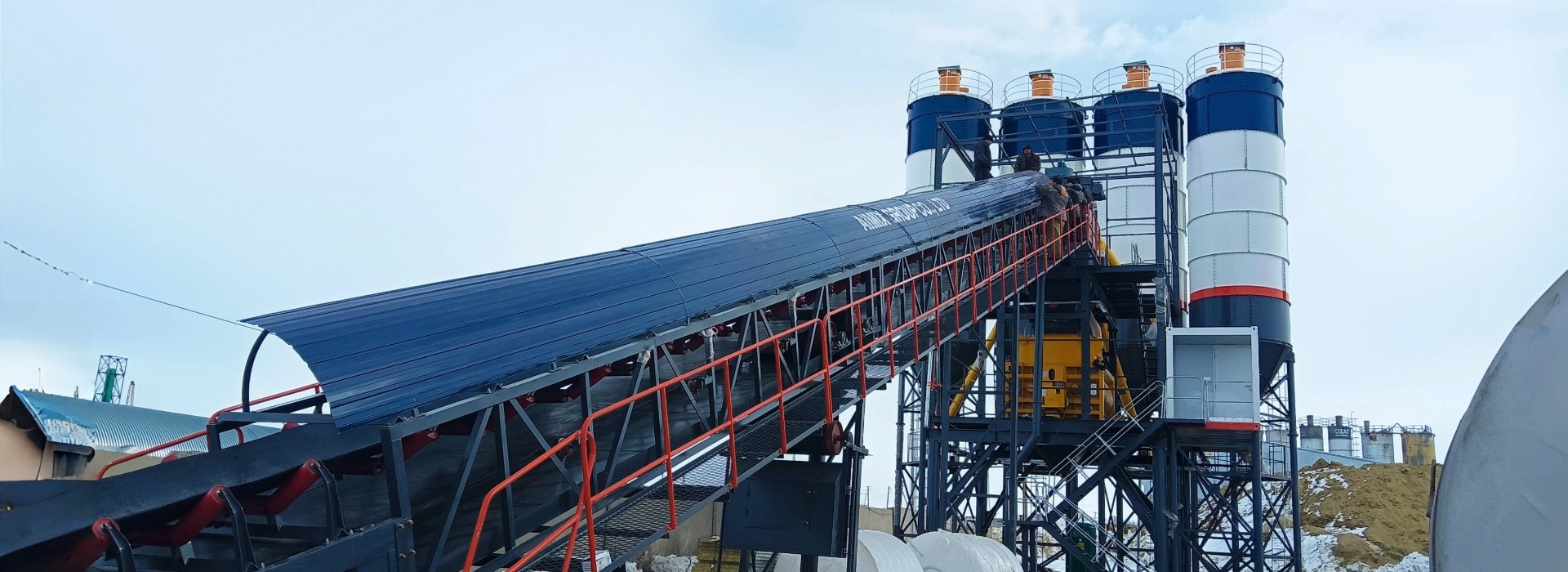
Concrete Batching Plant vs Asphalt Mixing Plant for Road Projects
| Comparison Item | Concrete Batching Plant | Asphalt Mixing Plant |
|---|---|---|
| Binder Material | Cement, mixed with water, aggregates and admixtures | Bitumen (asphalt), heated and blended with hot dried aggregates |
| Pavement Type | Rigid pavement | Flexible pavement |
| Production Requirement | No heating system needed; normal ambient production | Heating & drying system required, high energy consumption |
| Typical Service Life | 25–40 years | 8–15 years, regular resurfacing required |
| Load Resistance | Excellent for heavy axle loads, port & mining haul roads | Suitable for medium traffic; prone to rutting under sustained heavy loads |
| Open to Traffic | Needs curing (days or weeks) | Ready for traffic within hours after cooling |
| Repair & Maintenance | Hard repair; local patching is complicated | Fast, simple local repair and overlay |
| Best Application Scenarios | Highway rigid pavement, RCC base, airport runway, industrial yard, precast road components | Urban roads, residential streets, surface wearing course, road resurfacing & rehabilitation |
| Key Weakness | Long curing time, higher initial cost, noisy rough ride without surface treatment | Higher recurring maintenance cost, softens under high temperature |
No single plant suits every road job. Match plant mixing logic to your pavement layer type, haul distance, required surface finish and traffic loading before finalising investment.