Choosing between a 160 TPH mobile batch asphalt plant and a fixed asphalt production facility is an important investment decision for road contractors, asphalt producers, and infrastructure companies. Both options can support large-scale asphalt production, but they serve different business needs. The right choice depends on more than hourly output. Project locations, contract duration, transportation costs, installation requirements, production schedules, and future business opportunities all affect the final return on investment.
For contractors working on highways, regional roads, airport projects, or multiple construction sites, a mobile batch asphalt plant offers the flexibility to move production closer to the jobsite. Meanwhile, a fixed facility may provide better long-term value for businesses with stable demand and a permanent customer base. So, is investing in a 160 TPH mobile batch asphalt plant worth the additional cost compared with a stationary facility? Let’s examine the practical differences from a buyer’s and construction company’s perspective.
1. What Makes a 160 TPH Mobile Batch Asphalt Plant Different From a Fixed Plant?
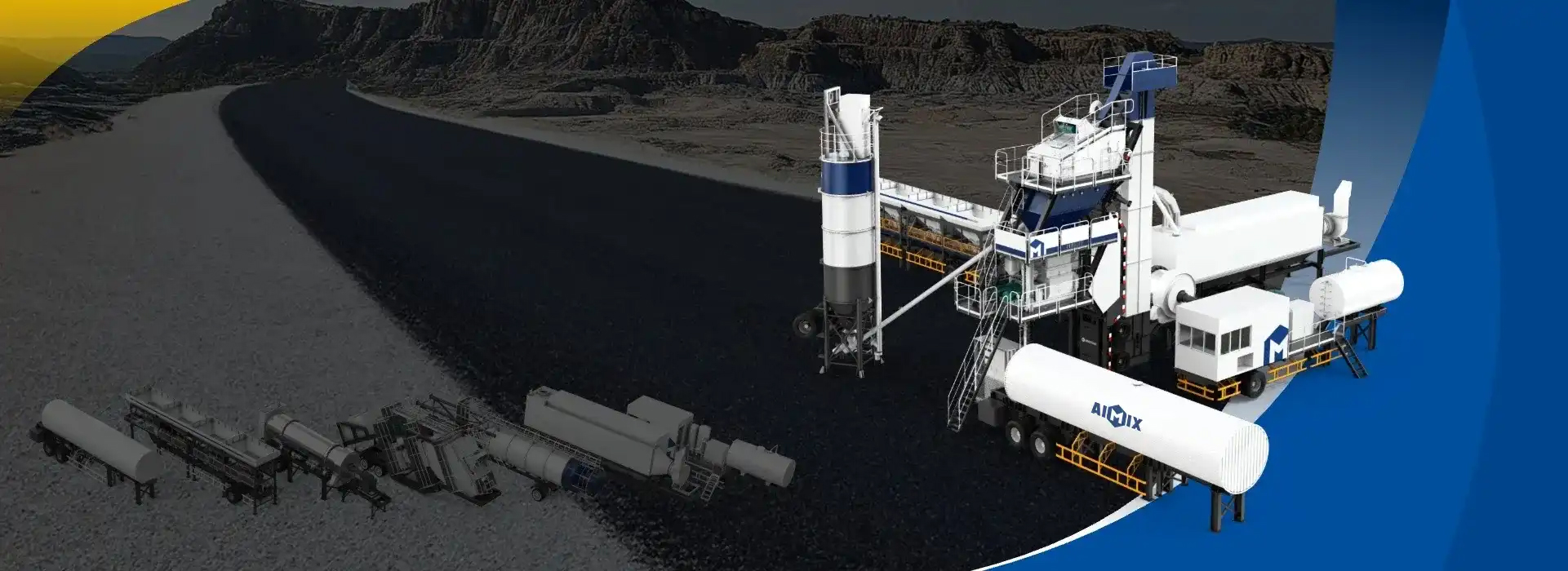
Before comparing investment costs, it is important to understand how these two production solutions operate. Although both can produce hot mix asphalt, their equipment layouts and operating strategies differ. A mobile asphalt batch mixing plant uses a modular configuration that supports transportation and relocation between construction sites.
How a 160 TPH Mobile Batch Asphalt Plant Works
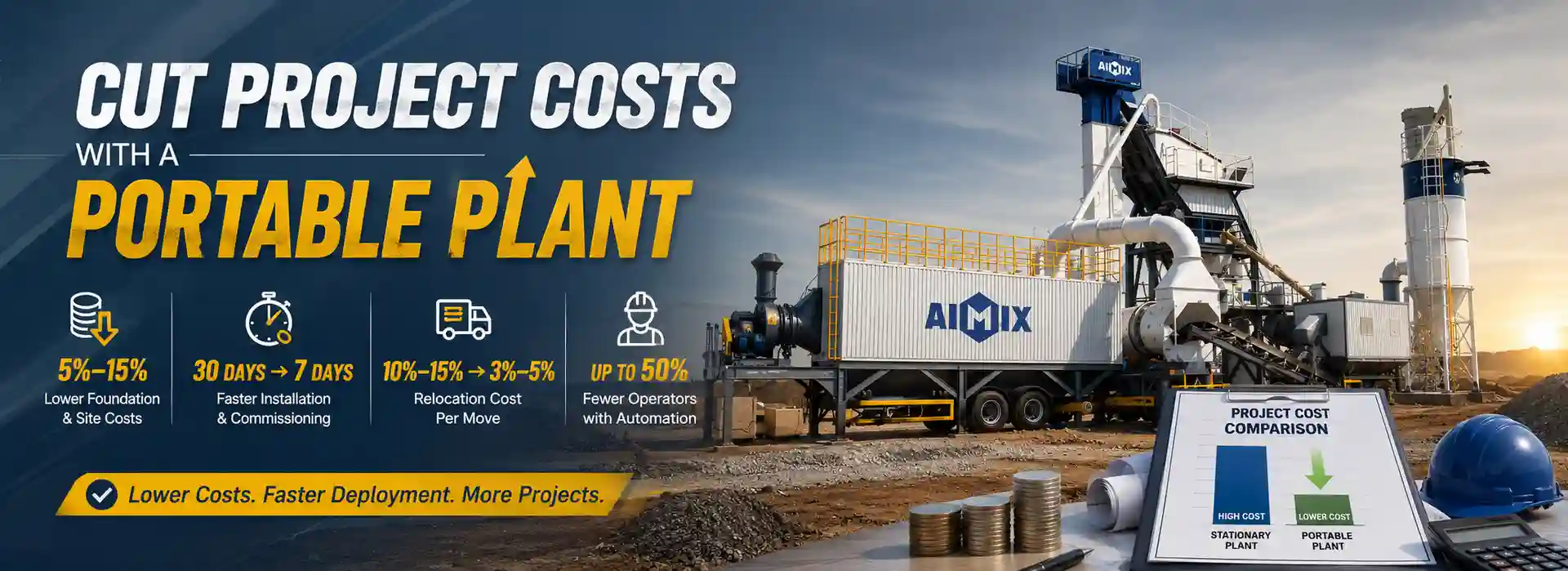
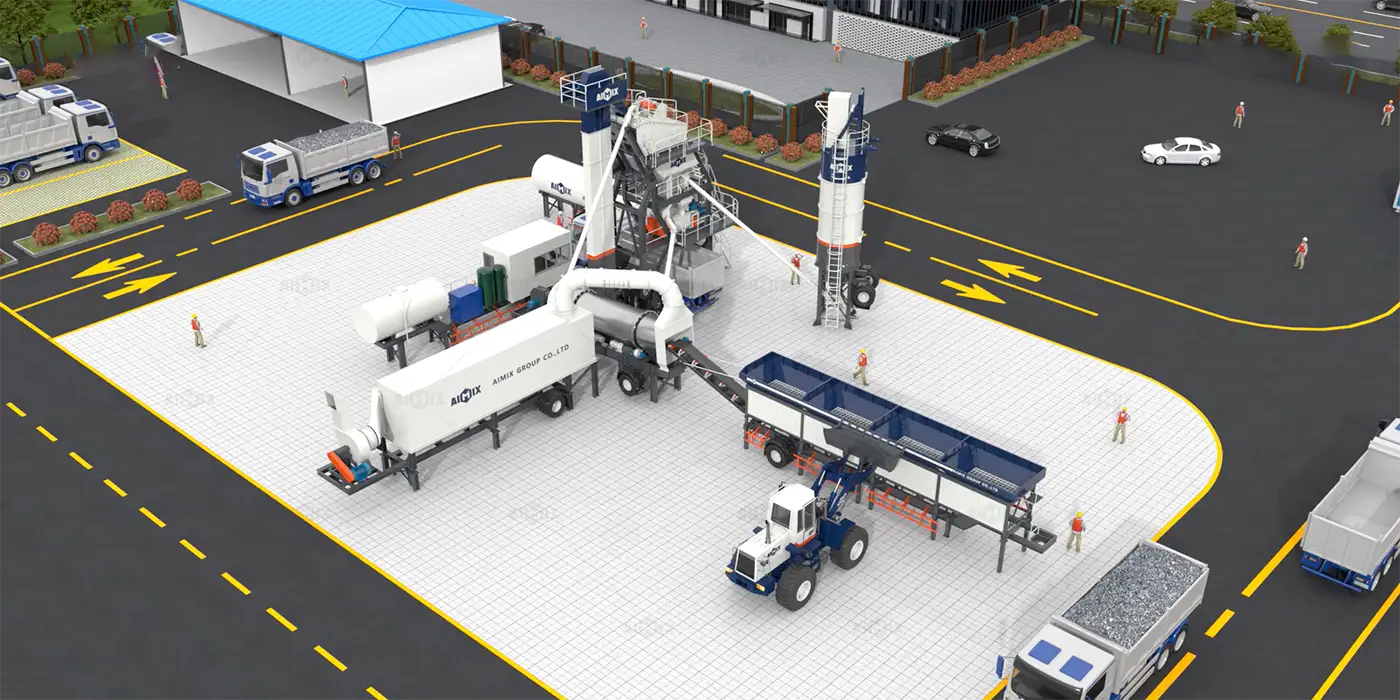
A 160 TPH mobile batch asphalt plant uses a modular design. Manufacturers divide the main production components into transportable units. These units can be assembled and connected at different construction locations according to project requirements.
Its batch production process heats and dries aggregates, screens them into different sizes, weighs the required materials, and mixes them with bitumen and mineral filler. Each mixing cycle produces a controlled batch of asphalt mixture.
For contractors who need to change production locations, this design reduces dependence on a permanent factory site. It also allows the company to bring asphalt production closer to road construction projects when transport conditions permit.
How a Fixed Asphalt Production Facility Works
A fixed asphalt plant normally operates from a permanent industrial site. Its production equipment, aggregate storage areas, bitumen tanks, control room, and supporting infrastructure follow a long-term layout.
This arrangement suits asphalt producers who supply several construction companies or serve a large market from one central location. Once the facility is installed and commissioned, the operator can focus on continuous production, maintenance, and customer orders without regularly relocating the main equipment.
However, a fixed facility requires suitable land, permanent infrastructure, and a stable supply network. Its long-term value depends heavily on whether the surrounding market can absorb its production.
2. Mobile vs. Fixed: Which 160 TPH Asphalt Plant Offers Better Investment Value?
The difference between these two options becomes clearer when buyers evaluate their total investment rather than the initial equipment price alone. A cheaper plant does not always generate a higher profit, especially when the business must transport asphalt over long distances or operate across multiple project locations. Buyers comparing asphalt batching plants should also consider production accuracy, mix requirements, and the expected operating life of the equipment.
Initial Equipment and Site Preparation Costs
A 160 TPH mobile batch asphalt plant may require a higher equipment investment than a comparable fixed configuration, depending on the manufacturer’s design, mobility system, component specifications, and included auxiliary equipment.
However, a mobile configuration can reduce certain site-related expenses because it does not always require the same permanent civil works as a fixed production facility.
- Mobile plant: Buyers should consider modular equipment costs, transport arrangements, supporting foundations, installation, electrical connections, and commissioning.
- Fixed plant: Buyers need to budget for equipment, land preparation, permanent foundations, aggregate storage areas, drainage, power infrastructure, and other site facilities.
- Both options: The quotation should clearly identify whether bitumen tanks, fuel systems, dust collection equipment, control systems, and other auxiliary components are included.
Therefore, buyers should compare the complete project investment instead of judging the two configurations by their equipment quotations alone.
Transportation Costs Can Change the Investment Decision
Transportation is one of the most important factors in asphalt production economics. Hot mix asphalt must reach the paving site within a suitable temperature range. Long transportation distances can increase fuel consumption, delivery time, and the risk of temperature loss.
For example, a contractor producing asphalt at a central fixed facility may need a large fleet of insulated dump trucks to supply a highway project 60 or 100 kilometers away. Traffic congestion, road conditions, and unloading delays can further reduce delivery efficiency.
By placing a mobile plant closer to the construction site, the contractor may shorten asphalt delivery distances and improve coordination between production and paving operations.
- For projects with several distant work sections, mobile production can reduce repeated long-distance asphalt deliveries.
- For projects located near an established asphalt market, a fixed facility may already have an efficient transportation network.
- For island construction projects or remote regions, buyers should compare equipment relocation costs with the cost of transporting finished asphalt from another production center.
As a result, the most economical configuration depends on the total delivered cost per ton, not simply the cost of producing one ton at the plant.
3. Is 160 TPH Enough for Your Actual Road Construction Demand?
Production capacity is another major purchasing consideration. A 160 TPH rating may look suitable for a large highway project, but buyers should understand the difference between rated capacity and actual daily production.
Calculate Daily Asphalt Production Requirements
A plant rated at 160 tons per hour does not automatically produce 1,280 tons every eight-hour shift. Actual output depends on operating efficiency, aggregate moisture, mixture specifications, production interruptions, material supply, and the coordination of the paving team.
For preliminary planning, contractors can use the following formula:
Actual Daily Production = Rated Capacity × Effective Operating Hours × Operating Efficiency
For example, assume a 160 TPH plant operates for eight scheduled hours with an estimated operating efficiency of 75%.
- Rated capacity: 160 tons per hour.
- Scheduled production time: 8 hours per day.
- Estimated operating efficiency: 75%.
- Estimated daily output: 160 × 8 × 75% = 960 tons.
This example is a planning estimate, not a guaranteed production result. Actual performance depends on the plant configuration, aggregate conditions, mix design, operator experience, and site management.
Match Plant Capacity With Paving Equipment and Truck Availability
A common mistake is purchasing a high-capacity asphalt plant without checking whether the rest of the construction operation can handle its output.
For instance, if a 160 TPH plant produces more asphalt than the paving crew can place, finished material may wait in trucks or storage facilities. This can create temperature management problems and reduce overall project efficiency.
Before selecting a plant, contractors should evaluate several connected production factors:
- Paving speed: Can the asphalt paver maintain a working speed that matches the planned asphalt supply?
- Road width and thickness: How many tons of asphalt does each kilometer of the project require?
- Truck fleet: How many trucks are available, and what is the average round-trip delivery time?
- Daily working hours: Does the project operate during daylight hours, at night, or across multiple shifts?
- Material supply: Can aggregate, bitumen, and filler reach the plant consistently?
For a contractor handling several large road sections, a 160 TPH mobile plant can provide useful production capacity. However, smaller projects with limited daily demand may not justify the additional investment.
4. When Is a 160 TPH Mobile Batch Asphalt Plant More Profitable?
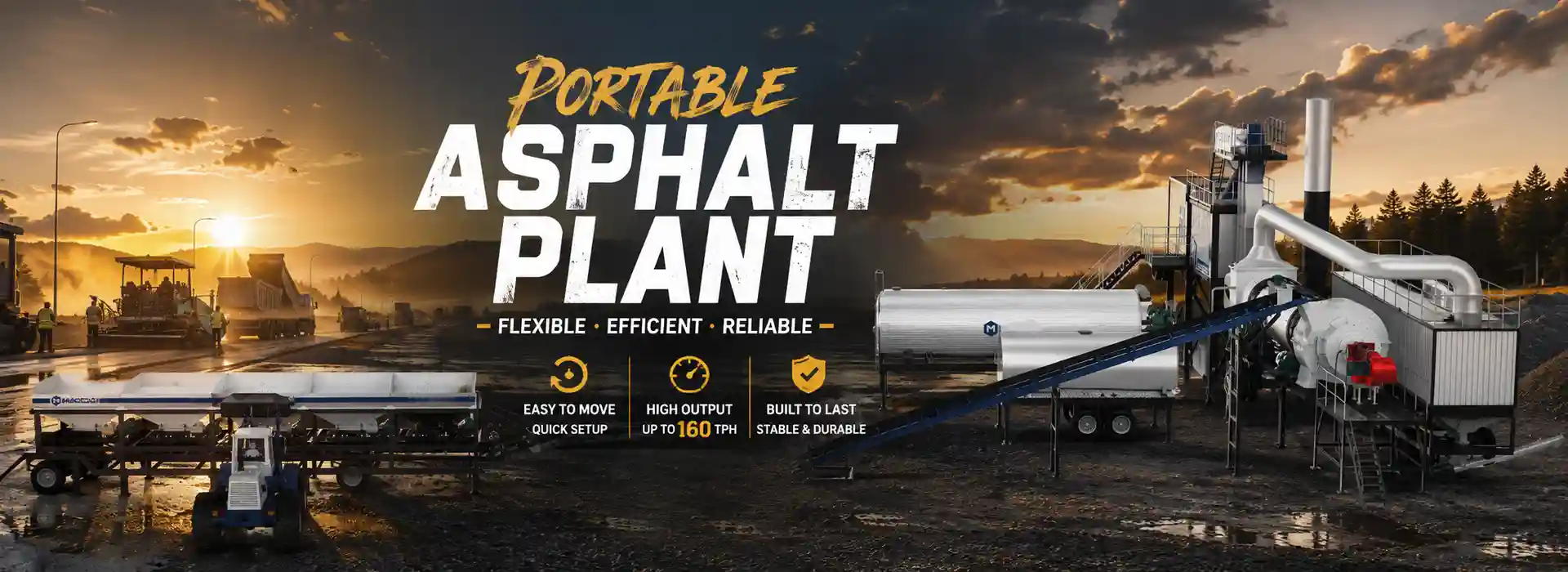
Although mobility adds value, it does not automatically make a mobile plant more profitable. Its strongest advantage appears when the business can use relocation flexibility to reduce project costs or secure additional contracts.
Multiple Highway Projects in Different Locations
Road construction contractors often work on projects in different districts or regions. Some contracts may last several months, while others require production for only a limited construction season.
In this situation, a mobile batch asphalt plant can support successive projects without requiring the company to establish a completely new permanent production facility at every location.
For example, a contractor may complete a regional road project before moving the plant to another highway construction site. Instead of depending on one central asphalt supplier, the company can manage more of its own production schedule.
Remote Construction Sites With Limited Asphalt Supply
Remote locations create additional challenges for asphalt procurement. The nearest commercial asphalt plant may be far away, and long delivery distances can increase transportation expenses.
A mobile production facility can help contractors establish a temporary asphalt supply point closer to the construction area. This is particularly relevant for mining access roads, regional highways, industrial roads, and infrastructure projects outside major urban centers.
However, buyers must confirm that the site has sufficient space, road access, electricity or generator capacity, fuel availability, aggregate supply, and environmental approval before moving the equipment.
Short- and Medium-Term Construction Contracts
Not every contractor needs a permanent asphalt production business. Some companies purchase equipment to support a specific group of road construction contracts.
A mobile configuration may suit this business model because the plant can move when the current contract ends. This gives the company more flexibility when planning future projects.
Nevertheless, relocation requires time, transport arrangements, dismantling, reassembly, testing, and commissioning. Buyers should include these costs and potential downtime in their financial calculations.
5. When Does a Fixed Asphalt Production Facility Make More Sense?
Mobile production is not the best solution for every asphalt business. A fixed facility can offer a stronger investment case when demand remains concentrated around one location.
Stable Demand From Multiple Local Customers
If a company regularly supplies asphalt to municipal road projects, private contractors, industrial parks, and infrastructure developers within one region, a permanent facility may provide a more efficient operating model.
Instead of relocating equipment between projects, the company can establish a central production and distribution network. It can also develop long-term relationships with aggregate suppliers, bitumen distributors, and local construction companies.
Long-Term Production and High Annual Utilization
A fixed plant becomes attractive when the business expects consistent production throughout the year. High annual utilization helps spread the initial investment over a larger number of tons.
For example, an asphalt producer with regular contracts and predictable demand may operate its plant over several construction seasons. Under these conditions, a permanent site can support stable production planning and long-term business development.
Established Infrastructure and Lower Relocation Requirements
Companies that already own suitable industrial land may have a significant advantage when choosing a fixed plant. Existing access roads, electricity connections, aggregate storage areas, and supporting facilities can reduce site development requirements.
In addition, a permanent production layout may offer convenient access to maintenance areas, spare parts, storage facilities, and operational support. This can simplify daily management when the company does not need to move its equipment frequently.
6. What Hidden Costs Should Buyers Consider Before Purchasing?
The purchase price is only one part of the investment. A realistic financial evaluation should include the expenses that affect production throughout the equipment’s service life. For contractors with smaller projects or lower output requirements, small portable asphalt plants for sale may also be worth evaluating as an alternative to a full 160 TPH production system.
Installation, Relocation, and Commissioning
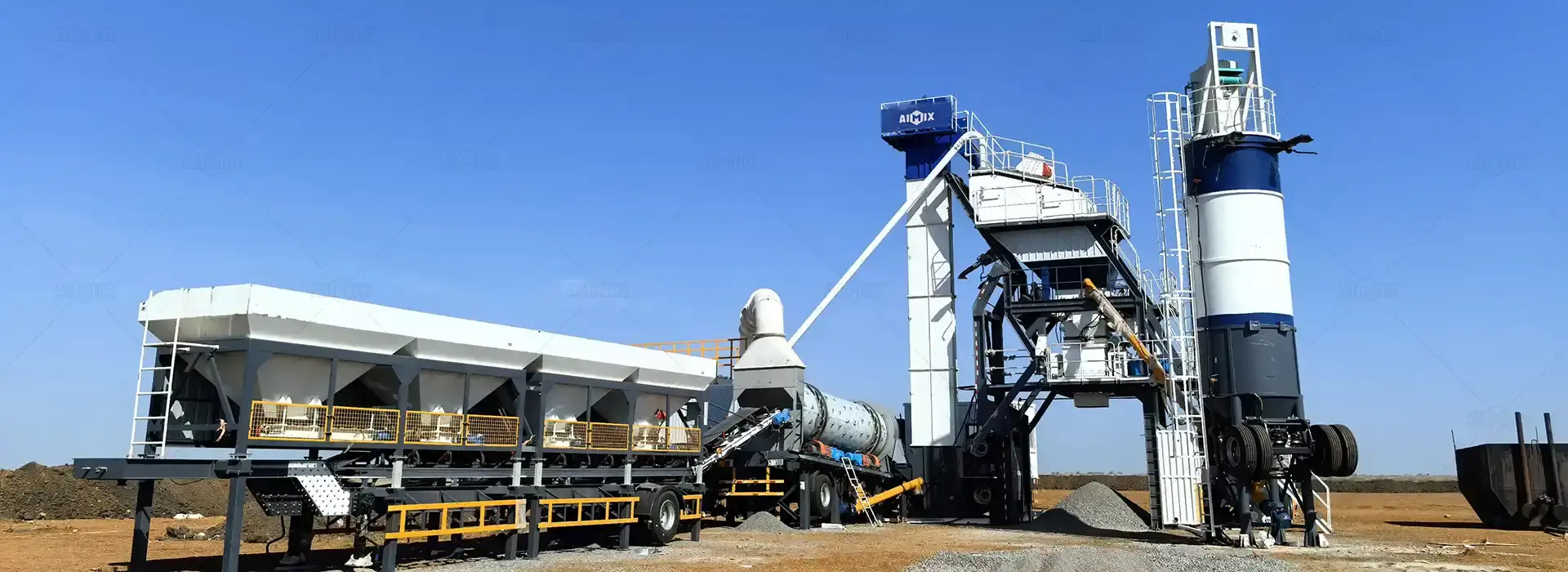
A mobile asphalt plant still requires careful installation. Its modular structure can simplify transportation, but the contractor must coordinate equipment delivery, assembly, electrical connections, system testing, and production commissioning.
If the business plans to move the plant several times, it should estimate the cost of each relocation in advance.
- Equipment dismantling and preparation for transport.
- Loading, transportation, and unloading costs.
- Reassembly and electrical connections at the new site.
- Testing, calibration, and commissioning time.
- Production downtime during relocation.
Fuel Consumption and Energy Requirements
Drying aggregates requires substantial thermal energy. Fuel consumption depends on aggregate moisture, ambient conditions, burner efficiency, fuel quality, and production requirements.
For this reason, buyers should ask manufacturers for fuel consumption information under clearly defined operating conditions. Comparing different plants without considering aggregate moisture or fuel type can produce misleading results.
Maintenance and Spare Parts Availability
Wear parts, filters, bearings, mixing components, conveyor belts, and other mechanical or electrical components affect long-term operating costs.
A mobile plant operating at multiple locations may face additional maintenance coordination challenges. Therefore, buyers should check spare parts availability, technical support, warranty coverage, and the manufacturer’s ability to provide installation and maintenance assistance.
Environmental Compliance and Site Requirements
Whether mobile or fixed, an asphalt plant must meet the applicable environmental and construction regulations at its operating location.
Buyers should evaluate dust collection performance, emissions control, noise management, bitumen storage, fuel storage, wastewater management, and local permitting requirements.
A mobile configuration does not automatically exempt a contractor from environmental approval. Each project location may have different regulatory and site requirements.
7. How to Calculate the Return on Investment of a 160 TPH Mobile Asphalt Plant
To determine whether the investment makes financial sense, buyers should compare the cost of owning the plant with the cost of purchasing asphalt from external suppliers.
Estimate the Cost Advantage Per Ton
A useful starting point is the difference between the delivered purchase price of commercial asphalt and the total in-house production cost.
Estimated Annual Operating Benefit = Annual Production × Net Cost Advantage Per Ton
For example, assume a contractor produces 100,000 tons of asphalt annually. Its estimated net cost advantage is $5 per ton after accounting for variable production and delivery expenses.
- Annual production: 100,000 tons.
- Estimated net cost advantage: $5 per ton.
- Estimated annual operating benefit: $500,000.
This simplified example does not represent a guaranteed saving or investment return. It excludes financing costs, depreciation, taxes, major repairs, fixed operating expenses, and possible differences in asphalt quality or commercial supply terms.
Calculate the Investment Payback Period
Once the annual operating benefit is estimated, buyers can calculate a preliminary payback period.
Simple Payback Period = Total Initial Investment ÷ Annual Net Cash Benefit
For example, if the complete initial investment is $800,000 and the estimated annual net cash benefit is $400,000, the simple payback period is approximately two years.
However, this calculation only works when the business can maintain the assumed production volume and cost advantage. Seasonal demand, project delays, idle equipment, financing, and unexpected maintenance can extend the actual payback period.
Compare Different Annual Utilization Scenarios
Rather than relying on one optimistic forecast, contractors should calculate several production scenarios.
- Low utilization: The plant operates for fewer days because of delayed contracts, seasonal restrictions, or limited material supply.
- Medium utilization: The plant serves several projects with a relatively stable production schedule.
- High utilization: The company secures multiple contracts and operates the plant consistently throughout the construction season.
This approach helps buyers understand how sensitive the investment is to actual project demand. It also reduces the risk of purchasing a high-capacity plant that remains underused.
8. What Should Buyers Check Before Ordering a 160 TPH Mobile Batch Asphalt Plant?
After identifying the preferred production configuration, the next step is to evaluate the complete equipment specification and the manufacturer’s technical support capabilities.
Check the Actual Batch Production Configuration
Buyers should confirm that the plant’s rated capacity matches their required mixture specifications and operating conditions. They should also examine the aggregate drying system, screening arrangement, hot aggregate storage, weighing accuracy, mixing capacity, and bitumen supply system.
Evaluate the Mobility and Transportation Design
Not all mobile asphalt plants offer the same level of mobility. Some use modular structures that require separate transport vehicles, while others incorporate more integrated transport arrangements.
Before purchasing, confirm the dimensions, transportation weight, number of transport units, lifting requirements, assembly procedures, and expected relocation time. These details matter when projects involve narrow roads, remote areas, bridges, or island transportation.
Review Manufacturer Support and After-Sales Service
A 160 TPH plant represents a major investment. Technical support can directly affect project schedules and production continuity.
- Does the manufacturer provide installation guidance and commissioning support?
- Are critical spare parts available for regular maintenance?
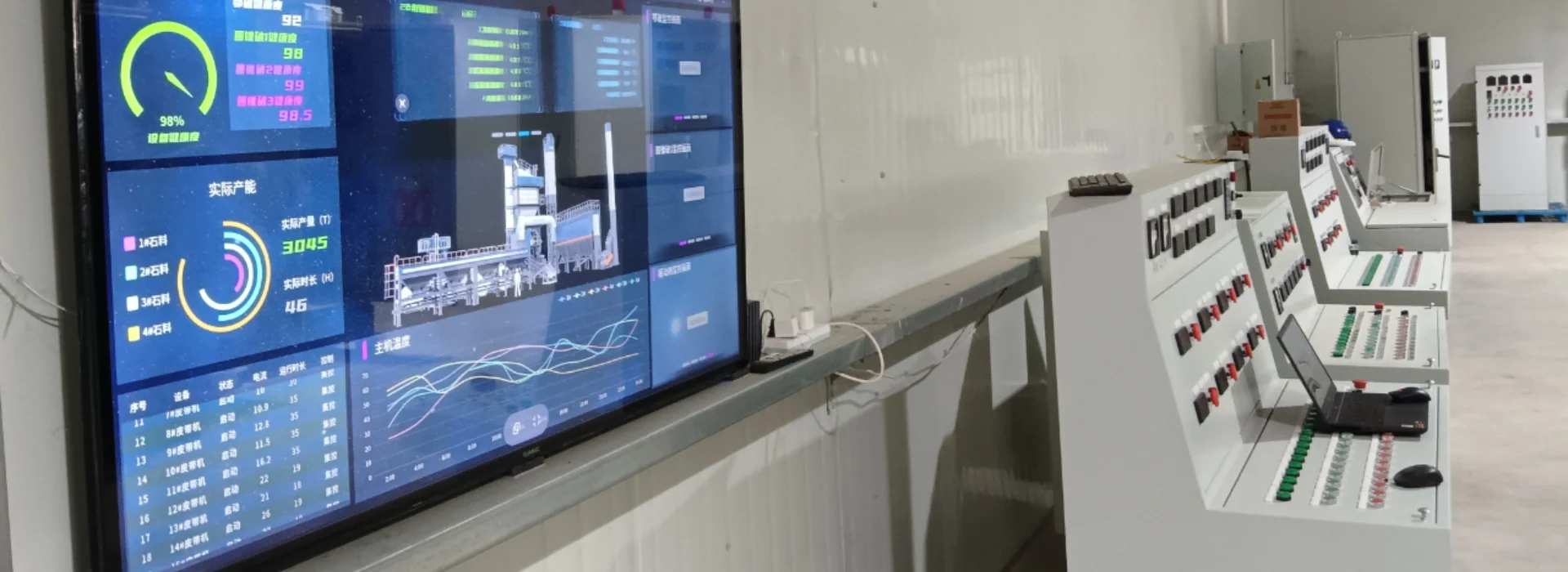
- Can the control system support the required asphalt mix designs?
- Does the supplier provide operator training and technical documentation?
- What warranty coverage and after-sales services are included?
- Can the manufacturer customize the configuration for local fuel, power, and environmental requirements?
Buyers should request a detailed technical proposal rather than relying only on a general product brochure. A reliable supplier should explain the equipment configuration, expected production conditions, installation requirements, and limitations clearly.
9. Mobile or Fixed: Which Asphalt Plant Should Your Company Choose?
There is no universal winner between a 160 TPH mobile batch asphalt plant and a fixed production facility. Each configuration offers different advantages depending on the company’s business model and project portfolio.
A mobile plant is generally more suitable when production needs to follow construction projects. A fixed facility is often more practical when the company serves a stable local market from one permanent production location.
- Choose a 160 TPH mobile batch asphalt plant if: Your company handles highway projects in different regions, works at remote construction sites, needs flexible production locations, or wants to reduce dependence on long-distance hot mix asphalt deliveries.
- Choose a fixed asphalt plant if: Your company has permanent land, stable local customers, predictable annual demand, and plans to operate a centralized asphalt production business over the long term.
- Consider both options carefully if: Your business combines long-term commercial asphalt supply with temporary infrastructure contracts. In this case, compare the cost of operating a central facility with the potential benefits of mobile production for individual projects.
Ultimately, the right investment should support your expected workload, not simply offer the highest rated production capacity or the most flexible equipment layout.
10. Final Thoughts: Is a 160 TPH Mobile Batch Asphalt Plant Worth Buying?
A 160 TPH mobile batch asphalt plant can be a worthwhile investment for contractors who manage large road construction projects across multiple locations. Its modular design can bring asphalt production closer to the construction site, reduce dependence on external suppliers, and improve coordination between mixing and paving operations.
However, its value depends on actual utilization. If your company has only one permanent production location and a stable customer base, a fixed asphalt facility may provide better long-term operating economics. If you regularly move between highway projects or work in areas with limited asphalt supply, mobility may justify the additional investment.
Before making a final decision, compare the total installed cost, expected annual production, transportation savings, fuel consumption, relocation expenses, maintenance requirements, and realistic payback period. These figures will provide a much clearer answer than the equipment price alone.
Discuss Your 160 TPH Asphalt Plant Project With AIMIX
At AIMIX, we understand that every asphalt production project has different requirements. A highway contractor working across several regions needs a different configuration from an asphalt producer supplying a permanent local market.
We provide a range of hot selling asphalt plant solutions for different production capacities and project conditions, including mobile batch and stationary batch configurations. Our team can help evaluate your production demand, site conditions, equipment configuration, and investment considerations before you make a purchasing decision.
If you are considering a 160 TPH mobile batch asphalt plant, contact AIMIX and share the following project details:
- Your project location and expected construction duration.
- Your required asphalt production capacity and daily output.
- Whether you plan to operate at one site or move between multiple projects.
- Your available aggregate, bitumen, fuel, and power resources.
- Your preferred equipment configuration and estimated investment budget.
With these details, we can help you compare mobile and fixed asphalt production solutions and identify a configuration that matches your construction schedule, operating conditions, and long-term business goals.
Contact AIMIX today to discuss your asphalt production requirements and request a customized 160 TPH asphalt plant proposal.