When comparing a concrete plant price, buyers often focus on the advertised production capacity and overlook another major cost factor: the mixing system. Two concrete batching plants with the same rated output can have noticeably different prices because they use different mixer technologies, configurations, and production arrangements. Understanding how mixer type and capacity interact helps buyers evaluate equipment costs more accurately, avoid unnecessary investment, and select a production solution that matches actual project requirements.
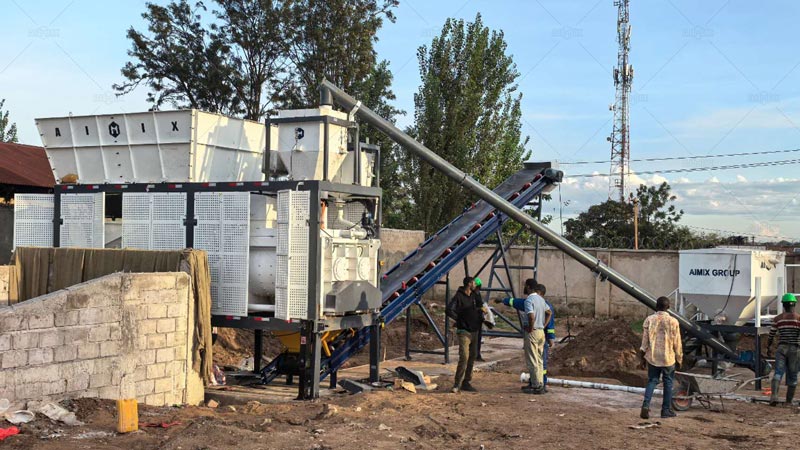
Why Mixer Type Is a Major Factor in Concrete Plant Price
The mixer is the core component responsible for combining cement, aggregates, water, and additives into uniform concrete. Its design affects not only mixing quality but also equipment costs, power consumption, maintenance requirements, and production efficiency. Therefore, selecting a mixer is an important step when calculating the overall concrete plant price(planta de concreto precio).
Twin-Shaft Mixers: Higher Investment for Intensive Production
Twin-shaft compulsory mixers use two synchronized horizontal shafts equipped with mixing blades. Their intensive mixing action produces homogeneous concrete within relatively short cycles, making them suitable for commercial concrete production, infrastructure construction, and projects requiring consistent quality.
However, twin-shaft mixers generally involve higher manufacturing costs because of their more complex transmission systems, mixing mechanisms, and wear-resistant components. Their power requirements and maintenance arrangements can also increase the initial investment.
For buyers planning continuous commercial production, the higher concrete plant price may be justified by faster mixing cycles, stable output, and the ability to handle different concrete formulations.
Planetary Mixers: Precision Mixing for Specialized Applications
Planetary mixers use rotating mixing tools that move around the mixing chamber while rotating on their own axes. This movement creates multiple mixing paths and helps distribute materials evenly.
They are commonly selected for applications requiring high mixing uniformity, such as precast concrete, concrete blocks, and specialized concrete products. Their mechanical structure and manufacturing precision can make them more expensive than conventional mixing solutions of comparable capacity.
When evaluating a concrete batching plant, buyers should consider whether their final products actually require this level of mixing performance. Otherwise, investing in a planetary mixer may increase the concrete plant price without delivering sufficient additional value.
Drum Mixers: A Different Cost Structure
Drum mixers combine materials through the rotation of an inclined mixing drum. Compared with compulsory mixing systems, their operating principle is relatively straightforward, and they are commonly used in smaller-scale concrete production and certain mobile mixing applications.
Their simpler construction can reduce equipment costs, although mixing efficiency and application suitability differ from those of compulsory mixers. Buyers should compare the required concrete quality, production process, and operating conditions rather than selecting equipment based solely on its purchase price.
How Production Capacity Changes the Equipment Investment
Production capacity is another major factor affecting concrete plant price. A higher-capacity plant requires more than simply a larger mixer. Its aggregate batching system, cement storage, weighing equipment, conveying mechanisms, electrical controls, and supporting structures must also be designed to handle increased material flow.
| Plant Capacity | Typical Configuration | Investment Characteristics |
|---|---|---|
| 25–50 m³/h | Compact mixing and batching system | Lower initial investment and smaller installation footprint |
| 60–90 m³/h | Medium-capacity batching system | Balanced equipment investment and production efficiency |
| 120–180 m³/h | Large mixer and high-volume material handling system | Higher equipment, installation, and infrastructure costs |
These capacity ranges represent common equipment configurations rather than fixed pricing categories. The actual concrete plant price depends on the mixer model, batching accuracy, aggregate storage, cement silos, automation level, and other project-specific requirements.
Why the Same Capacity Does Not Always Mean the Same Price
Consider two concrete batching plants(planta dosificadora de concreto) rated at 60 m³/h. One may use a twin-shaft mixer with a fully automatic batching system, while the other uses a different mixing configuration with simpler material handling equipment.
Although their rated capacities are identical, their manufacturing costs, power requirements, and overall configurations may differ significantly. Even when the same mixer type is selected, different batch volumes and mixing cycle times can result in different equipment specifications.
Buyers should therefore compare complete equipment configurations instead of using production capacity as the only pricing benchmark.
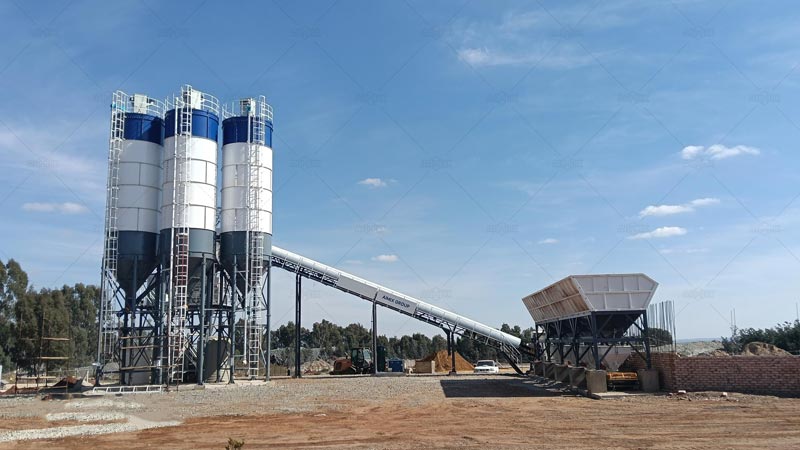
Mobile vs. Stationary Plants: How Layout Affects the Price
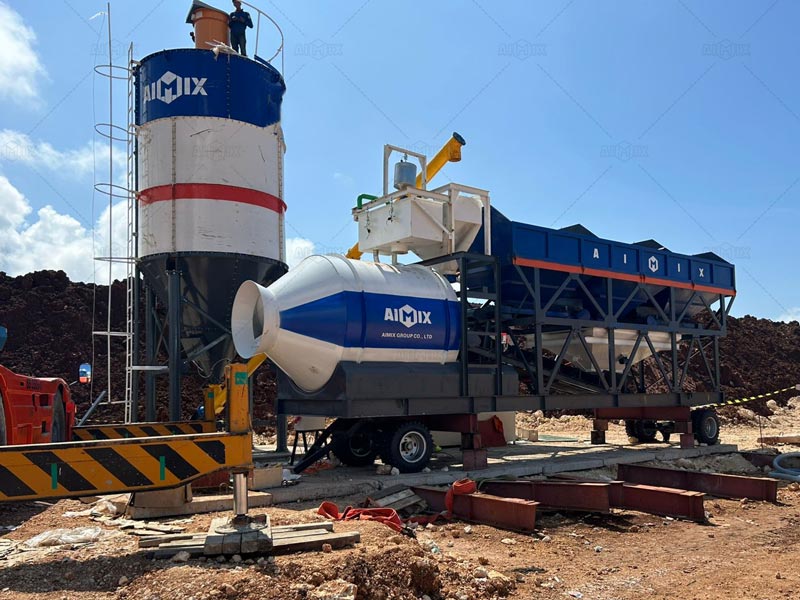
Equipment mobility introduces another dimension to the investment decision. A mobile concrete plant(planta de concreto móvil) typically integrates its batching, mixing, and conveying components into a compact transportable structure. This arrangement reduces the need for extensive on-site installation and makes relocation easier.
However, mobility does not automatically mean a lower concrete plant price. Specialized chassis, transportation-friendly structures, compact component arrangements, and quick-connection systems may increase manufacturing costs.
Stationary concrete batching plants generally provide greater flexibility for large-scale production. They can accommodate larger aggregate storage systems, multiple cement silos, and more extensive material handling configurations. Their foundations and installation requirements may increase initial project costs, but they are often more suitable for long-term commercial operations.
When comparing a mobile concrete plant with a stationary alternative, buyers should evaluate transportation, installation, relocation frequency, and expected operating duration rather than focusing exclusively on the equipment quotation.
What Buyers Should Consider When Choosing Concrete Plants in Colombia
For investors evaluating concrete plants in Colombia, equipment selection should reflect local construction conditions and the actual demand for ready-mixed concrete.
- Project location: Mountainous areas and remote construction sites may require compact layouts, easier transportation, or mobile configurations to reduce equipment relocation difficulties.
- Local market demand: Urban construction and commercial concrete supply may justify medium- or large-capacity plants, while temporary infrastructure projects may require more flexible production arrangements.
- Power and installation conditions: Check available electricity, foundation requirements, cement storage space, and aggregate transportation arrangements before confirming the configuration.
- Future expansion: If production demand is expected to increase, consider whether the initial batching system can accommodate additional storage, conveying equipment, or higher-capacity components.
These factors directly influence the configuration and total investment required for concrete plants in Colombia(plantas de concreto Colombia). A lower initial quotation may not represent the most economical solution if it creates additional transportation, installation, or operating expenses.
How to Match Mixer Type and Capacity with Your Budget
Instead of selecting the cheapest mixer or the largest available production capacity, buyers should work backward from their actual concrete demand.
First, estimate the average hourly requirement and peak production demand. Next, determine the concrete types to be produced and identify the appropriate mixing technology. Then, calculate the supporting equipment requirements, including aggregate bins, cement silos, weighing systems, and conveying equipment.
For example, a commercial ready-mix supplier may prioritize a twin-shaft mixer and a medium- or high-capacity stationary plant to maintain consistent production. A contractor handling multiple temporary projects may prefer a mobile concrete plant with a compact configuration and convenient relocation.
When requesting quotations from suppliers, ask for a detailed breakdown covering the mixer model, rated capacity, complete equipment list, installation requirements, and optional components. This makes it easier to compare the actual value behind different concrete plant price quotations.
Ultimately, the right investment is not necessarily the plant with the lowest purchase price or the highest rated output. It is the configuration that delivers the required mixing quality and production efficiency while keeping equipment, installation, and operating costs under control. By matching mixer technology with realistic production demand, buyers can make more informed purchasing decisions and build a concrete production system that supports long-term business growth.