Container yards at UAE seaports operate under demanding pavement conditions. Terminals in Jebel Ali, Khalifa Port, and other major maritime logistics hubs handle continuous container movements, heavy-duty terminal tractors, reach stackers, and rubber-tyred gantry cranes. Their pavement structures must withstand substantial wheel loads, repetitive traffic, braking forces, and localized pressure from container handling operations. Concrete pavement is therefore an important consideration for contractors developing new container storage areas, expanding terminal capacity, or rehabilitating existing port surfaces. Constructing these pavements requires more than placing concrete across a large open area. Contractors must coordinate concrete production, transportation, paving operations, joint formation, surface finishing, and curing within carefully controlled construction windows. A concrete road paving machine can help maintain consistent pavement thickness, alignment, and surface quality across extensive working areas. However, equipment selection must correspond to the pavement design, construction width, concrete supply capacity, and operational restrictions of the port. Understanding these factors helps contractors organize large-scale pavement construction while minimizing interruptions to terminal activities.
Structural Requirements of Container Yard Pavements at UAE Seaports
Withstand Heavy Container Handling Equipment
Container yards experience a different loading pattern from ordinary roads. Terminal tractors, loaded container trucks, reach stackers, and heavy handling equipment repeatedly travel along designated circulation routes and storage areas. Some equipment also produces concentrated wheel loads that place substantial stress on the pavement surface and underlying layers. Concrete pavement design must therefore consider axle loads, wheel configurations, traffic frequency, slab thickness, concrete flexural strength, joint spacing, and subgrade support. Areas used for container stacking may require additional attention because concentrated loads can create different stress conditions from ordinary vehicle traffic.
Consider Subgrade Preparation and Drainage
A durable concrete pavement depends on a properly prepared supporting structure. Contractors generally evaluate subgrade bearing capacity, compaction, drainage arrangements, and the condition of the underlying base before concrete placement begins. Poor drainage can allow water to accumulate beneath or around pavement slabs, potentially contributing to erosion, loss of support, and differential settlement. In coastal port environments, material selection and construction detailing should also account for exposure conditions and the project’s durability specifications.
Select Suitable Concrete Paving Equipment for Large Port Areas
Match the Paving Method to the Construction Layout
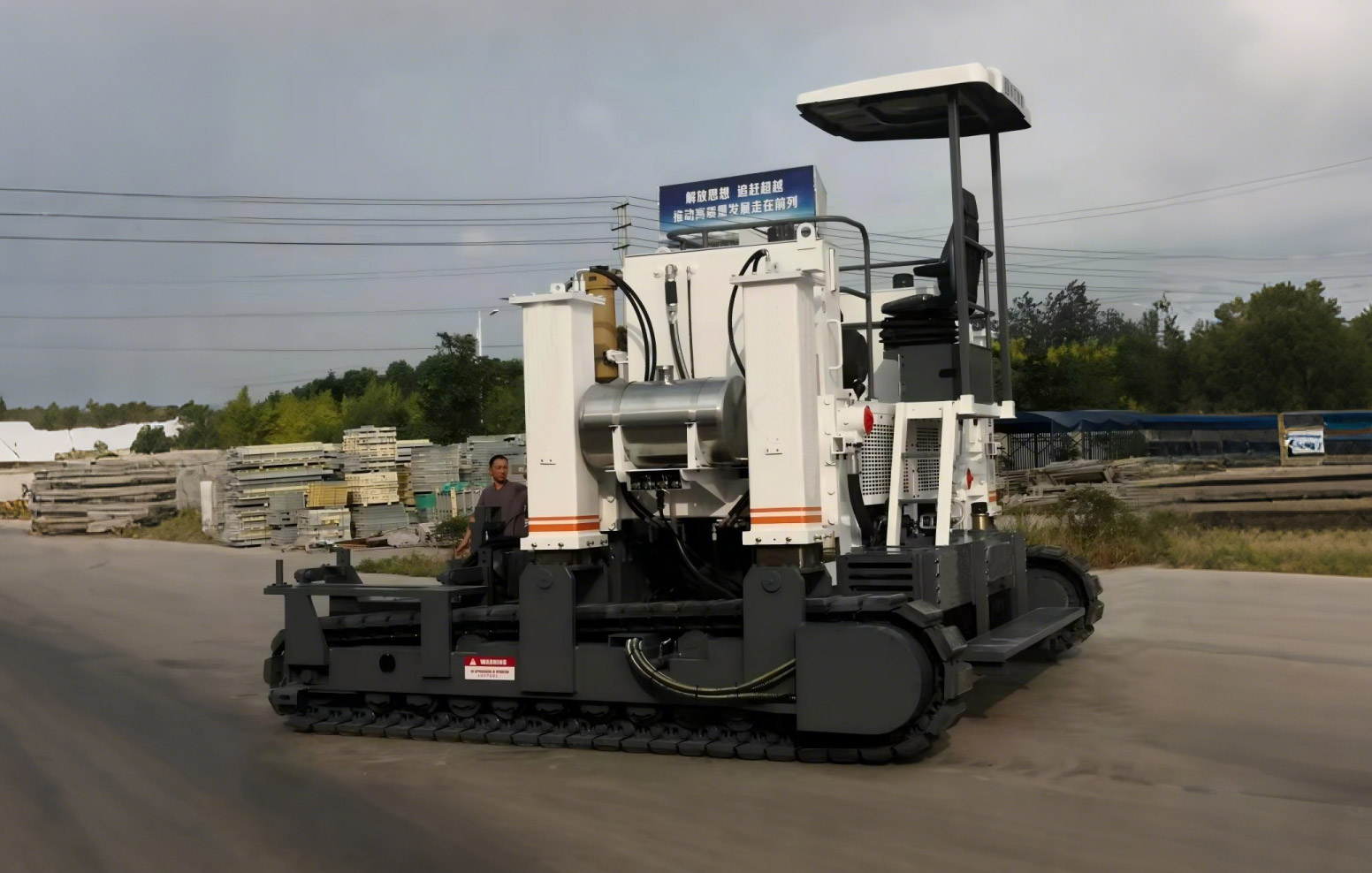
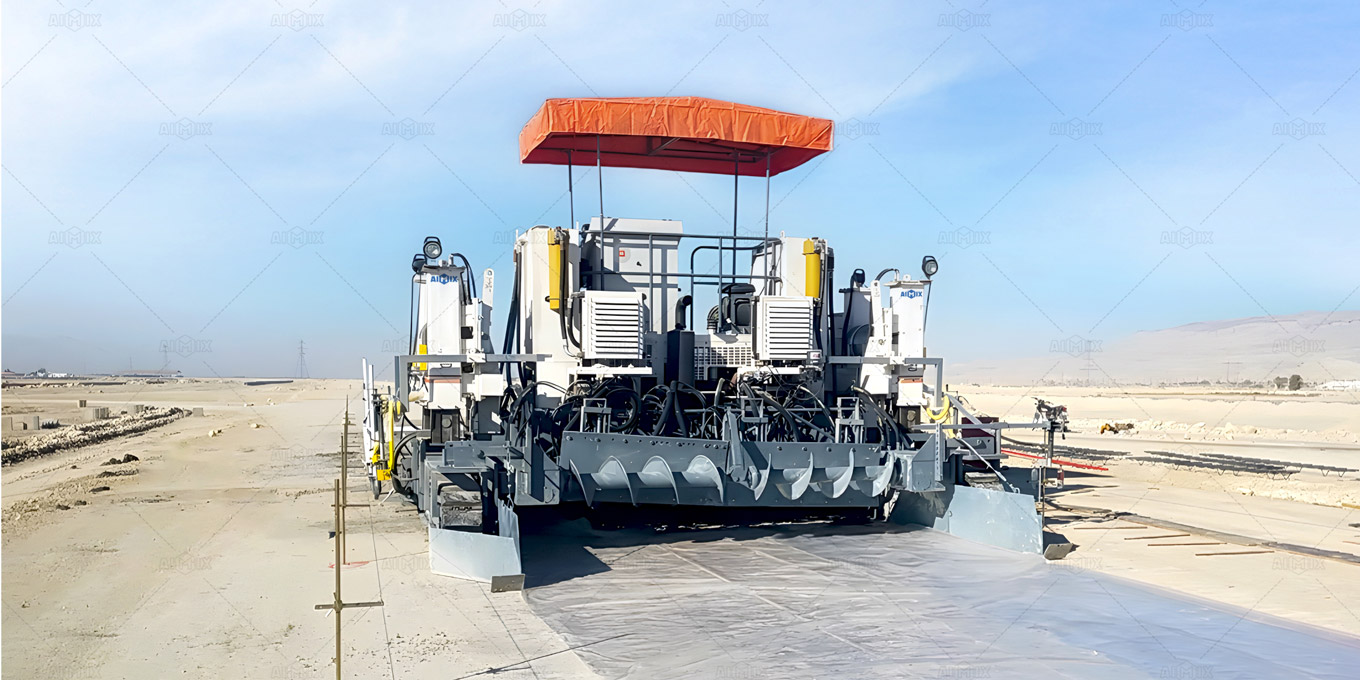
Large container yards typically contain extensive rectangular pavement sections, internal transport lanes, stacking zones, and equipment maneuvering areas. Contractors need a paving arrangement capable of maintaining consistent slab geometry across these different sections. A concrete paver machine in UAE port construction projects can mechanize concrete spreading, consolidation, and surface finishing, depending on the machine configuration. Slipform paving systems are particularly relevant to continuous paving operations where the required pavement width and profile can be established through a controlled forming process. For other layouts, contractors may consider fixed-form paving or specialized concrete spreading and finishing equipment. The decision depends on pavement dimensions, reinforcement arrangements, edge details, production volume, and available working space.
Evaluate Equipment Capacity and Working Width
Paving width influences the number of construction passes, the positioning of supply vehicles, and the organization of daily work sections. A wider machine may cover more pavement area per pass, but it also requires sufficient concrete supply and suitable site access. Contractors comparing a concrete paver for sale in UAE should examine the machine’s paving width, applicable slab thickness, working speed, vibration system, finishing configuration, and compatibility with the specified concrete mix. Equipment specifications should be assessed against actual project requirements rather than maximum rated output alone. A machine must be capable of maintaining stable operation throughout the planned paving shift.
Organize Continuous Concrete Production for Port Pavement Projects
Calculate the Required Concrete Supply
Concrete production planning begins with the dimensions of each pavement section. Contractors calculate the required volume using pavement length, width, and thickness, then incorporate the approved construction allowances and planned production sequence. For example, a pavement section measuring 100 m long, 20 m wide, and 0.30 m thick requires approximately 600 m³ of concrete before allowances for additional requirements or material losses. The production schedule must correspond with the paving machine’s actual placement rate. Insufficient supply can interrupt paving and create undesirable construction joints, while excessive production can result in delivery congestion and prolonged waiting times.
Configure the Batching Plant Around Paving Demand
A dedicated concrete batching plant in UAE for concrete production for paving provides controlled proportioning and mixing for large pavement construction projects. Its configuration should reflect the approved mix design, required hourly output, aggregate storage capacity, cementitious material supply, and transportation distance. Contractors should also evaluate weighing accuracy, moisture correction, mixing uniformity, and the consistency of admixture dosing. These parameters influence fresh-concrete behavior and the quality of the finished pavement. For projects with changing construction locations or temporary production requirements, a mobile batching arrangement may also be considered. However, mobility should not compromise calibration, material handling, or production reliability.
Manage Concrete Transportation and Placement Across the Container Yard
Coordinate Delivery Vehicles with Paving Progress
Large port pavement projects require a carefully synchronized delivery sequence. Transit mixer trucks must reach the paving area at intervals that maintain a consistent material supply without obstructing other construction activities. Contractors should establish designated delivery routes, unloading positions, vehicle turning areas, and communication procedures between the batching plant and paving supervisor. These arrangements become particularly important when construction takes place near active terminal operations.
Maintain Consistent Concrete Workability
Concrete supplied for paving must satisfy the approved requirements for consistency, stability, and placement behavior. Excessive variations between successive deliveries can affect spreading, vibration, surface finishing, and pavement geometry. In the UAE, high ambient temperatures can accelerate moisture loss and influence the workable period of fresh concrete. Contractors should coordinate delivery times, concrete temperature controls, approved admixtures, and curing preparations before beginning each paving section.
Control Pavement Thickness, Compaction, and Surface Finishing
Maintain Consistent Slab Geometry
Pavement thickness and elevation are important quality parameters in container yards because uneven surfaces can affect vehicle movement, drainage, and load distribution. Before paving, contractors establish survey references and verify the prepared base level. During construction, the paving team monitors machine alignment, elevation controls, slab thickness, and transverse and longitudinal profiles. Automated guidance systems, where available, can help maintain the intended paving line and elevation. Regular checks remain necessary to identify deviations before they extend across a larger section.
Ensure Adequate Consolidation and Surface Quality
Concrete must be consolidated sufficiently to achieve the specified density and minimize entrapped air. In mechanized paving, vibration settings and machine travel speed should correspond to the concrete properties and placement conditions. Surface finishing must also follow the specified texture requirements. Port pavements need adequate surface characteristics for heavy vehicle operation, braking, and maneuvering. Contractors should avoid excessive finishing or inappropriate water application, which may weaken the surface layer.
Adapt Construction Procedures to UAE Port Conditions
Schedule Work Around Heat and Terminal Operations
High temperatures and intense solar exposure can complicate concrete placement and curing. Contractors may schedule critical operations during cooler working periods, subject to port access restrictions and the overall construction programme. Temporary shading, suitable concrete temperature management, and timely curing measures can help reduce rapid moisture loss. The selected curing method should comply with the pavement specifications.
Divide Large Areas into Manageable Construction Sections
Container yards cannot always be closed entirely during expansion or rehabilitation. Contractors may divide the work into separate paving zones to preserve designated vehicle routes and maintain access to operational areas. Construction joints, daily production targets, equipment relocation, and concrete delivery routes should be planned around these sections. A clearly defined sequence reduces conflicts between construction machinery and terminal traffic.
Evaluate Equipment Configuration and Long-Term Construction Efficiency
Consider Maintenance and Operational Support
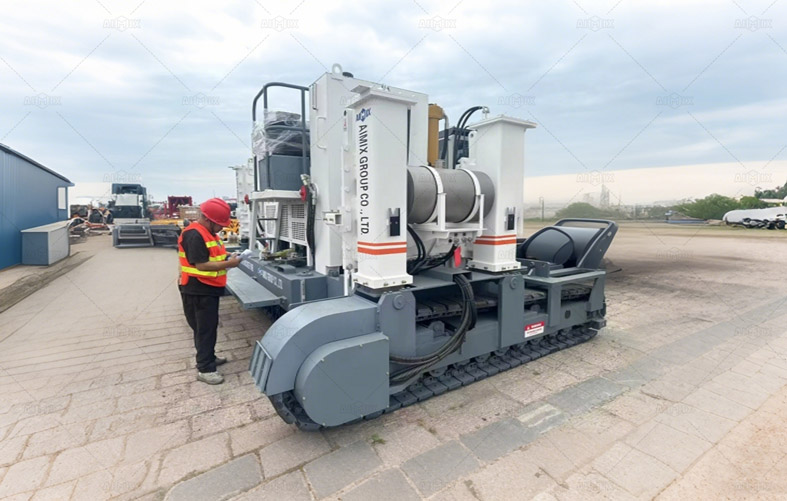
Concrete paving equipment used on extensive port projects may operate for long shifts under demanding conditions. Contractors should evaluate access to spare parts, routine maintenance requirements, operator training, and technical support when selecting machinery. Preventive inspections of hydraulic systems, vibration components, sensors, drive mechanisms, and finishing assemblies help reduce unexpected interruptions.
Balance Initial Investment with Project Requirements
The purchase or rental decision should reflect the total pavement area, construction duration, required paving capacity, and expected future utilization. A specialized paving machine may be suitable for a large terminal expansion, whereas smaller rehabilitation sections may require a different equipment arrangement. Contractors should compare equipment acquisition, mobilization, operating costs, maintenance, and productivity under realistic site conditions. The objective is to establish an equipment configuration that meets the project’s technical and scheduling requirements without introducing unnecessary operational complexity.
Conclusion
Container yard pavement construction at UAE seaports requires coordinated planning across pavement design, concrete production, transportation, mechanized paving, and quality control. Heavy handling equipment and repetitive traffic place demanding requirements on slab thickness, concrete properties, surface tolerances, and supporting layers. A suitable concrete paver machine can help contractors maintain consistent placement and finishing across extensive port areas. However, its performance depends on a reliable concrete supply, appropriate equipment configuration, prepared working surfaces, and effective construction scheduling. By coordinating these elements, contractors can deliver pavement sections designed to withstand the demanding operational conditions of modern UAE seaports.