The romance of the remote construction project—a bridge spanning a rugged fjord, a wind farm perched on a windswept plateau, or a mining camp deep in the bush—is invariably tempered by the harsh logistical realities of concrete supply. Unlike steel or timber, concrete is a perishable commodity; its properties are a function of time and temperature, governed by the inexorable hydration process that begins the moment water meets cement. For projects situated beyond the reach of conventional ready-mix truck delivery, the challenge is not merely one of inconvenience, but of fundamental structural viability. The tyranny of distance introduces the specter of slump loss, premature setting, and the astronomical costs of trucking dedicated mixer fleets over hundreds of kilometers of treacherous terrain. It is within this crucible of constraint that the mobile concrete batching plant for sale emerges not as a convenience, but as an existential necessity, offering a paradigm of self-sufficiency that redefines the possible in remote construction.
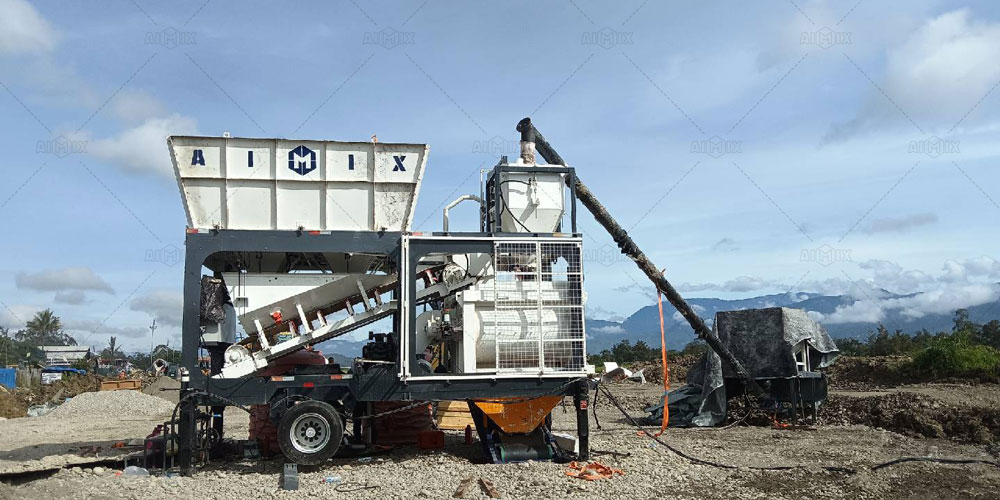
1. The Logistical Gordian Knot of Remote Concreting
Before extolling the virtues of the solution, one must fully appreciate the intractable nature of the problem. Conventional concrete supply chains are predicated on speed and proximity, two luxuries that are conspicuously absent in remote locales.
The Perishability Predicament and Slump Life
Concrete is a fickle matrix. Its workability, measured by the “slump” test, degrades progressively due to a combination of cement hydration and evaporation. Beyond a critical threshold—often less than 90 minutes from batching—the mix becomes unworkable, requiring the addition of water. This superficial remedy, however, catastrophically compromises the water-cement ratio, decimating the final compressive strength. For a remote project reliant on a batch plant for sale situated a hundred kilometers away, the practical “slump life” is entirely exhausted before the truck even reaches the site entrance. This forces a choice between accepting compromised structural integrity or utilizing expensive, powerful retarders that must be precisely tailored to the ambient temperature, adding another layer of complexity and risk.
The Tyranny of the Empty Return Journey
Logistical economics in haulage are mercilessly governed by the cost per loaded kilometer. When a ready-mix truck delivers a load to a remote site, it must return to the plant for its next fill. The expense of the return leg—fuel, driver wages, and vehicle depreciation—yields no productive output, effectively doubling the freight cost per cubic meter of concrete. For a major infrastructural undertaking requiring thousands of cubic meters of material, this inefficiency is a profound hemorrhaging of capital. The mobile batching plant eliminates this empty backhaul by locating the mixing plant at the point of consumption, ensuring that every kilometer travelled by the logistical chain contributes directly to productive output.
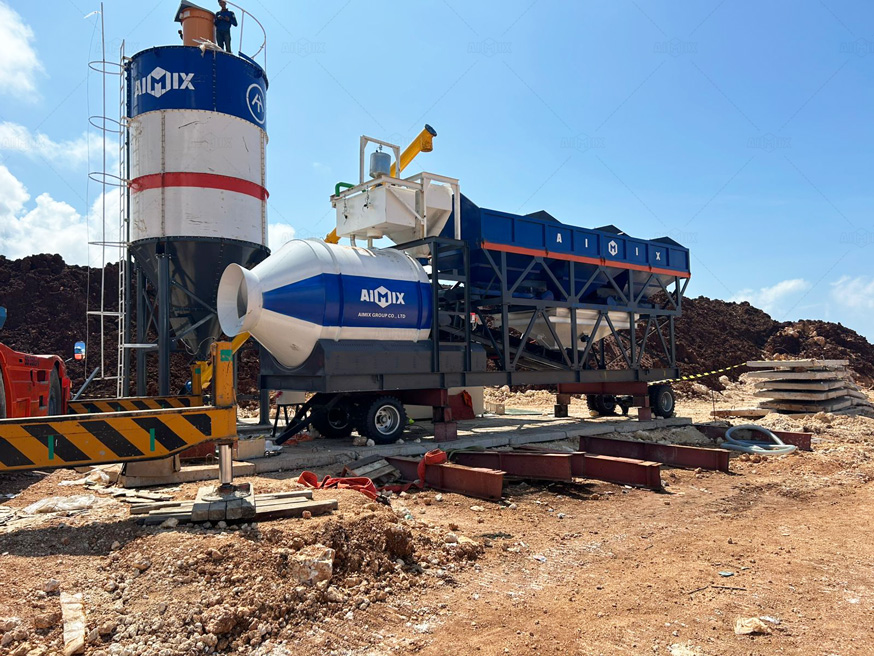
2. The Mobile Batching Plant: A Self-Contained Ecosystem
Mobile concrete batching plants are not merely smaller versions of their stationary cousins. They are engineered artifacts designed for rapid deployment and autonomous operation, representing a unique solution to a unique problem.
Rapid Deployment and “Plug-and-Play” Integration
The quintessential advantage of these systems is their expedited set-up time. Delivered in modular, road-towable configurations, they can be transported using standard prime movers without requiring specialized escorts or extensive route surveys. Upon arrival, the hydraulically actuated sections unfold with minimal requirement for groundwork; the aggregate bins, cement silos, and mixing unit all align with integrated framework. A typical unit can be fully operational within a few hours of arrival, converting a plot of raw land into a fully functioning concrete production facility. This agility allows project managers to sequence the setup precisely, mobilizing the plant only when the critical path demands, thereby conserving capital and optimizing rental periods.
Granular Inventory Control and Custom Mix Design
In the remote context, supply chain interdependency is a vulnerability. The portable concrete batch plant for sale affords unparalleled control over the raw materials inventory. Rather than relying on a distant supplier to manage cement or aggregate quality, the site team can oversee the stockpile, conducting on-the-spot moisture content analysis and sieve testing to ensure compliance. This localized oversight allows the batching plant to produce a diverse array of mix designs on demand, from the highly flowable lean mix for trench fill to the high-strength, low-permeability concrete required for water-retaining structures. This agility is simply impossible when one is chained to a distant, single-purpose ready-mix facility.
Controlling the “Heat of Hydration” in Curing
For mass concrete pours in remote, often extreme climates, managing the internal thermal gradient of the curing mass is paramount. The mobile plant’s ability to precisely control the temperature of the batch water, or even incorporate ice, is a critical asset. By cooling the concrete as it is batched, the plant mitigates the risk of thermal cracking—a phenomenon where the hot core of a concrete mass expands against a cooler, contracted exterior. This ensures the structural integrity of critical infrastructure, which is a non-negotiable requirement for projects like dam walls or deep foundations in permafrost zones. The localized nature of the plant makes this active temperature management logistically feasible.
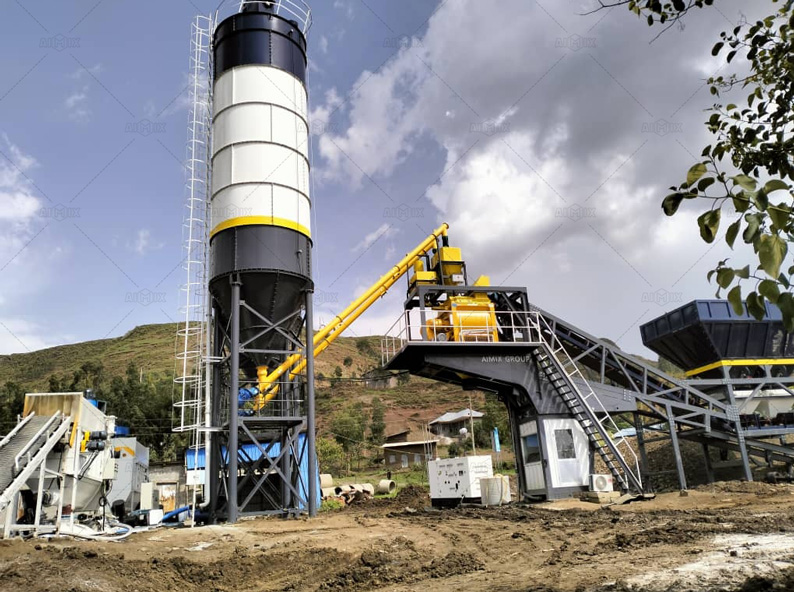
3. Economic and Operational Resilience
Beyond the immediate logistical and technical benefits, the mobile batching plant confers profound economic advantages, insulating the project from market volatility and fostering a resilient operational posture.
Mitigating the Volatility of Bulk Commodity Pricing
The cost of ready-mix concrete is often locked into contracts that factor in transportation overhead, which can fluctuate significantly with diesel prices. A mobile plant allows the project owner to procure raw materials—cement, aggregates, and admixtures—in bulk, directly from the source. This often involves negotiating favorable ex-works pricing, cutting out the intermediary costs of the mixer truck. This procurement strategy provides a hedge against the inflationary pressures that frequently plague the construction sector, enabling the project to adhere more accurately to its baseline budget. The ability to source aggregates locally, where available, further compounds these savings by decoupling the project from global pricing indexes.
Reducing the Carbon Footprint of the Logistics Chain
The modern construction paradigm is increasingly beholden to stringent environmental Key Performance Indicators (KPIs). The cumulative diesel consumption of hundreds of mixer trucks traversing hundreds of kilometers generates a substantial carbon burden. By locating the mini batching plant on-site, the project drastically curtails its Scope 1 emissions associated with material transport. This reduction in “freight intensity” is not only environmentally responsible but also contributes positively to tenders for “green” or sustainable building certifications, which are often a prerequisite for government-backed infrastructure funding. In this regard, the mobile plant is an instrument of environmental stewardship and corporate reputation.
Enhancing Workforce Productivity and Safety
On a remote site, workforce welfare is paramount. A reliable, on-site batching plant eliminates the uncertainty and stress associated with the variable arrival times of ready-mix trucks, which often lead to labor idleness and extended shift durations. The predictability of a “just-in-time” supply allows the concreting gang to work in a consistent, planned rhythm, reducing fatigue and enhancing job satisfaction. Furthermore, it mitigates the hazards of managing a high volume of heavy vehicle traffic within a congested construction environment, reducing the risk of accidents and injuries, and fostering a safer working atmosphere.