As global infrastructure construction extends further into remote areas with challenging terrain, precast concrete yards play an increasingly central role in highway and railway bridge construction. As the core equipment for hoisting heavy concrete components (such as box girders and T-girders) in precast yards, the energy choice for Rubber Tyred Gantry (RTG) cranes directly impacts not only project schedules but also construction costs, environmental compliance, and supply chain security. This paper systematically compares traditional diesel-generator set powered RTG cranes with electric-powered (including cable reel and hybrid) RTG cranes in terms of technical feasibility, economics, logistics, and environmental benefits under remote road construction scenarios, providing project decision-makers with a scientific energy selection framework.
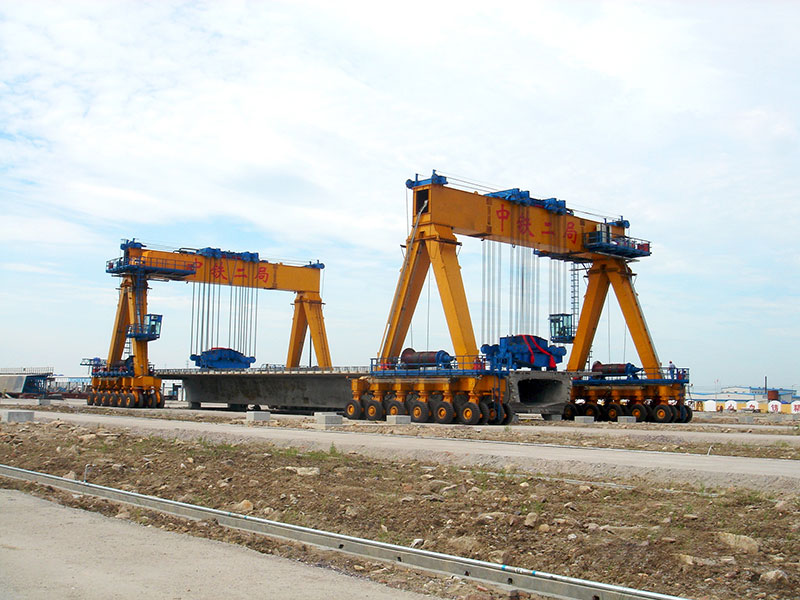
Special Operating Conditions of Precast Yards in Remote Areas
Precast concrete yards in remote road construction projects exhibit several distinct characteristics:
- Lack of Grid Infrastructure and Power Instability: Projects are usually located far from the main power grid. Constructing high-voltage substations and utility lines is costly and has long lead times.
- Temporary and Project-Phased Nature: These yards function as temporary facilities, operating for 1 to 3 years before being dismantled or relocated upon project completion.
- Harsh Environmental Conditions: They are frequently subjected to extreme weather such as high altitudes, freezing temperatures, arid deserts, strong winds, or high heat and humidity, which demand ultimate reliability from power systems.
- High Logistics and Supply Chain Costs: Fuel and spare parts must be transported over long distances, exposing the project to high supply chain interruption risks.
Under these multiple constraints, RTG rubber tyred gantry cranes – heavy-duty material handling machinery characterized by frequent start-stop operations and high transient power peaks (typically 150 kW to 400 kW) – require a carefully evaluated power source.
Diesel-Generator Powered RTG: The Traditional Workhorse
Traditionally, RTG cranes have relied on an onboard Diesel Generator Set (Gen-Set) as their primary power source.
Advantages
- Absolute Mobility and Autonomy: Completely untethered by physical lines or rails, diesel RTG cranes can steer and travel freely across the entire precast yard, storage areas, and adjacent zones.
- Plug-and-Play Deployability: There is no need to wait for local grid approval, high-voltage substations, or distribution lines. The machine is ready for work as soon as it arrives and is fueled, which drastically reduces initial mobilization times.
- High Robustness: Industrial diesel engines are highly mature and deeply trusted in harsh, remote environments. Skilled mechanics are widely available, and these engines maintain high performance in freezing winters and blistering desert heat.
Disadvantages and Technical Pain Points
- Low Energy Efficiency: The duty cycle of an RTG mobile gantry crane is highly cyclical and volatile. During spreader idling or standby waiting periods, the diesel engine continuously runs in a low-efficiency idle state (“oversized engine for undersized load”), resulting in poor fuel economy.
- Exorbitant Operational Expenditures (OPEX): In remote regions, diesel prices are inflated by secondary transportation costs. Frequent refueling, oil changes (typically every 250 running hours), filter replacements, and engine overhauls lead to heavy maintenance and labor costs.
- Carbon Emissions and Noise Pollution: Lacking advanced exhaust-treatment systems, diesel engines emit substantial greenhouse gases (GHGs) and particulates. High-decibel engine noise also poses health risks to workers and creates compliance hurdles in environmentally sensitive areas.
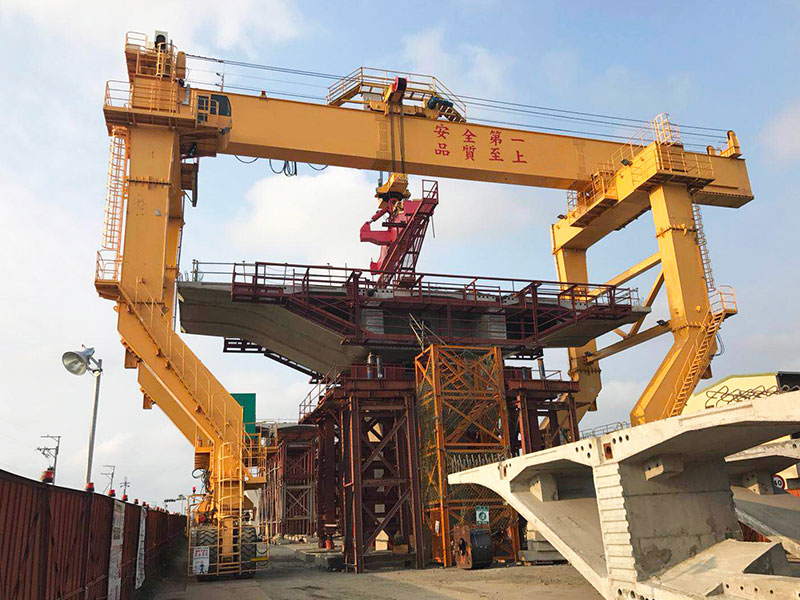
Electric-Powered RTG (E-RTG): The Green Frontier
With the global push toward carbon neutrality and “green construction” standards, Electric RTG (E-RTG) technologies have migrated from busy container terminals to civil infrastructure precast yards. Key technical configurations include Cable Reel systems and modern Diesel-Electric/Battery hybrid systems.
Advantages
- Significantly Lower Operational Costs: Electricity is overwhelmingly superior to diesel fuel in terms of consumption costs. This economic gap can be calculated using the following basic plain-text energy equations:
Diesel Cost = Average Power * Time * Specific Fuel Consumption * Fuel Price
Electric Cost = Average Power * Time * (1 / Motor Efficiency) * Electricity Price
(where Specific Fuel Consumption refers to fuel used per unit of energy generated, and Motor Efficiency represents the electric drive system’s conversion efficiency)
In practice, transitioning to electric drives results in a 60% to 75% reduction in direct energy expenses.
- Minimal Maintenance Overheads: Electric motors are mechanically simpler than internal combustion engines, lacking pistons, complex lubrication systems, and high-temperature combustion chambers. Eliminating oil filter changes, engine coolant maintenance, and mechanical wear reduces maintenance costs by roughly 70%.
- Zero Local Emissions and Reduced Noise: Electric rubber wheeled gantry cranes do not produce exhaust emissions during operation, and their low-noise profile drastically improves the work environment for ground crew.
- Regenerative Energy Recovery: During heavy load lowering, the electric drive motors function as generators. E-RTGs can capture this gravitational potential energy and feed it back into the local power grid or battery pack, further lowering net energy usage.
Disadvantages and Infrastructure Obstacles
- Substantial Initial Capital Expenditure (CAPEX): Wired electric RTG options require installing cable trenches and cable reels. The civil works and materials required for large precast yards can run up a significant bill.
- Reduced Operational Flexibility: A wired E-RTG is restricted by the length of its cable system. Repositioning the crane to a different bay or another part of the yard requires complex procedures.
- Grid Expansion Bottlenecks in Remote Areas: Rural electrical infrastructure in remote regions is often designed for low-power residential or agricultural usage. Connecting the high-capacity, three-phase power supply required by cranes (typically demanding over 400 kVA) requires specialized utility lines and heavy-duty transformers. The administrative approval, grid connection fees, and installation can take up to six months or more.
Comprehensive Comparison Matrix in Remote Environments
| Comparison Dimension | Diesel-Generator RTG | Electric-Powered RTG (E-RTG) | Hybrid RTG (Battery-Engine System) |
|---|---|---|---|
| Initial Capital Expenditure (CAPEX) | Low (Direct deployment upon procurement) | Extremely High (Requires substation expansion, cable trenches, or reels) | Medium to High (High machine cost, but no extensive grid buildout required) |
| Operational & Maintenance Cost (OPEX) | Extremely High (High fuel consumption, frequent engine maintenance) | Extremely Low (Cheap electricity, virtually maintenance-free motors) | Medium (Balances low fuel consumption with reduced engine wear) |
| Mobility & Flexibility | Excellent (Unrestricted movement and 360-degree turning) | Limited (Restricted to cable pathways) | Good (Battery or auxiliary engine mode allows cross-bay movement) |
| Logistics Dependency | High (Heavily dependent on routine diesel tanker deliveries) | None (Dependent only on local power grid stability) | Low (Fuel consumption is cut by 60% to 70%) |
| Climate Adaptability & Reliability | High (Immune to grid fluctuations; cold starts can be tough) | Medium (Vulnerable to grid instability, lightning strikes, or cable freezing) | High (Redundant power sources provide a fail-safe fallback) |
| Decarbonization Performance (ESG) | Poor (Significant GHG and particulate emissions) | Excellent (Can achieve 100% net-zero emissions if green energy is used) | Good (Achieves 50% to 60% emission reductions) |
Decision Framework: Choosing the Optimal Energy System
When planning remote road construction operations, engineering teams should follow a structured step-by-step process to determine the best RTG power configuration:
- Evaluate Project Lifecycle and Yard Operating Life:
- Short-term Projects (1.5 years or less): Prioritize mobility and low upfront costs.
- If reliable grid power is readily accessible onsite, choose a dual-power RTG or a cable-reel E-RTG.
- If there is no grid power available, deploy traditional diesel-generator powered RTGs directly.
- Long-term Projects (More than 1.5 years): Focus heavily on optimizing long-term operational expenditures (OPEX).
- If grid power is available or grid expansion is feasible, select pure electric E-RTGs (cable reel system).
- If grid power is unavailable and expansion is extremely difficult, utilize Hybrid RTGs (engine plus battery storage) or build a localized microgrid.
- Short-term Projects (1.5 years or less): Prioritize mobility and low upfront costs.
- Project Lifecycle Returns (LCOE Methodology): If the precast yard will operate for an extended duration (e.g., more than 24 months), the massive OPEX savings delivered by an electric drive system will easily offset the upfront costs of transformers and cable systems. For short-term yards that undergo frequent relocations, traditional diesel RTGs or self-contained hybrid systems are the most financially sensible options.
- Microgrid Feasibility: For extremely remote, long-term yards, a decentralized hybrid microgrid (such as solar PV plus battery storage plus diesel generator backup) presents an innovative solution. Harnessing solar energy via desert or wasteland PV panels and storing it in containerized lithium battery units allows RTG cranes to operate electrically at ultra-low costs while sidestepping the lack of municipal grid access.
Conclusion and Future Industry Outlook
In the context of remote road construction, the choice between “diesel-powered” and “electric-powered” is rarely a simple black-and-white decision.
For short-duration, geographically challenging, and grid-isolated early-stage projects, the diesel-generator powered RTG remains the irreplaceable, rugged workhorse due to its unparalleled tactical flexibility and low entry barrier. However, steps must be taken to minimize fuel waste, such as utilizing variable-frequency speed controls that slow down the engine generator during low-load or idle states.
On the other hand, in an era where green and sustainable infrastructure regulations are increasingly mandatory, and for large-scale precast yards operating for over two years, the transition to Electric Drive (E-RTG) or Diesel-Electric Hybrids is fast becoming the industry standard. This shift represents not only a highly rational financial choice to protect margins but also a critical environmental commitment (ESG) in fragile and remote ecological landscapes.