Selecting the right concrete batching plant involves more than choosing the appropriate production capacity. Installation methods and structural design also play a major role in determining project efficiency, operating flexibility, and long-term investment value. Different construction projects have different requirements for installation speed, relocation frequency, and production duration, making it essential to understand the various types of concrete batching plant available. From stationary concrete batch plants designed for permanent production facilities to mobile concrete batch plant solutions for temporary projects and modular concrete batching plant systems that combine flexibility with fast installation, each type offers unique advantages for specific construction applications.
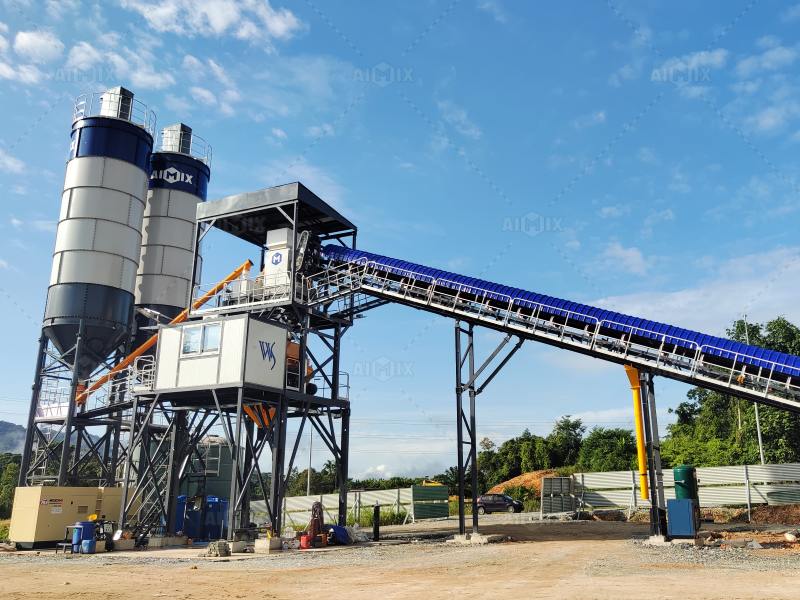
Stationary Concrete Batch Plants for Long-Term Production
Stationary concrete batch plants are designed for projects requiring continuous, high-volume concrete production over an extended period. These plants are permanently installed on reinforced foundations and typically remain at one location throughout their service life.
Their robust structural design allows them to support large-capacity mixers, multiple aggregate bins, high-volume cement silos, and advanced automation systems. Because they are installed as permanent facilities, stationary concrete batch plants can achieve excellent production stability and high operating efficiency.
These plants are widely used by commercial ready mix concrete suppliers, large infrastructure contractors, and industrial construction companies where daily concrete demand remains consistently high.
The installation process generally requires foundation construction, utility preparation, equipment assembly, and system commissioning. Although installation takes longer than mobile alternatives, the long-term productivity and durability make stationary plants a cost-effective solution for permanent operations.
Mobile Concrete Batch Plant for Flexible Construction Projects
Unlike stationary systems, a mobile concrete batch plant is designed for easy transportation and rapid deployment. Most equipment is pre-mounted on a mobile chassis or compact steel frame, allowing the plant to be relocated between project sites with minimal disassembly.
This flexibility makes mobile batching plants ideal for road construction, bridge projects, municipal engineering, remote infrastructure developments, and temporary construction sites where concrete production locations frequently change.
Because many structural components are integrated at the factory, installation usually requires only leveling, utility connections, and system calibration before production can begin. Contractors can significantly reduce setup time compared with conventional stationary plants.
For companies managing multiple short-term projects, a mobile concrete batch plant offers improved equipment utilization by allowing one production system to serve several construction sites throughout its service life.
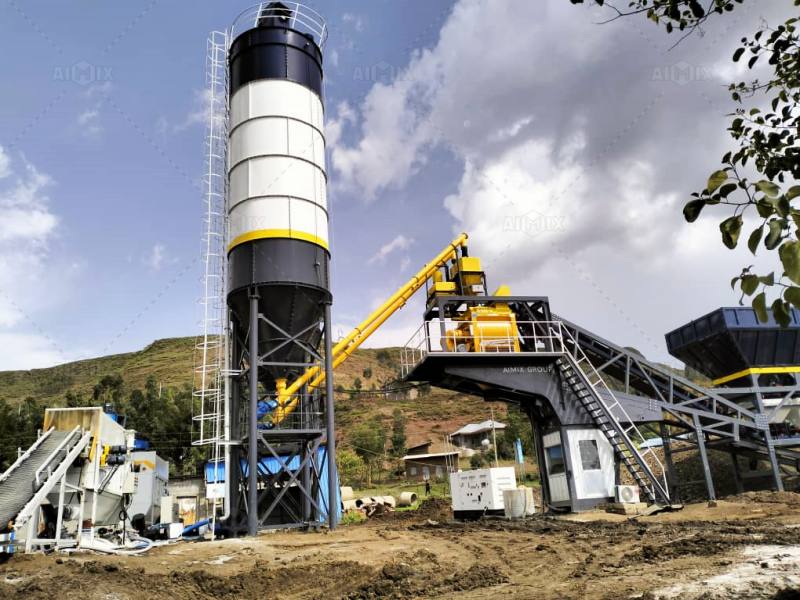
Modular Concrete Batching Plant for Faster Installation
A modular concrete batching plant combines many advantages of both stationary and mobile systems. Instead of transporting equipment as completely separate components, major structural sections are manufactured as standardized modules that are assembled quickly at the project site.
This modular design reduces installation complexity because many mechanical, electrical, and structural components are pre-assembled before shipment. As a result, contractors spend less time on-site performing welding, alignment, and structural adjustments.
Compared with traditional stationary plants, modular systems can significantly shorten project preparation while maintaining the high production capacity required for long-term concrete supply. Some quick-installation modular plants also feature foldable structures that reduce transportation volume and lower shipping costs.
For projects requiring both high productivity and relatively fast deployment, a modular concrete batching plant provides an excellent balance between efficiency and flexibility.
Structural Design Differences Between Plant Types
The structural design of each batching plant type directly influences transportation, installation, and daily operation.
Stationary concrete batch plants generally use permanent steel frameworks supported by reinforced concrete foundations. These structures are optimized for long-term stability and continuous production under heavy workloads.
A mobile concrete batch plant adopts compact structural layouts with integrated transport frames, allowing the entire system or major components to be moved efficiently between sites. Mobility is prioritized without sacrificing production performance.
Meanwhile, modular concrete batching plants divide the equipment into standardized structural units. These modules simplify transportation, improve installation efficiency, and allow easier expansion if production capacity needs increase in the future.
Each structural approach reflects different operational priorities, making equipment selection dependent on project characteristics rather than simply plant capacity.
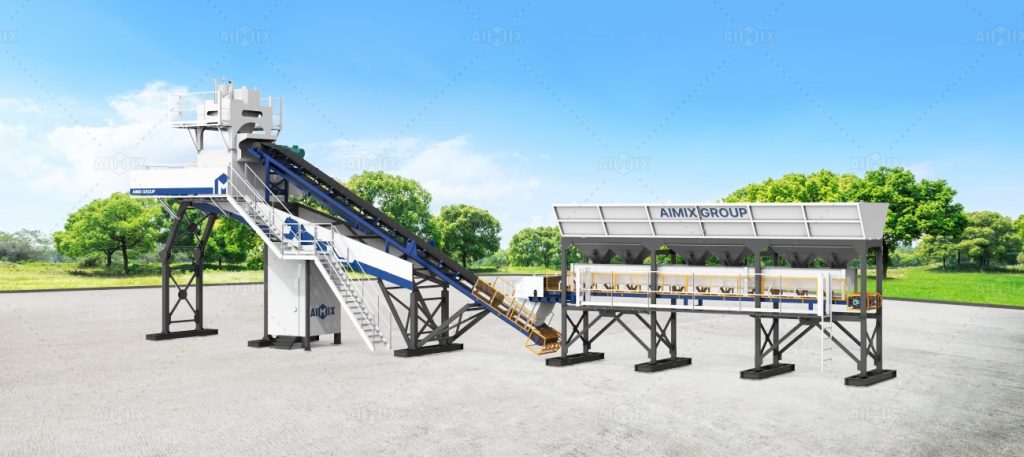
Selecting the Right Plant Based on Project Requirements
Choosing among different types of concrete batching plant should begin with an evaluation of project duration, production demand, site conditions, and relocation requirements.
For permanent ready mix concrete production facilities, stationary concrete batch plants usually provide the highest productivity and lowest long-term operating cost. Their large storage capacity and robust structures support continuous commercial concrete production.
If projects are temporary or located in multiple regions, a mobile concrete batch plant allows contractors to reduce transportation and installation costs while maintaining reliable concrete supply close to the construction site.
For contractors seeking both rapid installation and long-term production capability, a modular concrete batching plant offers an attractive alternative by combining factory pre-assembly with efficient on-site installation.
Future business expansion should also be considered during equipment selection. Plants with modular structural designs often allow easier upgrades and capacity expansion as market demand grows.
Other Factors That Influence Plant Selection
Besides installation methods, buyers should also evaluate automation systems, maintenance requirements, environmental protection features, and total ownership costs.
Advanced control systems improve batching accuracy, reduce material waste, and simplify daily operation regardless of plant type. Dust collection systems, water recycling equipment, and energy-efficient components can further improve operational sustainability.
Working with experienced manufacturers also helps ensure that the selected batching plant matches local construction conditions, production requirements, and future development plans.
Conclusion
Understanding the different types of concrete batching plant based on installation methods and structural design helps contractors select equipment that best supports their operational goals. Stationary concrete batch plants provide outstanding productivity for permanent concrete production, while a mobile concrete batch plant offers excellent flexibility for projects requiring frequent relocation. A modular concrete batching plant combines fast installation with high production efficiency, making it an increasingly popular choice for modern construction projects. By carefully evaluating project duration, production requirements, site conditions, and future expansion plans, businesses can invest in a batching plant solution that delivers reliable performance, lower operating costs, and long-term value.