In modern urban infrastructure construction—such as subways, elevated roadways, and underground utility networks—spatial constraints at the job site present a primary challenge for project management. Because urban centers are densely built-up with heavy traffic flow, conventional heavy lifting equipment like crawler cranes and tower cranes often fail to meet operational requirements due to their large footprints, complex assembly processes, or wide swing radiuses.
A compact rubber tired gantry crane (also commonly referred to as a compact rubber tyred gantry crane or mobile gantry crane) has emerged as a practical lifting solution for tight urban spaces. As highly mobile, trackless gantry cranes, they offer a small footprint, flexible multi-directional steering configurations, and even load distribution for heavy civil engineering projects.
1. Physical and Regulatory Constraints in Urban Center Construction
Lifting operations in dense urban areas are restricted by several objective conditions:
- Confined Job Sites: Construction boundaries are typically close to existing buildings, historical preservation zones, or public green spaces. The physical space available for crane movement, material handling, and outrigger extension is extremely limited.
- Traffic Control Restrictions: Urban roads cannot be closed entirely or for extended periods. Lifting operations must be completed within fenced construction barriers or very narrow temporary lanes without disrupting surrounding traffic.
- Overhead Swing Risks: Traditional boom-type cranes (such as all-terrain or crawler cranes) pose safety and legal risks during rotation, as their booms can easily overhang adjacent buildings, overhead power lines, or pedestrian walkways.
- Insufficient Underground Bearing Capacity: The ground surface in urban areas often conceals metro lines, utility pipelines, and drainage systems. These underground structures cannot withstand high wheel load limits and the concentrated point loads generated by large crane outriggers, risking pavement collapse or utility damage.
2. Structural Characteristics and Key Steering Configurations of Compact RTGs
Originally developed for high-throughput stacking operations in container terminals, the rubber tired mobile gantry crane has been optimized for civil engineering. Compact RTGs eliminate the need for fixed steel tracks and feature several technical modifications specifically for urban construction sites:
2.1 Small Physical Footprint and Trackless Operation
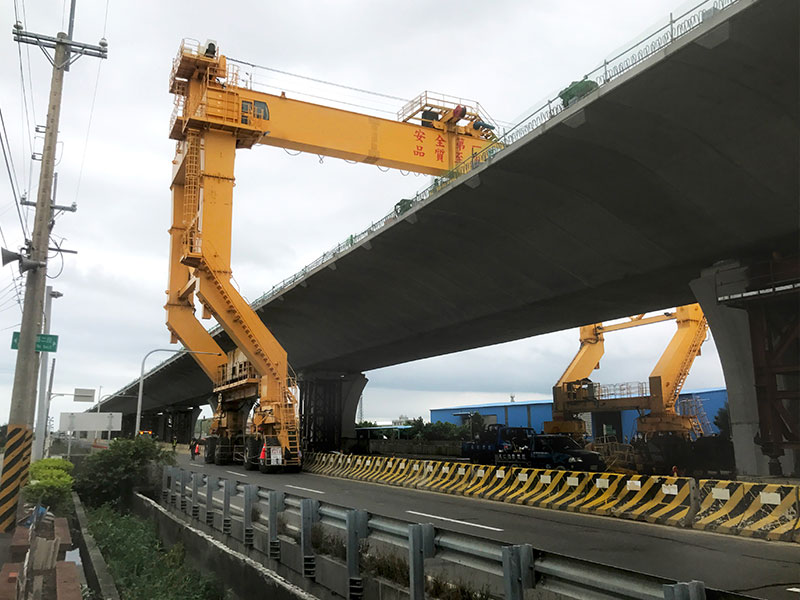
Compact RTGs utilize rubber tires as their travel mechanism, allowing them to operate directly on concrete, asphalt, or steel ground-plates. Their span and portal heights are designed compactly, enabling them to travel and operate within two-lane roads, underneath elevated bridges, or inside narrow precast concrete yards.
2.2 Key Technical Configuration: Multi-Directional Steering Systems
The steering system is the core technology enabling compact RTGs to navigate and align in tight spaces:
- 90-Degree Transverse / Crab Steering: The wheels can turn 90 degrees while stationary to allow lateral movement, enabling the crane to shift sideways in narrow access lanes without needing a turning radius.
- Pivot Steering: The crane can perform a 360-degree rotation on its own geometric center, significantly reducing the space required for maneuvering.
- Coordinated and Micro-Steering: This allows minor adjustments to the wheel angles, facilitating rapid and precise positioning during high-tolerance lifting operations.
2.3 High Load-to-Weight Ratio and Balanced Load Distribution
Despite their reduced physical dimensions compared to terminal RTG container gantry cranes, compact RTGs maintain lifting capacities ranging from tens to over one hundred metric tons. This easily satisfies the requirements for lifting heavy components such as precast concrete segments and tunnel boring machine (TBM) parts. Designed with multiple axles and wheel groups, the equipment distributes its total weight and payload evenly over multiple tires, minimizing ground bearing pressure on urban roads and subterranean utilities.
3. Primary Application Scenarios
The design features of compact RTGs provide distinct technical advantages in the following urban infrastructure scenarios:
3.1 Elevated Transit and Bridge Construction (Precast Yards & Assembly Zones)
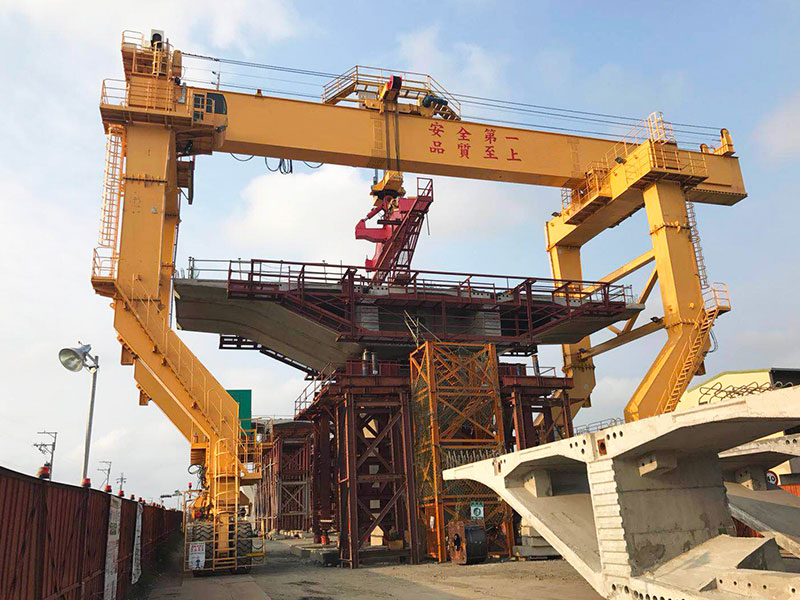
In the construction of urban elevated interchanges and light rails, storing and transporting precast segments is a critical bottleneck. Compact RTGs can straddle both the precast segments and the transport vehicles. This “straddling” design saves lateral space and allows segment lifting and loading operations to be completed within the boundaries of a single closed traffic lane, making them ideal precast yard lifting equipment.
3.2 Subway and Underground Tunnel Shaft Operations
At metro shaft entrances, operators must frequently lower TBM components and concrete segments into the shaft, as well as lift out excavated soil. A compact RTG can be positioned directly over the shaft. Compared to traditional mobile cranes, its footprint is a fraction of the size, and it does not require extending wide hydraulic outriggers, thereby preventing traffic congestion around the site.
3.3 Temporary Urban Precast Yards
Due to transportation costs and urban traffic restrictions, contractors often establish nomadic prefabricated beam yards near the job site. Equipped with precise anti-sway systems, compact RTG gantry cranes enable high-density vertical stacking of components. This compact storage arrangement increases the land utilization rate of temporary yards by more than 30%.
4. Safety, Environmental Protection, and Operational Efficiency
In urban environments, the selection of lifting equipment must balance lifting capacity with strict safety and environmental standards:
- Sway Control: Equipment is fitted with electronic or mechanical anti-sway systems that limit the swing of the load during lifting and travel. This prevents the payload from striking surrounding scaffolding or adjacent buildings.
- Low Noise and Hybrid Power: Modern compact RTGs often utilize diesel-electric hybrid drives or full-electric power (E-RTGs). During nighttime urban construction, this technology keeps operating noise and exhaust emissions well within municipal environmental limits.
- Efficient Duty Cycles: Once positioned and assembled, the equipment operates continuously within a designated area. Unlike mobile cranes, it does not require frequent retracting of outriggers or relocation, which improves overall construction efficiency.
5. Conclusion
The complexity of urban infrastructure projects demands lifting equipment that offers high mobility, a minimal footprint, and reliable safety controls. Compact Rubber Tired Gantry Cranes (Compact RTGs) address these challenges through trackless mobility, multi-directional steering, and a portal-straddling design. For contractors, integrating these machines optimizes site layouts, minimizes public traffic disruption, and supports the safe, on-time completion of urban projects.