Peru is undergoing a massive transformation in its transport infrastructure, driven by ambitious national initiatives to connect remote Andean regions with bustling coastal economic hubs. Building durable, high-load highways across Peru’s challenging geography demands an unprecedented volume of premium construction materials. Among these, high-quality concrete and asphalt aggregates are paramount. Historically, infrastructure projects relied heavily on natural river sand; however, environmental restrictions and dwindling natural reserves have shifted the industry’s focus toward manufactured sand (M-sand).
The transition to manufactured sand requires advanced technological intervention to ensure the final product meets strict engineering specifications. Central to this supply chain is the modern stone crusher plant Peru(plantas chancadoras de piedra Perú) utilizes to process raw geological formations into precisely graded, cubical sand particles. By deploying high-efficiency crushing equipment, infrastructure developers can guarantee a steady, localized supply of aggregate material, drastically reducing logistical costs and minimizing the environmental impact associated with traditional riverbed mining.
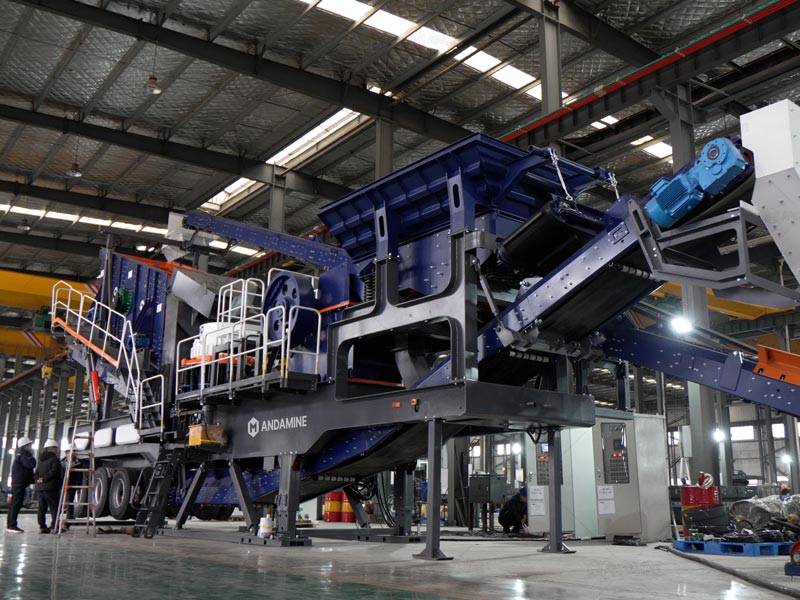
The Growing Demand for Manufactured Sand in Peruvian Infrastructure
As major corridors like the Longitudinal de la Sierra and coastal highway expansions progress, the demand for high-strength concrete has surged. Natural sand often contains organic impurities, mica, and clay silt, which can compromise the structural integrity of highway bridges, tunnels, and pavements. Manufactured sand, when produced correctly by a specialized stone crusher plant Peru contractors trust, offers a superior alternative with uniform physical properties and controllable grading curves.
Furthermore, relying on a localized rock crusher(trituradora de rocas localizada) reduces dependence on long-distance material transport, which is highly vulnerable to seasonal weather disruptions in the Andes. By setting up processing facilities near highway construction sites, engineering firms can maintain tight project timelines while ensuring that every batch of concrete poured complies with international durability standards.
Key Equipment Driving High-Efficiency Aggregate Production
Transforming massive river boulders or quarried granite into fine, high-quality manufactured sand requires a multi-stage reduction process. Each stage utilizes specific machinery designed to handle distinct material hardness levels and reduction ratios.
Primary and Secondary Crushing Stages
The initial reduction stage begins with a heavy-duty rock crusher, typically a jaw crusher, capable of accepting large feed sizes. This machine breaks down the run-of-mine material into manageable sizes for secondary processing. Depending on the abrasiveness of the rock, a cone crusher or an impact crusher is then deployed as a secondary rock crusher to further refine the aggregate dimension before it reaches the final shaping stage.
Tertiary Crushing and Vertical Shaft Impactors (VSI)
The true magic of manufactured sand production happens in the tertiary stage. Standard compression crushing can leave aggregates with elongated or flaky shapes, which are detrimental to concrete strength. To overcome this, operators implement a specialized ore crusher configuration known as a Vertical Shaft Impactor (VSI). The VSI utilizes a rock-on-rock crushing principle, accelerating particles at high velocities to break them along natural cleavage planes, resulting in perfectly cubical sand grains.
To better understand how these mechanical components collaborate within a high-capacity aggregate setup, the following table outlines the typical staging workflow:
| Production Stage | Primary Equipment Used | Input Material Size | Primary Function in Sand Production |
|---|---|---|---|
| Primary Reduction | Heavy-duty rock crusher (Jaw) | Up to 1000 mm | Initial coarse breaking of quarried rock or river boulders |
| Secondary Sizing | Cone or Impact rock crusher | Up to 250 mm | Intermediary reduction to prepare feed for the shaping phase |
| Tertiary Sand Making | VSI ore crusher / Sand maker | Under 50 mm | Shaping, cubical optimization, and fine sand generation |
| Fines Classification | Air classifiers / Sand washers | Under 5 mm | Removal of excess ultra-fine silt and clay particles |
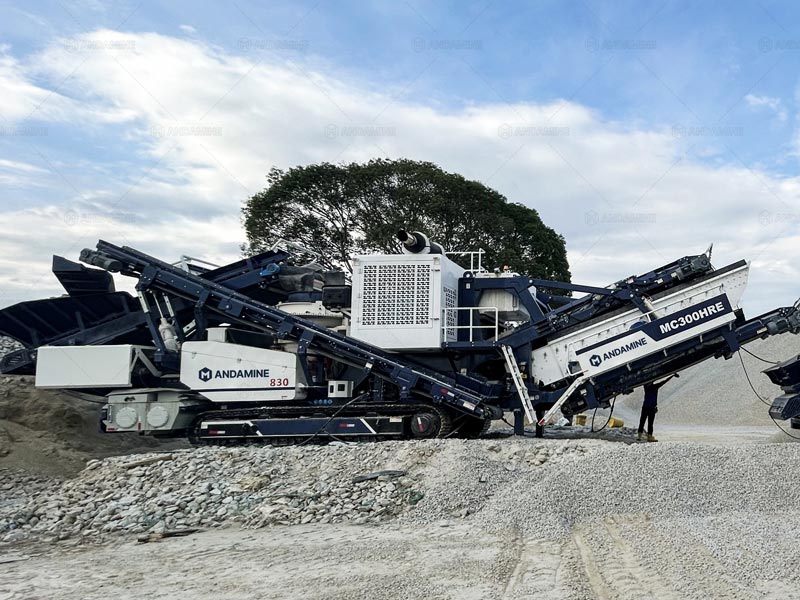
Overcoming Geological and Regional Challenges
Operating a stone crusher plant Peru infrastructure relies upon requires equipment that can withstand highly variable and abrasive geological conditions. The Andean region features dense deposits of silica-rich granite, basalt, and quartzite. Processing these materials accelerates mechanical wear and tear, necessitating heavy-duty components and advanced metallurgy.
Combating Abrasiveness with Advanced Ore Crushers
When dealing with high-silica rock, traditional impact crushers suffer from rapid blowbar wear. Therefore, high-efficiency plants often opt for a specialized cone or specialized hydraulic ore crusher(chancadora minería hidráulica especializada) engineered with high-manganese liners. These components extend the service life of the machinery, reducing maintenance downtime and keeping highway project timelines on track. This focus on heavy-duty durability is a shared priority across the border, matching the operational demands placed on a heavy-duty stone crusher in Chile, where copper mining and rugged terrain require similarly resilient infrastructure.
Water Management and Environmental Sustainability
In many parts of Peru, particularly the arid coastal regions, water scarcity is a critical operational constraint. Traditional wet sand washing systems consume massive quantities of water and generate large settling ponds. Modern high-efficiency plants are shifting toward dry sand production methods. By utilizing advanced air classifiers integrated within the ore crusher circuit, operators can separate excess fines and dust from the manufactured sand using controlled air currents, eliminating water consumption entirely and ensuring strict compliance with local environmental regulations.
Cross-Border Technology Standards in the Andean Region
The technology driving Peru’s infrastructure boom is closely aligned with broader regional trends. As construction standards tighten across South America, the exchange of technical expertise between neighboring countries has accelerated. The strict environmental and particle-shape benchmarks established for a stone crusher in Chile(establecida para una chancadora de piedra en Chile) are increasingly being integrated into Peruvian operations. Equipment manufacturers now design highly modular, containerized crushing systems that can easily be transported across national borders to service diverse highway projects.
Whether processing hard river gravel in southern Peru or tackling volcanic rock near the Chilean border, utilizing a synchronized rock crusher and screening matrix allows producers to maintain a uniform modulus of fineness. This consistency is vital for high-speed highway pavements, where even minor variations in sand quality can lead to premature cracking, potholes, or structural asphalt failure under heavy commercial traffic.
Driving the Future of Peruvian Infrastructure
The integration of high-efficiency manufactured sand production lines has fundamentally changed how Peru approaches highway engineering. By transforming raw local geological resources into high-grade aggregate materials, project developers have unlocked a reliable, cost-effective, and ecologically responsible alternative to natural river sand. The strategic combination of primary jaw reduction, precise secondary cone shaping, and tertiary VSI refinement ensures that every kilometer of new highway is built on a foundation of uncompromised structural integrity.
As Peru continues to expand its national transit networks, the reliance on advanced stone crusher plant Peru technologies will only deepen. Companies that invest in robust rock crusher systems, water-free air classification, and highly durable ore crusher machinery are successfully driving down operational costs while uplifting regional infrastructure standards. This technological evolution not only secures the success of Peru’s current mega-projects but also establishes a sustainable blueprint for highway construction that will benefit the entire Andean economic corridor for decades to come.