Construction is undergoing a structural realignment. The centralised model — where concrete is batched at a stationary concrete plant, loaded into transit mixers, and dispatched across long haul routes to waiting sites — served the industry adequately when projects were concentrated in urban cores with reliable road access and predictable logistics. That model is now being stress-tested by a new generation of construction programmes that are geographically dispersed, logistically complex, and operationally time-sensitive in ways that centralised supply chains simply cannot accommodate with consistency.
Decentralised construction is not a niche phenomenon. It encompasses rural infrastructure rollouts, remote energy projects, disaster reconstruction programmes, military and humanitarian facility builds, and the expanding wave of small-to-medium developments pushing into peri-urban and regional territories worldwide. Each of these contexts shares a common challenge: the need for reliable, quality-controlled concrete production at or near the point of use, without the luxury of proximity to established batching infrastructure. Compact instant concrete plants are emerging as the decisive technological response to this challenge — and their adoption trajectory is accelerating sharply.
Understanding the Decentralised Construction Imperative
The Limitations of Centralised Concrete Supply in Dispersed Project Environments
Centralised batching plants for sale are optimised for volume and proximity. They perform exceptionally when multiple high-demand projects cluster within a serviceable radius, allowing efficient route scheduling and consistent truck utilisation. Remove that clustering — spread projects across wide geographic areas, introduce difficult terrain, or eliminate reliable road access — and the centralised model deteriorates rapidly into an expensive, unreliable, and quality-compromised supply chain.
Transit time is the first casualty. Concrete is a time-sensitive material whose workability and strength development characteristics begin degrading from the moment batching is complete. Every additional kilometre of haul distance compounds the risk of slump loss, premature stiffening, and mix segregation. In remote or semi-accessible locations where haul distances routinely exceed the workability window, the concrete arriving on site may be technically non-compliant before a single cubic metre is placed.
Cost escalation follows closely. Extended haulage distances inflate per-cubic-metre delivery costs, while the unpredictability of remote road conditions introduces schedule volatility that cascades through pour planning, formwork sequencing, and labour deployment. For projects operating under tight budget envelopes — as most infrastructure programmes in developing regions do — this cost and schedule instability is operationally destabilising.
Compact instant concrete plants dissolve these dependencies by relocating the production function to the project site itself. Concrete is batched on demand, at the point of use, with mix parameters adjusted in real time to match placement requirements. The supply chain compression this enables is not incremental — it is transformative.
The Profile of Projects Driving Compact Plant Adoption
Several distinct project categories are driving the accelerating adoption of compact instant concrete plants in decentralised construction environments. Rural road and bridge programmes — particularly in South and Southeast Asia, Sub-Saharan Africa, and Latin America — represent perhaps the largest single demand category. These programmes typically involve multiple simultaneous worksites spread across hundreds of kilometres of corridor, where establishing a conventional batching plant for each site is economically prohibitive and logistically impractical.
Renewable energy infrastructure is another significant driver. Wind farm foundations, hydroelectric civil works, and solar installation ground-mounting structures all require substantial concrete volumes in locations selected for resource availability rather than construction logistics convenience. Remote mining operations, telecommunications tower foundations, agricultural irrigation infrastructure, and border security construction programmes share the same fundamental characteristic: high concrete demand in locations where centralised supply is absent or unreliable.
Humanitarian and post-disaster reconstruction contexts add urgency to the equation. Speed of deployment, simplicity of operation, and independence from damaged or non-existent infrastructure make compact instant plants uniquely suited to emergency construction scenarios where conventional supply chains have been disrupted or were never established.
Technical Attributes That Make Compact Instant Plants Fit for Purpose
Rapid Deployment and Minimal Civil Preparation Requirements
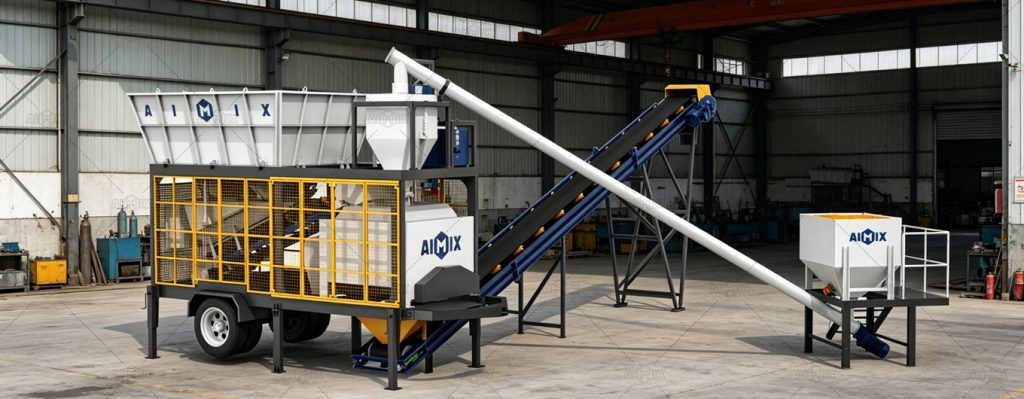
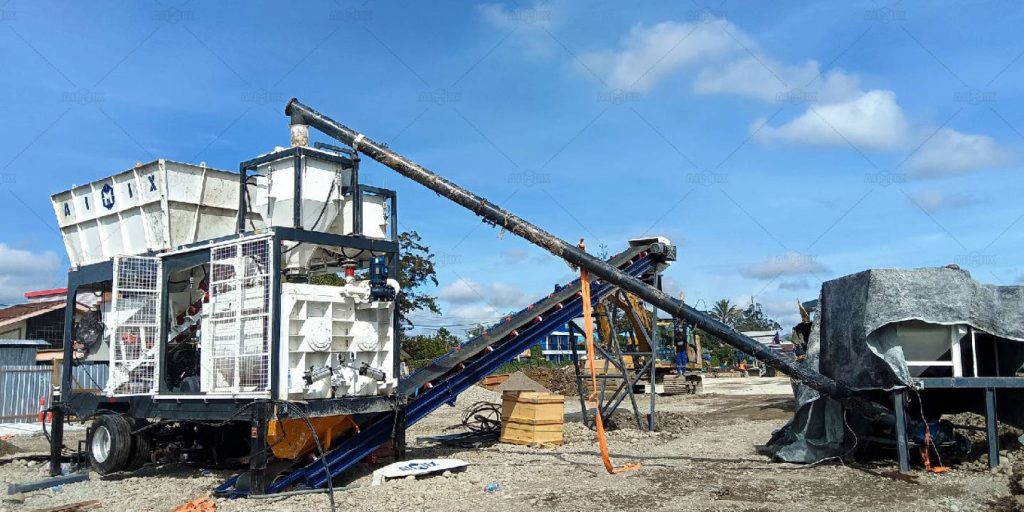
The defining operational characteristic of compact instant concrete plants is their capacity for rapid, low-infrastructure deployment. Unlike conventional batching plants — which require substantial civil foundations, extensive electrical infrastructure, and multi-day erection sequences — compact instant mobile concrete plants for sale are engineered for expeditionary commissioning. Many configurations are containerised or skid-mounted, arriving on site as integrated units that require minimal assembly and can achieve operational readiness within hours rather than days.
This deployment agility directly addresses one of the most significant hidden costs in remote project logistics: the lead time between site mobilisation and productive concrete output. Every day spent establishing supply infrastructure before construction can commence is a day of fixed overhead expenditure without productive return. Compact plants compress this non-productive commissioning period dramatically, enabling projects to achieve concrete production capability almost immediately upon site establishment.
Ground preparation requirements are similarly modest. A level, compacted surface of adequate bearing capacity is typically sufficient. No permanent concrete base, no specialist civil contractor, no extended ground works programme. For projects in remote locations where civil preparation resources are themselves scarce, this low-infrastructure deployment profile is a critical enabler.
Mix Flexibility and Quality Control at the Point of Production
Compact instant concrete plants deliver a quality control capability that centralised supply chains structurally cannot match for dispersed project environments. Because batching occurs at the point of use, mix design parameters can be adjusted in direct response to current site conditions — ambient temperature, aggregate moisture content, placement method, and structural specification — without the communication lag and logistical complexity that remote supply coordination involves.
Modern compact plant configurations incorporate gravimetric batching systems that deliver aggregate, cementitious material, water, and admixture proportions with precision comparable to large centralised plants. Electronic control systems record batch data for quality assurance documentation, supporting compliance with structural concrete specifications even in remote operational contexts where external oversight is limited.
Mix flexibility is equally significant. A single compact plant can produce a range of concrete grades and mix designs within the same operational session, accommodating the varied specification requirements of different structural elements on a multi-component project. This versatility eliminates the inflexibility of centralised supply, where mix change requests require advance notification, minimum order quantities, and schedule coordination that remote project logistics rarely permit.
Strategic and Economic Implications for the Construction Industry
Redefining Project Feasibility in Underserved Regions
Perhaps the most consequential dimension of compact instant concrete plant proliferation is its capacity to redefine project feasibility in regions previously considered logistically inaccessible to quality construction. Infrastructure deficits in remote and peri-urban areas are not primarily caused by absence of demand or funding — they are frequently caused by the absence of reliable construction material supply chains. Compact instant plants remove this supply chain barrier, enabling projects to proceed in locations where centralised concrete delivery was the decisive constraint on development.
This feasibility expansion has direct development implications. Rural road networks that reduce agricultural market access costs. Health facilities that serve communities beyond the reach of urban supply infrastructure. Educational buildings constructed in remote settlements where no batching plant exists within viable haul distance. Each of these outcomes is enabled, in practical terms, by the ability to produce quality concrete on site with compact, deployable equipment. The development multiplier of this capability is substantial and largely underappreciated in conventional infrastructure investment analysis.
Cost Economics and Return on Investment for Compact Plant Operators
The financial case for compact instant concrete plant investment is compelling when evaluated against the true total cost of centralised supply alternatives in decentralised project contexts. Procurement cost of concrete batching plant have declined significantly as manufacturing scale has increased and competition among suppliers has intensified. Operating costs — fuel, maintenance, aggregate, and cementitious material procurement — are highly predictable and directly controllable by the site team, eliminating the cost volatility associated with external supply chain dependencies.
Utilisation economics favour compact plants on projects of meaningful duration. A plant deployed across a twelve-month infrastructure programme will typically achieve full capital cost recovery well within the project lifecycle, with the balance of operational savings flowing directly to project margin. For contractors operating across multiple concurrent decentralised projects, a fleet of compact instant plants managed as a shared operational resource delivers asset utilisation rates and return on investment metrics that strengthen balance sheet performance materially.
The strategic positioning advantage is equally significant. Contractors equipped with self-sufficient concrete production capability can credibly bid on project categories and geographic territories that competitors dependent on centralised supply cannot access. In markets where infrastructure investment is growing rapidly and supply chain infrastructure remains underdeveloped, this competitive differentiation is not marginal — it is a defining capability that determines which contractors capture the most valuable project opportunities in the decade ahead.