Workshop foundations and heavy vehicle service bays in Christchurch require concrete placement that accommodates substantial floor loads, reinforced foundations, inspection pits, and vehicle access areas. Choosing the right concrete pump is therefore not simply a matter of selecting the largest output rating. Contractors must consider concrete volume, placement distance, reinforcement density, site access, and the sequence of construction activities. A pump that suits a broad industrial slab may not be the best fit for narrow foundation trenches or a service bay with restricted overhead clearance. Evaluating these conditions before purchasing helps contractors select equipment that matches the project and remains useful for future work.
For buyers comparing concrete pumps for sale nz, procurement should begin with the intended applications rather than the advertised maximum capacity. Christchurch projects can range from independent vehicle workshops to commercial truck maintenance facilities, where concrete must be delivered consistently across different structural elements. Understanding the distinction between trailer-mounted pumps, mixer pumps, and boom pumps makes it easier to assess equipment suitability, operating requirements, and long-term utilisation.
Match Concrete Pump Types to Workshop Foundations and Service Bays
Trailer Concrete Pumps for Reinforced Foundations and Floor Slabs
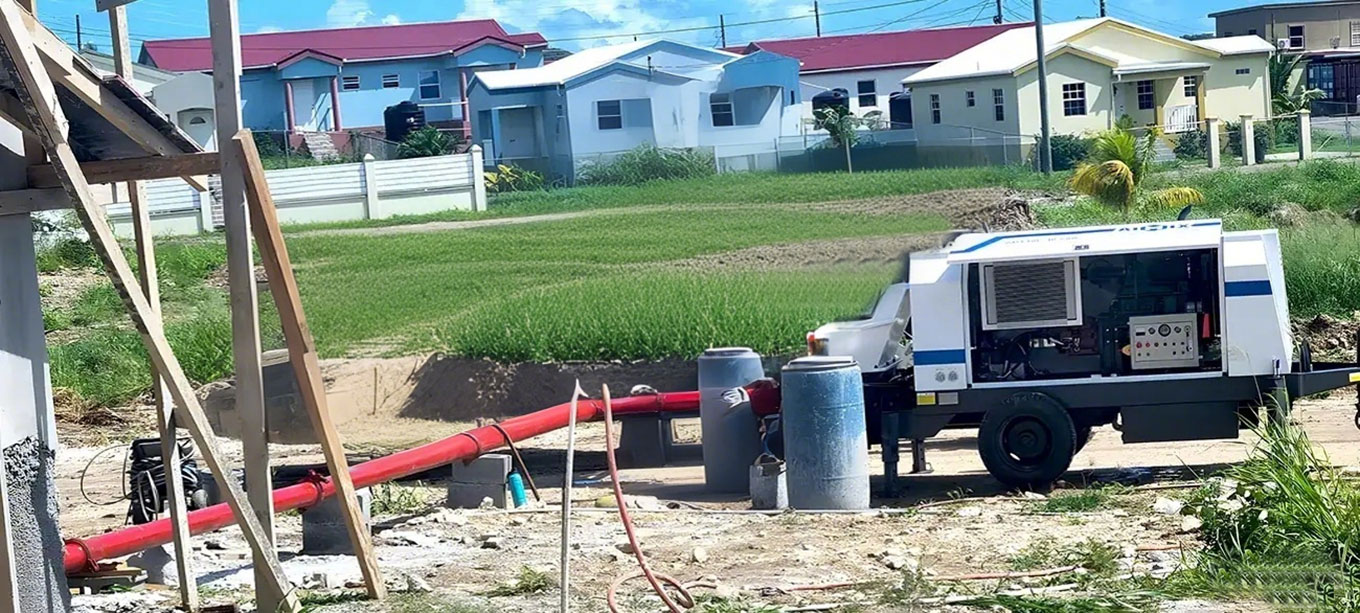
Trailer-mounted concrete pumps are worth considering when a project involves reinforced strip foundations, equipment plinths, ground beams, and workshop floor slabs. They pump concrete through a pipeline, allowing the delivery point to be positioned away from the mixer truck. This arrangement can be advantageous when vehicles cannot drive directly beside the pour or when reinforcement and formwork restrict access.
For Christchurch contractors, the key question is whether the pump can deliver the required concrete at the necessary rate without disrupting placing and finishing operations. A high theoretical output does not automatically translate into faster construction. The concrete supply must remain continuous, the pipeline must be laid out appropriately, and the placing crew must keep pace with delivery.
When comparing concrete trailer pumps nz, examine rated output, pumping pressure, aggregate compatibility, and the manufacturer’s recommended pipeline configuration. Confirm these specifications against the actual concrete mix and required pumping distance. Foundation concrete containing dense reinforcement or passing through narrow sections may require particular attention to aggregate size, workability, and pipe diameter.
Mixer Pumps for Smaller Workshops and Distributed Concrete Work
A concrete mixer pump combines mixing and pumping functions in one machine. It can suit smaller workshop extensions, repair facilities, isolated foundation sections, and projects where ready-mixed concrete deliveries are difficult to coordinate. Rather than arranging separate mixing and pumping equipment, contractors can produce and place concrete within a more integrated workflow.
However, the configuration has limits. Its practical output may be insufficient for a large service bay floor that needs substantial volumes placed within a restricted time window. Buyers should calculate the concrete volume per pour and compare it with realistic production rates, including loading, mixing, repositioning, and cleaning. For larger projects, a dedicated batching arrangement and a separate concrete pump may provide a more suitable production system.
Concrete Boom Pumps for Large Bays and Restricted Ground Access
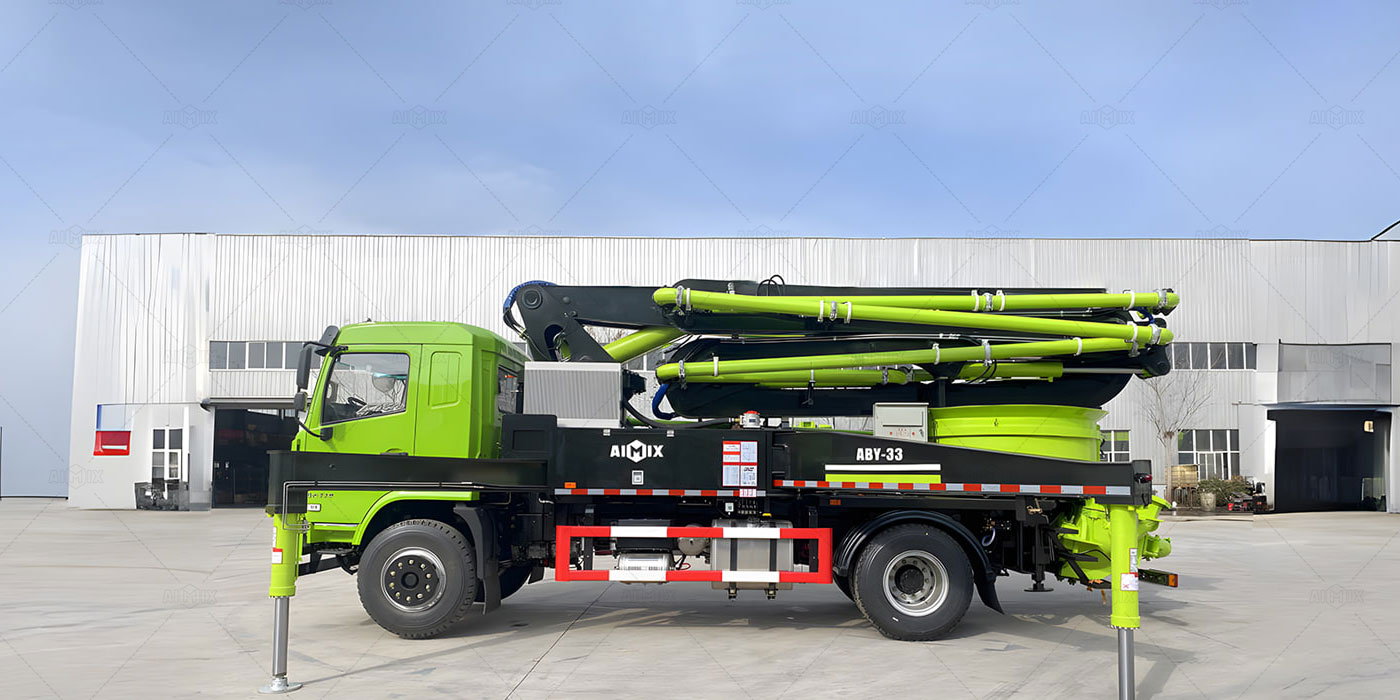
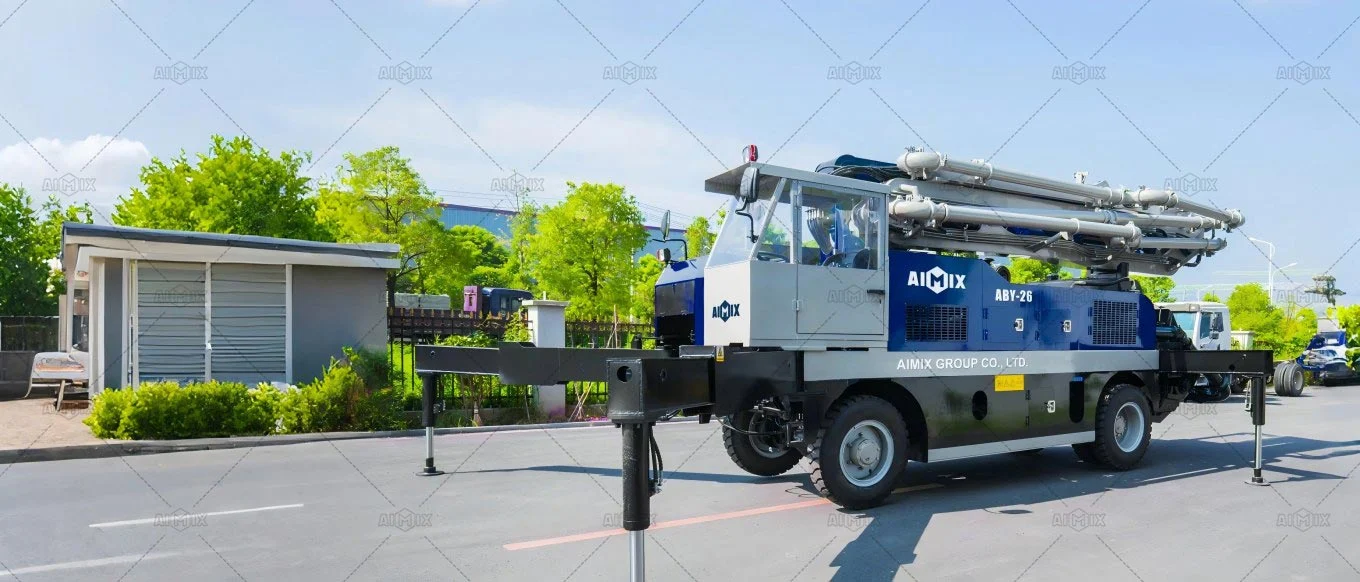
Boom pumps become relevant when concrete must reach extensive floor areas, elevated sections, or locations that are difficult to access using a ground-level pipeline alone. Their articulated booms can help distribute concrete across a large workshop footprint while reducing the need to reposition delivery hoses manually.
Contractors searching for concrete boom pumps for sale nz should assess the actual reach needed, available setup space, ground-bearing capacity, overhead obstructions, and access for the supporting truck. A boom pump may offer substantial placement advantages, but its mobilisation and setup requirements can be disproportionate for a small foundation pour. Where the site has limited manoeuvring room, a trailer pump with a carefully designed pipeline may be the more practical arrangement.
Assess Christchurch Site Conditions Before Selecting Pump Specifications
Calculate Concrete Volume, Delivery Rate, and Pumping Distance
Procurement should start with the construction drawings. Estimate the concrete volume for each foundation, service pit, equipment base, and floor slab, then identify the largest planned pour. Divide the required volume by the available placing window to establish the minimum average delivery rate. Allow additional time for interruptions, repositioning, testing, and finishing rather than assuming the machine will operate continuously at its maximum rated output.
For example, a workshop slab requiring 60 m³ of concrete within a six-hour placement window needs an average delivery rate of 10 m³ per hour. This is a planning calculation, not a pump recommendation: the actual machine must also accommodate pipeline losses, the concrete mix, and the site workflow. If concrete arrives in batches, delivery coordination may become the limiting factor even when the pump has ample capacity.
Account for Reinforcement, Service Pits, and Concrete Mix Design
Heavy vehicle service bays often include thickened slab sections, reinforced foundations, inspection pits, drainage channels, and anchor points for lifting equipment. These elements can create congested reinforcement zones where concrete must flow around steel and fill confined spaces without leaving voids. Pump selection must therefore be coordinated with the engineer’s concrete specification and the placement method.
Do not assume that a more powerful pump can compensate for an unsuitable mix. Concrete workability, aggregate grading, maximum aggregate size, and the mix’s suitability for pumping all influence delivery performance. Contractors should confirm mix compatibility with the pump supplier and concrete producer before committing to equipment. Any changes to the specified concrete must be approved through the project’s normal engineering and quality-control procedures.
Consider Christchurch Weather, Ground Conditions, and Site Access
Christchurch’s seasonal weather can affect concrete scheduling, ground preparation, and the conditions in which pumping equipment operates. Cold periods may influence concrete temperature and setting behaviour, while rain can complicate access across unsealed or poorly drained areas. These factors do not dictate one universal pump type, but they reinforce the importance of preparing a reliable site plan.
Before delivery, verify the setup area, truck access, ground stability, hose routes, drainage, and safe separation between moving vehicles and workers. For boom pumps, confirm outrigger support requirements and clearance from overhead hazards. For trailer pumps, plan pipeline supports, bends, hose restraints, and the location of the placing crew. A well-prepared site reduces avoidable delays and helps maintain a controlled concrete placement sequence.
Compare Procurement Costs with Long-Term Equipment Utilisation
Evaluate Purchase Price Alongside Operating Requirements
The purchase price is only one component of a concrete pump’s total ownership cost. Contractors should also examine transport, commissioning, operator training, routine servicing, wear parts, cleaning equipment, and the availability of technical support. Pumping concrete subjects delivery components to abrasive wear, so maintenance access and replacement-part availability matter when assessing long-term operating expenditure.
When comparing concrete pumps for sale nz, request a clear specification sheet and clarify which accessories are included. Pipeline sections, delivery hoses, clamps, cleaning equipment, and other necessary items can affect the final investment. Buyers should also establish the warranty conditions, service arrangements, and recommended maintenance intervals before placing an order.
Match Ownership to the Contractor’s Project Pipeline
Purchasing can be justified when a contractor has recurring foundation, industrial flooring, workshop construction, or structural repair projects that keep the machine productively occupied. If pumping demand is occasional or concentrated in a single large pour, hiring may reduce the risk of leaving expensive equipment underutilised. The decision should be based on expected annual operating hours, realistic contract demand, and the cost of outsourcing pumping services.
Contractors should also consider whether future projects will involve similar volumes and access conditions. A compact trailer pump may be suitable for recurring foundation work but less efficient for large commercial slabs that benefit from boom placement. Conversely, buying a boom pump for infrequent work can introduce unnecessary transport, setup, and maintenance commitments. The most suitable investment is the one that aligns with the contractor’s actual workload, not the machine with the most impressive headline specification.
Check Supplier Support and Equipment Documentation
Before finalising an order, confirm that the supplier can provide operating instructions, maintenance schedules, parts information, and practical guidance on commissioning. Check the machine’s compatibility with the intended concrete mix and pipeline arrangement, and clarify who is responsible for training and after-sales assistance. For imported equipment, buyers should also verify transport arrangements, applicable import requirements, and any local compliance obligations relevant to the machine and its operation.
Requesting comparable quotations helps reveal differences in supplied accessories, warranty coverage, service arrangements, and technical specifications. A low initial quotation may not represent the lowest overall ownership cost if essential components or support services are excluded.
Make the Pump Purchase Fit the Project, Not Just the Price
Concrete pump procurement for Christchurch workshop foundations and heavy vehicle service bays should be driven by placement conditions, concrete volume, site access, and repeat demand. Trailer pumps can support foundation and slab work through flexible pipeline layouts; mixer pumps may suit smaller, distributed pours; and boom pumps can improve concrete placement across larger or harder-to-reach areas.
Before choosing among concrete pumps nz, prepare a project-based comparison covering output, pressure, mix compatibility, reach, setup requirements, maintenance, and supplier support. Contractors evaluating concrete boom pumps for sale nz should pay particular attention to reach and setup constraints, while buyers considering trailer or mixer pumps should prioritise realistic delivery rates and the intended range of applications. The right procurement decision is the one that supports consistent concrete placement, predictable scheduling, and useful equipment life across the contractor’s future projects.