In modern construction projects, controlling material costs and logistics efficiency is critical to maintaining healthy profit margins. One of the most significant decisions project managers face is whether to purchase ready-mixed concrete from commercial batching plants or produce concrete directly on-site. While ready-mixed concrete offers convenience for urban infrastructure with easy access, it often introduces high transit costs, supply delays, and material waste for remote or medium-sized projects. Understanding the tipping point where on-site batching becomes the superior financial choice can save contractors thousands of dollars in operational expenses.
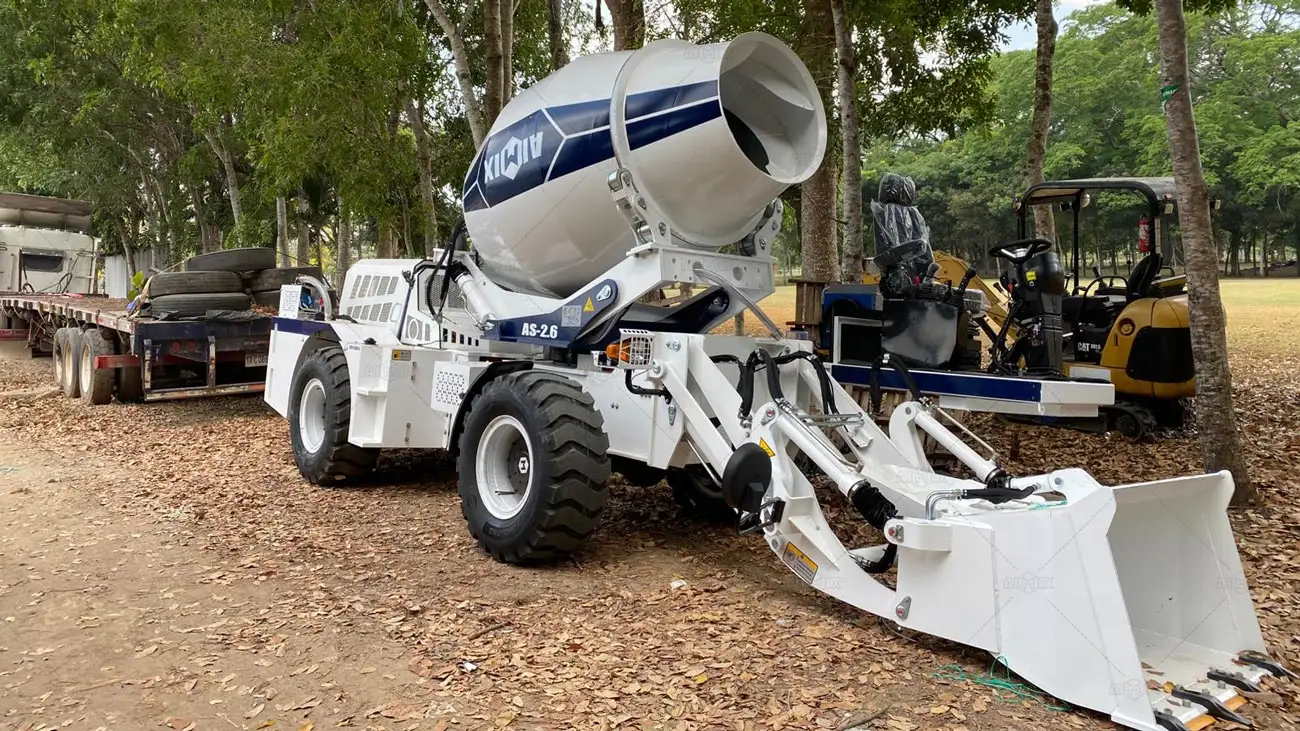
The introduction of modern equipment like the self-loading concrete mixer(hormigonera autocargable) has revolutionized on-site production. By combining aggregation, weighing, mixing, and transportation into a single mobile machine, contractors can drastically reduce labor overhead while maintaining strict concrete quality standards. In this article, we evaluate the precise scenarios where producing concrete on-site delivers a higher return on investment than relying on commercial suppliers.
Key Cost Factors: On-Site Production vs. Ready-Mixed Concrete
To determine which method is more economical, contractors must evaluate several key cost drivers that influence overall expenditure:
- Transportation and Delivery Surcharges: Commercial ready-mix suppliers charge premium rates for long-distance deliveries, small loads (under-load fees), and extended waiting times at job sites.
- Material Cost Markup: Pre-mixed concrete includes supplier profit margins and overhead costs, whereas purchasing raw materials (cement, aggregates, sand, and water) in bulk allows contractors to produce concrete at base material cost.
- Labor Efficiency: Manual batching on-site requires a dedicated crew. However, using an automated self-loading concrete mixer allows a single operator to complete the entire loading, batching, and discharge cycle.
- Equipment Capital Expenditure: Purchasing or leasing machinery requires initial capital, but these costs are amortized over multiple projects, eventually reducing per-cubic-meter production costs significantly below ready-mix prices.
Scenarios Where On-Site Production Wins
1. Remote Infrastructure and Rural Construction
When job sites are located far from commercial batching plants, ready-mix trucks face long travel times. This increases transit fees and risks premature setting of the concrete during transport. On-site production eliminates distance-related delays and ensures fresh concrete is poured exactly when needed.
For instance, contractors operating a self-loading concrete mixer in Chile frequently work across mountainous terrain and isolated mining or agricultural zones where commercial ready-mix plants simply do not exist or charge prohibitive delivery rates. In these rugged environments, mobile on-site production becomes the only viable and cost-effective choice.
2. Medium-Volume, Intermittent Concrete Pouring
Projects that require steady, medium-volume pours throughout the workday—such as canal linings, foundations, retaining walls, and utility trenches—often suffer from ready-mix scheduling delays. Late deliveries cause costly crew downtime. Mobile mixing machinery allows teams to produce exact batches on demand, preventing material waste and schedule overruns.
3. High-Frequency, Multi-Site Projects
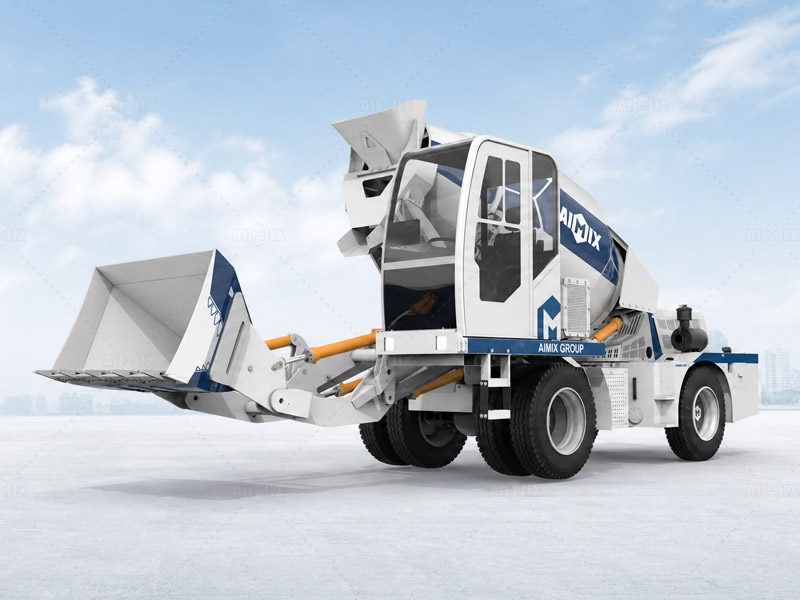
If your construction operations involve moving between several smaller job sites within a region, buying ready-mixed concrete for every location results in repeated delivery premiums. Equipment like the AS-MK24 self-loading concrete mixer(AS-MK24 autohormigonera) provides full mobility, driving from site to site independently to handle multiple jobs per day without relying on external suppliers.
Cost Breakdown: Evaluating ROI and Self-Loading Concrete Mixer Price
When assessing equipment investments, contractors must balance initial acquisition costs against long-term operational savings. Calculating the overall ROI involves analyzing raw material prices, labor reduction, and machine utilization rates.
| Cost Vector | Ready-Mixed Concrete | On-Site Production (Mobile Mixer) |
|---|---|---|
| Raw Material Cost | High (Includes supplier markup) | Low (Bulk purchasing of aggregates & cement) |
| Transportation Fees | High (Distance & waiting surcharges) | Minimal (Fuel and machine movement) |
| Labor Requirements | Minimal on-site, high coordination | 1–2 operators with self-loading capability |
| Supply Flexibility | Fixed delivery windows | Instant on-demand batching |
While looking into machinery options, researching competitive self-loading concrete mixer price(autohormigonera precio) points reveals that most contractors recover their initial capital investment within 3 to 6 months of continuous operation. The savings generated by eliminating commercial delivery surcharges and reducing total workforce headcount directly contribute to payback velocity.
Specific models, such as the high-efficiency AS-MK24 self-loading concrete mixer, feature 270-degree drum rotation, four-wheel drive, and precise electronic weighing systems. These features ensure batch accuracy comparable to commercial plants while maintaining low fuel consumption and minimal maintenance expenditure.
Maximizing Savings with Mobile Mixing Technology
Adopting on-site production is not merely about buying raw ingredients; it is about choosing machinery that optimizes job site workflow. Modern self-loading technology automates shovel loading, water metering, and mixing within a compact footprint. For regional contractors—such as companies deploying a self-loading concrete mixer in Chile(autohormigonera en Chile) or similar expanding markets—this mobility translates into a distinct competitive advantage when bidding on rural public works, road repairs, and private residential developments.
Before committing to commercial ready-mix contracts, calculate your project’s total volume, distance from batching plants, and expected delivery schedule. If transit fees and downtime threaten your margins, investing in versatile mobile mixing equipment like the AS-MK24 self-loading concrete mixer offers a reliable, highly profitable path forward for current and future construction projects.