Yes, straddle carriers can be used for project cargo handling, particularly when large, heavy, or oversized loads need to be lifted, transported, and positioned within industrial yards, ports, manufacturing facilities, and project construction sites. Their ability to lift cargo between their supporting legs and travel with the load makes them useful for moving equipment that is difficult to handle with conventional forklifts or standard yard trucks.
However, not every straddle carrier is suitable for project cargo. The required lifting capacity, cargo dimensions, lifting height, ground conditions, steering configuration, and load stability must be evaluated before selection. For unusually wide, long, or heavy cargo, the carrier may also require a customized lifting arrangement or specially designed support structure.
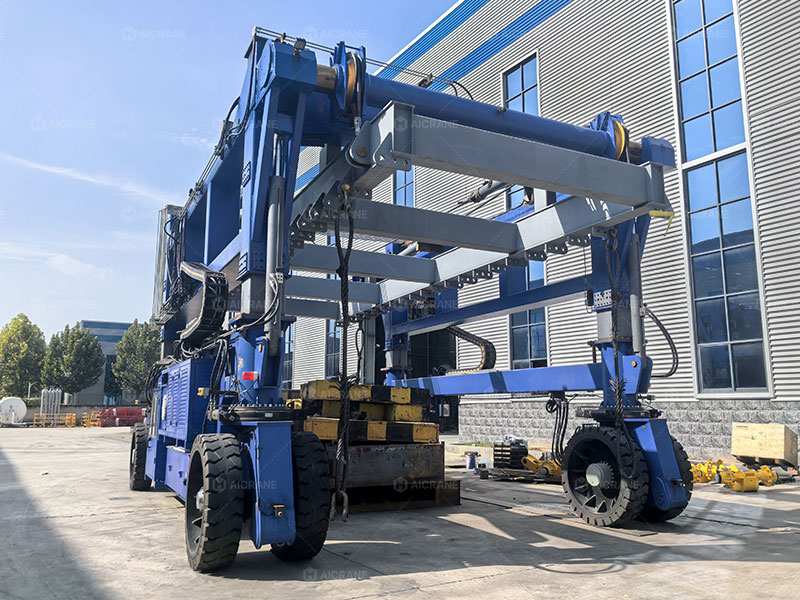
1. What Is a Straddle Carrier in Project Cargo Handling?
A straddle carrier for sale is a self-propelled material handling vehicle designed to lift and transport loads positioned between its supporting legs. Unlike a conventional forklift, which approaches a load from one side, a straddle carrier drives over or around the load and lifts it using a suspended lifting system or dedicated lifting attachments.
In project cargo operations, this configuration is useful for handling large industrial components that need to be moved through designated yard routes without relying entirely on fixed lifting infrastructure.
Typical project cargo applications include:
-
Industrial machinery and production equipment
-
Steel structures and fabricated components
-
Large transformers and electrical equipment
-
Precast concrete elements
-
Heavy equipment modules
-
Long pipes, beams, and structural assemblies
-
Port and shipyard project components
A straddle carrier can perform several material handling operations within one machine: lifting, horizontal transportation, maneuvering, and positioning. This makes it particularly useful in facilities where cargo moves between unloading areas, temporary storage zones, assembly workshops, and loading areas.
2. What Types of Project Cargo Can Straddle Carriers Handle?
The suitability of a straddle carrier depends on the cargo’s weight, dimensions, center of gravity, and lifting requirements. The following applications are particularly relevant.
2.1 Heavy Industrial Machinery
Industrial projects often involve transporting machinery such as compressors, generators, turbines, hydraulic equipment, and large production units.
These loads may be too heavy or bulky for standard forklifts. A suitably designed heavy-duty straddle carrier can lift machinery from designated support points and transport it across a prepared industrial yard.
For example, a manufacturing facility receiving a large production machine may use a straddle carrier to move it from the unloading area to a temporary storage position before final installation.
Important considerations include:
-
Total equipment weight, including packaging and lifting accessories
-
Manufacturer-approved lifting points
-
Load center and weight distribution
-
Required lifting height
-
Clearance around the machine
-
Protection of sensitive components during transportation
The lifting arrangement must distribute the load properly. Supporting a machine at unsuitable points can cause structural deformation or damage to precision components.
2.2 Oversized Steel Structures
Steel fabrication yards frequently handle large welded structures, structural frames, bridge components, and prefabricated industrial modules.
Straddle carriers can transport these components between fabrication workshops, storage areas, and dispatch zones.
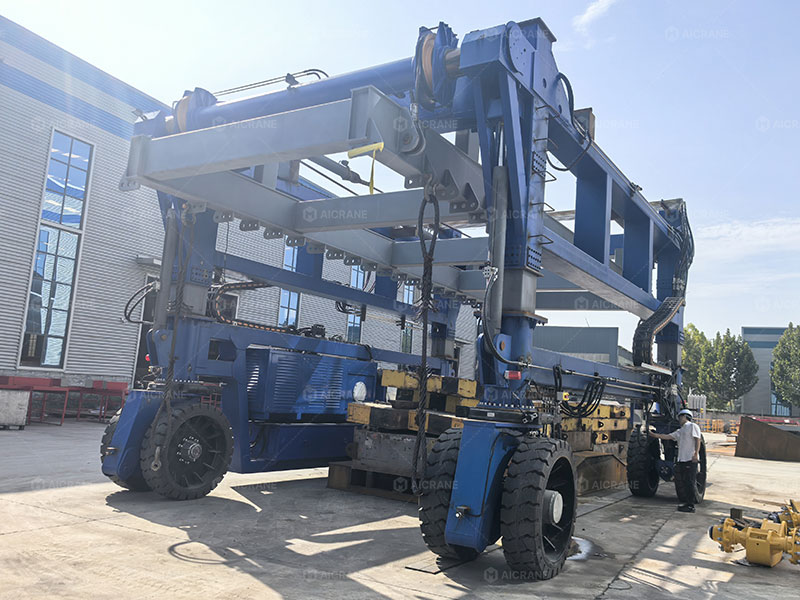
Their elevated frame provides space for cargo to be positioned underneath the carrier, while the lifting system supports the component during movement.
For long steel structures, engineers must pay particular attention to:
-
Overall cargo length and width
-
Structural deflection during lifting
-
Distance between lifting points
-
Wind exposure
-
Turning radius and travel path
-
Ground clearance and overhead obstructions
Long components may require multiple lifting points or a spreader beam to prevent excessive bending.
2.3 Precast Concrete Components
Precast concrete factories and infrastructure construction projects handle large beams, columns, wall panels, and other prefabricated elements.
A straddle carrier can transport these products from casting or curing areas to storage locations and dispatch zones.
This is particularly useful when production areas are distributed across a large yard and conventional overhead crane coverage is limited.
However, concrete products may have different lifting requirements depending on their design and curing condition. The carrier must use approved lifting inserts or lifting attachments, and the lifting points must be positioned according to the component’s structural design.
2.4 Transformers and Electrical Equipment
Large transformers, switchgear assemblies, and other electrical equipment are common project cargo items.
These loads often combine considerable weight with sensitive internal components. Their transportation requires controlled lifting, stable support, and careful movement.
A straddle carrier may be suitable for yard transportation when:
-
The equipment dimensions fit within the carrier’s clear opening.
-
The rated lifting capacity covers the complete load.
-
The lifting arrangement matches the equipment’s approved lifting points.
-
The travel surface supports the wheel loads.
-
The transportation route provides sufficient clearance.
For particularly sensitive equipment, acceleration, braking, and turning speeds should be controlled to reduce dynamic loading and unnecessary movement.
3. How Does a Straddle Carrier Handle Project Cargo?
The handling process generally involves four stages: load preparation, lifting, transportation, and positioning.
3.1 Load Preparation
Before lifting, operators and engineers should confirm the cargo’s actual weight, dimensions, center of gravity, and lifting requirements.
The cargo should be positioned within the carrier’s operating area, with sufficient space for the vehicle to approach and align correctly.
The lifting arrangement must be checked to ensure that all slings, spreader beams, lifting points, and attachments are suitable for the load.
3.2 Lifting and Load Stabilization
The carrier moves into the designated lifting position and lowers its lifting system or attachment.
Once the lifting equipment is connected, the operator raises the cargo gradually.
A controlled initial lift helps verify load balance and identify unexpected movement before the cargo is transported.
For project cargo with an irregular shape or offset center of gravity, engineers may need to calculate the lifting point arrangement and load distribution in advance.
3.3 Horizontal Transportation
After lifting, the carrier transports the cargo along a planned route.
Its steering system allows it to maneuver within industrial yards, but the available turning space depends on the machine’s configuration and cargo dimensions.
During transportation, operators should maintain:
-
Controlled acceleration and braking
-
Appropriate travel speed
-
Safe clearance from buildings and other equipment
-
Stable load positioning
-
Adequate visibility
-
Compliance with the approved travel route
Uneven surfaces, sharp turns, and sudden braking can increase dynamic forces on the cargo and the carrier.
3.4 Precise Positioning and Unloading
At the destination, the carrier aligns the cargo with its designated support structure or installation position.
The load is then lowered gradually until it is fully supported.
For equipment installation or heavy component storage, positioning accuracy may be important. The required accuracy should be specified during equipment design so that the lifting system, steering configuration, and operator controls can meet the project requirements.
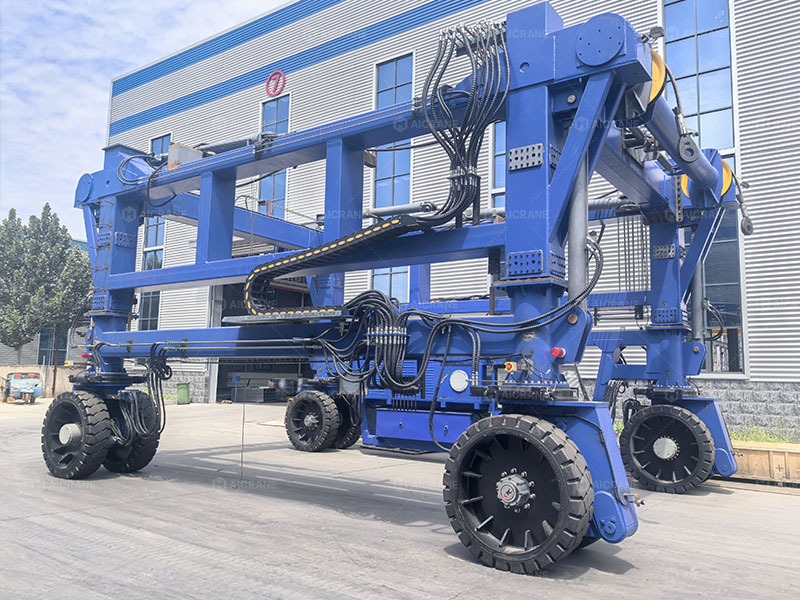
4. What Specifications Matter When Selecting a Straddle Carrier for Project Cargo?
Selecting a straddle carrier for project cargo requires more than checking its maximum lifting capacity. Engineers should evaluate the complete relationship between cargo characteristics, operating conditions, and machine configuration.
4.1 Rated Lifting Capacity
Lifting capacity is the first specification to consider.
The carrier must safely handle the total suspended load, including the cargo, spreader beam, slings, lifting attachments, and other accessories where applicable.
For example, if an industrial component weighs 45 tons and its lifting accessories add another 3 tons, the lifting system must account for a total suspended load of 48 tons.
However, the required rated capacity cannot be determined from this calculation alone. Engineers must also consider the manufacturer’s rated operating conditions, load configuration, lifting geometry, and applicable design standards.
The maximum rated capacity should not be confused with the capacity available in every lifting configuration.
4.2 Cargo Dimensions and Clear Opening
The internal dimensions of the straddle carrier determine whether the cargo can fit safely between its supporting legs.
Three dimensions are especially important:
-
Clear width: The available horizontal space between the supporting legs.
-
Clear height: The vertical space available for the cargo and lifting arrangement.
-
Clear length: The available space within the carrier’s longitudinal operating configuration.
Engineers should also consider the cargo’s actual transportation envelope, including protruding components, lifting accessories, and required clearance.
For example, a 40-ton machine may be within the carrier’s rated lifting capacity but still be unsuitable if its width exceeds the available clear opening.
4.3 Lifting Height
The required lifting height depends on the cargo’s support arrangement, transportation clearance, and unloading position.
For project cargo, the lifting system must provide enough vertical travel to:
-
Lift the cargo clear of its supports.
-
Maintain sufficient ground clearance during transportation.
-
Place the cargo onto transport platforms or storage foundations.
-
Complete loading and unloading operations safely.
The required lifting height should be calculated using the cargo dimensions and the actual operating layout.
4.4 Steering and Maneuverability
Steering configuration has a direct impact on project cargo handling efficiency.
Common steering functions may include:
-
Straight steering
-
Diagonal steering
-
90-degree steering
-
Pivot or swing steering
-
360-degree steering
-
Ackermann steering
Not every model offers all these functions.
For example, diagonal steering can help a carrier move sideways within a restricted yard, while 90-degree steering is useful when changing direction in areas with limited turning space.
The correct configuration depends on the site layout, cargo dimensions, travel distance, and available maneuvering area.
4.5 Ground Conditions and Wheel Loads
A heavy-duty straddle carrier places substantial loads on its wheels and the supporting ground.
This is especially important when transporting project cargo across temporary construction yards or industrial areas that were not originally designed for heavy mobile equipment.
Engineers should evaluate:
-
Ground bearing capacity
-
Pavement thickness and condition
-
Maximum wheel loads
-
Surface flatness
-
Drainage conditions
-
Gradients and cross slopes
-
Expansion joints and underground structures
The carrier’s total weight and lifted cargo weight must be considered when calculating ground loading.
A machine with sufficient lifting capacity may still be unsuitable if the operating surface cannot safely support its wheel loads.
5. Straddle Carrier vs. Other Equipment for Project Cargo Handling
Straddle carriers are not the only solution for moving oversized and heavy industrial components. Their suitability becomes clearer when compared with other common material handling equipment.
| Equipment | Main advantages | Main limitations |
|---|---|---|
| Straddle carrier | Lifts and transports cargo within its supporting frame; mobile yard operation | Requires sufficient cargo clearance, ground capacity, and route space |
| Heavy-duty forklift | Flexible for palletized and compact industrial loads | Very large or long loads may require specialized attachments and careful stability calculations |
| Mobile crane | Suitable for lifting and positioning heavy loads over a defined working area | Requires crane setup space and may need separate transport equipment |
| Overhead crane | Efficient for repetitive lifting within a fixed workshop or building | Limited to areas covered by the runway system |
| Self-propelled modular transporter (SPMT) | Suitable for exceptionally heavy and oversized loads | Requires a specialized transport and lifting arrangement; loading equipment may be needed |
| Yard trailer | Practical for moving cargo over longer yard distances | Requires separate lifting equipment for loading and unloading |
When Is a Straddle Carrier More Suitable?
A straddle carrier is particularly attractive when a project requires repeated lifting and transportation of large components within a defined operating area.
For example, a steel fabrication facility may need to move completed structures from multiple production bays to a central storage area. A straddle carrier can combine lifting and transportation in one operation, reducing the need to coordinate separate lifting and hauling equipment.
By comparison, a mobile crane may be more appropriate when the cargo must be lifted to a high installation position or moved across obstacles.
For exceptionally heavy cargo, an SPMT may be more appropriate for horizontal transportation, provided a suitable loading and unloading solution is available.
The decision should be based on the complete handling process rather than the lifting capacity of an individual machine.
6. What Are the Main Advantages of Using Straddle Carriers for Project Cargo?
6.1 Combined Lifting and Transportation
One of the main advantages is the ability to lift and transport cargo using the same machine.
This can reduce the number of equipment transfers required between unloading, storage, and dispatch operations.
It may also simplify yard logistics when cargo moves frequently between designated locations.
6.2 Flexible Yard Operations
Straddle carriers are self-propelled and can operate across multiple handling zones.
Unlike fixed overhead cranes, they are not restricted to a permanent runway system.
This makes them useful for industrial facilities with changing storage arrangements or multiple outdoor handling areas.
6.3 Adaptable Lifting Configurations
Depending on the design, a straddle carrier can be equipped with different lifting systems or attachments to accommodate specific cargo types.
Possible configurations include:
-
Hydraulic lifting systems
-
Dedicated lifting beams
-
Spreader beams
-
Customized lifting frames
-
Special lifting attachments
The lifting arrangement should be engineered around the actual cargo rather than assuming that one standard attachment can handle every project load.
6.4 Reduced Dependence on Separate Handling Equipment
When the carrier can complete both lifting and transportation, the facility may reduce its dependence on separate forklifts, material handling cranes, and transport vehicles for certain workflows.
However, this does not mean that a straddle carrier can replace every piece of material handling equipment. Final installation, high-level lifting, or exceptionally heavy transport may still require additional machinery.
7. What Are the Limitations of Straddle Carriers in Project Cargo Applications?
Although straddle carriers offer considerable operational flexibility, several limitations need to be addressed before purchasing.
Cargo size restrictions: The load must fit within the machine’s clear opening and transportation envelope. Extremely wide or long structures may require a specialized design.
Ground requirements: Heavy loads create significant wheel pressures. Weak or uneven surfaces can affect stability and operational safety.
Overhead clearance: The carrier’s overall height, lifting structure, and cargo position must be compatible with overhead buildings, cables, pipelines, and other obstructions.
Load stability: Irregularly shaped cargo or loads with an offset center of gravity may require customized lifting arrangements and engineering calculations.
Turning space: The carrier needs sufficient space to maneuver, especially when carrying long or oversized components.
Initial investment: Heavy-duty and customized straddle carriers may involve substantial design and manufacturing costs. Their economic value depends on handling frequency, labor requirements, operational efficiency, and the alternative equipment needed.
These limitations make preliminary engineering assessment essential, particularly for one-off project cargo operations.
8. What Safety Systems Are Important for Project Cargo Handling?
Safety requirements become especially important when transporting heavy and oversized loads because load movement can affect both the carrier and surrounding infrastructure.
The required safety systems vary by manufacturer, machine configuration, and applicable regulations.
Important systems and features may include:
8.1 Overload Protection
An overload protection system monitors the lifting load and helps prevent the carrier from operating beyond its permitted capacity.
This is particularly important when handling project cargo with varying weights and lifting arrangements.
8.2 Anti-Tipping and Stability Monitoring
Stability monitoring can help detect operating conditions that may increase the risk of tipping or excessive structural loading.
The system should be designed around the carrier’s actual geometry, wheel configuration, and load characteristics.
8.3 Emergency Stop System
Emergency stop devices allow operators to stop relevant machine movements when an unsafe situation occurs.
Their locations should be accessible and clearly identified.
8.4 Braking and Steering Safety
Reliable braking and steering systems are essential when transporting heavy cargo.
The carrier must maintain controlled movement during starting, turning, stopping, and operation on designated gradients.
8.5 Operator Visibility and Warning Systems
Cameras, working lights, audible alarms, and warning indicators can improve operator awareness.
For oversized cargo, cameras and additional monitoring devices may be particularly useful because the load can obstruct direct visibility.
Safety systems should be complemented by operator training, regular inspections, approved lifting procedures, and a documented traffic management plan.
9. How to Plan a Straddle Carrier Project Cargo Handling System
Before purchasing a straddle carrier, project owners should prepare a clear technical requirement document.
The following steps help ensure that the proposed equipment matches actual operating conditions.
Step 1: Identify the cargo.
Prepare a cargo list showing the maximum weight, dimensions, center of gravity, lifting points, and handling frequency of each component.
Step 2: Define the handling process.
Determine where cargo will be collected, transported, stored, and delivered. Identify whether the carrier needs to perform loading, unloading, stacking, or installation-related positioning.
Step 3: Survey the operating site.
Measure road widths, turning areas, overhead clearance, ground conditions, gradients, and potential obstacles.
Step 4: Determine technical specifications.
Define the required lifting capacity, clear opening, lifting height, travel speed, steering functions, and lifting arrangement.
Step 5: Review safety and compliance requirements.
Confirm the applicable machinery safety standards, lifting equipment requirements, inspection procedures, and operator qualifications for the project location.
Step 6: Request an engineering proposal.
Provide the equipment manufacturer with cargo drawings, site layouts, handling procedures, and operating conditions.
A technical proposal should explain the machine configuration, rated capacity, lifting system, steering arrangement, power supply, safety features, and operating limitations.
Step 7: Verify the design before manufacturing.
Review drawings, lifting calculations, wheel loads, operating clearances, and safety provisions before approving the final design.
This process helps avoid a common purchasing mistake: selecting a carrier based only on tonnage without checking whether it can physically and safely handle the actual cargo.
10. Frequently Asked Questions
Can a straddle carrier lift extremely heavy project cargo?
Yes, provided the carrier is specifically designed and rated for the required load. Heavy-duty straddle carriers can be engineered for different lifting capacities, but the actual limit depends on the machine structure, lifting system, load geometry, and operating conditions.
Can straddle carriers handle oversized cargo?
Yes. They can handle certain oversized loads when the cargo fits within the carrier’s clear opening and transportation envelope. Very wide or long cargo may require a customized frame, lifting beam, or specialized handling arrangement.
Can a straddle carrier transport cargo on uneven ground?
A straddle carrier can operate only within the ground conditions permitted by its design. Uneven surfaces, excessive slopes, and inadequate ground bearing capacity can create stability and structural risks. The travel surface should be evaluated before operation.
Are straddle carriers suitable for outdoor project cargo handling?
Yes. They are commonly suited to outdoor industrial yards, ports, shipyards, and construction-related handling areas. Their suitability depends on weather protection requirements, ground conditions, environmental conditions, and the machine’s design.
Can straddle carriers replace mobile cranes?
Not completely. Straddle carriers combine lifting and horizontal transportation, making them useful for yard logistics. Mobile cranes are generally more suitable for lifting cargo to elevated installation positions or over obstacles. The two types of equipment can also complement each other.
Can a straddle carrier be customized for specific project cargo?
Yes. Depending on the manufacturer and engineering requirements, customization may include lifting capacity, clear opening dimensions, lifting height, steering functions, lifting beams, attachments, and safety systems.
The final design should be based on actual cargo drawings and site conditions.
11. Conclusion: Is a Straddle Carrier the Right Choice for Your Project?
Straddle carriers can be an effective solution for project cargo handling when large industrial components need to be lifted and transported repeatedly within a defined yard or industrial facility.
Their main advantage is the integration of lifting and horizontal transportation into one mobile machine. This can simplify material handling workflows and reduce the need for separate equipment in suitable applications.
However, selecting the right carrier requires a detailed assessment of cargo weight, dimensions, center of gravity, lifting points, ground conditions, and operating routes. For oversized or irregular cargo, customized lifting arrangements and engineering verification may be necessary. AICRANE provides customized straddle carrier solutions for industrial material handling applications. If you are planning a project cargo handling system, share your cargo weight, dimensions, handling requirements, and site layout with our team. We can evaluate the application and recommend a suitable straddle carrier configuration.