Large concrete road pavement projects depend on a carefully synchronized sequence: aggregates and cement must be batched, concrete must be mixed and transported, and the fresh material must reach the paving front before its workable period is compromised. The process resembles a moving production line. If one stage slows, the disturbance can propagate through the entire operation. A batching plant may have sufficient theoretical output, yet an inadequate transport fleet can starve the paving operation. Likewise, a high-performance concrete road paving machine cannot maintain its designed paving rhythm when concrete deliveries arrive sporadically.
For this reason, concrete supply continuity is not simply a matter of production capacity. It concerns the coordination of the batching plant, transit mixer, paving equipment, and curing operations as one interconnected system. On extensive highways, airport pavements, industrial roads, and other concrete pavement projects, a mobile batching plant can also provide production closer to the active work front. The objective is to sustain a predictable flow of concrete from material dosing to final curing, while minimizing interruptions that could affect pavement uniformity.
Why Continuous Concrete Supply Matters in Road Pavement Construction
Large-Scale Paving Requires an Uninterrupted Workflow
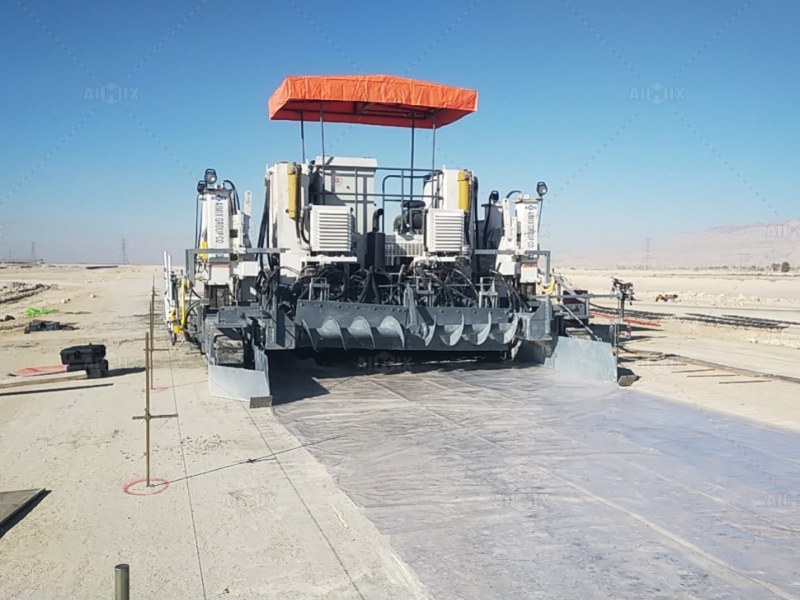
Concrete pavement construction differs from many conventional concrete applications because the paving front progresses continuously along a defined alignment. Once the concrete paver machine begins placing material, the operation is expected to advance at a controlled speed. Concrete must therefore arrive at approximately the same rhythm as the paving process.
This creates a production equation rather than a simple equipment requirement. The effective paving rate depends not only on the paver itself but also on mixing capacity, transportation cycles, discharge efficiency, and site traffic. If concrete reaches the paver too slowly, the machine may need to reduce speed or stop. Neither condition is desirable on a large pavement project.
Irregular Supply Can Affect Pavement Continuity
Concrete pavement benefits from consistent placement conditions. Extended interruptions can create interfaces between successive placements, while inconsistent delivery may cause variations in workability and finishing conditions.
A cold joint or poorly integrated construction joint is not merely a visual imperfection. It can become a discontinuity within the pavement structure and may require additional treatment or corrective work. Maintaining concrete supply continuity therefore helps the paving crew preserve a more uniform placement sequence and reduces unnecessary interruptions.
Building a Continuous Concrete Supply Chain
Batching Plant for Centralized Concrete Production
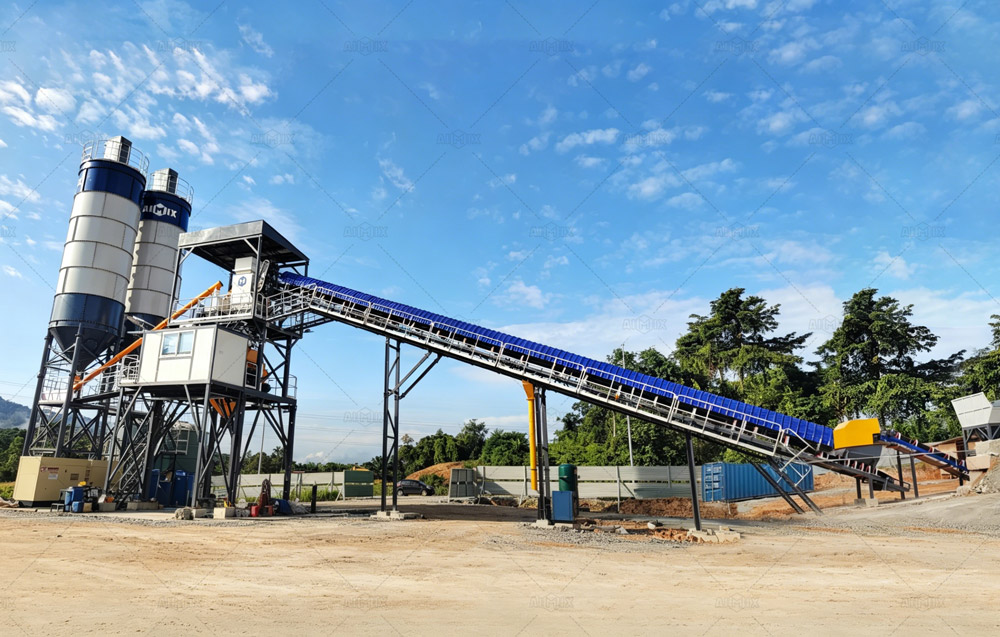
A batching plant forms the production nucleus of a large concrete pavement operation. It receives and proportionally doses aggregates, cement, water, and other materials before mixing them into concrete with the required properties.
For major road projects, production planning should begin with the required paving rate rather than simply selecting a plant based on its maximum advertised output. The plant must produce enough concrete to support the paver while also accommodating practical factors such as loading intervals, maintenance, material replenishment, and variations in site conditions.
Centralized production also provides greater control over mix consistency. Stable aggregate proportions and repeatable batching cycles help maintain similar concrete characteristics throughout an extended paving shift.
Mobile Batching Plant for Changing Construction Fronts
A mobile batching plant becomes particularly useful when road construction extends over a considerable distance or when the active paving front gradually shifts. Instead of keeping concrete production permanently tied to one location, the plant can be deployed closer to the construction zone.
This arrangement can reduce transportation distances and help shorten the interval between mixing and placement. The benefit becomes more pronounced on projects where road conditions, traffic restrictions, or long haul distances could otherwise introduce uncertainty into concrete delivery.
Mobility also provides a degree of logistical resilience. As the paving front advances, the production point can be repositioned according to the project’s evolving geometry, provided the relocation plan is incorporated into the overall construction schedule.
Transit Mixers Connect Production With the Paving Front
The transit mixer is the link between concrete production and pavement placement. Its role is more consequential than simply transporting material. The vehicle must complete loading, travel, discharge, and return cycles quickly enough to prevent gaps in the supply chain.
For a continuous paving operation, fleet sizing should consider the complete transportation cycle. A mixer that spends substantial time waiting at the plant or traveling along a congested access route contributes less effective supply than its nominal carrying capacity might suggest.
Consequently, several transit mixers may be required to create a buffer between the batching plant and paver. The objective is to prevent a single delayed vehicle from interrupting the paving rhythm.
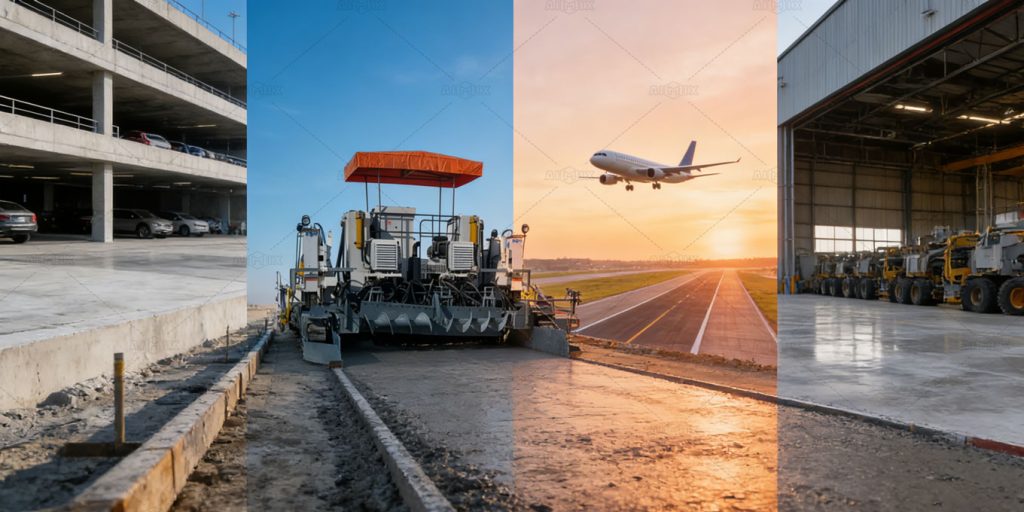
Coordinating Concrete Production With Pavement Operations
Match Batching Capacity With Paving Speed
The production rate of the batching plant should be aligned with the concrete consumption rate of the paver. If the plant consistently produces less concrete than the paving operation consumes, the paver will eventually exhaust the available material. Conversely, excessive production without adequate transportation can result in unnecessary waiting and inefficient material handling.
A more useful approach is to establish the expected paving rate first and then calculate the required concrete volume per unit of pavement length. Pavement width, thickness, paving speed, and concrete density can then be used to estimate the approximate hourly demand. Allowances for operational interruptions and delivery variability should also be incorporated.
Integrate the Concrete Paver Machine With Upstream Equipment
The concrete paver machine represents the downstream point of the concrete production chain. Its productivity depends on receiving material at the correct frequency and in sufficient quantity.
Before paving begins, the batching plant for sale, transit mixers, paver, and supporting crews should therefore be treated as one operational system. Delivery routes should be defined, discharge points should be coordinated, and communication between the production and paving teams should remain continuous.
This synchronization creates a more stable paving rhythm. Instead of reacting to shortages as they occur, the operation is organized around anticipated concrete consumption.
Control Concrete Quality From Mixing to Placement
Continuity does not mean sacrificing quality for speed. Concrete must retain the required workability and uniformity throughout transportation and placement. Excessive delays, prolonged agitation, or poorly managed delivery sequences can affect the material before it reaches the paver.
Quality control should therefore extend beyond the batching plant. Fresh concrete testing, visual inspection, delivery-time records, and monitoring of placement conditions can help identify deviations before they become embedded across a large pavement section.
Maintaining Pavement Quality During Long Concrete Pours
Reduce Cold Joints and Unplanned Stoppages
One of the clearest reasons to maintain supply continuity is to reduce avoidable stoppages. A paving operation interrupted by insufficient concrete may have to manage an unintended termination point, reorganize the work area, or create a construction joint at a location that was not included in the original paving sequence.
A properly planned supply chain reduces this possibility. Production capacity, mixer availability, travel distance, and reserve arrangements should all be evaluated before a major pavement pour begins.
Coordinate Paving, Vibration, and Finishing
Concrete placement is followed by consolidation, shaping, surface treatment, and other finishing operations. These activities are closely coupled with the movement of the paver.
If the concrete supply becomes erratic, the downstream crews may experience alternating periods of excessive workload and inactivity. Continuous supply creates a steadier operating rhythm, allowing finishing personnel to work behind the paver without repeatedly adapting to sudden changes in material availability.
Plan Curing as Part of the Same Production Sequence
Curing should not be treated as an isolated activity after paving is complete. It is the final link in the concrete pavement workflow. Once the surface has been finished, appropriate curing measures should follow within the planned sequence to limit premature moisture loss and support concrete strength development.
On large projects, the paving train can therefore be viewed as a continuous chain: the batching plant produces concrete, transit mixers transport it, the concrete paver machine places and shapes it, and curing operations protect the newly finished pavement. Weakness at any link can affect the performance of the entire system.
Concrete supply continuity ultimately determines how effectively large pavement projects can convert production capacity into finished roadway. A batching plant provides the production foundation, a portable concrete batch plant for sale can bring that production closer to changing work fronts, and transit mixers maintain the connection between the plant and the paving operation. At the downstream end, the concrete paver machine depends on this coordinated supply to maintain a stable paving rhythm. When production, transportation, paving, finishing, and curing are planned as one integrated sequence, large concrete road projects can reduce interruptions, improve placement consistency, and create a more predictable construction process.