A well-designed crushing circuit is the foundation of efficient aggregate production and mineral processing. Rather than relying on a single machine, modern crushing plants use multiple crushing stages to gradually reduce large rocks into finished products with the required particle size and shape. Each stage performs a specific function, improving production efficiency, minimizing wear, and optimizing energy consumption.
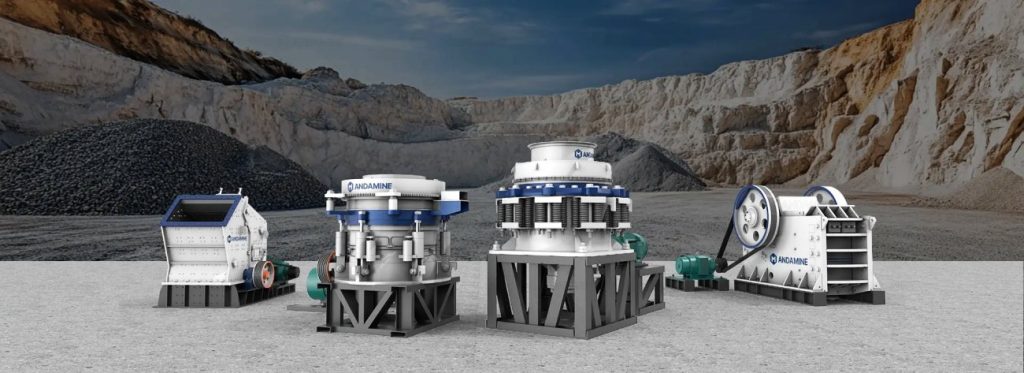
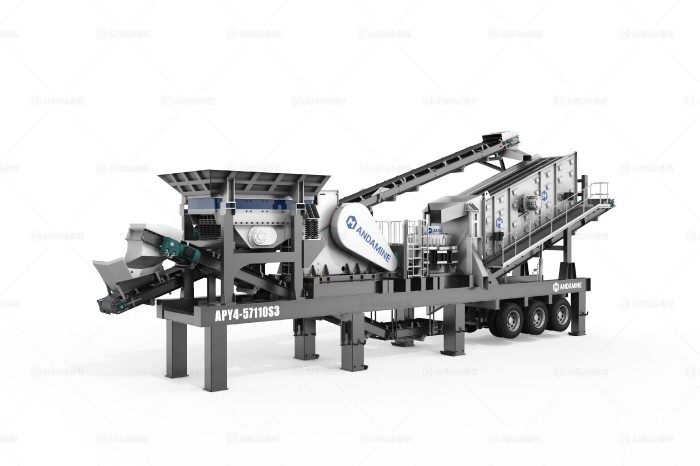
A typical multi-stage crushing plant combines different types of crusher, each selected according to the feed size, material hardness, desired product size, and production capacity. The most common configuration includes a primary jaw crusher for coarse crushing, a secondary cone crusher for intermediate reduction, and a tertiary impact crusher for final shaping and fine crushing. Understanding how these machines work together is essential for designing an efficient and cost-effective crushing circuit.
Why Multi-Stage Crushing Circuits Are Necessary
Large rocks extracted from quarries or mines are often too big to be processed directly into usable aggregates or mineral products. Attempting to reduce oversized material in a single crushing stage would require excessive energy, accelerate equipment wear, and produce inconsistent particle sizes.
Multi-stage crushing solves this problem by dividing the size reduction process into several controlled steps. Each crusher handles a specific reduction ratio, allowing the next machine to receive properly sized material. This staged approach improves overall plant efficiency while extending equipment service life and producing higher-quality aggregates.
In addition to improving productivity, a properly designed crushing circuit allows operators to adjust production according to market demand. Different screen sizes, crusher settings, and recirculation systems can be used to produce multiple aggregate grades from the same production line.
Primary Crushing Stage: The Role of the Primary Jaw Crusher
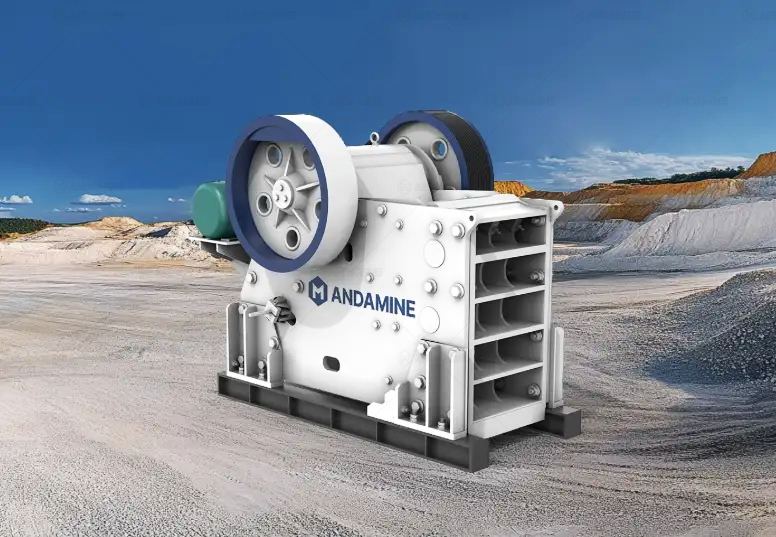
The first stage of a crushing circuit is responsible for reducing large blasted rocks into manageable sizes. This task is typically performed by a primary jaw crusher, which uses compressive force to crush material between a fixed jaw plate and a moving jaw plate.
Primary jaw crushers are valued for their ability to process extremely hard and abrasive materials such as granite, basalt, limestone, iron ore, and river stone. They accept large feed sizes while delivering reliable and continuous operation under heavy-duty conditions.
During circuit design, engineers select the jaw crusher based on feed opening dimensions, reduction ratio, throughput capacity, and rock characteristics. Proper sizing of the primary crusher ensures stable downstream production and prevents bottlenecks throughout the plant.
After primary crushing, material is transported by conveyors to vibrating screens or directly to the next crushing stage, depending on the circuit layout.
Secondary Crushing Stage: Improving Particle Size with a Secondary Cone Crusher
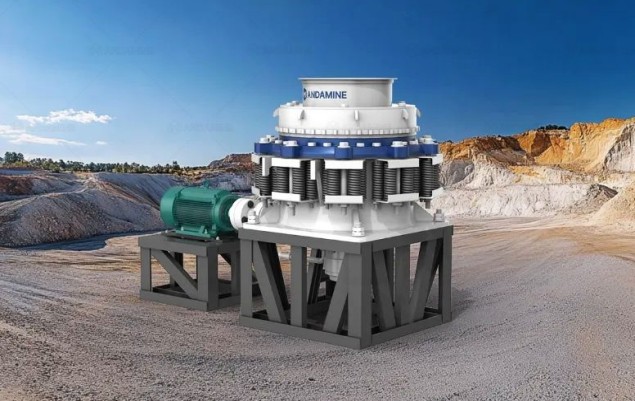
After coarse crushing, the material enters the secondary stage, where a secondary cone crusher further reduces particle size while maintaining high production efficiency. Unlike jaw crushers, cone crushers use a rotating mantle inside a concave liner to compress and crush material continuously.
Secondary cone crushers are particularly effective when processing hard rock because they generate a more uniform product size while maintaining low wear rates. Their hydraulic adjustment systems also allow operators to quickly modify the closed-side setting (CSS) to control product size.
In many aggregate plants, the secondary cone crusher works together with vibrating screens in a closed circuit. Oversized material returns to the crusher for further reduction, while qualified aggregates move forward to the tertiary stage. This closed-loop configuration improves product consistency and maximizes production efficiency.
Tertiary Crushing Stage: Final Shaping with a Tertiary Impact Crusher
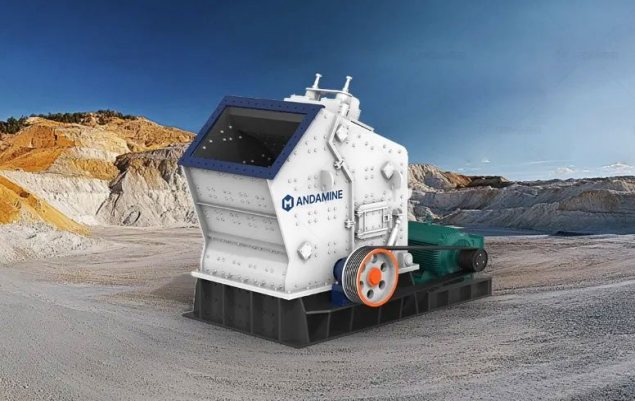
The final stage of many crushing circuits uses a tertiary impact crusher to produce well-shaped aggregates and fine materials. Unlike compression crushers, impact crushers reduce material through high-speed impact, creating cubical particles that are highly desirable for concrete and asphalt production.
Tertiary impact crushers are especially valuable when strict aggregate quality standards require excellent particle shape and low flakiness indexes. They also help improve grading distribution by generating more uniformly sized finished products.
In addition to shaping aggregates, tertiary impact crushers can process recycled concrete, construction waste, and medium-hard rock materials, making them versatile equipment for modern aggregate production plants.
Proper rotor speed, impact curtain adjustment, and feed control are essential for maximizing shaping efficiency while minimizing wear on blow bars and liners.
Screening and Material Recirculation in Crushing Circuits
Crushers alone cannot guarantee consistent product quality. Vibrating screens play an equally important role by separating materials according to particle size after each crushing stage.
Oversized materials are automatically returned to the appropriate crusher for additional reduction, while qualified products move to storage or the next processing stage. This recirculation system increases overall plant efficiency and reduces unnecessary crushing of already-sized aggregates.
Proper screen selection, aperture design, and vibration performance significantly influence the productivity of the entire crushing circuit. Poor screening efficiency can overload downstream crushers and reduce final product quality.
Factors Affecting Crushing Circuit Design
Every crushing plant is designed according to specific project requirements. Engineers evaluate numerous factors before selecting equipment and designing the processing flow.
Important considerations include:
- Material hardness and abrasiveness
- Maximum feed size
- Required production capacity
- Target aggregate sizes and grading
- Particle shape requirements
- Moisture content of raw materials
- Available installation space
- Energy consumption targets
- Maintenance accessibility
Balancing these factors allows engineers to design a crushing circuit that maximizes productivity while minimizing operating costs.
Automation and Intelligent Control in Modern Crushing Plants
Modern multi-stage crushing plants increasingly integrate automation technologies to improve operational efficiency. Sensors installed throughout the production line continuously monitor crusher load, motor current, conveyor speed, screen performance, and material flow.
Advanced control systems automatically adjust crusher settings, feeder speed, and conveyor operation based on real-time production data. This helps maintain stable throughput while reducing energy consumption and preventing equipment overload.
Remote monitoring platforms also allow operators to analyze production statistics, schedule predictive maintenance, and identify performance bottlenecks before failures occur. These Industry 4.0 technologies improve plant reliability while reducing maintenance costs.
Benefits of a Well-Designed Multi-Stage Crushing Circuit
When properly engineered, a multi-stage crushing plant delivers significant operational and economic advantages over simpler crushing systems.
- Higher aggregate production capacity
- Improved particle shape and grading consistency
- Lower energy consumption per ton of material processed
- Reduced wear on crushing equipment
- Greater flexibility for producing multiple aggregate sizes
- Higher automation and production stability
- Lower long-term maintenance and operating costs
These benefits make multi-stage processing plants the preferred solution for commercial aggregate production, mining operations, infrastructure projects, and recycled material processing.
Conclusion
An efficient crushing circuit depends on selecting the right combination of equipment for each processing stage. A primary jaw crusher provides reliable coarse crushing of large rocks, a secondary cone crusher delivers controlled size reduction with high efficiency, and a tertiary impact crusher produces the cubical, well-graded aggregates required for modern construction applications. Supported by effective screening, material recirculation, and intelligent automation systems, these different types of crusher work together to maximize productivity, improve aggregate quality, and reduce lifecycle operating costs. A carefully engineered multi-stage crushing circuit ultimately provides the performance, flexibility, and reliability needed for today’s demanding aggregate and mining industries.