For contractors and developers, 8,000 m³ is a meaningful volume. Yet the right decision still depends on the project duration, daily demand, site location, concrete delivery distance, labor, and whether the equipment can serve future projects. Therefore, this decision should start with the project’s actual concrete demand rather than the concrete plant price alone.
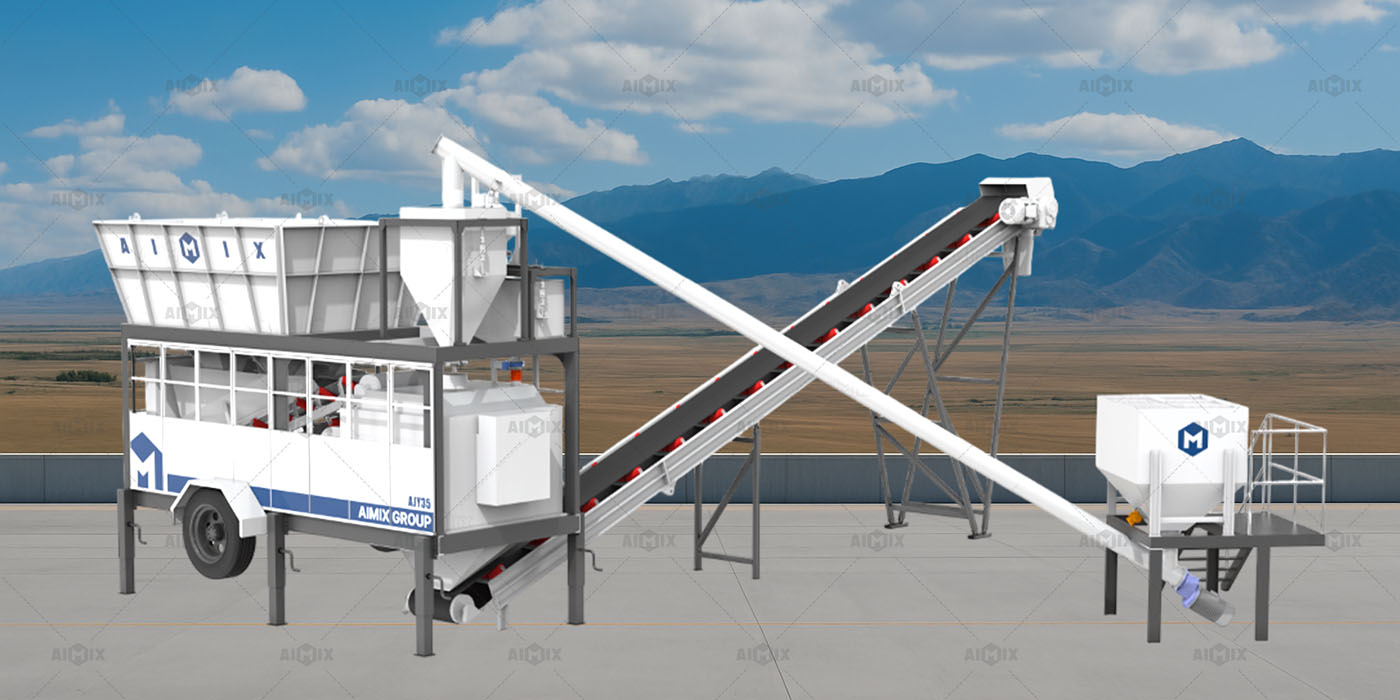
What Does 8,000 m³ of Concrete Mean in Daily Production?
First, divide the total concrete requirement by the planned concrete placement period. This gives a more practical view of the required production capacity.
For example, contractors can consider a concrete mixing plant when they need more control over production and want to coordinate concrete output with their own construction schedule.
| Concrete Period | Average Daily Requirement | Possible Plant Capacity |
|---|---|---|
| 60 days | About 133 m³/day | 30–60 m³/h |
| 90 days | About 89 m³/day | 30–60 m³/h |
| 120 days | About 67 m³/day | 30–60 m³/h |
| 180 days | About 44 m³/day | 25–40 m³/h |
These figures are planning references rather than exact production requirements. Construction rarely uses concrete at a perfectly constant rate. A project may need only 30 m³ on one day but 150 m³ during a major slab or foundation pour.
Therefore, contractors should consider both average demand and peak demand. A plant should have enough practical capacity for intensive pouring periods without being unnecessarily oversized for the rest of the project.
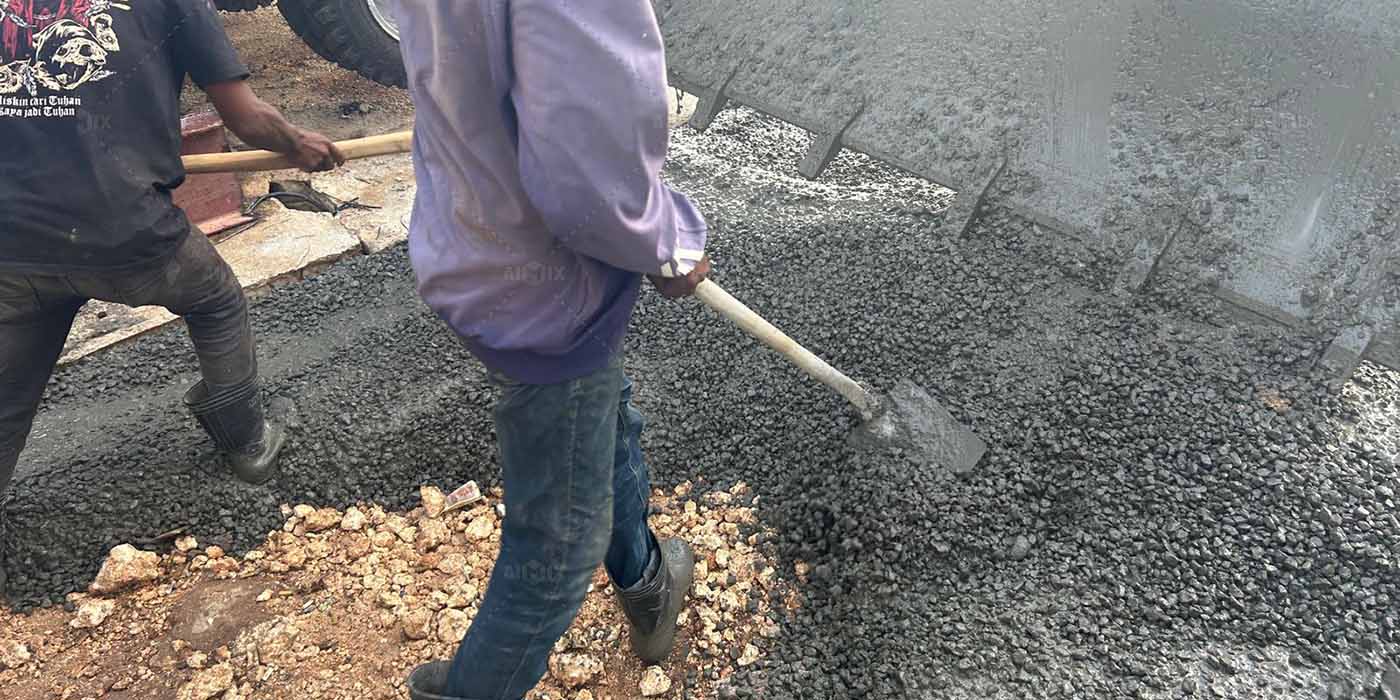
When Does Buying a Batching Plant Make More Sense?
The answer becomes clearer when you look at the operational problems behind concrete procurement. An 8,000 m³ project may benefit from an in-house plant when several of these conditions exist.
1. The Project Has a Short Construction Schedule
If the project needs 8,000 m³ within two or three months, concrete demand can become highly concentrated. Major foundations, columns, beams, slabs, and other structures may require large volumes within short time windows.
In this situation, depending entirely on an external ready-mix supplier can create scheduling pressure. The supplier may have other projects. Truck availability can also change. Traffic can further increase delivery time.
With an on-site batching plant, the contractor has more control over production timing. Concrete can be produced according to the actual pouring schedule. Consequently, the plant becomes part of the project’s production system rather than simply another machine on site.
2. The Construction Site Is Far From Commercial Batching Plants
Distance is another major factor. If a commercial supplier is far from the project, transportation can add both cost and uncertainty to every cubic meter. This becomes more important when the project requires frequent concrete deliveries.
For projects that need consistent ready-mix production, a ready mixed concrete plant can provide an integrated production point closer to the construction site.
If the nearest commercial concrete supplier is far away, every cubic meter may involve significant transportation time and cost. Long delivery routes also make traffic, road conditions, and truck availability more important.
For remote projects, an on-site batching plant can shorten the concrete supply chain. Aggregates, cement, water, and admixtures come to the project site, while finished concrete travels only a short distance to the pouring location.
This can be particularly useful for projects in remote areas, industrial zones, islands, mining areas, resorts, and infrastructure projects where commercial ready-mix coverage is limited.
3. The Contractor Needs Better Control Over Concrete Supply
Concrete quality depends on more than the concrete mix design. Production timing, material storage, batching accuracy, mixing, transportation, and placement all matter.
Owning a batching plant gives the contractor greater control over these steps. The team can coordinate production with concrete pumps, mixer trucks, workers, and the construction schedule.
For example, if a large foundation requires 120 m³ of concrete in one day, the contractor can organize aggregate, cement, water, admixture, mixer trucks, and pumping capacity around that specific operation.
How Much Concrete Can a 30–60 m³/h Plant Produce?
Plant capacity is often misunderstood. A 60 m³/h rating does not mean the plant will produce 60 m³ every hour for the entire working day.
Actual output depends on loading, material availability, mixing cycle, truck changes, site conditions, operator efficiency, and other factors.
Example: 8,000 m³ Over 90 Days
Suppose the project needs 8,000 m³ over 90 days.
The average requirement is about:
8,000 ÷ 90 = 88.9 m³/day
If the plant operates for four effective production hours per day, a 30 m³/h plant has a nominal production capacity of about 120 m³/day. A 50 m³/h plant would have a nominal capacity of about 200 m³/day.
This does not mean the contractor must buy a 50 m³/h plant. Instead, it shows why production capacity should be matched with the construction schedule and peak pouring requirements.
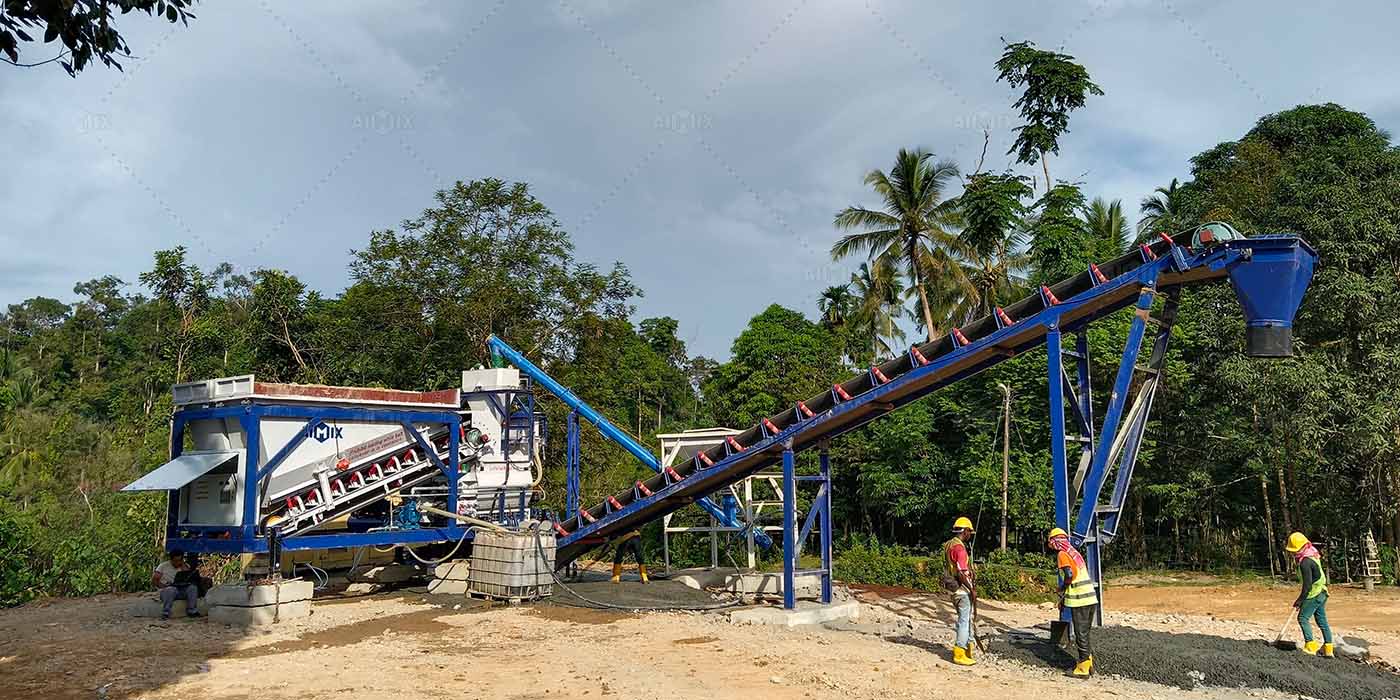
Buying vs. Purchasing Ready-Mix Concrete
The comparison should not focus only on the equipment purchase price. Contractors should compare the complete cost and operational risks of both options.
| Factor | Own Batching Plant | Buy Ready-Mix Concrete |
|---|---|---|
| Initial investment | Higher | Lower |
| Concrete supply control | Higher | Depends on supplier |
| Transportation distance | Can be reduced | Depends on supplier location |
| Production flexibility | High | Depends on supplier capacity |
| Future project use | Possible | No equipment asset |
| Operation responsibility | Contractor manages production | Supplier manages production |
Therefore, the cheaper option on day one is not always the lower-cost option across the entire project. Contractors should calculate the total cost per cubic meter under both scenarios.
What Costs Should Be Included in the Calculation?
A realistic calculation should include more than the batching plant purchase price.
Equipment Cost
Start with the batching plant itself. Then include the required configuration, such as cement silos, screw conveyors, aggregate bins, control systems, and other supporting equipment.
At this stage, it is also useful to contact a concrete batching plant supplier for a project-specific quotation rather than relying only on a general online price range.
Site Preparation and Installation
The site may require foundations, electrical connections, water supply, access roads, drainage, and installation work. These costs vary according to local site conditions.
Material and Production Costs
Cement, aggregates, water, admixtures, electricity, fuel, labor, and maintenance all contribute to the actual production cost.
Concrete Transportation
Even with an on-site batching plant, concrete still needs to reach the pouring point. Mixer trucks or other concrete transport equipment may therefore remain necessary.
Plant Utilization After the Project
This is an important part of the calculation.
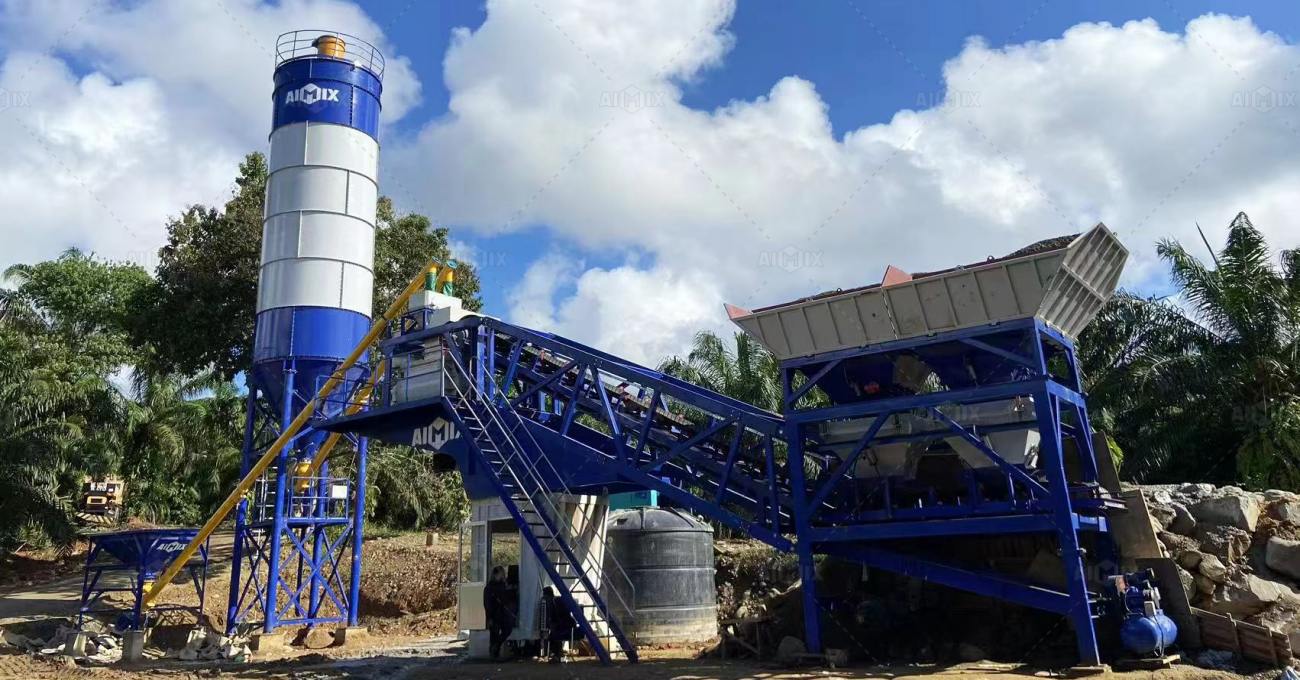
If the contractor can move the plant to another project after completing the 8,000 m³ job, the equipment has value beyond the current contract. A mobile or compact batching plant can be especially useful for contractors who frequently move between projects.
What If the Project Needs Concrete in Different Construction Areas?
Project layout also affects the decision.
For a large construction site, a batching plant located close to the main work area can reduce internal transportation time. For projects with several separated work zones, however, a mobile or compact solution may provide greater flexibility.
For example, road construction, bridges, housing developments, industrial projects, and remote infrastructure projects may not have the same concrete logistics. Therefore, the best plant configuration should follow the site rather than forcing the site to follow the equipment.
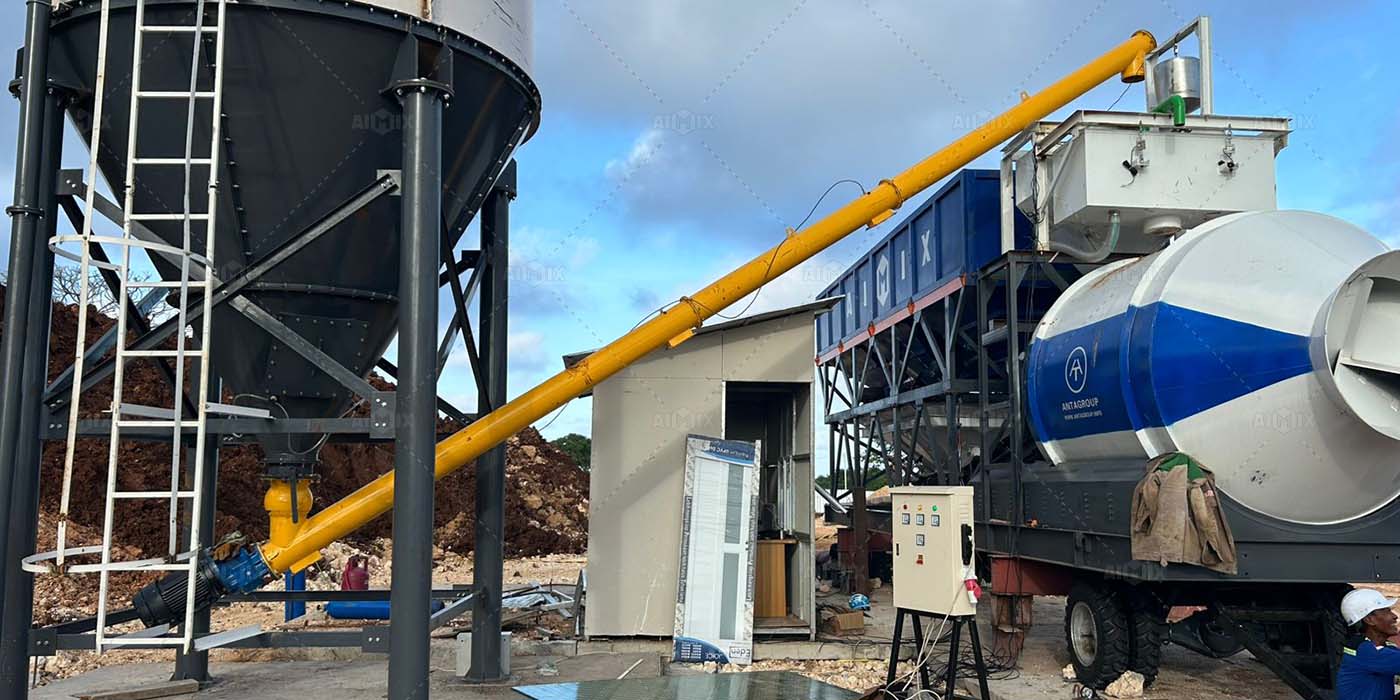
Could a Fast-Installation Plant Be Useful for an 8,000 m³ Project?
When time is limited, installation speed becomes part of the project economics.
A fast installation mobile batching plant can reduce the time between equipment arrival and concrete production. This can matter when the construction schedule is already tight.
For example, AIMIX AJQ fast-installation batching plants are available in capacities such as 50, 70, 100, and 150 m³/h. The suitable capacity depends on the project’s actual peak demand rather than the total 8,000 m³ volume alone.
For projects that may relocate after completion, a mobile or compact configuration can also be considered. This allows contractors to think beyond one construction contract.
When Might Buying a Plant Not Make Sense?
Buying equipment is not automatically the right solution for every 8,000 m³ project.
If the project lasts a long time and requires only a small amount of concrete each day, a large plant may remain underutilized. Similarly, if a reliable ready-mix supplier operates close to the site and can guarantee the required delivery schedule, external supply may reduce the contractor’s equipment management responsibilities.
Furthermore, contractors should consider whether they have trained operators, material storage space, maintenance resources, and suitable access for the equipment.
In short, the total concrete volume is only one part of the decision.
A Practical Break-Even Check for 8,000 m³
Contractors can start with a simple calculation.
Potential saving per m³ = Ready-mix delivered cost − In-house production cost
Then estimate:
Total potential operating saving = Potential saving per m³ × 8,000 m³
Next, compare this amount with the total cost of owning and operating the plant. Include depreciation or resale value, installation, labor, electricity, maintenance, transport, and other project-specific expenses.
The calculation becomes even more useful when the plant can serve additional projects. In that case, the 8,000 m³ project does not need to recover the entire equipment investment by itself.
What Plant Capacity Is Reasonable for 8,000 m³?
There is no single capacity that fits every 8,000 m³ project.
However, many projects in this range can start their evaluation with compact capacities such as 30, 40, 50, or 60 m³/h. The final choice should depend on the maximum concrete volume required during the busiest pouring periods.
For example, a project with moderate daily demand may not need a high-capacity plant. In contrast, a project with several large concrete pours may need more capacity to shorten the production window.
Therefore, do not select a plant simply because its hourly capacity looks impressive. Select it because the capacity fits the project’s actual production rhythm.
Key Questions to Ask Before Buying
Before placing an order, contractors should answer several practical questions:
- How many cubic meters of concrete are needed each day?
- What is the maximum concrete volume required in one day?
- How many cubic meters may be required during the largest single pour?
- How far is the nearest reliable ready-mix supplier?
- How much does delivered ready-mix concrete currently cost?
- What is the expected in-house production cost per cubic meter?
- How long will the batching plant operate on this project?
- Can the plant be moved to another project afterward?
- Is there enough space for aggregate and cement storage?
- Who will operate and maintain the plant?
Once these questions are answered, the buying decision becomes much more concrete. Instead of asking whether an 8,000 m³ project is “big enough,” the contractor can evaluate the actual economics and logistics.
So, Does Buying a Batching Plant Make Sense?
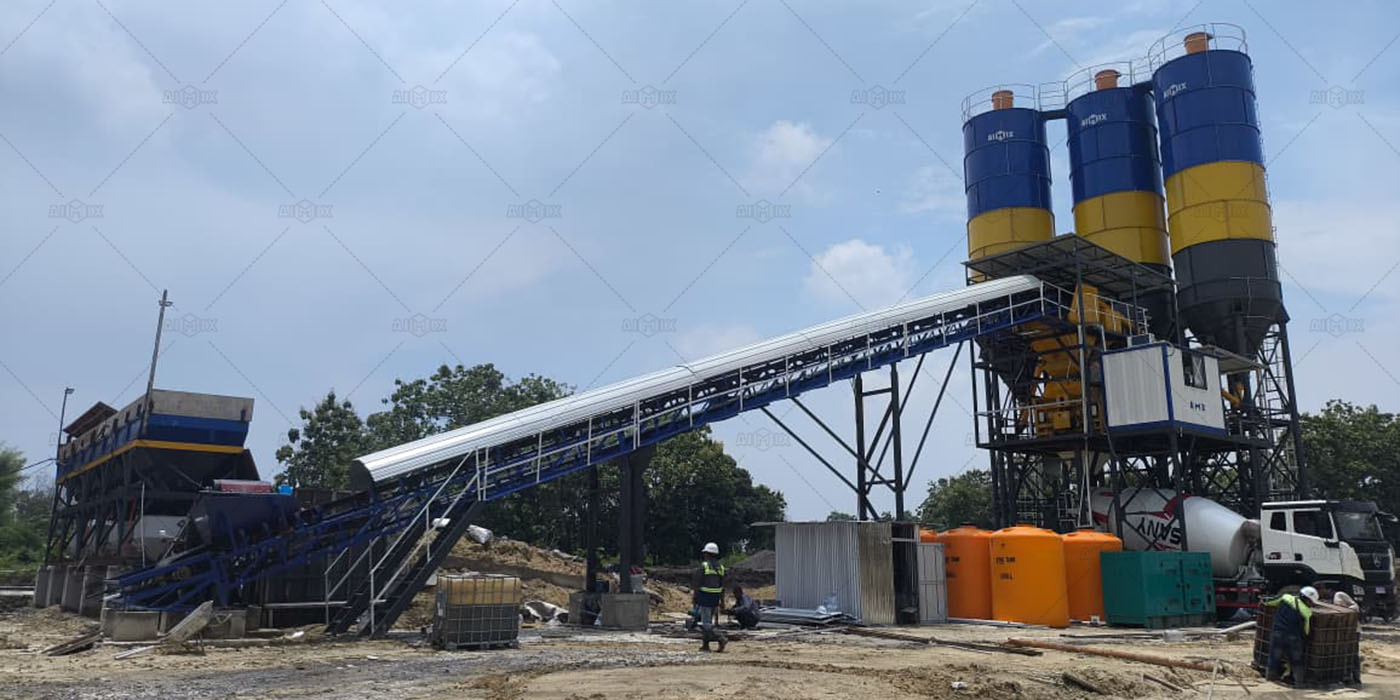
An 8,000 m³ concrete requirement can support the case for an on-site batching plant when the project needs strong supply control, has intensive concrete demand, faces long ready-mix transportation distances, or can reuse the plant on future projects.
On the other hand, the total volume alone does not determine whether buying is economical. Project duration, peak demand, local ready-mix prices, transportation, utilization, installation, and future equipment use all affect the result.
The most practical approach is therefore to calculate the total cost per cubic meter under both options. Then compare that result with the project’s schedule and operational requirements.
Plan Your 8,000 m³ Concrete Supply Around the Project
If you are planning an 8,000 m³ concrete project, AIMIX can help you evaluate the required batching capacity based on your project duration, daily concrete demand, site conditions, and concrete transportation distance.
Instead of selecting a plant only by its rated capacity, you can compare different configurations and determine whether a compact, fast-installation, stationary, or mobile batching plant fits your construction plan.
Share your project location, total concrete volume, construction period, peak daily demand, and expected start date with the AIMIX team. With these details, you can make a more practical equipment and concrete-supply decision before investing in the plant.